
Quick Answer
If you’re asking why do I wake up at 3AM every night, the most common reasons include stress, cortisol spikes, blood sugar drops, disrupted sleep cycles, poor evening habits, or environmental disturbances. Around 3AM, your body is in a lighter sleep phase and more sensitive to internal changes, making it easier to wake up. The good news is that improving your evening routine, stabilizing your diet, and reducing stress can help you sleep more consistently and wake up feeling refreshed.
Introduction
Waking up at 3AM can feel incredibly frustrating—especially when it happens night after night.
You go to bed tired, fall asleep normally, and then suddenly, you’re awake. Sometimes your mind starts racing. Other times, you feel alert for no clear reason. And the most confusing part? It often happens at the exact same time.
If you’ve been wondering why do I wake up at 3AM every night, you’re not alone. This is one of the most common sleep complaints people experience.
The truth is, this pattern is not random. Your body follows internal rhythms, and when something is slightly out of balance—whether it’s stress, hormones, or lifestyle habits—it tends to show up during the night.
Understanding the cause is the first step toward fixing it.
What Is Waking Up at 3AM?
Waking up during the night is often referred to as sleep maintenance disruption.
Unlike difficulty falling asleep, this issue happens after you’ve already entered sleep. You wake up unexpectedly and may struggle to fall back asleep.
The reason 3AM is so common is because it aligns with a transition phase in your sleep cycle. At this point, your sleep becomes lighter, and your body is more responsive to internal signals.
That means even small disruptions—like stress, temperature changes, or blood sugar shifts—can wake you up.
What Happens in Your Body at 3AM
Around 3AM, your body is in one of its most sensitive phases.
At this time:
- Your body temperature is at its lowest
- Melatonin (sleep hormone) is still active
- Cortisol (stress hormone) is starting to rise
- Sleep becomes lighter and more fragile
This combination makes it easier for your body to wake up.
If anything is slightly off—stress, diet, or environment—you’re more likely to wake fully instead of staying asleep.
This is why many people wake up at almost the same time every night. Your body is simply more vulnerable at this point in the sleep cycle.
7 Main Causes of Waking Up at 3AM
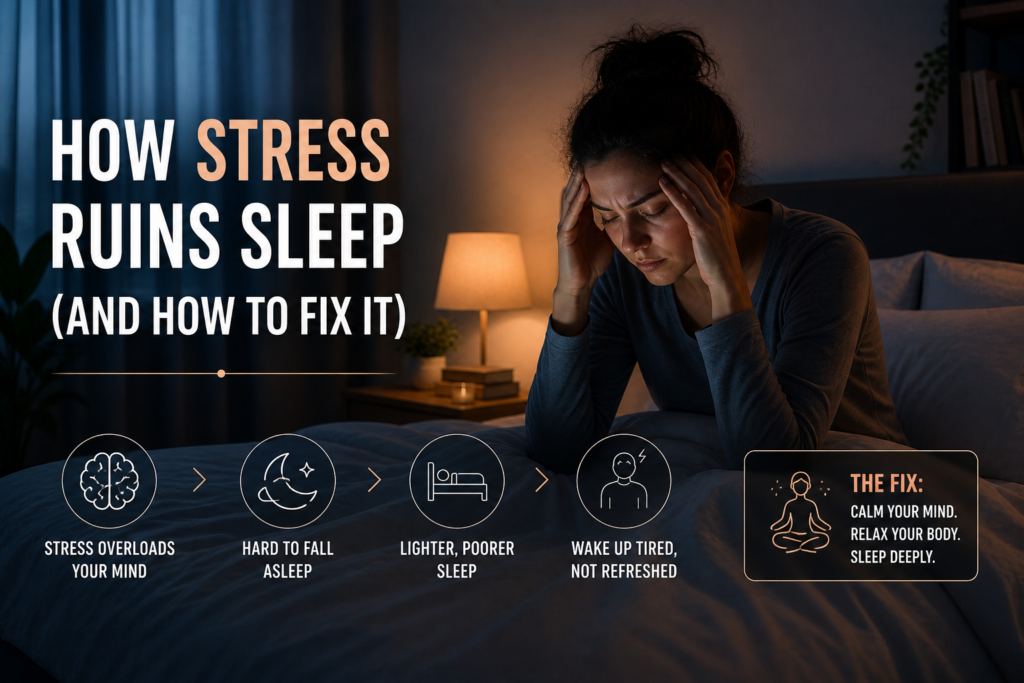
1. Stress and Overthinking
This type of wake-up often builds over time rather than happening suddenly. You might go through a few stressful days without noticing any immediate effect, but your brain continues processing those thoughts at night. Eventually, this mental activity begins to interrupt your sleep cycle. Once your body starts waking at the same time repeatedly, it can turn into a learned pattern driven by ongoing stress.
Stress is the number one reason people wake up at night.
Even if you don’t feel stressed during the day, your brain processes unresolved thoughts during sleep. This can trigger sudden wake-ups.
Many people notice:
- racing thoughts
- worrying about the future
- replaying conversations
The problem is not just stress—it’s unprocessed stress.
Fix:
Write down your thoughts before bed or create a calming routine to reduce mental activity.
2. Cortisol Spikes
Cortisol imbalances don’t usually appear overnight. They develop gradually as your body adapts to ongoing stress, irregular routines, or late-night stimulation. Over time, your internal clock may begin releasing cortisol earlier than it should. When this happens consistently, your body starts waking up at the same time each night, reinforcing the pattern.
Cortisol should be low at night and rise in the morning.
But when stress is high, cortisol can spike too early—waking you up at 3AM.
You may feel:
- suddenly alert
- unable to relax
- mentally active
Fix:
Reduce stimulation at night. Avoid late work, screens, and intense thinking before bed.
3. Blood Sugar Drops
Blood sugar-related wake-ups are often linked to daily eating habits rather than a single meal. Skipping meals, eating too much sugar, or having an unbalanced dinner can slowly affect how your body manages energy overnight. As this pattern continues, your body may begin waking at the same time to signal a need for fuel, turning it into a repeated cycle.
Your body needs stable blood sugar during sleep.
If levels drop too low, your body releases stress hormones to wake you up.
Signs include:
- waking hungry
- sweating
- restlessness
Fix:
Eat a balanced dinner with protein, healthy fats, and complex carbs.

4. Poor Sleep Routine
An inconsistent sleep schedule doesn’t disrupt your sleep immediately—it builds over time. Going to bed at different hours or changing your routine on weekends can gradually confuse your internal clock. Eventually, your body starts waking at irregular times, and in many cases, this settles into a consistent 3AM pattern.
Irregular sleep schedules confuse your body clock.
Going to bed at different times makes your sleep less stable.
Signs:
- inconsistent wake-ups
- difficulty staying asleep
Fix:
Stick to a consistent sleep and wake time—even on weekends.
5. Caffeine or Stimulants
The effects of caffeine can accumulate over several days without being obvious at first. Even if you feel fine during the day, your sleep quality may gradually become lighter. As this continues, your body becomes more sensitive to stimulation during the night, making it easier to wake up at the same time repeatedly.
Caffeine stays in your system for hours.
Even afternoon coffee can affect sleep quality.
Signs:
- light sleep
- waking too easily
- feeling wired
Fix:
Limit caffeine after early afternoon.
6. Environmental Disruptions
Sleep environment issues often go unnoticed because they seem minor. Small factors like light exposure, noise, or temperature changes may not wake you immediately, but repeated exposure can gradually train your body to wake up. Over time, your brain begins to associate that specific moment in the night with alertness.
Your sleep environment matters more than you think.
Even small changes can wake you up:
- light exposure
- noise
- room temperature
Fix:
Keep your room dark, quiet, and cool.
7. Hormonal Imbalances
Hormonal patterns shift slowly, not instantly. Changes in stress levels, sleep quality, or lifestyle habits can gradually affect hormone regulation. As your body adjusts, these shifts may begin to influence your sleep cycle at specific times. Once this pattern becomes consistent, waking at 3AM can feel automatic.
Hormones regulate sleep cycles.
Changes in cortisol, melatonin, or other hormones can affect your ability to stay asleep.
Signs:
- frequent wake-ups
- night sweats
- inconsistent sleep
Fix:
Support sleep with consistent routines and stress management.

Why It Happens
Your body runs on predictable cycles.
At around 3AM, you transition between sleep stages. This is when your body becomes more sensitive.
If your lifestyle includes stress, irregular habits, or poor sleep hygiene, your body reacts during this window.
Another key factor is habit formation.
If you wake up at 3AM repeatedly, your brain starts expecting it. Over time, this becomes a learned pattern.
Breaking it requires consistency, not quick fixes.
Another reason this issue feels persistent is because your brain forms patterns.
If you wake up at 3AM repeatedly, your body begins to expect it. This creates a feedback loop where waking becomes part of your routine, even if the original cause is no longer present.
Breaking this cycle requires consistent changes over time, not one-time fixes.
Hidden Signs Your Routine Is Causing It
Many people don’t realize their daily habits are contributing to the problem.
Common hidden triggers include:
- checking your phone late at night
- skipping meals or eating poorly
- relying on caffeine
- irregular sleep schedules
- high stress levels
These patterns keep your body in a semi-alert state, even during sleep.
Daily Habits That Trigger 3AM Wake-Ups
Your daytime habits often determine your nighttime sleep.
Many people focus only on bedtime routines, but the problem often starts much earlier.
Common triggers include:
- drinking caffeine late in the day
- eating high-sugar meals
- skipping meals
- staying indoors without natural light
- working late or mentally overstimulating yourself
- irregular sleep schedule
These habits keep your nervous system active and make it harder for your body to stay in deep sleep.
Over time, your body becomes more sensitive to disruptions, especially during the early morning hours.
Fixing sleep often means improving your entire daily rhythm—not just what you do before bed.
What To Do When You Wake Up at 3AM
Waking up is one thing—but what you do next matters even more.
Many people make the mistake of:
- checking their phone
- looking at the clock repeatedly
- worrying about not sleeping
These actions stimulate your brain and make it harder to fall back asleep.
Instead:
- stay calm
- keep lights dim
- take slow breaths
- avoid screens
- get out of bed briefly if needed
The goal is to stay relaxed and avoid triggering your brain into “day mode.”
Another important point is how you respond emotionally.
Many people become frustrated or anxious when they wake up. This creates a stress response, which makes it even harder to fall back asleep.
Instead, try to stay neutral. Remind yourself that waking up occasionally is normal and that your body will return to sleep.
Avoid checking the time repeatedly, as this increases pressure and keeps your brain active.
The calmer your response, the faster your body can relax again.
How to Fix It Without Overwhelm
Trying to fix everything at once can feel frustrating.
Instead, focus on a few key changes:
- improve your evening routine
- reduce stimulation before bed
- eat balanced meals
- manage stress
Start small.
For example:
- fix your bedtime
- reduce screen time
- improve dinner
Consistency matters more than perfection.

7-Day Reset Plan
Day 1: Set a consistent bedtime
Day 2: Reduce screen exposure at night
Day 3: Improve dinner quality
Day 4: Hydrate properly
Day 5: Reduce caffeine
Day 6: Add a relaxation routine
Day 7: Combine all habits
How Long Results Take
Some improvements happen within a few days.
For example:
- reducing caffeine → quick effect
- improving routine → noticeable change
Deeper sleep improvements usually take:
👉 2–3 weeks of consistency
Your body needs time to reset its natural rhythm.
It’s important to understand that sleep improvement is not immediate.
Your body needs time to adjust its internal clock. Even if you make positive changes, it may take several days before you notice a difference.
Staying consistent—even when results are not immediate—is key to long-term improvement.
What to Expect After 30 Days
After 30 days of consistent habits, many people notice:
- fewer night wake-ups
- deeper sleep
- better energy
- improved mood
The biggest change is feeling more in control of your sleep instead of being frustrated by it.
Best Products to Consider
1. Magnesium Glycinate Supplement
Supports relaxation and may help calm the nervous system.
Improve your nighttime routine with magnesium support.
2. Sleep Mask
Blocks light and improves sleep environment.
Create a darker, deeper sleep environment tonight.
3. White Noise Machine
Helps reduce noise disruptions during sleep.
Sleep more consistently with a quiet, controlled environment.
FAQ
Why do I wake up at 3AM every night?
This usually happens due to stress, sleep cycle changes, or hormonal fluctuations. Your body becomes more sensitive at this time, making it easier to wake up.
Why is it always the same time?
Your body follows patterns. Once you wake at a certain time repeatedly, it can become part of your internal rhythm.
Why can’t I fall back asleep?
Your brain may become too alert due to stress or stimulation, making it harder to relax again.
Is this insomnia?
It can be a form of sleep maintenance insomnia if it happens frequently.
How do I stop it?
Focus on improving your evening habits, reducing stress, and maintaining consistency.
When to Seek Help
If your sleep is disrupted for several weeks and affects your daily life, it may be helpful to speak with a healthcare professional.
Want better sleep, energy, and wellness tips?
Join Purely Vital Living and get expert-backed strategies delivered weekly.
Final Summary
If you’re asking why do I wake up at 3AM every night, the answer usually lies in your body’s natural rhythms being disrupted by stress, lifestyle habits, or environment.
The solution is not complicated—it’s consistent.
Small changes like improving your routine, managing stress, and stabilizing your diet can help you sleep through the night and wake up feeling refreshed.
Better sleep starts with better habits.