
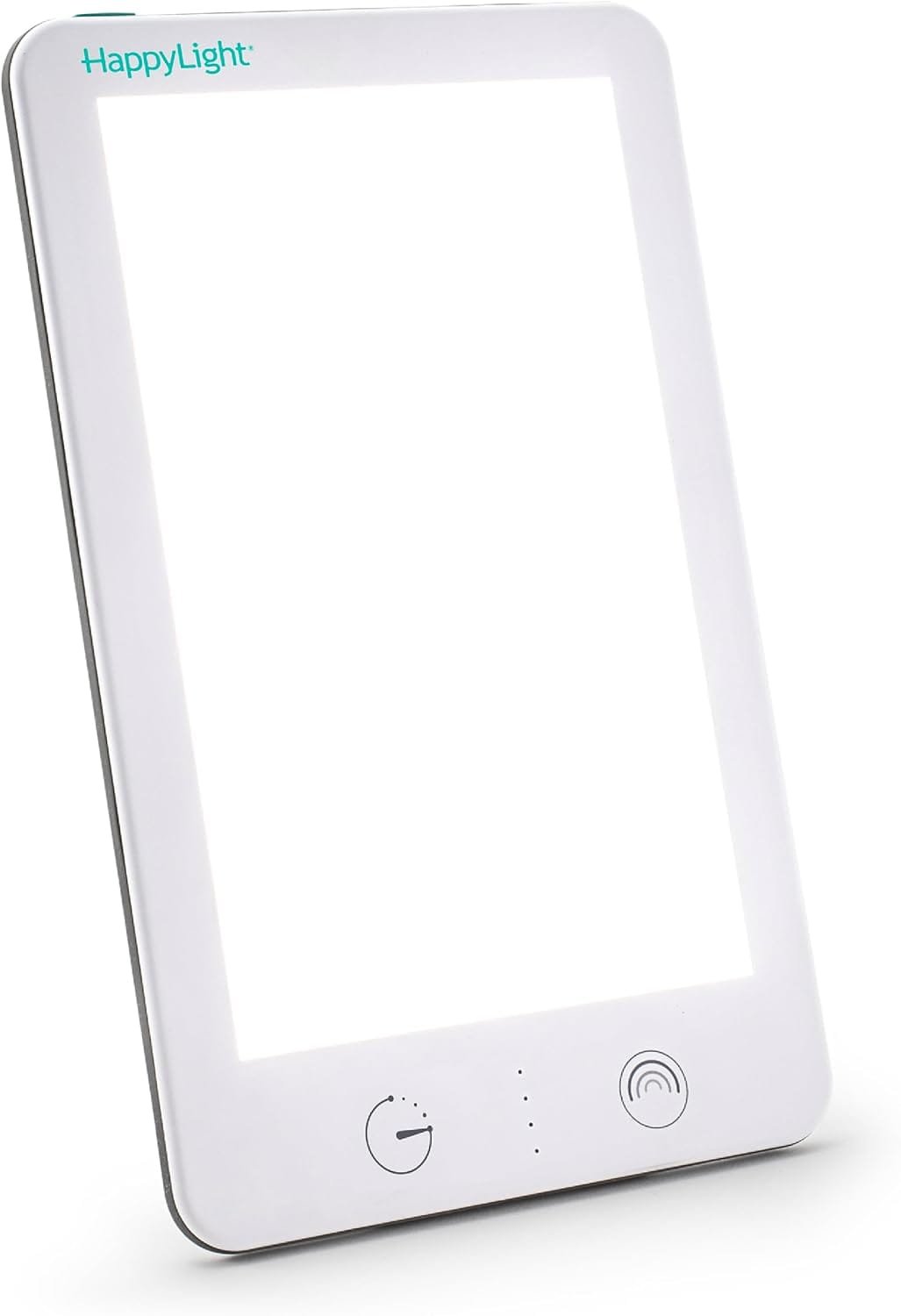
Quick Verdict: The Verilux HappyLight Lumi Plus is a compact, reasonably priced light therapy lamp that delivers up to 10,000 lux of UV-free white LED light. Three brightness levels, a 15–60-minute countdown timer, a detachable stand, and wall-mount compatibility make it easier to build bright-light exposure into a morning routine. Its small illuminated surface and corded design limit placement flexibility, and the 10,000-lux claim applies only at the manufacturer-specified distance. It is a practical entry-level option, but anyone using light therapy for seasonal depression, bipolar disorder, an eye condition, or alongside photosensitizing medication should first obtain professional guidance.
PVL Rating: 4.3/5
Best For: adults who want a compact desktop light therapy lamp for dark mornings, seasonal routines, shift-work schedules, or travel and who can position it at the correct distance consistently.
Light Therapy Lamp Review at a Glance
| Product | Verilux HappyLight Lumi Plus, model VT41WW3 |
|---|---|
| Maximum illuminance | Up to 10,000 lux at the specified distance |
| Light source | UV-free, full-spectrum white LED |
| Brightness settings | Three |
| Timer | 15, 30, 45, or 60 minutes |
| Dimensions | Approximately 9 × 5.6 × 0.9 inches |
| Weight | Approximately 1.3 lb |
| Placement | Detachable tabletop stand or wall mount |
| Power | Corded |
| Our rating | 4.3 out of 5 |
What Is the Verilux HappyLight Lumi Plus?
The HappyLight Lumi Plus is a slim bright-light therapy device designed to imitate the intensity of outdoor daylight without emitting harmful ultraviolet light. It is not a tanning lamp, heat lamp, wake-up alarm, or ordinary desk light. Its purpose is to provide controlled bright-light exposure, usually during the morning, while the user reads, eats breakfast, or works nearby.
Verilux lists a maximum output of 10,000 lux, three intensity levels, and a timer that can run in 15-minute increments for up to one hour. The detachable stand supports tabletop use and doubles as a wall-mounting solution. At roughly nine inches tall and 1.3 pounds, it is easier to move than a large clinical-style light box.
Does Bright-Light Therapy Work?
Bright-light therapy is an established treatment option for winter-pattern seasonal affective disorder (SAD), not merely a wellness trend. The National Institute of Mental Health describes daily exposure to a 10,000-lux UV-filtered light box for around 30–45 minutes, usually first thing in the morning, as a mainstay treatment. Mayo Clinic similarly notes that timing, intensity, distance, and duration all influence the dose.
That evidence supports properly delivered bright-light therapy; it does not prove that every lamp, schedule, or self-diagnosed symptom will produce the same result. A compact panel can reach 10,000 lux only within a particular range. Moving it farther away lowers the light reaching the eyes, even though the lamp itself appears bright. Follow the Verilux manual and advice from a qualified clinician rather than copying a generic routine.
Brightness and Light Quality
The Lumi Plus provides three brightness levels. The highest setting is intended to deliver the maximum 10,000-lux output at the correct distance, while lower settings can make adaptation more comfortable. The broad white LED light is described as full spectrum and UV-free. Verilux also markets it as free from visible flicker, glare, and hotspots.
The smaller panel is convenient but less forgiving than a large light box. If you turn your head frequently, sit too far away, or place it too low, your eyes may receive less consistent illumination. A larger panel costs more and takes more desk space, but it may provide a wider useful field. Lumi Plus works best for someone willing to position it carefully.
Timer and Daily Use
The countdown timer is one of the lamp’s most useful features. Touch controls allow 15-, 30-, 45-, or 60-minute sessions, after which the unit switches off. This reduces clock-watching and makes a repeatable morning routine easier.
Many clinical recommendations begin around 20–30 minutes at 10,000 lux soon after waking, but individual timing can differ. Longer is not automatically better. Excessive or poorly timed exposure can cause headache, eyestrain, agitation, nausea, or sleep disruption. People using the lamp to shift sleep timing should get individualized advice, especially when managing shift work or a diagnosed circadian-rhythm disorder.
Design, Portability, and Setup
At about 9 × 5.6 × 0.9 inches, the lamp fits on a crowded desk, bedside table, kitchen counter, or in luggage. The stand can be removed for packing and can support wall mounting. The slim white tablet design blends into a home office more easily than a bulky medical-looking box.
It is corded, so “portable” means easy to carry rather than usable without an outlet. The detachable stand also offers less angle flexibility than a multi-joint arm. Before buying, identify where the lamp will sit, check the recommended distance, and confirm that the surface and outlet allow the correct position.
Pros and Cons
Pros
- Up to 10,000 lux, matching the commonly recommended clinical intensity.
- UV-free white LED light.
- Three brightness settings.
- Built-in 15–60-minute countdown timer.
- Compact, lightweight design.
- Detachable stand and wall-mount option.
- Three-year manufacturer warranty.
- Competitive price for a branded light therapy device.
Cons
- Small light surface requires more careful positioning.
- 10,000 lux is achieved only at the specified distance.
- Corded rather than battery-powered.
- No alarm-clock or sunrise-simulation function.
- No adjustable color-temperature setting.
- Stand offers limited height and angle adjustment.
- Bright light can cause temporary side effects in some users.
Who Should Consider It?
The Lumi Plus suits adults seeking a straightforward light therapy lamp for darker seasons, a consistent morning routine, or professional guidance for circadian timing. It also makes sense for small spaces and travel because it is thin and light. The timer benefits users who prefer a defined daily session rather than leaving the lamp on indefinitely.
Who Should Avoid or Seek Medical Advice First?
Talk with a qualified health professional before beginning bright-light therapy if you have bipolar disorder, because overly rapid or prolonged exposure can provoke manic symptoms. Medical guidance is also important for glaucoma, cataracts, retinal disease, diabetic eye damage, or medications and supplements that increase light sensitivity.
A lamp is not a substitute for assessment when low mood is severe, persistent, or accompanied by hopelessness or thoughts of self-harm. Seasonal affective disorder is a form of depression and may require psychotherapy, medication, light therapy, or a combination.
How to Use a Light Therapy Lamp Safely
- Read the HappyLight Lumi Plus manual before the first session.
- Confirm the correct distance needed for the selected brightness.
- Position the lamp so light reaches your open eyes indirectly; do not stare into it.
- Start with the recommended duration rather than assuming a longer session is better.
- Morning use is typical for winter-pattern SAD, but timing should match your clinical goal.
- Stop and seek advice if you develop significant headache, eye discomfort, agitation, or mood elevation.
- Keep the lamp dry, stable, ventilated, and connected to the correct power adapter.
HappyLight Lumi Plus vs Other Options
| Option | Best advantage | Main limitation |
|---|---|---|
| HappyLight Lumi Plus | Compact 10,000-lux lamp with timer | Small panel and corded operation |
| Larger 10,000-lux light box | Wider illumination field and easier positioning | Bulkier and often more expensive |
| Sunrise alarm | Gradual wake-up experience | Usually does not replace a 10,000-lux therapy session |
| Outdoor morning light | Free, broad natural illumination | Weather, season, and schedule dependent |
Light exposure works best as part of a consistent routine. See our guides to improving sleep quality naturally and falling asleep faster. If fatigue continues despite adequate sleep, review common reasons you may feel tired rather than assuming insufficient light is the only cause. You can also track broader habits with the PVL Sleep Score Calculator.
Is the Verilux HappyLight Lumi Plus Worth It?
Yes, for users who want an affordable, uncomplicated 10,000-lux light therapy lamp and can work within its positioning limits. The timer, multiple brightness levels, low weight, wall-mount option, and three-year warranty offer good value at this price.
It is less compelling for someone who needs a broad illumination field, cordless operation, flexible height adjustment, or sunrise-alarm features. The best lamp is one that provides the required dose and fits a routine you will follow consistently.
Frequently Asked Questions
Does the HappyLight Lumi Plus provide 10,000 lux?
Verilux advertises up to 10,000 lux, but the illumination reaching your eyes depends on distance and positioning. The advertised maximum does not mean every seating position receives 10,000 lux. Consult the current product manual for the specified distance, and avoid assuming that a lower brightness setting provides the same exposure.
What time should I use a light therapy lamp?
Morning use soon after waking is commonly recommended for winter-pattern seasonal affective disorder, but the optimal timing depends on your sleep schedule and treatment goals. Light exposure later in the day can shift circadian timing differently. If you have a diagnosed mood or sleep condition, discuss timing with a qualified clinician rather than improvising a treatment schedule.
How long should a light therapy session last?
Many bright-light protocols use around 20 to 30 minutes at an appropriately delivered 10,000 lux; the National Institute of Mental Health also describes sessions of approximately 30 to 45 minutes. The correct duration depends on actual intensity, distance, timing, and tolerance. Follow the lamp instructions and individualized medical guidance instead of extending sessions indiscriminately.
Do I need to look directly at the lamp?
No. You generally keep your eyes open while the lamp sits within your field of view at the distance and angle recommended by the manufacturer. You do not need to stare into the light. Avoid looking directly at bright LEDs, and ask an eye-care professional before use if you have relevant eye disease or light-sensitive conditions.
Is the Verilux HappyLight UV-free?
Verilux describes the HappyLight Lumi Plus as UV-free, an important distinction from tanning lamps and ultraviolet exposure devices. A suitable bright-light therapy lamp should minimize ultraviolet radiation. Even with UV-free light, correct distance and positioning matter for comfort, and people with eye conditions or photosensitizing medications may need individualized advice.
Can a light therapy lamp improve sleep?
Bright light can influence the body’s circadian rhythm, so appropriately timed morning exposure may help some people shift toward an earlier sleep schedule. However, effects vary, and using bright light late in the day can delay sleep for some individuals. This lamp is not a guaranteed insomnia treatment; consider timing, overall sleep habits, and medical guidance.
Can light therapy cause side effects?
Possible side effects include headache, eyestrain, nausea, irritability, agitation, or changes in sleep. People with bipolar disorder should seek specialist guidance because bright-light treatment can sometimes trigger mood elevation. Those with eye conditions or medications that increase light sensitivity should also consult a clinician. Stop use and seek advice if concerning symptoms occur.
Is HappyLight Lumi Plus cordless?
No. The HappyLight Lumi Plus is portable in size but operates from an electrical outlet rather than a built-in rechargeable battery. Consider where you will sit during sessions and whether an outlet is nearby. Its compact design can be convenient for a desk, but proper placement and distance are still necessary.
Final Verdict
The Verilux HappyLight Lumi Plus earns a 4.3/5 PVL rating. It combines an appropriate maximum intensity, UV-free light, useful timer, adjustable brightness, and compact construction at a reasonable price. Its small panel and corded setup require deliberate placement, and health claims should remain tied to correctly delivered bright-light therapy rather than the product alone. Used with realistic expectations and appropriate medical guidance, it is a strong entry-level light therapy lamp.
Reviews
There are no reviews yet.