Quick Answer
Stress and sleep affect each other in both directions. Stress can increase mental and physical arousal, making it harder to fall asleep, stay asleep, or feel restored the next day, while poor sleep can make stress feel harder to manage. Helpful strategies include reducing evening stimulation, using a consistent wind-down routine, and seeking professional support when sleep problems persist.
Key Takeaways
- Stress and sleep reinforce each other. Stress can disrupt sleep, while poor sleep may make stress feel harder to manage the next day.
- An alert nervous system delays rest. Racing thoughts, muscle tension, and elevated arousal can make it harder to fall or stay asleep.
- A wind-down routine can reduce stimulation. Dim lighting, journaling, slow breathing, and gentle stretching may help the body shift toward rest.
- Consistency matters more than perfection. Regular sleep and wake times help strengthen the signals that prepare your body for sleep.
- Persistent symptoms deserve attention. Seek professional guidance when insomnia continues, worsens, or affects daytime functioning.
- Key Takeaways
- Introduction
- How Stress and Sleep Are Connected
- How Stress Affects Sleep
- 7 Ways Stress Affects Sleep Quality
- Signs That Stress Is Affecting Your Sleep
- Stress and Sleep: Why the Cycle Gets Worse Over Time
- What To Do When Stress and Insomnia Keep You Awake
- Evidence-Based Ways to Reduce Stress Before Bed
- Can Meditation Apps and Sleep Trackers Help With Stress and Sleep?
- When Stress-Related Sleep Problems Need Professional Help
- How to Improve Stress and Sleep Without Overwhelm
- 7-Day Stress and Sleep Reset Plan
- How Long Can Stress-Related Sleep Improvement Take?
- What Progress May Look Like Over Time
- Best Products to Consider
- FAQ
- Final Summary
- References
Introduction
The connection between stress and sleep became very clear to me during demanding periods of construction work. I could feel physically exhausted at night while my mind continued reviewing problems, deadlines, and responsibilities. Trying to force sleep usually increased frustration rather than helping.
Stress can keep the nervous system alert, increase mental activity, create physical tension, and make it harder to fall asleep or stay asleep. Poor sleep can then make the next day feel more stressful, creating a cycle that becomes difficult to break.
What helped me most was reducing stimulation before bed and building consistent stress-management habits. This guide explains how stress affects sleep quality and what may support a calmer nighttime transition. For daytime strategies, see these stress management techniques.
How Stress and Sleep Are Connected
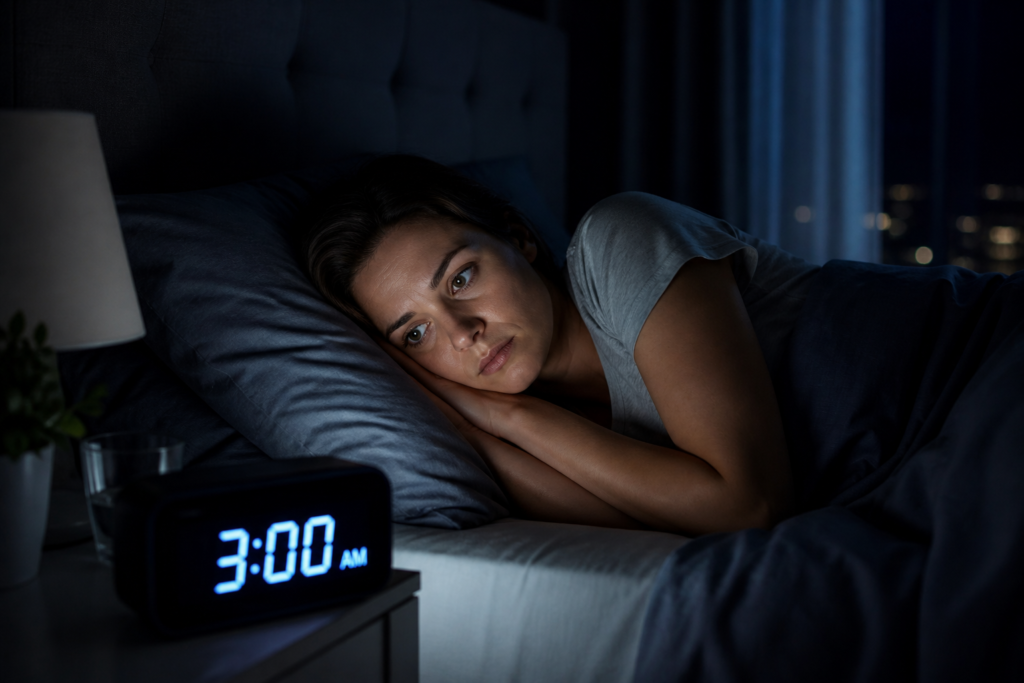
Stress and sleep have a two-way relationship. Stress can increase mental and physical arousal, making it harder to fall asleep or stay asleep, while poor sleep can make stress feel harder to manage the next day.
At night, unresolved thoughts, physical tension, and heightened alertness can delay the normal transition from wakefulness to sleep.
How Stress Affects Sleep
Understanding how stress affects sleep begins with understanding the body’s natural stress response system.
When stress occurs:
- cortisol (stress hormone) increases
- heart rate rises
- brain activity increases
This is helpful during the day—but harmful at night.
Instead of relaxing, your body stays in “alert mode.”
This heightened arousal can make it harder to settle into restful sleep.
7 Ways Stress Affects Sleep Quality
1. Keeps Your Mind Overactive
Many people assume that stress only affects them during the day, but its effects often become stronger at night.
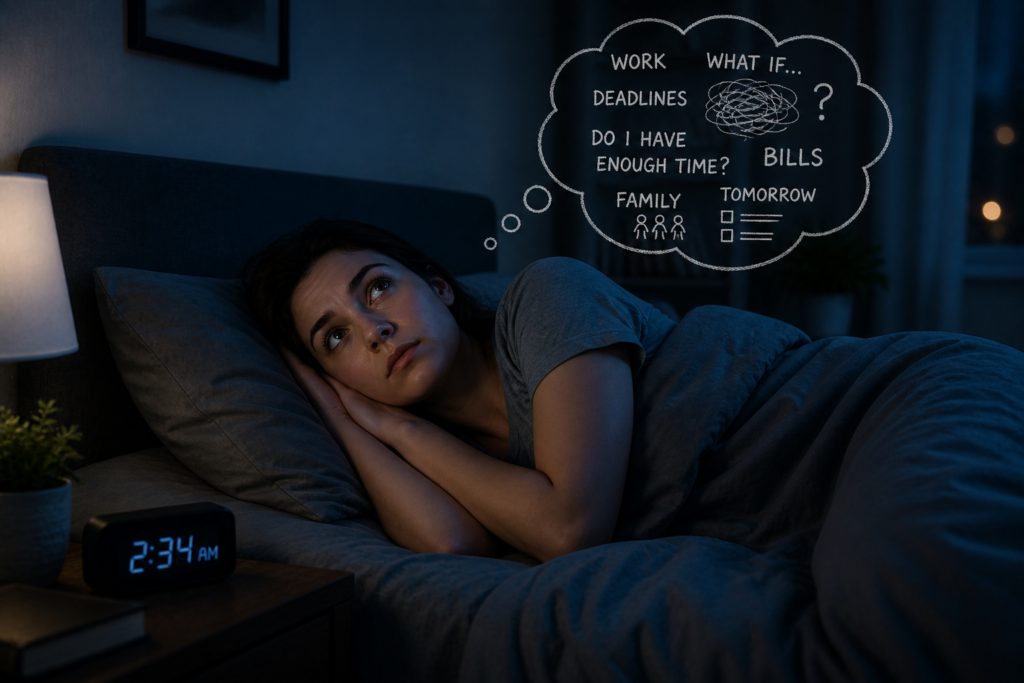
When you lie down, your brain has fewer distractions, which allows unresolved thoughts to surface more clearly.
This can lead to racing thoughts, replaying conversations, or worrying about future tasks.
The problem is not just thinking—it’s the inability to “turn off” those thoughts.
This keeps your brain active when it should be slowing down.
A helpful approach is to create a mental offload before bed, such as writing down tasks or concerns. This gives your brain permission to rest instead of continuing to process information during sleep.
Fix:
Write down thoughts before bed to clear your mind.
2. Increases Nighttime Arousal
Stress doesn’t just affect your thoughts—it directly changes your body chemistry.
Stress activates systems involved in alertness and threat response, which can make it harder to relax at night.
Cortisol is part of the stress-response system, but nighttime wakefulness does not by itself show that cortisol is abnormally high. For the hormone-specific evidence, see our guide to cortisol and sleep, including the normal daily cortisol rhythm and why a 3 a.m. awakening is not a cortisol test.
This can make your body feel awake even when you’re physically tired.
Many people notice they feel “wired but exhausted,” which is a common sign of this imbalance.
A helpful approach is to reduce stimulation in the evening and introduce calming habits like dim lighting or relaxation techniques to help your body shift into a lower-stress state.
Fix:
Reduce stimulation before bed.
3. Delays Falling Asleep
One of the most common effects of stress and sleep disruption is delayed sleep onset.
Even if you go to bed at the right time, stress can make it difficult for your body to relax enough to fall asleep.
This often happens because your brain remains in a problem-solving mode instead of transitioning into rest.
You may find yourself lying in bed for long periods, unable to “switch off.”
Over time, this can create frustration, which adds even more stress to the situation.
A simple improvement is to build a consistent wind-down routine before bed. Activities like reading, stretching, or breathing exercises can help signal to your brain that it’s time to relax. These sleep hygiene tips can help you structure that routine.
Fix:
Create a wind-down routine.
4. Causes Night Wake-Ups
Stress and insomnia often involve both difficulty falling asleep and difficulty staying asleep.
Many people fall asleep without trouble but wake up during the night, often around the same time. If this happens regularly, review the common reasons people wake up at 3 AM.
This happens because stress keeps your nervous system more sensitive, making it easier to wake up during lighter sleep stages.
When you wake up, your mind may quickly become active again, making it difficult to fall back asleep.
This can lead to broken sleep and feeling unrefreshed in the morning.
A helpful approach is to improve your overall relaxation before bed and avoid stimulating activities late at night to reduce these interruptions.
Fix:
Avoid stimulating activities before bed.
5. Reduces Deep Sleep
One of the most important effects of stress on sleep is reduced deep sleep and overnight recovery.
Even if you sleep for several hours, the quality of that sleep may be lower.
This is why many people feel tired despite getting enough sleep. Our guide to feeling tired after eight hours of sleep explains other factors that may reduce overnight recovery.
Stress and heightened arousal may reduce sleep quality and can alter sleep architecture in some people, which may leave sleep feeling less restorative.
Over time, this can affect your energy, mood, and overall health.
A simple improvement is to focus on calming your body before bed so it can transition more easily into deeper sleep stages
Fix:
Focus on relaxation before bedtime.
6. Increases Physical Tension
Stress often shows up physically in the body.
You may not notice it right away, but tension can build in areas like your shoulders, neck, or jaw.
This tension makes it harder for your body to fully relax, even when you’re lying in bed.
Instead of entering a comfortable resting state, your body remains slightly tense.
This can lead to discomfort, restlessness, or difficulty staying asleep.
A helpful approach is to include light stretching, deep breathing, or relaxation exercises before bed to release built-up tension and prepare your body for sleep.
Fix:
Try stretching or breathing exercises.
7. Creates a Sleep Anxiety Loop
One of the most overlooked aspects of stress and sleep problems is the cycle they create together.
After a few nights of poor sleep, many people begin to worry about sleep itself.
You might start thinking, “What if I can’t sleep again tonight?”
This thought alone can increase stress and make sleep even harder.
Over time, your brain begins to associate bedtime with pressure instead of relaxation.
This creates a loop where stress causes poor sleep, and poor sleep increases stress.
A helpful approach is to shift your focus away from “trying to sleep” and instead focus on relaxing your body and mind. This reduces pressure and allows sleep to happen more naturally.
Fix:
Shift focus away from “trying to sleep.”
Signs That Stress Is Affecting Your Sleep
- waking up tired
- frequent wake-ups
- racing thoughts
- feeling alert at night
- relying on caffeine
Stress and Sleep: Why the Cycle Gets Worse Over Time
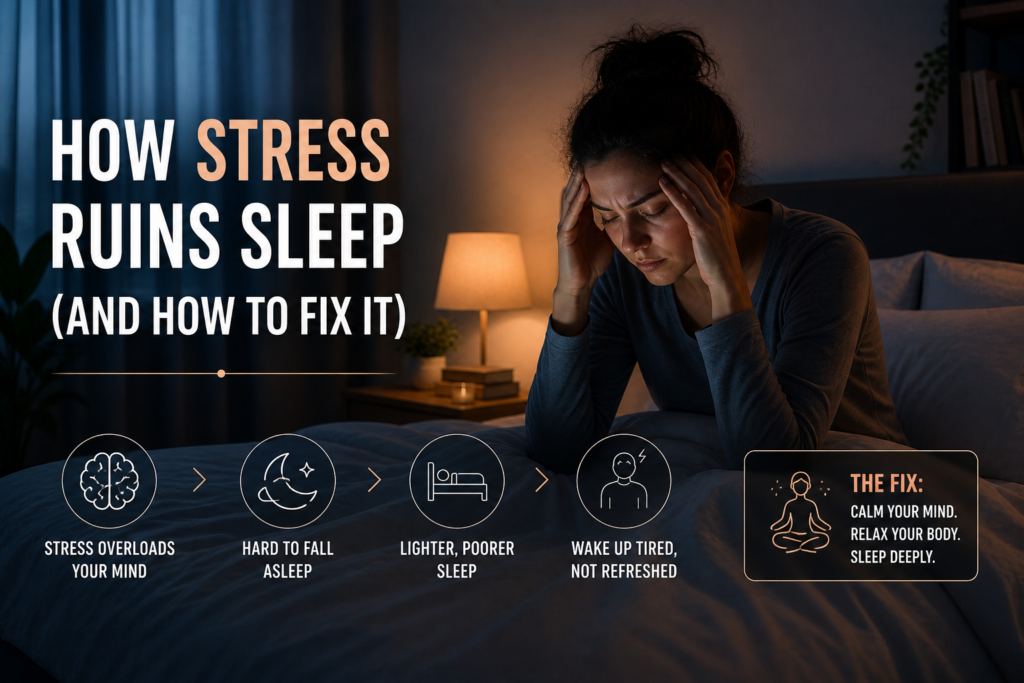
Stress and sleep are closely connected in a cycle.
Many people experience stress insomnia because poor sleep increases stress levels, while higher stress levels make quality sleep more difficult.
It usually looks like this:
- stress increases
- sleep becomes lighter
- you wake up tired
- you rely on caffeine or push through fatigue
- stress increases again
Over time, this cycle becomes stronger.
Your body begins to associate nighttime with alertness instead of rest.
This is why sleep problems often feel harder to fix the longer they continue.
Breaking this cycle requires consistent changes, not quick fixes.
What To Do When Stress and Insomnia Keep You Awake
If stress is preventing you from sleeping, your immediate response matters.
Many people:
- check their phone
- start worrying about sleep
- become frustrated
This increases alertness.
Instead:
- keep lights dim
- avoid screens
- focus on breathing
- stay calm
- get out of bed briefly if needed
The goal is to avoid activating your brain further.
A calm, low-stimulation response may make it easier to return to sleep.
Evidence-Based Ways to Reduce Stress Before Bed
Helpful ways to reduce stress before bed include slow breathing, progressive muscle relaxation, journaling, mindfulness, and a consistent wind-down routine. The goal is to lower mental and physical arousal before sleep rather than trying to force sleep itself.
- write down worries or tomorrow’s tasks before bed
- use slow breathing or progressive muscle relaxation
- practice a short mindfulness or body-scan meditation
- reduce work, news, and emotionally stimulating content before bedtime
- keep sleep and wake times reasonably consistent
Can Meditation Apps and Sleep Trackers Help With Stress and Sleep?
Meditation apps and sleep trackers can support stress and sleep habits, but they are tools rather than treatments. Guided apps may provide breathing exercises, mindfulness, body scans, or sleep meditations. Wearables can help you compare patterns in sleep timing, awakenings, resting heart rate, or stress-related metrics across several nights.
Use tracker data to look for trends rather than treating a single score as a diagnosis. Consumer devices cannot confirm anxiety disorders, insomnia, abnormal cortisol levels, or the medical cause of poor sleep.
When Stress-Related Sleep Problems Need Professional Help
Seek professional help when stress-related sleep problems persist, significantly affect daytime functioning, or occur with worsening anxiety, depression, panic symptoms, or severe daytime sleepiness. A healthcare professional can assess whether insomnia, another sleep disorder, a mental-health condition, medications, or another medical issue may be contributing.
For chronic insomnia, cognitive behavioral therapy for insomnia (CBT-I) is a structured treatment that addresses sleep-related thoughts and behaviors. CBT-I may be delivered in person, through telehealth, or through structured online programs, depending on availability and individual needs.
How to Improve Stress and Sleep Without Overwhelm
Trying to eliminate stress completely is unrealistic, but improving stress management can have a significant impact on sleep quality.
Instead, focus on reducing how your body responds to stress at night.
Start with:
- reducing evening stimulation
- creating a wind-down routine
- managing thoughts before bed
- improving sleep consistency
Pick one or two habits first.
Once they feel natural, add more.
This gradual approach is more sustainable and leads to better long-term results.
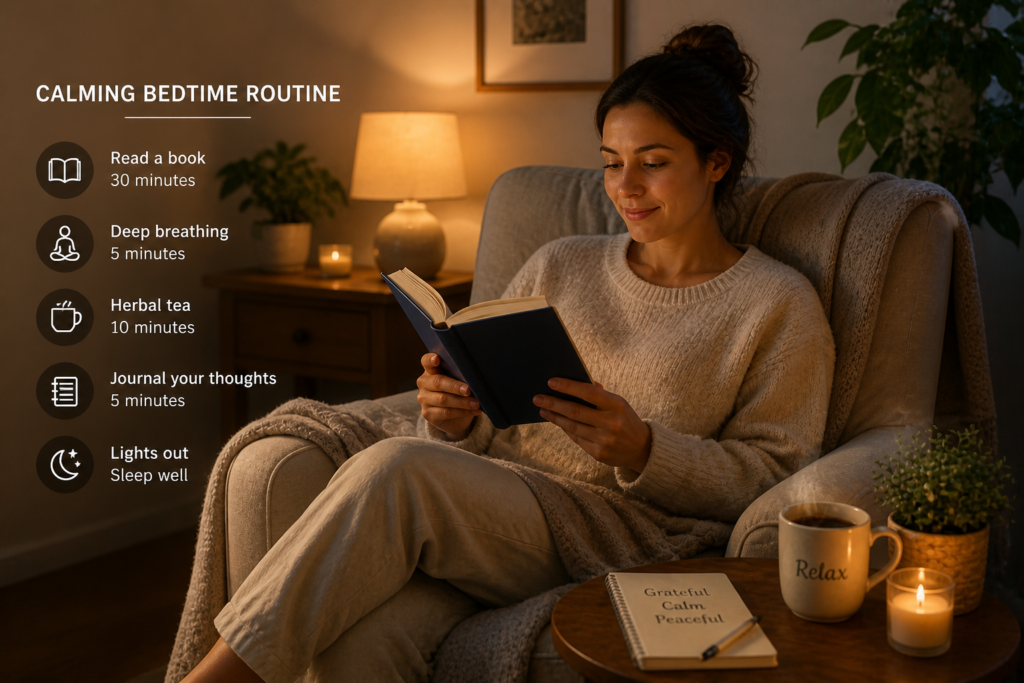
7-Day Stress and Sleep Reset Plan
Day 1: set a consistent wake time
Day 2: move caffeine earlier
Day 3: reduce evening screens and bright light
Day 4: add a 10-minute relaxation practice
Day 5: write down worries or tomorrow’s tasks before bed
Day 6: make the bedroom quieter, darker, and more comfortable
Day 7: combine the habits that helped most and keep them realistic
How Long Can Stress-Related Sleep Improvement Take?
There is no fixed timeline for improving stress-related sleep problems. Some people notice changes after reducing evening stimulation or building a calmer routine, while persistent insomnia, anxiety, or another underlying condition may take longer and may require professional treatment.
What Progress May Look Like Over Time
Progress is better judged by trends than by a fixed 30-day promise. Helpful changes may include easier sleep onset, fewer or shorter awakenings, less bedtime tension, or better daytime energy and mood, depending on the cause and how consistently the contributing factors are addressed.
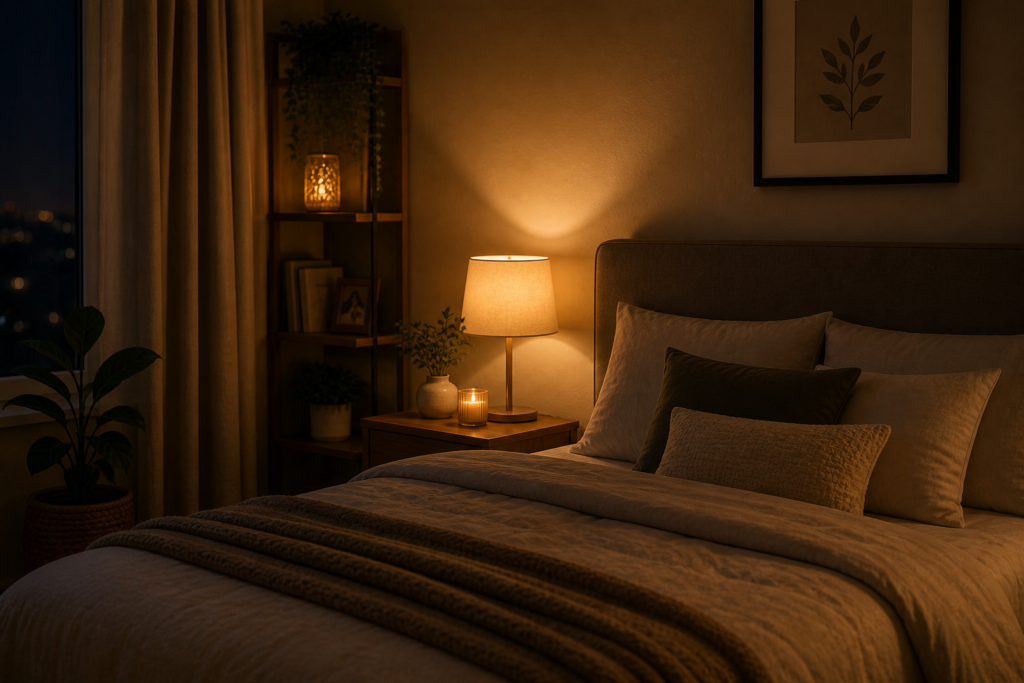
Best Products to Consider
Smart Sleep & Relaxation Devices
Smart sleep devices are designed to support healthier bedtime habits using calming sounds, gentle alarms, meditation audio, and reduced nighttime screen exposure.
⭐ Editor’s Pick
Amazon Echo Spot (2024 Release)
Best For: Relaxing Bedtime Routines & Smart Sleep Support
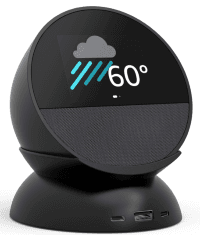
The Amazon Echo Spot (2024 release) is a compact smart alarm clock with Alexa, customizable clock faces, relaxing audio playback, and gradual wake-up routines designed for bedside use. It was redesigned specifically as a nightstand-friendly smart clock without a camera
✔ Gentle music and alarm wake-ups
✔ Compact bedside-friendly design
✔ Voice-controlled sleep sounds and reminders
✔ Helps support calmer nighttime routines
👉 Upgrade your nighttime routine with smart sleep support.
Sleep Comfort & Anxiety Support
Weighted blankets are commonly used to create a calming sleep environment through gentle pressure that may help reduce stress and nighttime restlessness.
⭐ Editor’s Pick
Baloo Living Weighted Blanket
Best For: Hot Sleepers, Stress Relief & Relaxation

Made with 100% breathable cotton and lead-free glass microbeads, the Baloo weighted blanket delivers calming deep-pressure comfort without trapping excess heat. Its minimalist luxury design and evenly distributed weight make it ideal for people struggling with stress, anxiety, or restless sleep
✔ Promotes relaxation and calmer sleep
✔ Cooling cotton construction helps reduce overheating
✔ Even weight distribution for comfortable pressure
✔ OEKO-TEX certified materials
👉 Upgrade your nighttime comfort naturally.
Sleep Sound Machines & Bedroom Wellness
Sound machines help create consistent background audio that may reduce nighttime disruptions from traffic, neighbors, snoring, or sudden environmental noises. If noise is part of your stress-sleep pattern, compare the best sounds for sleep before deciding whether white, pink, brown, or nature sounds fit the problem.
⭐ Editor’s Pick
Homedics SoundSleep White Noise Machine
Best For: Reducing Nighttime Noise Stress

Homedics SoundSleep White Noise Machine features multiple relaxing sound options including rain, ocean, white noise, and nature sounds for a calmer sleep environment.
✔ Multiple relaxing sound options
✔ Helps mask intermittent nighttime noise
✔ Compact bedside-friendly design
✔ Supports a more consistent sleep environment
👉 Looking for a calmer, more consistent sleep environment?
FAQ
How does stress affect sleep?
Stress can make it harder to fall asleep, stay asleep, and feel restored the next day. Mental worry, muscle tension, and heightened physiological arousal can keep the body alert at night. Poor sleep can then make stress feel harder to manage, creating a cycle between stress and sleep disruption.
Can stress cause insomnia?
Yes. Stress can contribute to insomnia by increasing worry and nighttime arousal, which may interfere with falling asleep or staying asleep. When sleep difficulty becomes persistent, stress about sleep itself can reinforce the problem. Chronic insomnia deserves evaluation rather than being assumed to be caused by stress alone.
Why does my mind race when I try to sleep?
A racing mind at bedtime often reflects worry, unfinished tasks, or heightened arousal becoming more noticeable when daytime distractions stop. Writing down concerns, reducing stimulating content, and using a calming wind-down routine may help. Persistent racing thoughts with anxiety or mood symptoms may warrant professional support.
How can I calm my mind before bed?
Calm your mind before bed by reducing stimulation and giving yourself a consistent transition from activity to rest. Try dimmer lighting, journaling, slow breathing, gentle stretching, or a short mindfulness practice. Avoid turning bedtime into a performance test; focus on relaxation rather than forcing sleep.
What are the best stress-reduction techniques for better sleep?
Useful stress-reduction techniques for sleep include slow breathing, progressive muscle relaxation, mindfulness, journaling, and a regular wind-down routine. These approaches aim to reduce mental and physical arousal before bedtime. Consistent daytime stress management and regular sleep timing can also make nighttime relaxation easier.
Can meditation apps help with stress and sleep?
Yes, meditation apps can provide structured tools for relaxation, including guided breathing, mindfulness, body scans, and sleep meditations. They may be useful for building a consistent wind-down habit, but they are not a substitute for treatment when insomnia, anxiety, depression, or other sleep problems are persistent or severe.
Can a sleep tracker show how stress affects my sleep?
A sleep tracker can help reveal patterns, but it cannot prove that stress caused a particular night of poor sleep. Wearables may estimate sleep timing, awakenings, heart rate, and stress-related metrics. Compare trends across several nights and use persistent symptoms—not a single device score—to guide medical evaluation.
When should I seek professional help for stress-related sleep problems?
Seek professional help when sleep problems persist, impair daytime functioning, or occur with worsening anxiety, depression, panic symptoms, or severe daytime sleepiness. A clinician can assess contributing conditions and may recommend cognitive behavioral therapy for insomnia (CBT-I), mental-health treatment, or further sleep evaluation when appropriate.
Want better sleep and less stress?
Join Purely Vital Living for expert-backed wellness tips.
Final Summary
Understanding the relationship between stress and sleep is the first step toward improving both sleep quality and overall wellness. When your mind stays active and your body remains in a heightened state of alertness, it becomes difficult to fall asleep, stay asleep, and reach the deep, restorative stages your body needs.
Improving stress-related sleep often starts with simple, consistent changes such as reducing evening stimulation, managing stress before bed, and creating a calming nighttime routine.
Over time, these habits can support a calmer bedtime transition and more consistent sleep, although results depend on the underlying causes of the sleep problem.
Better sleep isn’t about perfection—it’s about consistency.
References
- Centers for Disease Control and Prevention (CDC). Managing Stress.
- National Heart, Lung, and Blood Institute (NHLBI). Insomnia: What Is Insomnia?
- National Heart, Lung, and Blood Institute (NHLBI). Insomnia Treatment and CBT-I.
Related Reads
- 7 Stress Management Techniques You Can Practice Daily — practical daytime strategies for reducing stress.
- How to Improve Sleep Quality Naturally: Complete Sleep Guide — the broader guide to sleep quality and recovery.
- Why Do I Wake Up at 3AM Every Night? — common reasons for recurring nighttime awakenings.
- Sleep Hygiene Tips: 7 Bedtime Habits for Better Sleep — build a more consistent evening routine and sleep environment.
- How to Fall Asleep Faster Tonight Naturally — practical techniques for nights when stress keeps you awake.