
Quick Answer
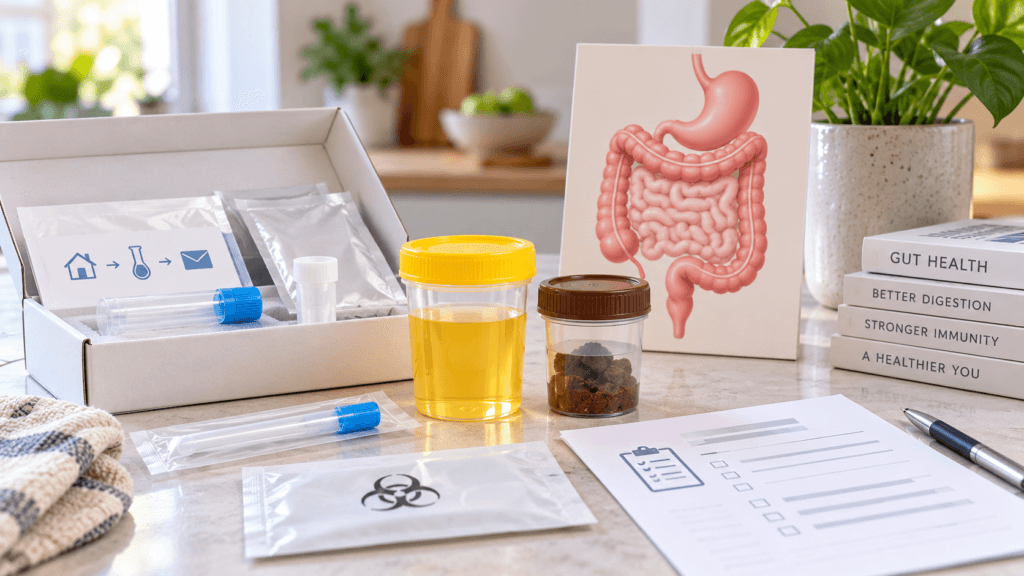
There is no single at-home test that can definitively diagnose “leaky gut syndrome.” Some laboratory tests can investigate intestinal permeability or related gut-health markers, and certain urine or stool samples can be collected at home. However, results such as zonulin levels or microbiome findings should not be treated as proof of leaky gut on their own.
If you’re wondering how to test for leaky gut at home, the key is understanding the difference between measuring intestinal permeability, measuring related biomarkers, and actually making a diagnosis. Increased intestinal permeability is a real biological phenomenon, but testing it—and interpreting what the results mean—is more complicated than many commercial test kits suggest.
Some tests can measure markers associated with intestinal permeability or gut health. Others provide useful information about inflammation or the gut microbiome but don’t directly tell you whether your intestinal barrier is “leaky.” Below, we’ll separate what these tests actually measure from the claims that can go too far.
Key Takeaways
- No single home test definitively diagnoses leaky gut syndrome.
- Urine permeability tests such as lactulose-mannitol investigate how molecules cross the intestinal barrier.
- Stool tests may measure zonulin, inflammation or the gut microbiome, but these are not interchangeable with direct permeability testing.
- Zonulin alone is not proof of leaky gut and should be interpreted cautiously.
- Symptoms such as bloating, fatigue or bowel changes are nonspecific and can have many other causes.
- Before buying an at-home kit, check exactly what it measures, the laboratory used, and whether qualified interpretation is included.
- Quick Answer
- Key Takeaways
- At-Home Leaky Gut Tests Compared
- Can Symptoms Tell You If You Have Leaky Gut?
- What You Can Track at Home
- At-Home Leaky Gut Testing: What Works vs. What’s a Myth
- How Much Does an At-Home Leaky Gut Test Cost?
- Before You Buy an At-Home Leaky Gut Test
- When to Talk to a Doctor
- What If You Suspect Increased Intestinal Permeability?
- Frequently Asked Questions
- Related Reading
- References
At-Home Leaky Gut Tests Compared
| Test or Method | What It Measures | At-Home Collection? | Diagnoses “Leaky Gut”? | Main Limitation |
|---|---|---|---|---|
| Lactulose-mannitol urine test | Passage of different-sized sugar molecules through the intestinal barrier | Often | No | Results require careful interpretation |
| Zonulin stool test | A marker associated with regulation of intestinal tight junctions | Yes | No | Zonulin alone is not a validated diagnosis |
| Blood-based markers | Various antibodies or biomarkers | Usually requires laboratory collection | No | Markers may not be specific to intestinal permeability |
| Microbiome stool test | Gut microorganisms and sometimes digestive or inflammatory markers | Yes | No | Microbiome composition is not the same as permeability |
| Symptom tracking | Patterns in symptoms, foods and lifestyle | Yes | No | Symptoms can have many different causes |
How Does the Lactulose-Mannitol Test Measure Intestinal Permeability?
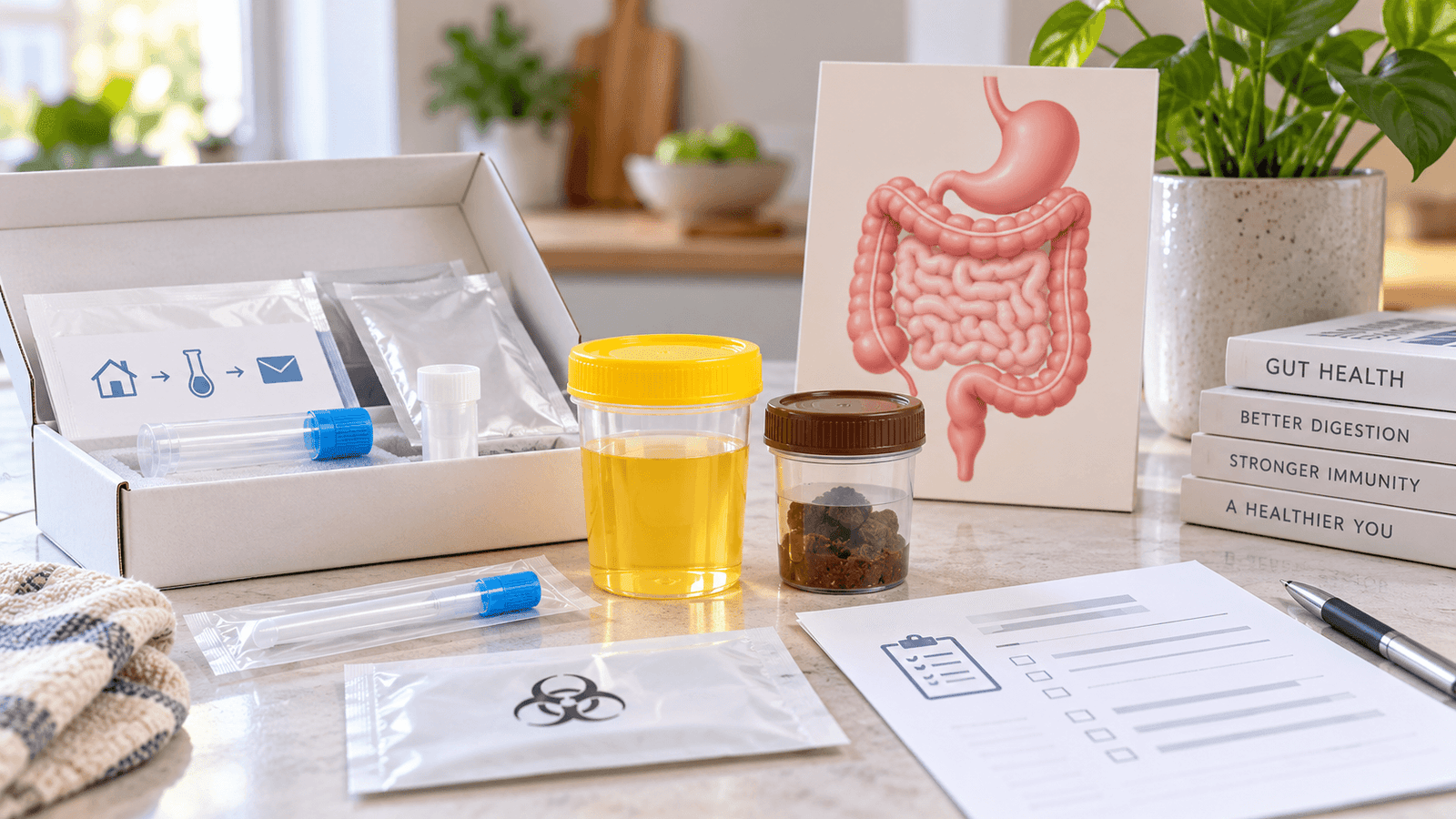
The lactulose-mannitol test is one of the most commonly used in-vivo approaches for investigating small-intestinal permeability.[1] You drink a solution containing two differently sized sugars and then collect urine over a specified period. A laboratory measures how much of each sugar appears in the urine.
The principle is that differently sized molecules cross the intestinal barrier differently. The resulting lactulose-to-mannitol ratio can provide information about intestinal permeability; a 0–2 hour urine collection is commonly used as a readout of small-intestinal permeability in research.[1] However, this is not the same as receiving a definitive diagnosis of “leaky gut syndrome,” and results should be interpreted in clinical context.

What Does a Zonulin Stool Test Actually Measure?
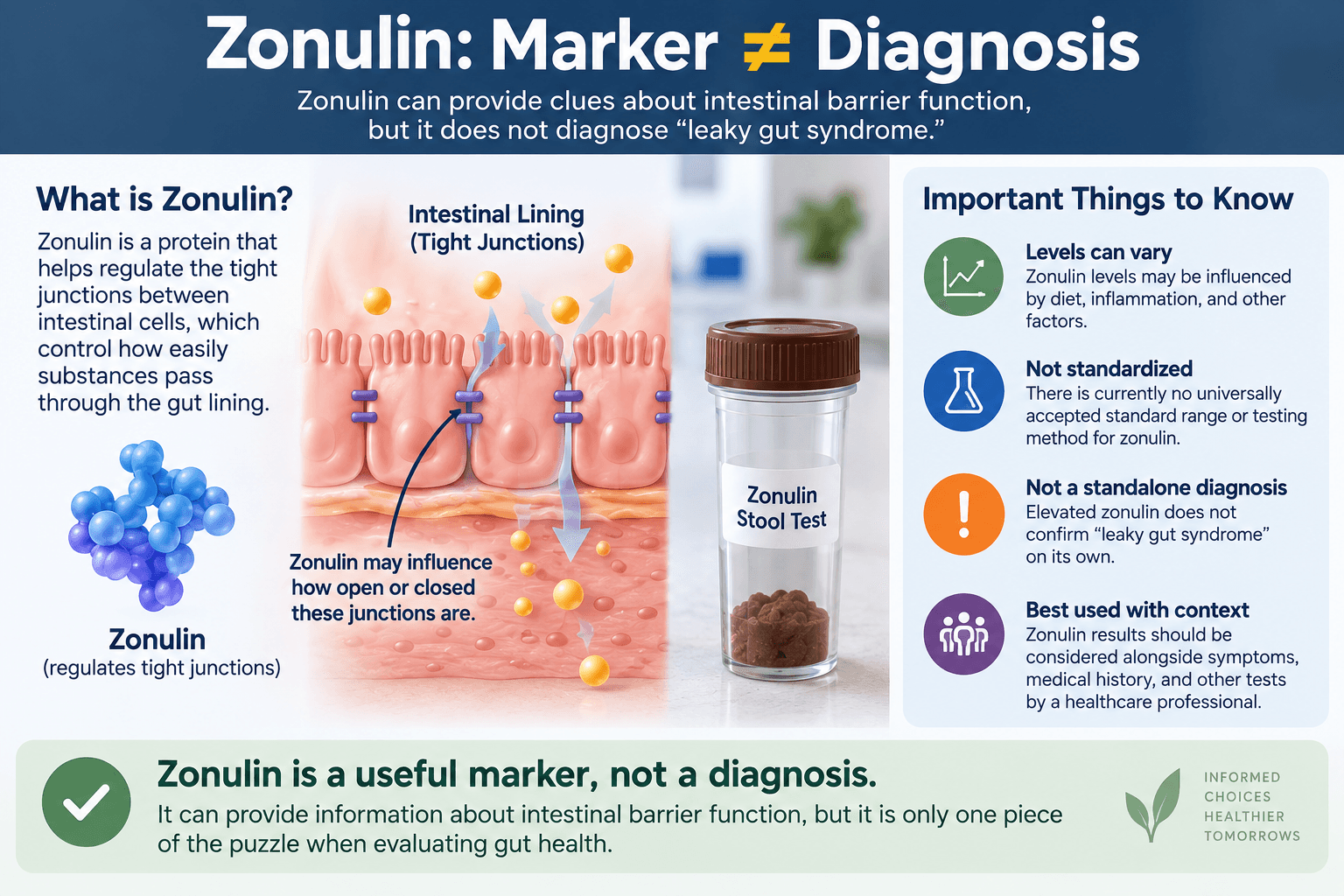
Zonulin is involved in regulating tight junctions between intestinal cells, which is why it has become a popular marker in commercial gut-health testing. Some mail-in stool kits measure fecal zonulin and present elevated levels as a possible sign of increased intestinal permeability.
The problem is interpretation. A zonulin result by itself does not establish that someone has leaky gut syndrome, and independent research has found that some commercial zonulin ELISA assays may detect proteins other than zonulin and correlate poorly with functional permeability testing.[2][3] Treat a result as one piece of information rather than a diagnosis.
Is a Zonulin Test Accurate for Leaky Gut?
This is where marketing claims can get ahead of the evidence. Zonulin has a biological relationship with intestinal barrier regulation, but that does not mean a single stool or blood measurement can reliably confirm or rule out increased intestinal permeability in an individual.
If a test company describes zonulin as a definitive “leaky gut test,” look closely at the evidence behind that claim and how the laboratory validates and interprets the marker.
Can a Blood Test Detect Increased Intestinal Permeability?
Blood testing may be used to measure various biomarkers or antibodies that have been associated with gut-barrier function. But these markers generally shouldn’t be interpreted as stand-alone proof of leaky gut. They can be influenced by other biological processes and health conditions.
Can a Gut Microbiome Test Detect Leaky Gut?
At-home microbiome tests have become widely available. Typically, you collect a small stool sample and mail it to a laboratory for analysis. Depending on the test, the report may describe bacterial populations and additional digestive or inflammatory markers.
These tests may provide information about your gut microbiome, but a microbiome test is not the same thing as an intestinal permeability test. Finding an unusual microbial pattern does not, by itself, demonstrate that the intestinal barrier is abnormally permeable.
RECOMMENDED FOR AT-HOME GUT HEALTH INSIGHTS

KiHealth Gut Health Basics Test
$149.68 supplied price
An at-home stool analysis designed to evaluate microbiome balance, digestion, inflammation and other gut-health markers. It can provide useful information about gut health, but it should not be treated as a diagnostic test for “leaky gut syndrome.”
As an Amazon Associate, Purely Vital Living may earn from qualifying purchases. Price shown was supplied at the time of writing and may change.
Myth: A Gut Microbiome Test Can Diagnose Leaky Gut
Microbiome composition, intestinal inflammation and intestinal permeability are related areas of gut health, but they aren’t interchangeable. Be cautious when a commercial report turns microbiome findings into a definitive leaky-gut diagnosis.
Can Symptoms Tell You If You Have Leaky Gut?
Not reliably. Bloating, abdominal discomfort, diarrhea, constipation and fatigue are sometimes associated with leaky gut online, but these symptoms are nonspecific. They can occur for many reasons, including established gastrointestinal conditions that may require proper medical evaluation.
What You Can Track at Home
Although symptom tracking can’t diagnose intestinal permeability, keeping a structured record may help you identify patterns worth discussing with a healthcare professional. Consider recording meals, digestive symptoms, bowel movements, sleep, stress and the timing of symptoms.
A diary is most useful as a pattern-finding tool—not as a substitute for diagnosis. Avoid unnecessarily eliminating multiple foods based on symptoms alone, particularly for long periods, without appropriate guidance.
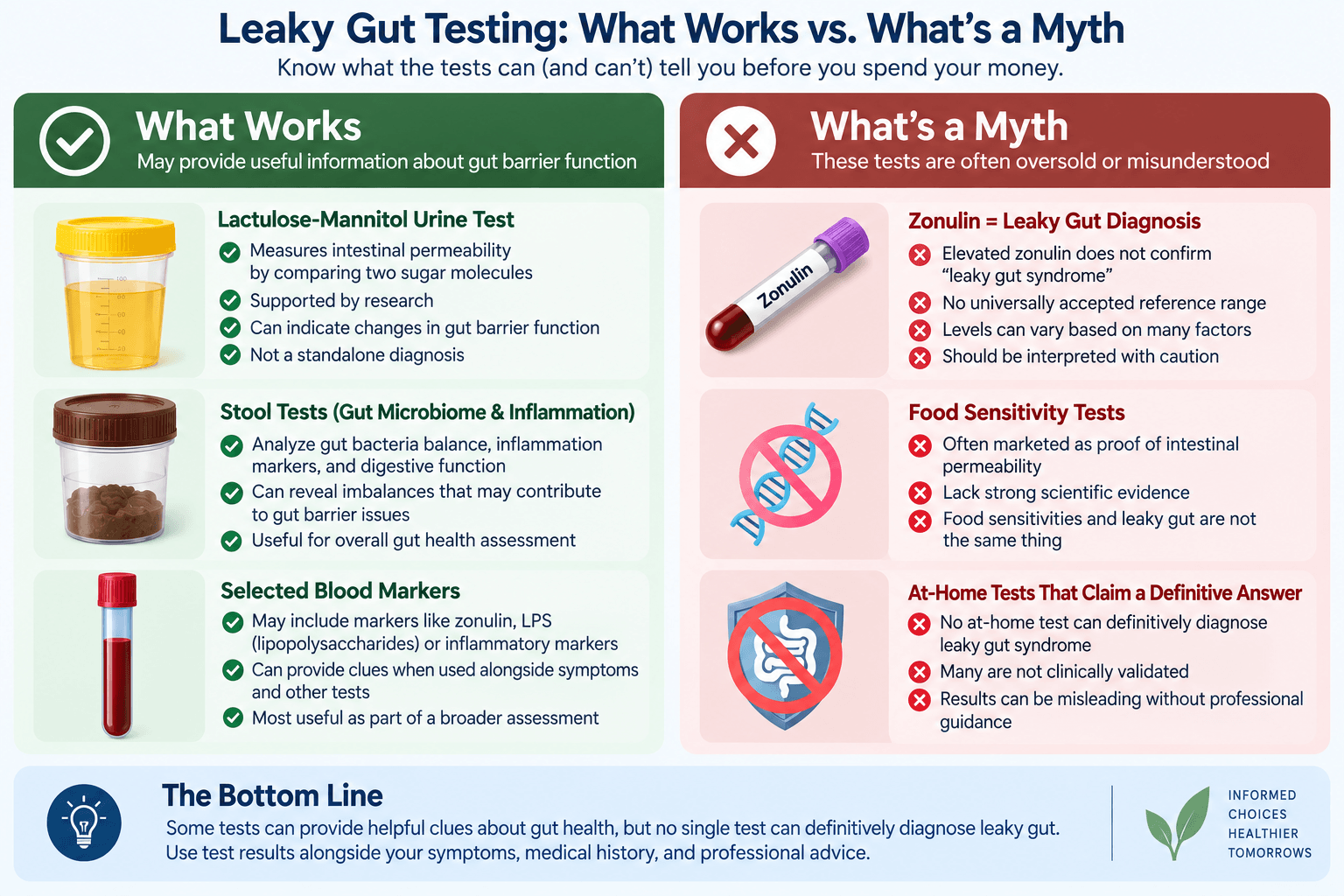
At-Home Leaky Gut Testing: What Works vs. What’s a Myth
| Claim | Verdict |
|---|---|
| A single home test can definitively diagnose leaky gut syndrome. | Myth. There is no universally accepted single diagnostic home test. |
| Intestinal permeability can be investigated. | Yes. Certain laboratory methods can assess aspects of permeability. |
| A high zonulin result proves you have leaky gut. | No. A single marker is not sufficient for diagnosis. |
| A microbiome test diagnoses intestinal permeability. | No. These tests assess different aspects of gut health. |
| Symptoms alone can diagnose leaky gut. | No. Common digestive symptoms are nonspecific. |
| Some gut-related laboratory samples can be collected at home. | Yes. Mail-in stool and certain urine-testing services are available. |
How Much Does an At-Home Leaky Gut Test Cost?
Prices vary considerably depending on whether a service measures a single biomarker, performs a permeability assessment, or bundles the test into a broader microbiome or digestive-health panel. Before paying for a kit, focus less on the number of markers in the report and more on whether those markers answer the question you actually want answered.
Before You Buy an At-Home Leaky Gut Test
- Ask what the test actually measures. Is it permeability, zonulin, inflammation, microbiome composition or something else?
- Check the laboratory. Look for transparent information about where and how samples are analyzed.
- Look at the evidence for the marker. A measurable biomarker isn’t automatically a validated diagnostic test.
- Check whether interpretation is included. More data isn’t always more useful without appropriate context.
- Be cautious with certainty. Claims that one result can definitively diagnose or explain a wide range of symptoms deserve scrutiny.
When to Talk to a Doctor
If you have persistent digestive symptoms, unexplained weight loss, blood in your stool, ongoing diarrhea, significant abdominal pain or other concerning symptoms, seek medical evaluation rather than relying on an at-home gut test. The priority is identifying or ruling out established conditions that could explain your symptoms.
OPTION FOR CONVENIENT PREBIOTIC FIBER SUPPORT

Metamucil Fiber Gummies
$24.95 supplied price
Metamucil Fiber Gummies provide 5 grams of prebiotic fiber per three-gummy serving using inulin and soluble corn fiber. They can help close a modest fiber gap, but they do not contain psyllium and should not be considered a treatment for increased intestinal permeability or “leaky gut.”
As an Amazon Associate, Purely Vital Living may earn from qualifying purchases. Price shown was supplied at the time of writing and may change.
What If You Suspect Increased Intestinal Permeability?
Testing is only one part of the picture. If you’re concerned about your gut barrier, focus on identifying the underlying reason for your symptoms rather than trying to “fix leaky gut” based on a single commercial marker. Diet quality, fiber intake, sleep, stress, medications and existing gastrointestinal conditions can all be relevant to gut health.
And be skeptical of promises that everyone can “heal leaky gut” on the same fixed timeline. What improves—and how quickly—depends on what is actually causing the problem.
OPTION FOR YEAST-BASED PROBIOTIC SUPPORT
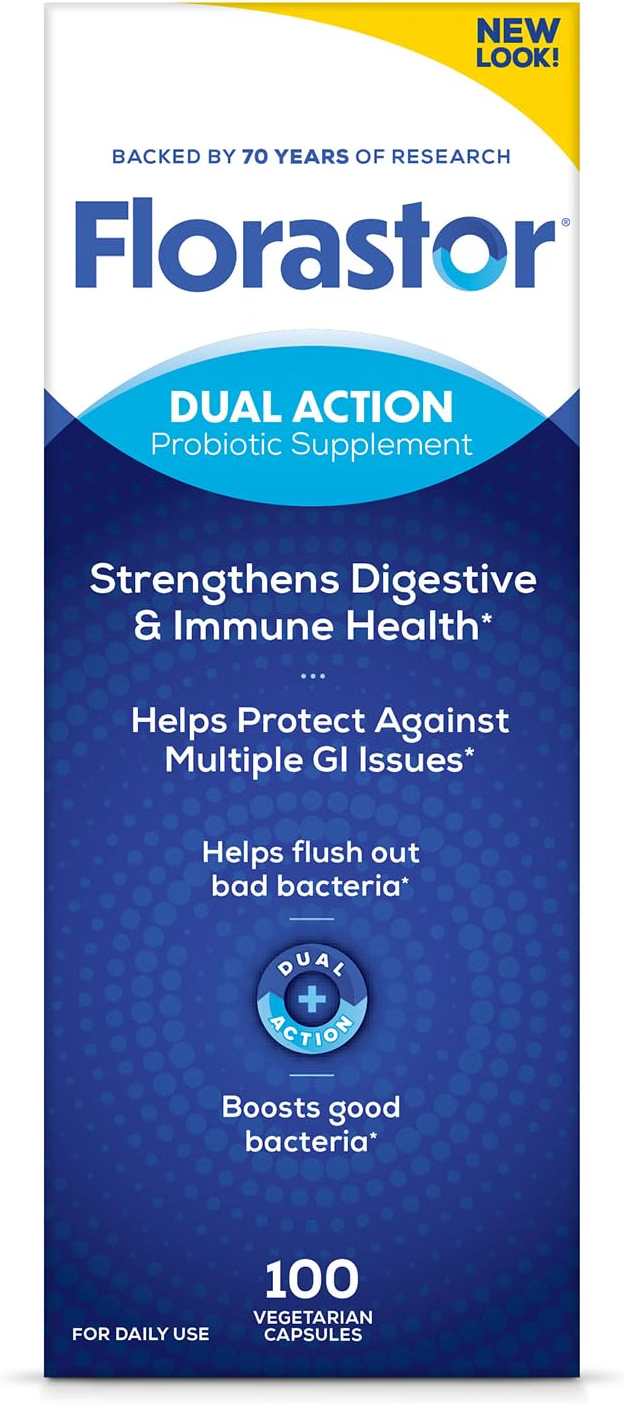
Florastor Probiotic — 100 Capsules
$67.99 supplied price
Florastor uses Saccharomyces boulardii CNCM I-745, a well-studied probiotic yeast rather than a bacterial probiotic strain. It may be useful for digestive and microbiome support, including during antibiotic use when appropriate, but it should not be considered a treatment for increased intestinal permeability or “leaky gut.”
As an Amazon Associate, Purely Vital Living may earn from qualifying purchases. Price shown was supplied at the time of writing and may change.
Want more practical, evidence-based gut health guidance?
Join the Purely Vital Living newsletter for research-informed gut health, digestion, supplement, sleep, and healthy-aging guidance delivered in a practical format.
Frequently Asked Questions
Can you test for leaky gut at home?
You can collect some gut-related test samples at home, but no home kit definitively diagnoses “leaky gut syndrome.” Sugar-based urine tests can assess intestinal permeability, while stool tests may measure zonulin, inflammation, or microbiome features. These methods answer different questions, so results should be interpreted in context rather than treated as a stand-alone diagnosis.
What is the most accurate test for intestinal permeability?
Lactulose-mannitol urine testing is one of the most widely used methods for assessing small-intestinal permeability in research. It compares urinary recovery of two differently sized sugars after ingestion. However, protocols and reference values vary, so even this method is not a simple universal diagnostic test for “leaky gut.”[1]
Can a stool test detect leaky gut?
No stool test can by itself confirm leaky gut syndrome. Commercial stool panels may measure fecal zonulin, inflammation, digestive markers, or microbiome composition, but these are not the same as directly measuring intestinal permeability. A stool result can provide related gut-health information, yet it should not be interpreted as proof that the intestinal barrier is abnormally permeable.
Is zonulin testing reliable for leaky gut?
Zonulin testing should be interpreted cautiously and is not a stand-alone diagnostic test for leaky gut. Independent studies have reported that some commercial zonulin ELISA assays may detect other proteins and may correlate poorly with lactulose-mannitol permeability measurements. That makes a single elevated zonulin result insufficient to confirm intestinal barrier dysfunction.[2][3]
Can a microbiome test detect leaky gut?
No. A microbiome test does not directly measure intestinal permeability. It analyzes microbial composition and may include inflammatory or digestive markers, while permeability tests such as lactulose-mannitol assess how molecules cross the intestinal barrier. The two can provide related information about gut health, but they should not be interpreted as interchangeable tests.
Related Reading
- Best Probiotics for Bloating and Gas
- Best Digestive Enzymes
- Florastor Review: Benefits, Side Effects & Is It Worth It?
- Align Probiotic Review
- Metamucil Fiber Gummies Review
References
- Sequeira IR, Lentle RG, Kruger MC, Hurst RD. The Role of Intestinal Permeability in Gastrointestinal Disorders and Current Methods of Evaluation. Int J Mol Sci. 2021.
- Massier L, et al. Blurring the picture in leaky gut research: how shortcomings of zonulin as a biomarker mislead the field of intestinal permeability. Gut. 2021.
- Ajamian M, et al. Serum zonulin as a marker of intestinal mucosal barrier function: may not be what it seems. PLOS ONE. 2019.
This article is for informational purposes and is not a substitute for medical diagnosis or treatment. If you have persistent or concerning gastrointestinal symptoms, consult a qualified healthcare professional.