
Quick Answer
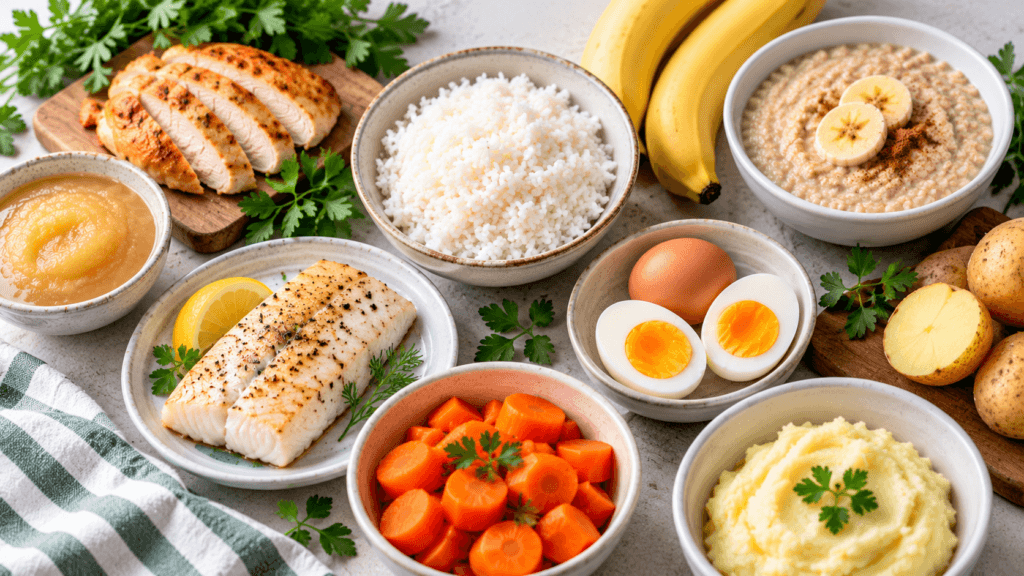
Easily digested foods are generally soft, simply prepared, relatively low in fat, and sometimes lower in fiber when your stomach or intestines are sensitive. Common choices include white rice, ripe bananas, applesauce, eggs, skinless chicken, white fish, potatoes, cooked carrots, oatmeal, and broth. The best choice depends on your symptoms and individual tolerance.
Key Takeaways
- Soft, well-cooked foods are often easier to tolerate when digestion feels sensitive.
- Lean proteins and lower-fat cooking methods may feel gentler than fried or greasy meals.
- Fiber is important for long-term gut health, but very high-fiber foods may not feel easy to digest during a digestive flare.
- Food tolerance varies, so use symptoms and personal response rather than treating any list as universal.
- Persistent or severe digestive symptoms deserve medical evaluation.
- Quick Answer
- Key Takeaways
- What Foods Are Easy to Digest?
- What Makes a Food Easy to Digest?
- 20 Easily Digested Foods
- What Foods Are Hard to Digest?
- Easy-to-Digest Foods vs. Gut-Healthy Foods: What’s the Difference?
- What Are the Best Foods for Gut Health?
- Easy-to-Digest Foods for Common Situations
- Simple Easy-to-Digest Meal Ideas
- When Digestive Symptoms Deserve Medical Attention
- Frequently Asked Questions
- What are the easiest foods to digest?
- What foods are easy to digest when your stomach is upset?
- Are eggs easy to digest?
- Is white rice easy to digest?
- Are bananas easy to digest?
- Is oatmeal easy to digest?
- What vegetables are easiest to digest?
- What foods are hardest to digest?
- Are easily digested foods also good for gut health?
- Are low-fiber foods easier to digest?
- Does cooking food make it easier to digest?
- Is a low-FODMAP diet the same as an easy-to-digest diet?
- How long should you eat only easy-to-digest foods?
- Want free practical tips for better sleep, energy, gut health, and healthy aging?
- Final Thoughts
- Related Reads
- References
When your stomach feels unsettled, a normal meal can suddenly feel too heavy. Bloating, nausea, digestive sensitivity, or feeling uncomfortably full after eating can make simpler foods more appealing.
The important point is that easy-to-digest foods are not automatically the same as the best foods for long-term gut health. A soft, lower-fiber meal may be easier to tolerate temporarily, while a healthy everyday eating pattern usually benefits from adequate fiber, diverse plant foods, and other nutrient-rich choices.
This guide explains which foods are commonly easier to digest, how preparation changes digestibility, which foods may be harder on a sensitive stomach, and how to transition from gentle foods toward a broader gut-supportive diet.
What Foods Are Easy to Digest?
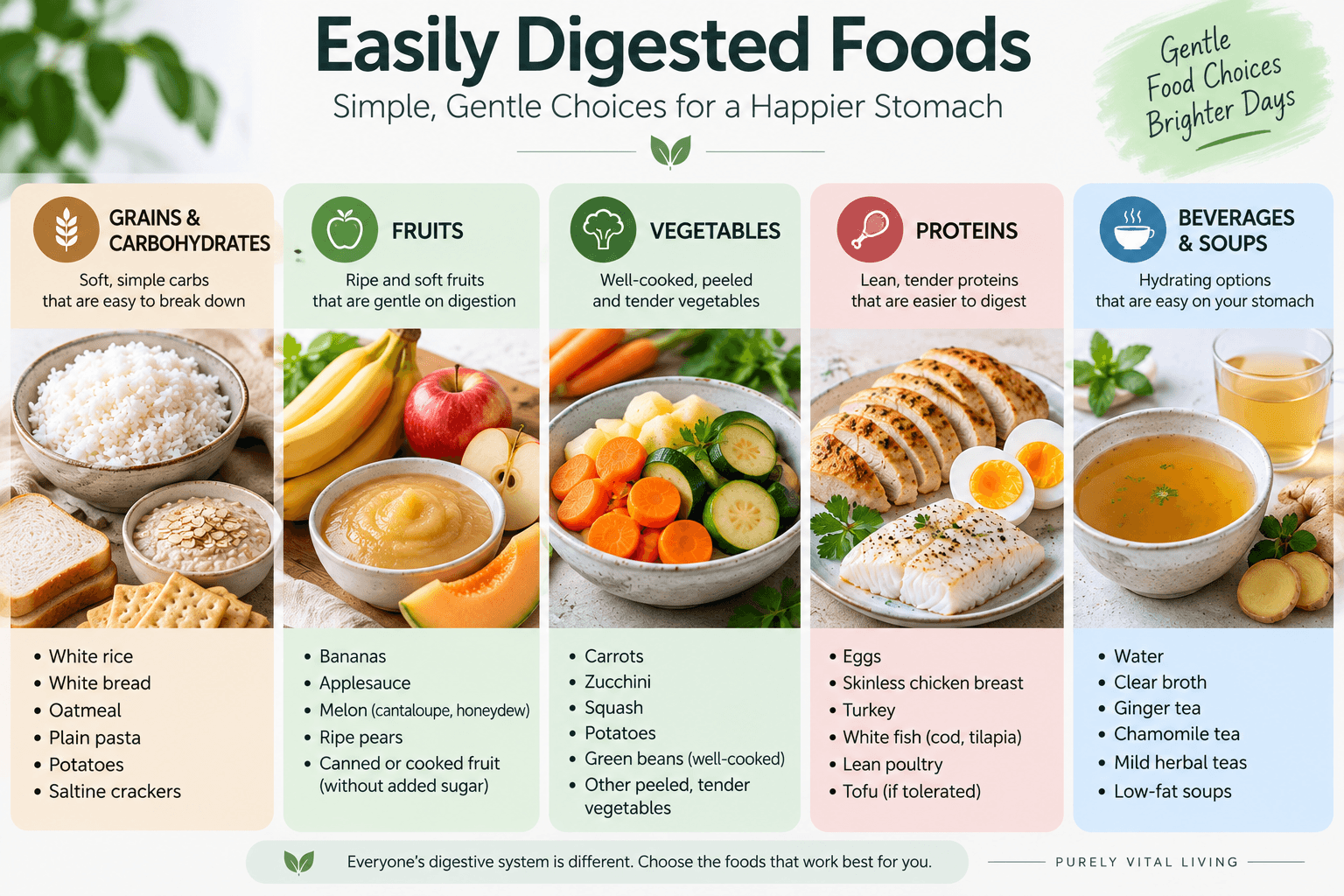
Foods that are easy to digest tend to be soft, cooked until tender, lower in fat, and less mechanically demanding for the digestive system. White rice, ripe bananas, applesauce, eggs, lean poultry, white fish, peeled potatoes, cooked vegetables, oatmeal, and broth are common examples.
| Food | Why It May Feel Easier to Digest | Simple Preparation |
|---|---|---|
| White rice | Soft and relatively low in fiber | Cook until tender and serve plain |
| Ripe banana | Soft texture | Choose fully ripe fruit |
| Applesauce | Soft, cooked fruit without the texture of raw peel | Choose unsweetened applesauce |
| Eggs | Soft source of protein | Boiled, poached, or lightly scrambled |
| Chicken | Lean protein when skin is removed | Bake, poach, or simmer |
| White fish | Lean and tender | Bake or poach |
| Potatoes | Become very soft when cooked | Peel and mash or boil |
| Carrots | Cooking softens their texture | Peel and steam until tender |
| Oatmeal | Soft when thoroughly cooked | Cook well with water or tolerated milk |
| Broth | Provides fluid with minimal solid food | Choose a simple, lower-fat broth |
What Makes a Food Easy to Digest?
Digestibility is not determined by one nutrient. Texture, cooking method, fat content, fiber, portion size, and your individual digestive health can all change how a meal feels.
Softer Textures
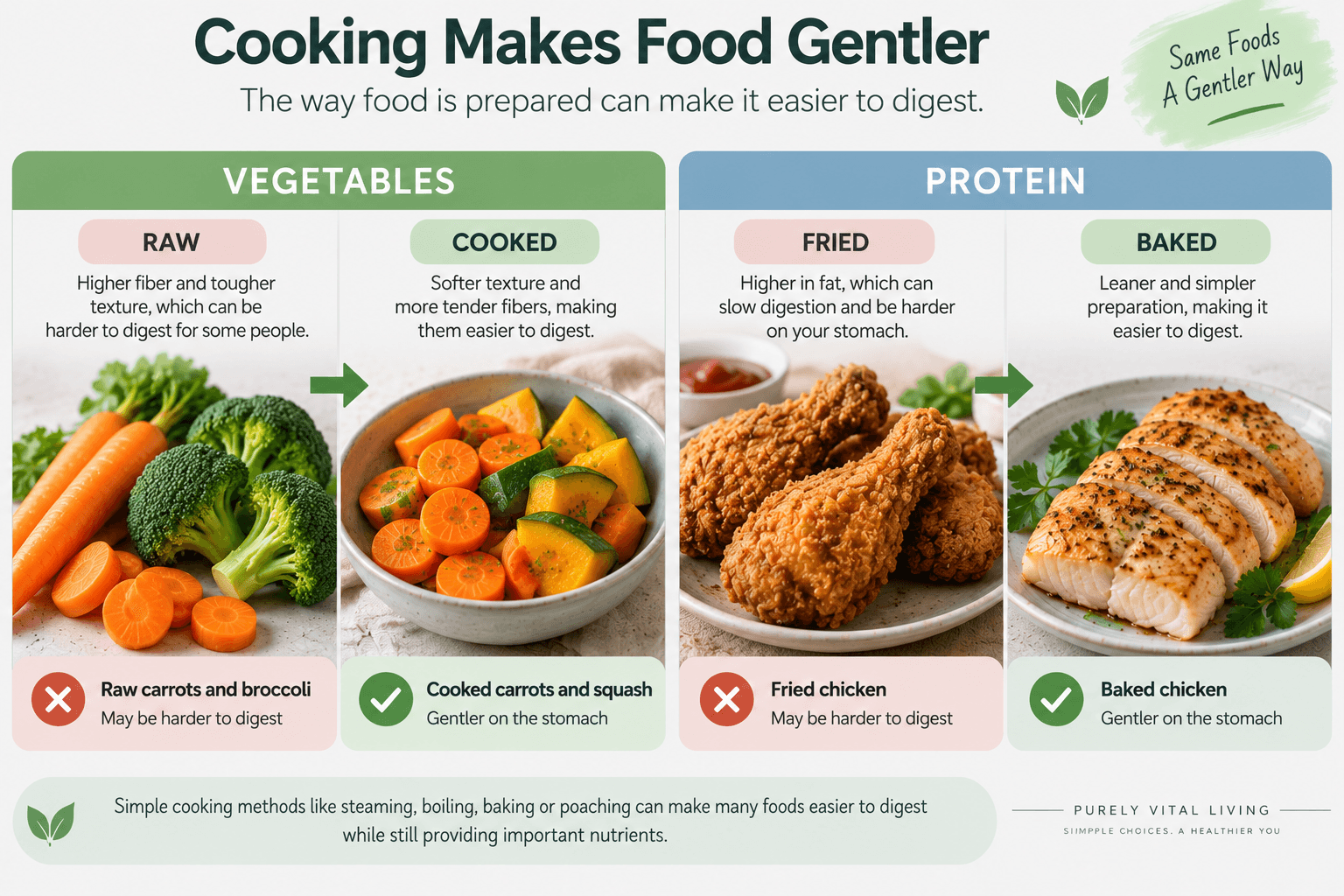
Soft foods require less chewing and have already undergone some physical breakdown. Mashing, blending, peeling, or cooking foods until tender can make them easier to manage when your digestive system feels sensitive.
Cooking and Preparation
Cooking softens plant cell walls and changes texture. A cooked carrot, for example, is usually softer and less bulky than a raw carrot. Boiling, steaming, poaching, and baking are generally gentler preparation methods than deep frying.
Lower Amounts of Fat
High-fat meals can slow stomach emptying and may feel heavy for some people. Choosing lean protein and avoiding large amounts of added fat can make a meal feel lighter.
Fiber Type and Amount
Fiber is essential to a healthy diet, but more is not always better in the middle of digestive discomfort. Raw vegetables, intact whole grains, beans, nuts, and seeds may be harder to tolerate for some people during a flare. This does not make them unhealthy; many are excellent foods for long-term gut health.
Portion Size
Even a gentle food can feel uncomfortable in a very large serving. Smaller meals eaten slowly may be easier to tolerate than one heavy meal, especially when you already feel bloated or overly full.
20 Easily Digested Foods
The following foods are practical starting points when you want meals with softer textures and relatively simple preparation. Individual tolerance still matters.
Easy-to-Digest Grains and Carbohydrates
1. White Rice
Well-cooked white rice is soft, bland, and lower in fiber than brown rice. Pair it with a lean protein and tender cooked vegetables for a simple meal.

A plain rice-based hot cereal that cooks to a soft, smooth texture, making it a convenient option when you want a simple carbohydrate meal.
As an Amazon Associate, Purely Vital Living may earn from qualifying purchases. Price shown was supplied at the time of writing and may change.
2. Oatmeal
Oatmeal becomes soft when cooked thoroughly and provides soluble fiber. Start with a modest portion if fiber tends to worsen your symptoms.

A convenient original instant oatmeal option that cooks to a soft texture and comes in individual 0.98-ounce packets. It works well when you want a quick, portioned oatmeal breakfast without choosing a heavily flavored variety.
As an Amazon Associate, Purely Vital Living may earn from qualifying purchases. Price shown was supplied at the time of writing and may change.
3. White Toast
Plain white toast is lower in fiber than whole-grain bread and may be easier to tolerate temporarily when your stomach feels unsettled.
4. Plain Pasta
Refined pasta cooked until tender provides a simple carbohydrate base. Keep sauces light if rich or spicy foods bother your digestion.
5. Potatoes
Peeled boiled or mashed potatoes have a soft texture. Avoid turning them into a high-fat meal with heavy frying or large amounts of butter when digestive comfort is the priority.
Easy-to-Digest Fruits
6. Ripe Bananas
Ripe bananas are soft and convenient. Ripeness can affect how a banana is tolerated, so choose the stage that works best for you.
7. Applesauce
Cooking and pureeing apples creates a softer texture than eating a raw apple with its peel. Unsweetened varieties keep the ingredient list simple.

Single-serve 4-ounce applesauce cups with no added sugar, offering a soft, convenient fruit option when you want something simple and easy to portion.
As an Amazon Associate, Purely Vital Living may earn from qualifying purchases. Price shown was supplied at the time of writing and may change.
8. Melon
Soft ripe melon can be an easy fruit option for some people. Keep portions moderate and pay attention to your own response.
9. Cooked or Canned Fruit
Soft cooked fruits or fruit canned in juice can require less chewing and have a gentler texture than firm raw fruit. Choose options without heavy syrup when possible.
Easy-to-Digest Vegetables
10. Cooked Carrots
Peeling and cooking carrots until tender makes them considerably softer than eating them raw.
11. Squash
Well-cooked squash has a soft texture and works well mashed, roasted until tender, or blended into soup.
12. Sweet Potatoes
Sweet potatoes become soft when baked or boiled. Removing the skin can reduce the amount of rough texture when you want a gentler meal.
13. Other Peeled, Well-Cooked Vegetables
Zucchini and other tender vegetables may be easier to tolerate when peeled if needed and cooked thoroughly. Your personal response is more important than following a rigid list.
Easy-to-Digest Protein Foods
14. Eggs
Eggs provide protein without fiber and can be prepared with a soft texture. Boiled, poached, or lightly scrambled eggs avoid the extra fat of deep-fried preparations.
15. Skinless Chicken
Chicken breast or other lean skinless cuts can provide protein without a large amount of fat. Baking, poaching, or simmering keeps preparation simple.
16. Turkey
Lean turkey is another simple protein choice. Avoid heavily processed, greasy, or spicy versions when your stomach is sensitive.
17. White Fish
White fish is tender and generally lower in fat than many rich meat dishes. Baking or poaching works well.
Other Gentle Foods and Drinks
18. Plain Yogurt
Plain yogurt has a soft texture and provides protein. However, dairy can trigger symptoms in people with lactose intolerance, so include it only if you tolerate it well.
19. Clear Broth and Simple Soups
Broth provides fluid and can be combined with soft rice, noodles, chicken, or well-cooked vegetables to create a gentle meal.

A portable instant beef bone broth with 10g of protein and 5g of collagen per serving. The individual packets mix with hot water for a convenient sipping broth when you want a simple alternative to preparing broth from scratch.
As an Amazon Associate, Purely Vital Living may earn from qualifying purchases. Price shown was supplied at the time of writing and may change.
20. Ginger Tea
A warm, non-caffeinated drink can be soothing for some people. Keep it mild if strong flavors worsen your symptoms.
What Foods Are Hard to Digest?
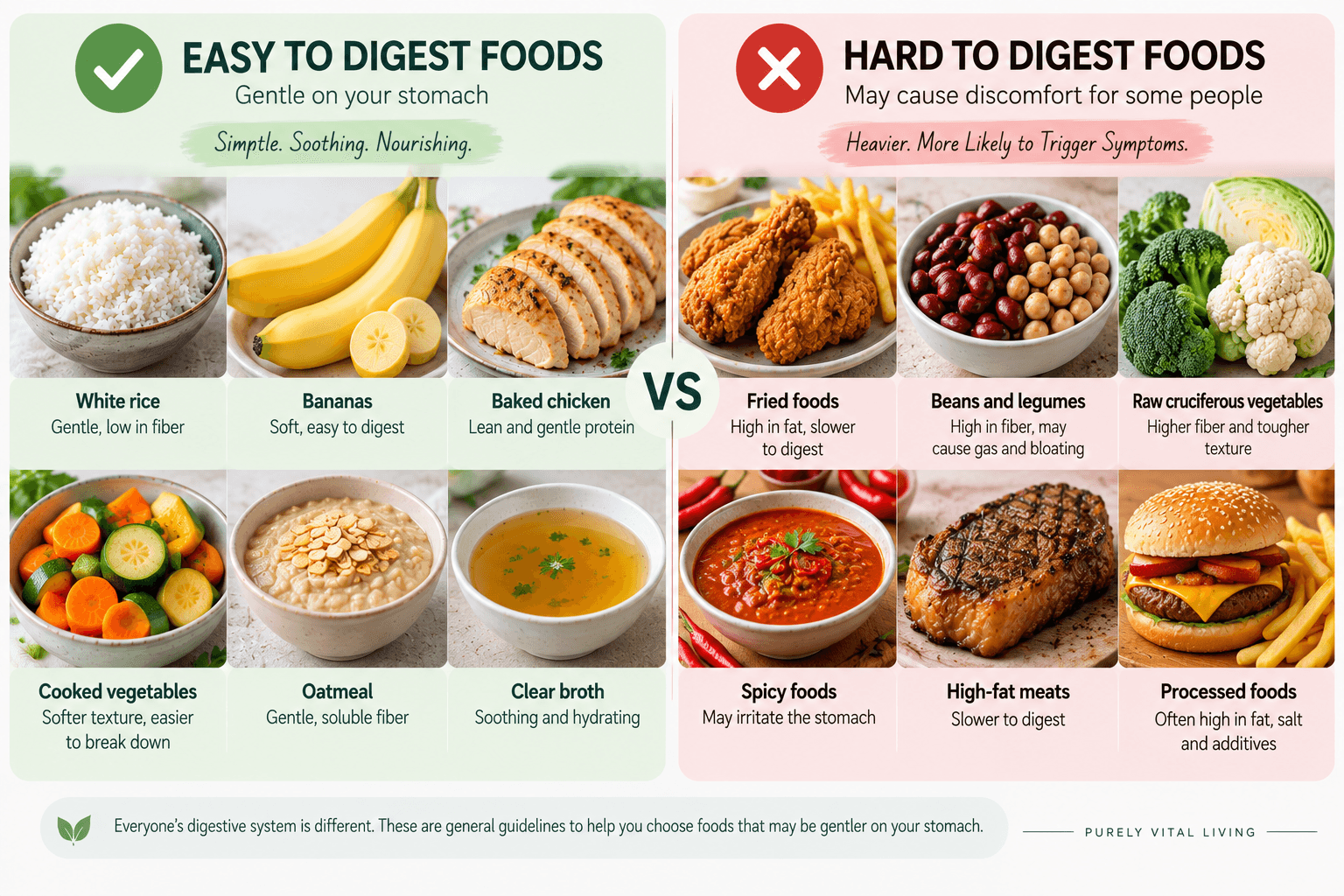
Foods that feel difficult to digest vary from person to person, but very fatty meals, large amounts of raw fibrous vegetables, whole nuts and seeds, beans, and strongly spicy foods can cause more discomfort for some people when their digestive system is already sensitive.
Fried and High-Fat Foods
Fried chicken, fries, rich sauces, and greasy meats can feel heavy because high-fat meals may slow stomach emptying.
Large Portions of Raw Vegetables
Raw broccoli, cauliflower, cabbage, and large salads contain plenty of valuable nutrients and fiber, but their volume and texture can worsen gas or bloating in some sensitive people.
Beans and Legumes
Beans and lentils are excellent long-term gut-health foods, but their fermentable carbohydrates and fiber can increase gas in some people, particularly when intake rises quickly.
Whole Nuts and Seeds
Nuts and seeds are nutritious but dense and relatively high in fat and fiber. Smooth nut butter may feel easier for some people than whole nuts.
Very Spicy Foods
Spicy meals do not bother everyone, but they can aggravate heartburn or digestive discomfort in susceptible people.
Your Personal Trigger Foods
A food can be nutritious and still disagree with you. Lactose, certain fermentable carbohydrates, large fatty meals, or specific ingredients may trigger symptoms depending on the person.
| Potentially Easier Choice | Potentially Harder Choice |
|---|---|
| Baked skinless chicken | Fried chicken |
| Cooked carrots | Large serving of raw cruciferous vegetables |
| Applesauce | Raw apple with peel when sensitive |
| Mashed potato | French fries |
| White rice | Large portion of intact high-fiber grains |
| Baked white fish | Greasy or heavily fried meat |
Easy-to-Digest Foods vs. Gut-Healthy Foods: What’s the Difference?
Easy-to-digest foods are chosen mainly for short-term tolerance. Gut-healthy foods are chosen for their contribution to long-term dietary quality and digestive health. The two categories overlap, but they are not identical.
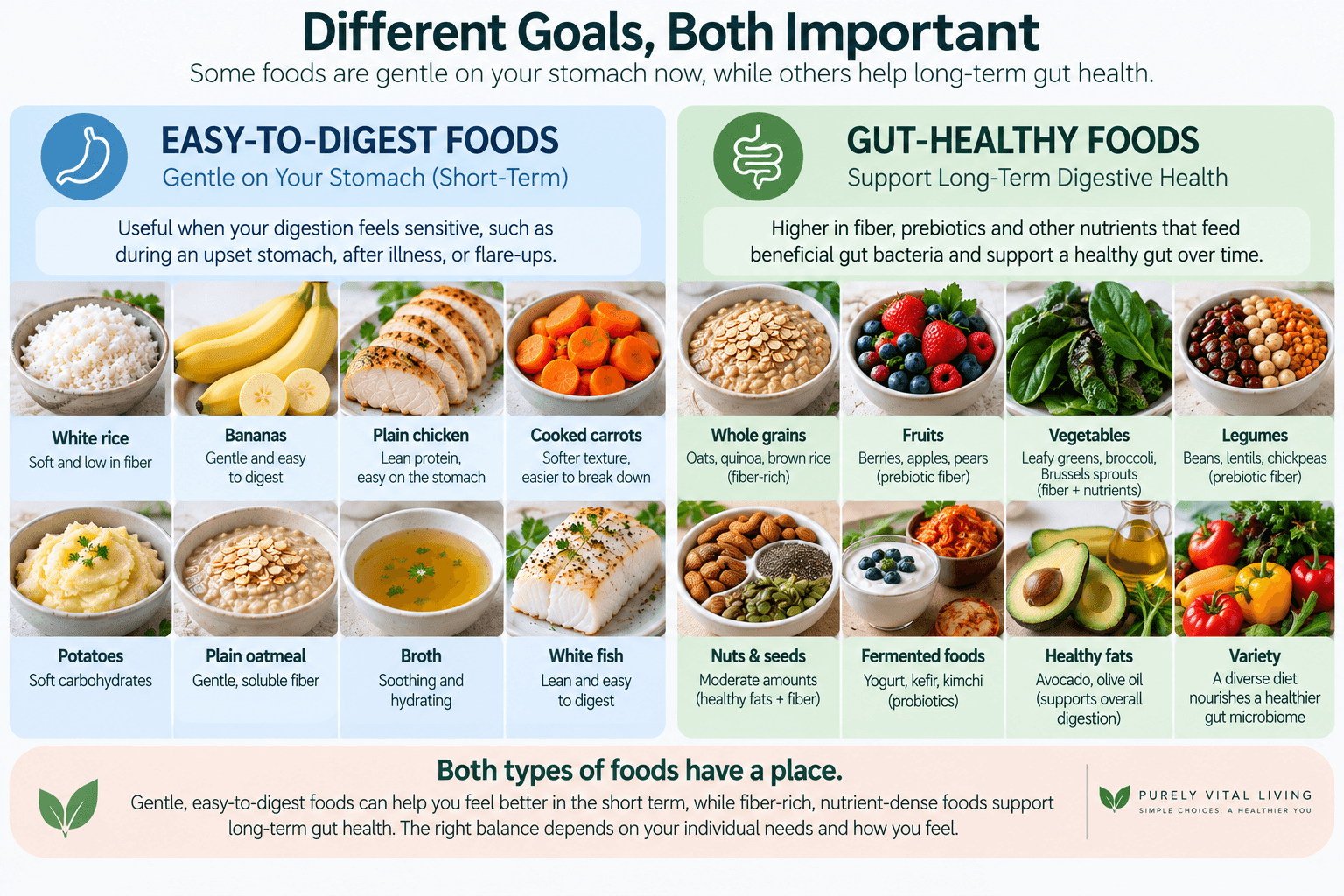
| Easy Digestion | Long-Term Gut Health |
|---|---|
| Focuses on immediate tolerance | Focuses on long-term dietary quality |
| Often uses softer, well-cooked foods | Encourages diverse plant foods |
| May temporarily be lower in fiber | Usually emphasizes adequate fiber |
| Often favors lean, simple meals | Includes prebiotic and fiber-rich foods |
| Useful when digestion feels sensitive | Designed as an everyday eating pattern |
This distinction matters. White rice and applesauce may feel gentle during an upset stomach, but living mainly on low-fiber refined foods would not provide the diversity that supports long-term gut health.
What Are the Best Foods for Gut Health?
For long-term gut health, focus less on finding one “best” food and more on building a varied eating pattern. Fiber-rich plants, prebiotic foods, and fermented foods can all play useful roles when they are well tolerated.
Fiber-Rich Foods
Oats, whole grains, vegetables, fruits, beans, and lentils provide different forms of dietary fiber. Increase fiber gradually if your current intake is low, because a sudden increase can temporarily cause gas or bloating.
Prebiotic Foods
Prebiotics are compounds used by beneficial gut microorganisms. Foods such as onions, garlic, leeks, oats, bananas, and certain other plants can contribute prebiotic fibers, although some are poorly tolerated by people with IBS.
Fermented and Probiotic Foods
Yogurt with live cultures, kefir, kimchi, sauerkraut, and other fermented foods can add variety to the diet. Fermented does not automatically mean probiotic, and tolerance varies, so introduce unfamiliar foods gradually.
A Diverse Range of Plant Foods
Rather than chasing a single gut-health superfood, rotate fruits, vegetables, whole grains, legumes, nuts, seeds, herbs, and other plant foods that you tolerate. For practical ways to turn these ingredients into meals, see our gut-healthy recipes.
Easy-to-Digest Foods for Common Situations
When Your Stomach Feels Upset
Simple foods such as rice, toast, banana, applesauce, broth, potatoes, or lean protein may be easier to tolerate. Hydration is especially important if vomiting or diarrhea is present.
When You’re Feeling Bloated
Smaller portions, cooked vegetables, lean proteins, and simpler meals may help you identify what feels comfortable. If bloating is frequent, keeping a short food-and-symptom record can be more useful than eliminating many foods at once.

An organic vegan protein-bar variety pack marketed as FODMAP friendly, offering a convenient packaged snack option for people specifically following a low-FODMAP approach. Low-FODMAP does not automatically mean easy to digest for everyone, so individual tolerance and serving size still matter.
As an Amazon Associate, Purely Vital Living may earn from qualifying purchases. Price shown was supplied at the time of writing and may change.
After Diarrhea
Fluids and foods that are easy to tolerate may be useful while appetite returns. Persistent diarrhea, signs of dehydration, blood, fever, or severe symptoms require medical advice.
When You’re Constipated
Constipation is different: simply switching to a low-fiber diet may make the problem worse. Adequate fluid, fiber, movement, and individualized medical guidance may be more appropriate.
When Large Meals Leave You Feeling Too Full
Try smaller portions, eat slowly, and choose meals that are not excessively fatty. Persistent early fullness, unexplained weight loss, vomiting, or pain should be evaluated by a healthcare professional.
Simple Easy-to-Digest Meal Ideas
| Meal | Simple Idea |
|---|---|
| Breakfast | Well-cooked oatmeal with ripe banana |
| Lunch | White rice with baked chicken and cooked carrots |
| Snack | Unsweetened applesauce or plain yogurt if tolerated |
| Dinner | Baked white fish with mashed potatoes and cooked squash |
These are examples rather than a prescription. Adjust portions and ingredients to your appetite, dietary needs, and personal tolerance.
When Digestive Symptoms Deserve Medical Attention
Occasional digestive discomfort is common, but persistent symptoms should not automatically be treated as a food-selection problem. Seek medical care for severe or worsening abdominal pain, repeated vomiting, blood in the stool, black stools, unexplained weight loss, persistent diarrhea, difficulty swallowing, signs of dehydration, or major changes in bowel habits.
If symptoms repeatedly follow meals or continue despite dietary changes, a clinician or registered dietitian can help identify the cause and determine whether a targeted eating plan is appropriate.
Frequently Asked Questions
What are the easiest foods to digest?
The easiest foods to digest are typically soft, well-cooked, lower-fat foods such as white rice, ripe bananas, applesauce, eggs, lean chicken, white fish, peeled potatoes, cooked carrots, oatmeal, and broth. These choices require less mechanical breakdown and are often lower in rough, insoluble fiber. Individual tolerance still determines which foods feel best.
What foods are easy to digest when your stomach is upset?
When your stomach is upset, start with small portions of simple foods such as rice, toast, bananas, applesauce, potatoes, broth, eggs, or lean poultry. Soft textures and lower-fat preparation methods are generally easier to tolerate than fried, spicy, or very fibrous meals. Fluids are especially important if vomiting or diarrhea is present.
Are eggs easy to digest?
Yes, eggs are often easy to digest because they provide protein without dietary fiber and can be cooked to a soft texture. Boiled, poached, or lightly scrambled eggs usually contain less added fat than fried preparations. However, an egg allergy, intolerance, or a high-fat preparation can change how well an individual tolerates them.
Is white rice easy to digest?
Yes, well-cooked white rice is commonly considered easy to digest because it is soft and contains less fiber than brown rice. It provides a simple carbohydrate base without the intact bran found in whole-grain rice. Pair it with lean protein and tender vegetables for a gentle meal when digestion feels sensitive.
Are bananas easy to digest?
Yes, ripe bananas are often easy to digest because their soft texture requires little chewing and preparation. Ripeness changes the carbohydrate profile as starch is converted to sugars, which can affect tolerance. Start with a moderate portion if fruit or fermentable carbohydrates tend to trigger bloating for you.
Is oatmeal easy to digest?
Well-cooked oatmeal can be easy to digest for many people because cooking produces a soft texture and oats provide soluble fiber. That fiber is useful nutritionally, but a large serving may worsen gas or bloating in someone temporarily sensitive to fiber. Start with a smaller portion and increase according to tolerance.
What vegetables are easiest to digest?
Peeled, thoroughly cooked vegetables such as carrots, zucchini, squash, and sweet potatoes are often easier to digest than large servings of raw vegetables. Cooking softens plant tissues, while peeling removes some of the tougher outer fiber. Steaming, boiling, roasting until tender, or blending vegetables into soup can further soften their texture.
What foods are hardest to digest?
Foods that are commonly harder to tolerate include fried or greasy meals, fatty meats, large raw salads, beans, whole nuts and seeds, and some cruciferous vegetables. Fat can slow stomach emptying, while large amounts of fiber or fermentable carbohydrates may increase fullness, gas, or bloating. Your personal trigger foods may be different.
Are easily digested foods also good for gut health?
Not necessarily: easy digestion and long-term gut health are different goals. White rice or applesauce may be useful for short-term tolerance, while everyday gut health generally benefits from adequate fiber and a varied range of plant foods. Once symptoms settle, aim to return gradually to the broadest nutritious diet you comfortably tolerate.
Are low-fiber foods easier to digest?
Low-fiber foods can be easier to tolerate in certain situations because they leave less undigested plant material moving through the intestine. Medically prescribed low-fiber diets may limit intake to roughly 10–15 grams of fiber per day. That does not mean low fiber is healthier long term, especially when constipation is the problem.
Does cooking food make it easier to digest?
Cooking can make many foods physically easier to eat and tolerate by softening plant tissues and reducing the work required for chewing. Boiling, steaming, poaching, and baking can produce softer textures without the large amounts of fat added by deep frying. Cooking does not guarantee symptom-free digestion, because tolerance remains individual.
Is a low-FODMAP diet the same as an easy-to-digest diet?
No, a low-FODMAP diet and an easy-to-digest diet are not the same thing. Low-FODMAP eating temporarily restricts specific fermentable carbohydrates to help identify IBS triggers, while easy-to-digest eating focuses more broadly on texture, fat, fiber, portion size, and tolerance. The structured low-FODMAP restriction phase is generally used for only 2–6 weeks before reintroduction.
How long should you eat only easy-to-digest foods?
Easy-to-digest foods are usually best treated as a short-term strategy rather than a permanently restrictive diet. As symptoms improve, gradually reintroduce tolerated fruits, vegetables, whole grains, legumes, nuts, seeds, and other nutrient-dense foods. If you repeatedly need a restricted diet or symptoms persist, speak with a clinician or registered dietitian.
Want free practical tips for better sleep, energy, gut health, and healthy aging?
Join the Purely Vital Living newsletter and get science-backed wellness tips delivered to your inbox.
Final Thoughts
When digestion feels sensitive, simpler meals can make eating feel more manageable. Start with soft, well-cooked foods and lean proteins that you tolerate, then gradually broaden your diet as symptoms settle.
For long-term gut health, the goal is not to stay on a restrictive “easy digestion” diet indefinitely. A varied eating pattern that includes fiber-rich plants and other nutrient-dense foods you tolerate provides a stronger foundation for digestive health.
Related Reads
- 15 Gut Healthy Recipes to Support Digestion Naturally
- 10 Signs of Poor Gut Health and How to Fix It
- Best Supplements for Gut Health & Microbiome Support
- Best Supplements for Digestive Health: The Complete Guide
References
- MedlinePlus. Bland diet. U.S. National Library of Medicine.
- MedlinePlus. Low-fiber diet. U.S. National Library of Medicine.
- National Institute of Diabetes and Digestive and Kidney Diseases. Eating, Diet, & Nutrition for Indigestion. Reviewed March 2025.
- National Institute of Diabetes and Digestive and Kidney Diseases. Eating, Diet, & Nutrition for Constipation.
- National Institute of Diabetes and Digestive and Kidney Diseases. Eating, Diet, & Nutrition for Irritable Bowel Syndrome.
- Monash University. Starting the Low FODMAP Diet. Monash FODMAP.