

Quick Answer
Improve sleep quality naturally by keeping consistent sleep and wake times, getting morning daylight, reducing evening light and stimulation, limiting late caffeine and alcohol, managing stress, exercising regularly, and keeping the bedroom cool, dark, and quiet. Supplements and sleep devices may help certain people, but they work best as additions to these foundational habits rather than replacements for them.
Key Takeaways
- Better sleep usually comes from several habits working together. Consistent timing, lower evening stimulation, stress management, and a supportive bedroom environment matter most.
- Sleep quality matters as much as sleep duration. Restorative sleep depends on healthy cycles, fewer disruptions, and waking reasonably refreshed.
- Your daytime routine affects your night. Morning light, movement, caffeine timing, nutrition, and stress levels all influence sleep readiness.
- Supplements and devices are supportive, not foundational. They work best alongside healthy sleep habits rather than replacing them.
- Progress is gradual. Small changes practiced consistently for several weeks are usually more useful than trying to perfect everything at once.
- Key Takeaways
- Introduction
- What Is Sleep Quality and Why Does It Matter?
- Understanding Sleep Cycles and Recovery
- Why Modern Life Disrupts Sleep
- 1. Build Healthy Sleep Habits
- 2. Improve Sleep Hygiene and Your Sleep Environment
- 3. Reduce Stress Before Bed
- 4. How Diet and Nutrition Affect Sleep
- 5. Improve Sleep Consistency and Sleep Hygiene
- 6. Best Natural Sleep Supplements
- 7. Common Causes of Insomnia
- 8. Sleep Gadgets That May Help
- Morning Habits That Affect Sleep Quality
- Poor Sleep Hygiene Habits That Quietly Ruin Sleep
- Tips to Improve Sleep Without Overwhelm
- 7-Day Plan to Improve Sleep Quality
- How Long Sleep Improvement Takes
- What to Expect After 30 Days
- Best Products to Consider
- FAQ
- Final Summary
Introduction
Sleep affects nearly every part of your physical and mental health.
When sleep quality suffers, energy, focus, mood, recovery, metabolism, stress levels, and overall wellness often decline as well.
Over the years, I learned that improving sleep quality rarely comes from one change alone. Consistent sleep schedules, stress management, and limiting late-night screen use had the greatest impact on my own sleep.
Yet many people struggle with:
- difficulty falling asleep
- waking during the night
- poor sleep quality
- inconsistent sleep schedules
- waking tired despite enough hours in bed
Modern lifestyles often make sleep problems worse.
Late-night screen exposure, stress, irregular schedules, caffeine, overstimulation, poor sleep environments, and inconsistent routines can gradually disrupt the body’s natural sleep cycle.
Unfortunately, many people try to solve sleep problems with quick fixes instead of addressing the deeper habits affecting sleep quality.
The good news is that healthy sleep often improves through realistic lifestyle changes practiced consistently over time.
This pillar guide covers:
- sleep optimization
- insomnia support
- natural sleep habits
- recovery strategies
- supplements
- sleep gadgets
- healthy bedtime routines
The goal is not perfection.
The goal is creating sustainable habits that support deeper, more restorative sleep naturally.
What Is Sleep Quality and Why Does It Matter?
Sleep quality is more than simply spending enough hours in bed. Learning how to improve sleep quality involves supporting deeper sleep, reducing nighttime disruptions, and waking feeling refreshed and recovered.
Quality sleep involves:
- falling asleep consistently
- staying asleep throughout the night
- progressing through healthy sleep cycles
- waking refreshed and recovered
Sleep helps regulate:
- hormone balance
- metabolism
- immune function
- stress recovery
- cognitive performance
- muscle recovery
- emotional health
When sleep becomes disrupted consistently, the effects often build gradually.
Many people normalize fatigue, brain fog, low motivation, irritability, and poor focus without realizing how strongly poor sleep contributes to these issues.
This is why improving sleep quality often creates noticeable improvements in overall wellness.
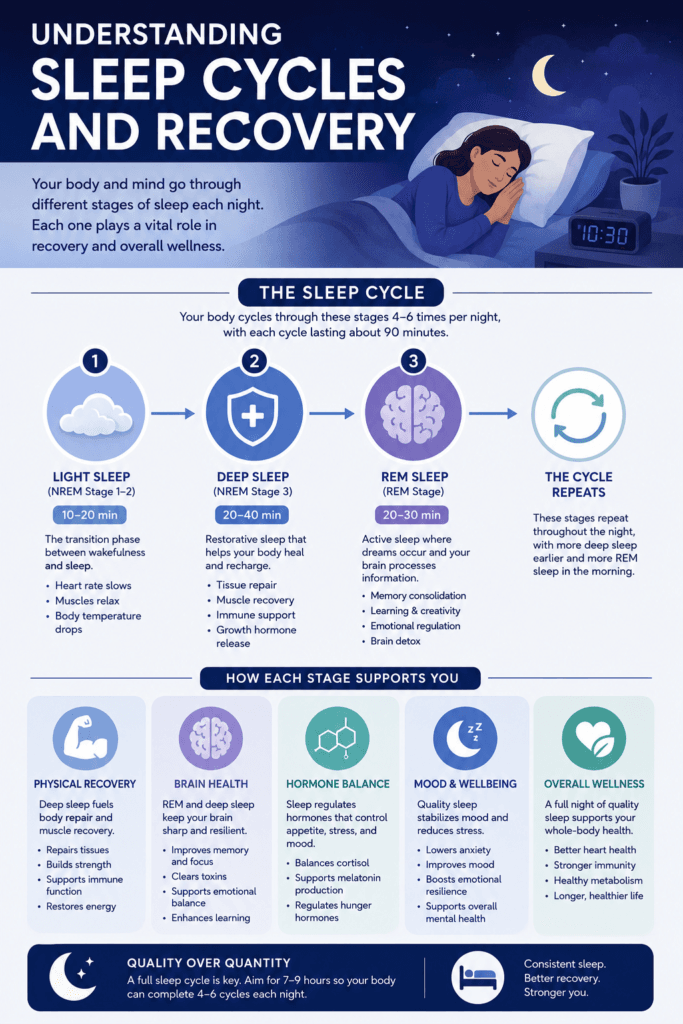
Understanding Sleep Cycles and Recovery
Sleep is not a single uniform process.
Throughout the night, the body moves through multiple sleep stages that each play different roles in recovery, brain function, and overall wellness.
These stages are generally divided into:
- light sleep
- deep sleep
- REM sleep
Light sleep helps the body transition into rest and makes up a large portion of total sleep time.
Deep sleep is especially important for:
- physical recovery
- muscle repair
- immune support
- hormone regulation
Deep sleep is one part of normal sleep architecture and is associated with physical restoration and recovery. For a focused guide to habits that may support this stage, see how to improve deep sleep.
REM sleep is strongly connected to:
- memory
- learning
- emotional processing
- brain recovery
This is why poor sleep often affects both physical energy and mental clarity.
Many people focus only on total sleep hours while ignoring sleep quality and recovery depth.
Someone may spend eight hours in bed but still wake up tired after a full night of sleep if sleep cycles remain disrupted throughout the night.
Modern habits often interfere with healthy sleep cycles.
Late-night stimulation, stress, alcohol, inconsistent schedules, and poor sleep environments may reduce deep sleep and increase nighttime waking.
This issue often develops gradually because poor-quality sleep becomes normalized over time.
Improving sleep recovery usually involves supporting the body’s natural rhythm rather than forcing sleep artificially.
Healthy habits that may support better sleep cycles include:
- consistent sleep schedules
- reduced evening stimulation
- stress reduction
- improved bedroom environments
- healthier nighttime routines
Long-term recovery often improves as healthier sleep cycles become more stable and consistent.
Why Modern Life Disrupts Sleep
Modern environments constantly expose the brain to stimulation.
Phones, notifications, stress, social media, artificial lighting, and irregular schedules all interfere with the body’s natural sleep rhythm.
One major factor is evening light exposure. Bright and blue-enriched light can affect melatonin timing and circadian signals. If this is a concern, see our evidence review of blue-blocking glasses and melatonin.
Blue light suppresses melatonin production, which may delay the body’s natural preparation for sleep.
Stress is another major contributor.
When stress levels remain elevated, the nervous system often stays alert even when the body feels physically tired.
This may lead to:
- racing thoughts
- shallow sleep
- nighttime waking
- difficulty relaxing before bed
Poor sleep environments also play a role.
Noise, excessive warmth, bright lighting, and inconsistent routines may all reduce sleep quality over time.
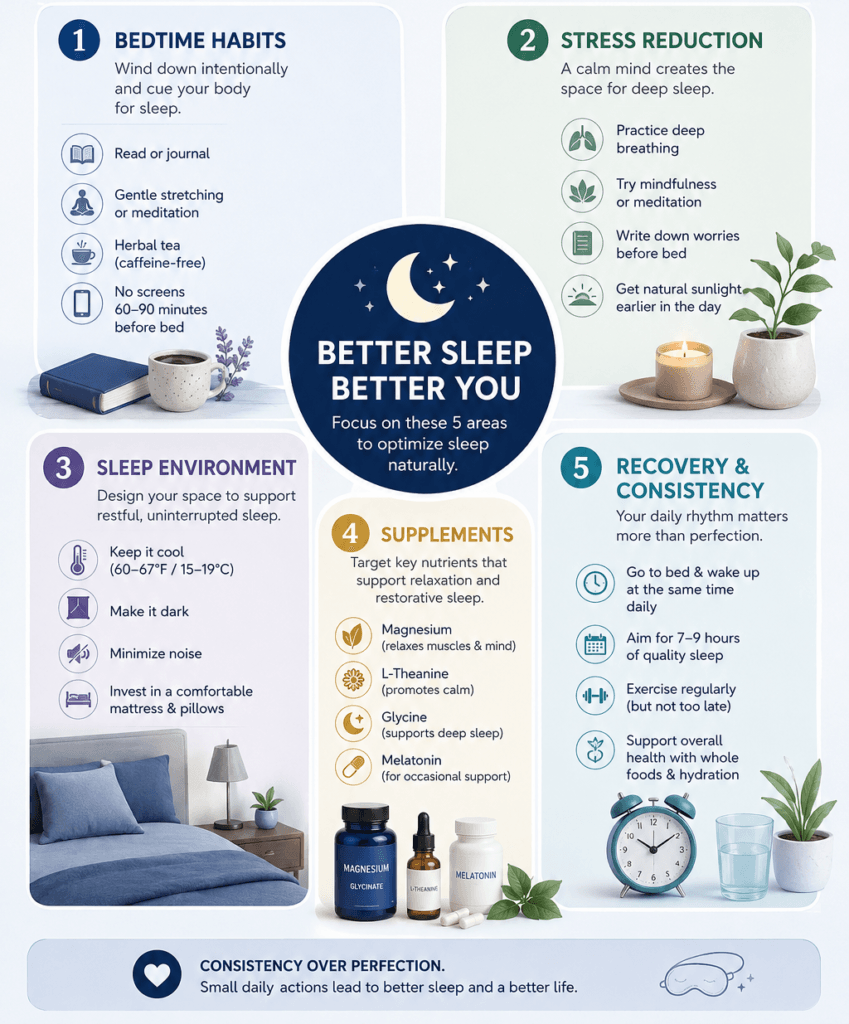
1. Build Healthy Sleep Habits
One of the most effective ways to improve sleep quality is by building healthy sleep habits that support the body’s natural sleep-wake cycle.
The brain responds strongly to patterns and routines.
When bedtime habits become predictable, the body gradually learns when it is time to relax and prepare for sleep.
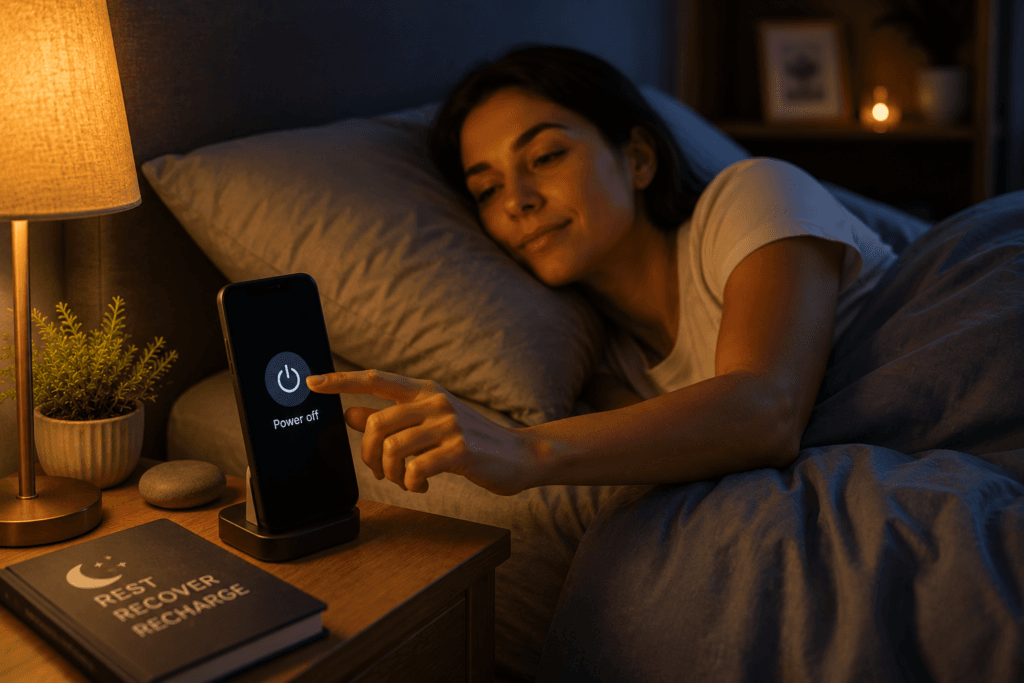
Helpful bedtime habits may include:
- dimming lights
- reducing screen exposure
- reading
- stretching
- breathing exercises
- warm showers
- calming music
- relaxing tea
Many people assume they should be able to fall asleep immediately after highly stimulating activities.
However, the nervous system usually needs time to transition into a calmer state.
This issue often builds gradually rather than appearing suddenly.
Late-night scrolling, inconsistent bedtimes, and overstimulation slowly train the brain to remain alert later into the evening.
A better approach is creating a consistent “wind-down” period before sleep.
Even 30–60 minutes of reduced stimulation may help support deeper and more consistent sleep over time.
Many people underestimate how strongly bedtime habits influence sleep quality over time.
The brain responds to repeated behaviors and environmental signals.
If your nightly routine regularly includes:
- bright screens
- stressful work
- social media
- inconsistent timing
- heavy meals
your nervous system may remain overly alert late into the evening.
This can make falling asleep feel difficult even when you are physically tired.
Another common mistake is trying to “force” sleep.
The harder many people try to fall asleep, the more mentally active they become.
A better approach is creating relaxing habits that naturally support the body’s transition into rest.
Examples include:
- low lighting
- relaxing audio
- stretching
- reading
- calming breathing exercises
Over time, these repeated behaviors help train the brain to associate bedtime with recovery and relaxation.
Small bedtime improvements practiced consistently often produce stronger long-term sleep benefits than aggressive short-term solutions.
What Should You Do If You Can’t Fall Asleep?
If you have been awake for roughly 20 minutes and feel increasingly alert or frustrated, get out of bed rather than trying to force sleep. Do something quiet and relaxing in dim light, such as reading, then return to bed when you feel sleepy. This can help rebuild the association between your bed and sleep instead of wakefulness or worry.
2. Improve Sleep Hygiene and Your Sleep Environment
The bedroom environment strongly affects sleep quality.
Sleep hygiene refers to the daily habits and environmental factors that influence sleep quality. Good sleep hygiene includes maintaining consistent sleep schedules, reducing evening stimulation, creating a dark bedroom environment, and supporting healthy bedtime routines.
Many people underestimate how much noise, light, temperature, and clutter influence nighttime recovery.
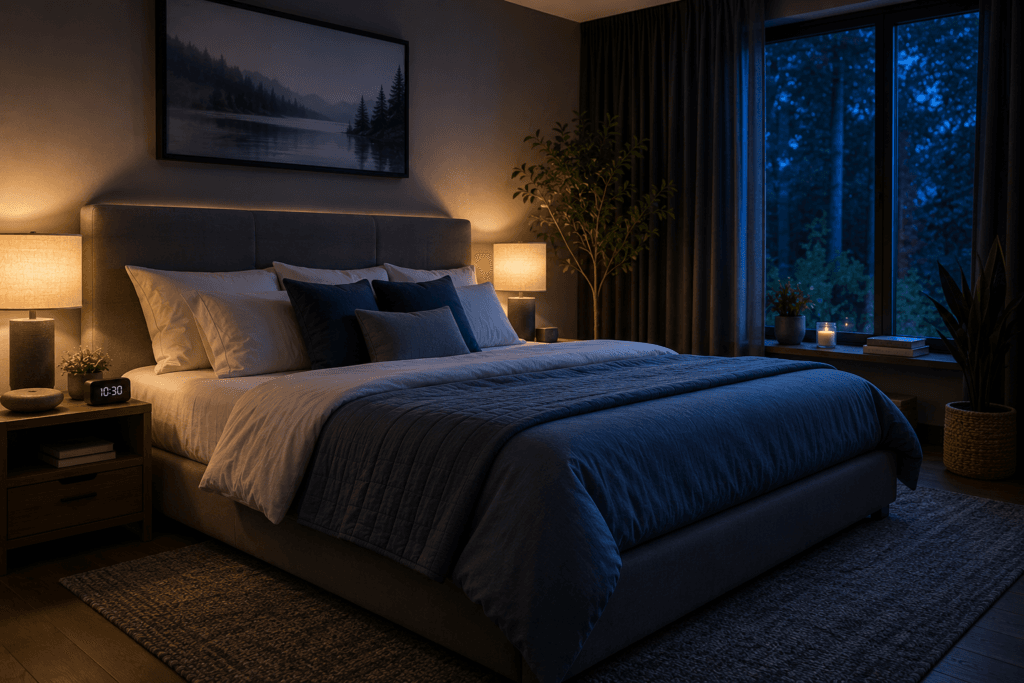
A healthier sleep environment often includes:
- cool room temperatures
- darker lighting
- minimal noise
- supportive bedding
- reduced distractions
Darkness is especially important because it helps support natural melatonin production.
Even small amounts of bright light can interfere with the body’s sleep-wake rhythm.
This issue often develops slowly because poor sleep environments become normalized over time.
For example, people may become accustomed to sleeping with televisions on, excessive phone use, or inconsistent lighting without realizing how much those habits affect sleep depth.
Simple bedroom improvements often create noticeable sleep benefits surprisingly quickly.
Temperature is another major factor affecting sleep quality.
Many people sleep better in slightly cooler environments because cooler temperatures support the body’s natural nighttime drop in core temperature. Around 65°F (18°C) is often used as a practical starting point, but comfort varies by person. See our full guide to the best sleeping temperature for the evidence, practical range, and hot-sleeper adjustments.
Overheated rooms may increase restlessness and nighttime waking.
If trapped mattress heat is the main problem, a targeted water-based option may help without cooling the entire room. See our Adamson B10 Bed Cooling System review for its pros, limitations, maintenance needs, and comparison with other bed-cooling approaches.
Noise pollution is also commonly underestimated.
Even low-level background sounds may interrupt deeper sleep stages without fully waking you consciously.
Some people use steady background audio to mask unpredictable environmental noise. Our best sounds for sleep guide compares white, pink and brown noise with rain and other nature sounds.
This is one reason some people benefit from:
- white noise machines
- fans
- calming ambient sounds
Clutter and overstimulation may also affect relaxation.
A calmer and cleaner bedroom environment often feels psychologically more restful.
The goal is helping the brain associate the bedroom primarily with recovery and relaxation instead of stimulation or work.
Lighting is equally important.
Bright overhead lighting late at night may suppress melatonin production and delay sleepiness signals.
Warm dim lighting generally supports healthier nighttime transitions.
Even small environmental improvements may noticeably improve sleep consistency over time.
3. Reduce Stress Before Bed
Stress and sleep are closely connected.
When stress remains elevated, the nervous system may struggle to fully relax at night.
This can lead to:
- overthinking
- muscle tension
- shallow sleep
- waking during the night
Many people assume stress only affects daytime wellness, but nighttime effects are often even stronger because the brain has fewer distractions.
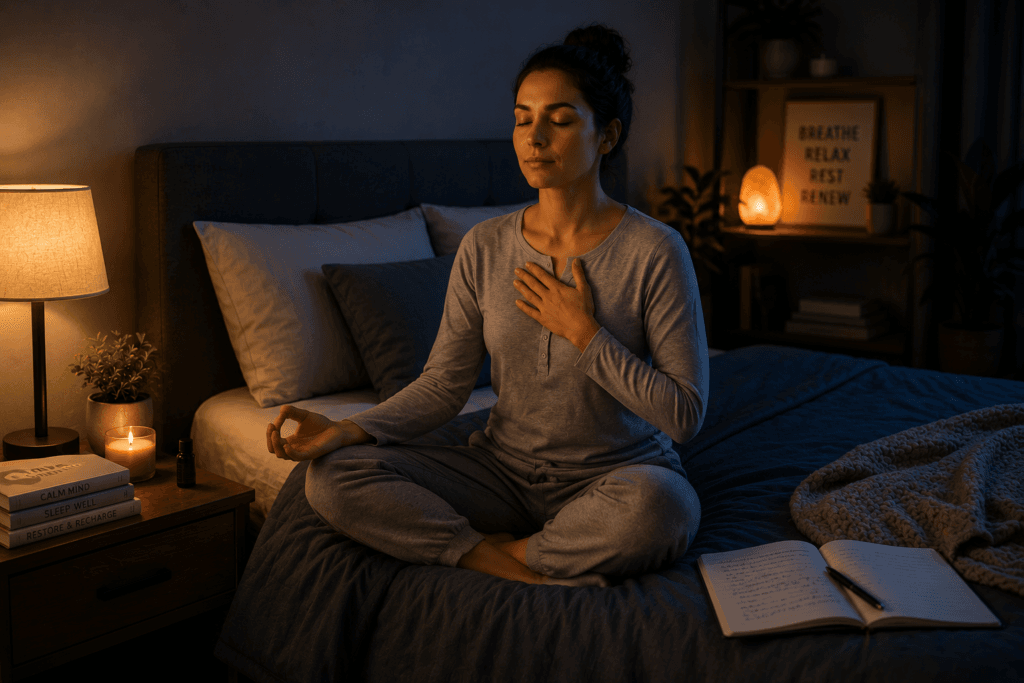
A helpful approach is creating “mental offload” habits before bed.
Examples include:
- journaling
- writing tomorrow’s tasks
- meditation
- breathing exercises
- gratitude practices
These activities help reduce mental stimulation and create a calmer transition into sleep.
Stress management is often one of the most overlooked aspects of natural sleep improvement. For the hormonal side of this relationship, see how cortisol and sleep interact.
4. How Diet and Nutrition Affect Sleep
Nutrition habits can strongly influence sleep quality.
Many people focus only on bedtime routines while overlooking how food choices affect energy, hormones, and nighttime recovery.
Caffeine is one of the biggest contributors to sleep disruption.
Because caffeine may remain in the body for many hours, late afternoon or evening intake can interfere with falling asleep even if you do not immediately feel overstimulated.
Alcohol is another common issue.
Some people assume alcohol helps sleep because it creates temporary drowsiness.
However, alcohol may reduce sleep quality later in the night and increase sleep fragmentation.
Heavy meals late at night may also affect sleep comfort and digestion. If large meals disturb your sleep or trigger reflux, finishing dinner roughly two to three hours before bedtime can be a useful starting point.
Large meals close to bedtime sometimes increase:
- discomfort
- acid reflux
- nighttime waking
On the other hand, balanced nutrition habits may help support healthier sleep consistency.
Foods commonly associated with healthier sleep routines include:
- magnesium-rich foods
- complex carbohydrates
- healthy fats
- protein-rich meals
Hydration also matters.
Both dehydration and excessive fluid intake close to bedtime may negatively affect sleep quality.
The goal is not perfection, but creating nutrition habits that support energy stability and nighttime recovery more consistently.

5. Improve Sleep Consistency and Sleep Hygiene
Improving sleep quality often starts with better sleep hygiene and more consistent sleep schedules. Irregular sleep schedules can disrupt the body’s internal clock and reduce sleep quality over time.
Sleeping at dramatically different times throughout the week may reduce sleep quality even if total sleep hours seem adequate.
The body generally responds well to consistency.
This means:
- going to bed around the same time
- waking at consistent times
- reducing “social jet lag” on weekends
Many people stay up significantly later on weekends, which may shift the body’s sleep rhythm and make weekday sleep more difficult.
Consistency helps stabilize circadian rhythms and improve long-term sleep predictability.
Daytime naps can also affect nighttime sleep pressure. If naps make it harder for you to fall asleep at night, keep them relatively short—around 20–30 minutes—and avoid napping late in the day. People who sleep well at night may not need to avoid naps entirely, so use your nighttime sleep as the guide.
This issue often becomes worse gradually because inconsistent schedules slowly shift sleep timing later over time.
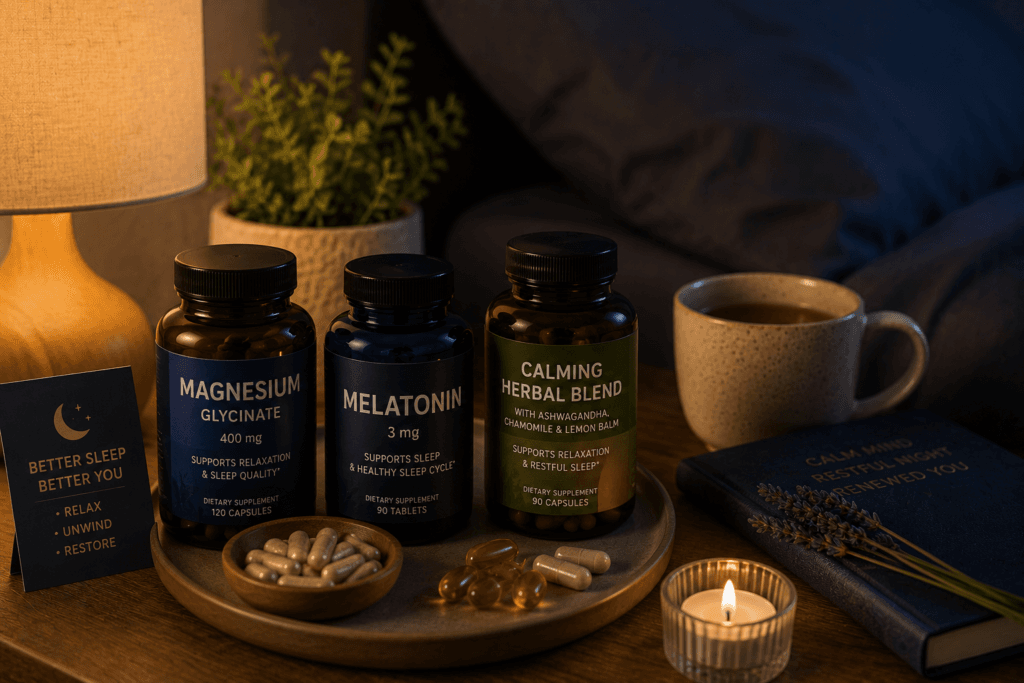
6. Best Natural Sleep Supplements
Some people use supplements to support relaxation and bedtime routines naturally.
Supplements are usually most effective when combined with healthier sleep habits rather than used as standalone solutions.
Popular sleep-support supplements include:
- magnesium glycinate
- melatonin
- L-theanine
- chamomile
- valerian root
Magnesium is commonly associated with muscle relaxation and nighttime recovery support.
Melatonin may help support sleep timing and bedtime consistency. If you are comparing common options, our melatonin vs magnesium for sleep guide explains how their roles and evidence differ.
L-theanine is often used to support calmness and relaxation without strong sedation.
One common mistake is expecting supplements alone to overcome poor sleep habits.
Long-term improvement usually requires both supportive habits and supportive products together.
Magnesium glycinate is one of the most commonly used nighttime supplements because magnesium plays a role in muscle relaxation and nervous system regulation.
Some people use magnesium as part of broader nighttime recovery routines designed to support calmness before bed.
Melatonin is different because it primarily supports sleep timing rather than acting like a traditional sedative.
Melatonin may be especially helpful for:
- irregular sleep schedules
- jet lag
- delayed sleep timing
However, many people mistakenly assume higher melatonin doses work better.
In reality, excessively high intake may increase the likelihood of grogginess for some individuals.
L-theanine is often used to support relaxation without strong sedation.
This amino acid is commonly associated with calming mental activity and reducing overstimulation before bed.
Herbal options like chamomile and valerian root are also widely used in nighttime wellness routines.
One important point is that supplements generally work best when paired with supportive sleep habits.
No supplement fully replaces:
- healthy routines
- stress management
- environmental optimization
- consistent sleep timing
Long-term sleep improvement usually comes from combining multiple supportive strategies together.
7. Common Causes of Insomnia
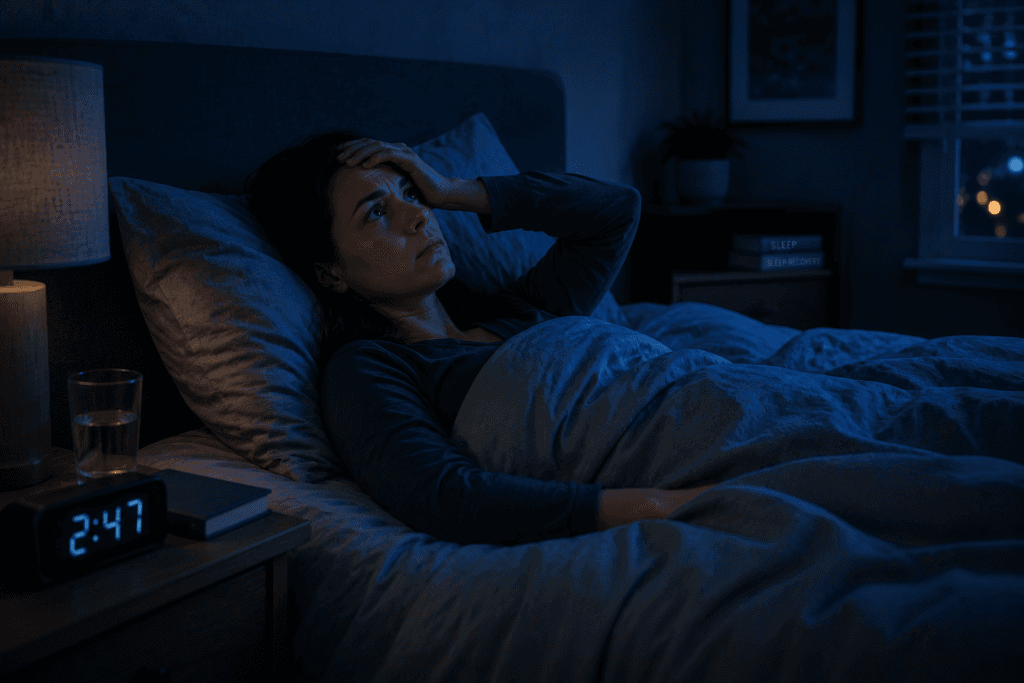
Insomnia is one of the most common sleep problems worldwide.
Some people struggle to fall asleep, while others wake repeatedly during the night or wake much earlier than intended.
Insomnia often develops gradually rather than appearing suddenly.
Common contributors include:
- chronic stress
- anxiety
- overstimulation
- irregular schedules
- poor sleep habits
- excessive screen exposure
- caffeine
- inconsistent routines
Many people unintentionally train their brains to remain alert at night.
For example, repeatedly working, scrolling social media, or watching stimulating content late into the evening may condition the brain to stay mentally active during bedtime hours.
Another important factor is sleep anxiety.
After repeated nights of poor sleep, some people begin worrying excessively about sleep itself.
This may create additional mental pressure that makes relaxation even harder.
This is why insomnia often becomes both a behavioral and psychological cycle.
Improving insomnia naturally usually requires reducing overstimulation while gradually rebuilding healthier nighttime associations.
Helpful strategies often include:
- consistent sleep timing
- reducing screen exposure
- calming nighttime routines
- stress management
- healthier sleep environments
Recovery often happens gradually through consistency rather than overnight solutions.
8. Sleep Gadgets That May Help
Modern sleep gadgets can help support healthier sleep routines when used appropriately.
Popular sleep-support devices include:
- white noise machines
- sunrise alarm clocks
- weighted blankets
- sleep masks
- aromatherapy diffusers
These tools may reduce specific environmental disruptions or make a bedtime routine more consistent. If noise is the problem, start with our best white noise machines guide; if heat is the problem, compare the best bed cooling systems.
For example:
- white noise may reduce distracting sounds
- weighted blankets may support relaxation
- sunrise alarms may support gentler waking
The goal is not relying entirely on gadgets, but using them to support healthier sleep environments and routines.
Can Sleep Trackers Help Improve Sleep Quality?
Sleep trackers can help improve sleep habits by showing patterns in sleep duration, timing, awakenings, heart rate, and overnight routines. Their main value is trend awareness: you may notice, for example, that late caffeine, alcohol, stress, or inconsistent bedtimes coincide with poorer nights.
Consumer wearables estimate sleep stages rather than measuring brain activity directly, so treat Deep, REM, and sleep-score results as approximations. Compare trends across several nights and combine tracker data with how rested and alert you feel during the day.
Morning Habits That Affect Sleep Quality
Many people think sleep improvement only happens at night, but morning habits also influence the body’s sleep rhythm.
Sunlight exposure early in the day helps regulate circadian rhythms and supports healthier melatonin timing later at night.
Regular daytime exercise can support better sleep quality and help build healthy nighttime sleep pressure. If vigorous workouts leave you feeling wired at bedtime, finish them at least a few hours before sleep or move harder training earlier in the day. Gentler evening activity, such as walking or stretching, may be easier to fit into a wind-down routine.
This is one reason people who remain inactive throughout the day sometimes struggle to feel naturally tired at bedtime.
Consistent wake times are equally important.
Sleeping dramatically later on weekends may shift the body’s internal clock and create “social jet lag.”
Hydration, movement, and exposure to natural light during the morning all help reinforce healthier sleep-wake patterns.
Better sleep often begins long before bedtime itself.

Poor Sleep Hygiene Habits That Quietly Ruin Sleep
Many sleep problems are connected to habits people rarely notice.
Examples include:
- excessive evening caffeine
- late-night phone scrolling
- inconsistent schedules
- heavy nighttime meals
- alcohol before bed
- chronic stress
These behaviors often build slowly over time until poor sleep becomes normalized.
Awareness is the first step toward improvement.
Tips to Improve Sleep Without Overwhelm
When learning how to improve sleep quality, trying to completely “perfect” sleep overnight can become frustrating.
A better approach is improving one or two habits at a time.
For example:
- reduce nighttime screens
- improve bedroom darkness
- create a calming routine
- go to bed more consistently
Small improvements repeated consistently often create stronger long-term results than extreme changes.
7-Day Plan to Improve Sleep Quality
Day 1
Reduce screens before bed.
Day 2
Improve bedroom darkness.
Day 3
Create a calming nighttime routine.
Day 4
Reduce caffeine later in the day.
Day 5
Improve sleep consistency.
Day 6
Try calming breathing exercises.
Day 7
Review habits and adjust routines.
How Long Sleep Improvement Takes
Many people who want to improve sleep quality become frustrated because they expect results immediately.
However, healthy sleep recovery often develops gradually as the body rebuilds healthier rhythms and routines.
Some people notice small improvements within several days, especially after reducing nighttime stimulation or improving bedtime consistency.
Early improvements may include:
- falling asleep faster
- fewer nighttime awakenings
- feeling calmer before bed
- slightly improved morning energy
For others, meaningful changes may take several weeks depending on:
- stress levels
- sleep history
- lifestyle habits
- consistency of routines
Sleep is heavily connected to the nervous system, and the body often needs time to adjust after long periods of poor sleep habits or chronic overstimulation.
This is why consistency matters more than perfection.
Small habits repeated daily usually produce stronger long-term improvements than aggressive short-term changes.
The goal is not achieving “perfect sleep” overnight.
The goal is gradually creating healthier patterns that support deeper recovery and more consistent rest over time.
What to Expect After 30 Days
After several weeks of improving sleep hygiene and building healthier sleep habits, many people begin noticing improvements that extend far beyond nighttime sleep itself.
As the body starts adapting to more consistent routines, sleep often becomes deeper and more restorative.
Many people report:
- falling asleep more easily
- fewer nighttime interruptions
- calmer evenings
- improved morning energy
- better mental clarity
Stress management may also improve because healthy sleep helps regulate recovery and nervous system balance.
Over time, this may support:
- improved mood
- healthier focus
- better emotional resilience
- improved daytime productivity
Physical recovery may improve as well.
Quality sleep plays an important role in:
- muscle recovery
- hormone regulation
- appetite balance
- immune support
This is one reason healthier sleep habits often positively affect many other wellness goals including energy, fitness, and stress reduction.
One important point is that progress is rarely perfectly linear.
Some nights will still feel better than others.
However, as healthy sleep habits become more automatic, the body often becomes better at maintaining more stable sleep patterns overall.
Long-term sleep improvement is usually built through realistic habits repeated consistently—not through quick fixes or extreme routines.
Best Products to Consider
Advanced Magnesium Recovery Supplements
Magnesium recovery supplements are commonly used to support muscle relaxation, nervous system balance, nighttime recovery, and healthier sleep routines.
⭐ Editor’s Pick
BIOptimizers Magnesium Breakthrough
Best For: Full-Body Relaxation & Nighttime Recovery

BIOptimizers Magnesium Breakthrough combines multiple forms of magnesium designed to support deeper relaxation, muscle recovery, stress management, and overall nighttime wellness support.
✔ Supports nighttime muscle relaxation
✔ Helps support stress recovery
✔ Multiple forms of magnesium included
✔ Designed for evening wellness routines
👉 Support deeper nighttime recovery naturally.
Weighted Blankets & Sleep Comfort Support
Weighted blankets are designed to create gentle pressure that may help support relaxation, reduce nighttime restlessness, and improve bedtime comfort.
⭐ Editor’s Pick
Baloo Living Weighted Blanket
Best For: Relaxation & Calming Sleep Comfort
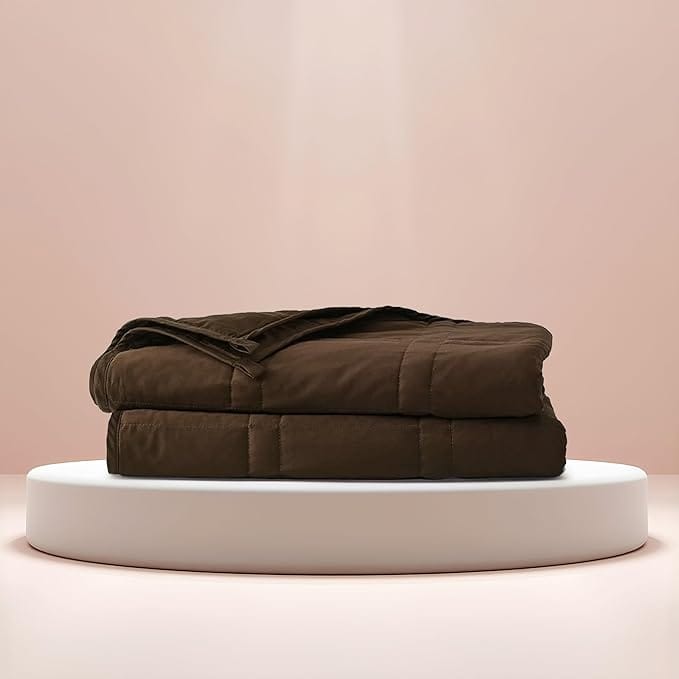
Baloo Living Weighted Blanket features breathable cotton construction and evenly distributed weight designed to create a calming and cozy nighttime sleep environment.
✔ Gentle calming weighted pressure
✔ Breathable sleep-friendly design
✔ Helps support nighttime relaxation
✔ Comfortable all-season use
👉 Create a calmer and more relaxing sleep environment.
Aromatherapy & Bedroom Wellness Devices
Aromatherapy diffusers are commonly used to support calming nighttime routines, relaxing sleep environments, and healthier stress management habits before bed.
⭐ Editor’s Pick
Pure Enrichment PureSpa Essential Oil Diffuser
Best For: Relaxing Bedtime Atmosphere & Stress Reduction

Pure Enrichment PureSpa Essential Oil Diffuser combines ultrasonic mist technology, soft ambient lighting, and quiet operation designed to help create a calmer and more peaceful nighttime environment.
✔ Supports calming bedtime routines
✔ Quiet operation for nighttime use
✔ Soft ambient wellness lighting
✔ Compatible with relaxing essential oils
👉 Create a calmer nighttime environment naturally.
FAQ
How can I improve sleep quality naturally?
Improve sleep quality naturally by combining consistent sleep and wake times, lower evening stimulation, stress management, regular daytime movement, and a cool, dark, quiet bedroom. These habits support circadian rhythm, melatonin timing, and fewer nighttime disruptions. Start with one or two changes and practice them consistently before adding more.
How long does it take to improve sleep naturally?
Some people notice small sleep improvements within several days, but more meaningful changes often take a few weeks of consistent habits. Timing depends on stress levels, sleep history, schedule regularity, and how many habits need to change. Falling asleep faster or waking less often may improve before overall sleep quality feels consistently better.
Can supplements help with sleep?
Some supplements may support relaxation or sleep timing, but they work best alongside healthy sleep habits. Magnesium is commonly used for relaxation, while melatonin primarily supports circadian timing rather than acting like a traditional sedative. Effects vary by person and dose, and supplements should not be expected to overcome an inconsistent schedule or poor sleep environment.
Why do I wake up tired even after sleeping?
Waking tired despite enough time in bed often points to poor sleep quality rather than sleep duration alone. Stress, irregular schedules, frequent awakenings, alcohol, an uncomfortable sleep environment, or conditions such as sleep apnea can fragment normal sleep cycles. Persistent morning fatigue, especially with loud snoring or daytime sleepiness, deserves medical evaluation.
Do sleep gadgets actually help?
Yes, some sleep gadgets can help when they solve a specific problem, such as noise, light, temperature, or inconsistent wake timing. White-noise machines, cooling systems, sunrise alarms, and weighted blankets may support comfort or routine, but they do not replace healthy sleep habits. Choose devices based on the disruption you are actually trying to reduce.
What is the best bedroom environment for quality sleep?
The best bedroom for quality sleep is cool, dark, quiet, comfortable, and low in stimulation. Darkness supports normal melatonin timing, cooler conditions support the body’s natural nighttime temperature drop, and reducing noise may limit sleep fragmentation. Supportive bedding and keeping work, bright screens, and unnecessary distractions out of the bedroom can also help.
What foods promote better sleep naturally?
No single food guarantees better sleep, but balanced meals can support steadier energy and a healthier nighttime routine. Foods providing magnesium, protein, complex carbohydrates, and healthy fats can fit into a sleep-supportive diet. More importantly, avoid heavy meals, excess alcohol, and large amounts of fluid close to bedtime if they disrupt comfort or sleep continuity.
What breathing exercises can help you fall asleep faster?
Slow, controlled breathing can help reduce mental and physical arousal before bed. A simple approach is to breathe gently through the nose and make the exhale slightly longer than the inhale for several minutes. The goal is not to force sleep, but to shift attention away from racing thoughts and support a calmer nervous-system state.
Can reducing blue light improve sleep quality?
Reducing bright and blue-enriched light in the evening may help support normal melatonin timing and make it easier to wind down. Dimming room lights and reducing phone, tablet, and computer exposure before bed are practical first steps. Blue-light-blocking glasses may help some people, but they should complement—not replace—lower overall evening stimulation and consistent sleep timing.
Can sleep trackers help improve sleep quality?
Yes, sleep trackers can help by revealing patterns in sleep duration, timing, awakenings, and overnight habits. Their greatest value is comparing trends across many nights and seeing how behaviors such as late caffeine, alcohol, stress, or irregular bedtimes affect your results. Sleep-stage estimates remain approximations, so combine the data with how rested you feel.
Can weighted blankets help with anxiety and sleep?
Weighted blankets may help some people feel calmer and more settled at bedtime, but they are not a guaranteed treatment for anxiety or insomnia. The evenly distributed pressure can create a comforting sensation that supports relaxation for certain users. Comfort, temperature, and personal preference matter, so a weighted blanket should be viewed as a supportive sleep tool rather than a primary solution.
How many hours of sleep do adults need for good sleep quality?
Most adults should aim for about 7–9 hours of sleep per night, although individual needs vary. Sleep quality matters alongside duration: enough time in bed does not guarantee restorative sleep if it is frequently interrupted. Consistent timing, adequate total sleep, and feeling reasonably alert during the day are more useful than chasing one perfect number.
Better sleep starts with healthier habits.
Support deeper sleep, recovery, and wellness naturally with practical sleep strategies from Purely Vital Living.
Improving sleep quality is rarely about a single solution. Most people experience the best results by combining healthy sleep habits, good sleep hygiene, stress management, better bedtime routines, and consistent sleep schedules. Small improvements practiced consistently often create meaningful long-term improvements in sleep quality and overall wellness.
Final Summary
Learning how to improve sleep quality naturally is one of the most valuable long-term investments you can make for your overall health and quality of life.
Sleep affects nearly every major system in the body, including:
- energy production
- stress recovery
- immune health
- metabolism
- mood balance
- focus and cognitive performance
When sleep quality declines consistently, the effects often spread into many other areas of wellness. Fatigue, brain fog, low motivation, cravings, irritability, and poor recovery are frequently connected to unhealthy sleep patterns that develop gradually over time.
The good news is that better sleep usually does not require perfection or extreme routines.
In many cases, the most effective improvements come from small consistent habits practiced daily.
Reducing nighttime stimulation, improving sleep consistency, creating calming bedtime routines, optimizing the bedroom environment, managing stress, and supporting recovery naturally may all help improve sleep quality over time.
Supplements and sleep gadgets can also play supportive roles when combined with healthier habits and realistic expectations.
Most importantly, sleep improvement is rarely instant.
The body and nervous system often need time to rebuild healthier rhythms and recovery patterns.
Consistency matters far more than perfection.
Small improvements repeated consistently often create the strongest long-term results.
As healthier sleep habits become more automatic, many people notice improvements not only in sleep itself, but also in energy, mood, productivity, recovery, and overall daily wellness.
If you are improving your sleep routine but want to quantify whether recent nights are still falling short on duration, use the Sleep Debt Calculator to compare 7 or 14 nights with your personal sleep target.