
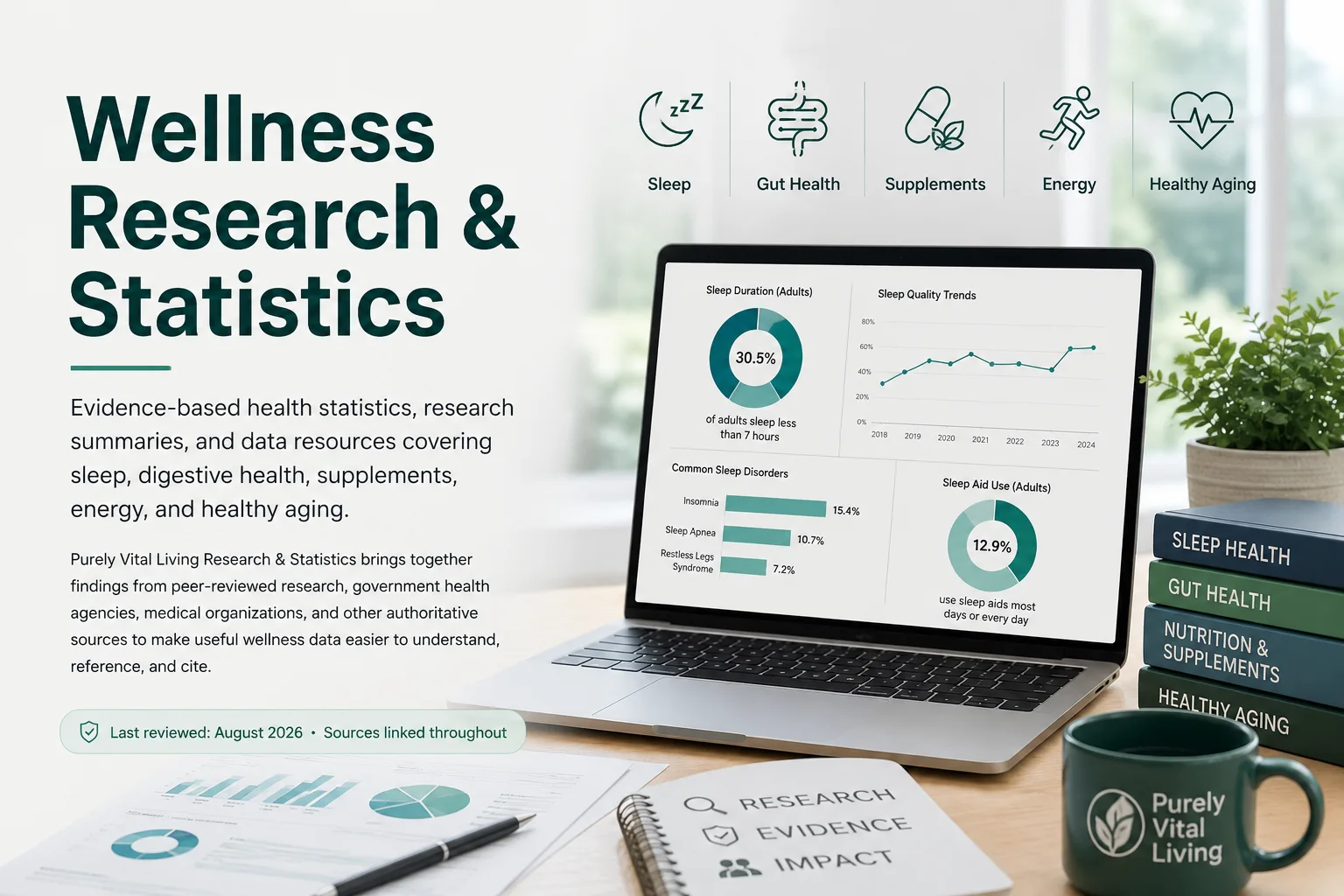
Wellness Research & Statistics
Evidence-based health statistics, research summaries, and data resources covering sleep, digestive health, supplements, energy, and healthy aging.
Purely Vital Living Research & Statistics brings together findings from peer-reviewed research, government health agencies, medical organizations, and other authoritative sources. Our goal is to make useful wellness data easier to understand, reference, and cite.
Last reviewed: August 2026 · Sources linked throughout
Featured Research
In-depth statistics and evidence summaries designed to be useful to readers, writers, journalists, and researchers.
Sleep · Statistics
35 Sleep Statistics You Should Know in 2026
Key statistics covering sleep duration, sleep deprivation, insomnia, sleep apnea, sleep quality, and the health effects associated with poor sleep.
Gut Health · Statistics
Digestive Health & IBS Statistics 2026
Statistics covering IBS prevalence, constipation, digestive symptoms, gut health, and the impact of digestive disorders on everyday life.
Supplements · Research Summary
What Research Says About Magnesium for Sleep
A research summary examining what clinical studies say about magnesium, sleep quality, insomnia, relaxation, and where the evidence remains uncertain.
Browse Research by Topic
Explore the evidence areas that will shape the Purely Vital Living research library as it expands.
Sleep
Sleep duration, insomnia, sleep apnea, REM sleep, and sleep-quality research.
Gut Health
IBS, constipation, the microbiome, bloating, and digestive-health statistics.
Supplements
Evidence summaries for magnesium, vitamin D, probiotics, NAD+, and other supplements.
Energy & Fatigue
Fatigue prevalence, sleep-energy relationships, and lifestyle research.
Healthy Aging
Longevity, physical activity, healthy aging, and age-related health statistics.
Wellness
Stress, emotional wellness, lifestyle habits, and preventive-health research.
Latest Statistics & Data
Current statistics and data resources, reviewed against authoritative original sources wherever possible.
Sleep Statistics 2026
35 statistics and research findings about how people sleep, sleep disorders, and sleep health.
Digestive Health & IBS Statistics 2026
Current statistics covering IBS, constipation, digestive symptoms, healthcare use, and gut health.
Research Summaries
Clear summaries of what current scientific research tells us—and what it does not.
Available now
What Research Says About Magnesium for Sleep
Review the evidence around magnesium forms, sleep quality, stress, and relaxation.
Available now
What Research Says About Probiotics for IBS
Review the evidence around probiotic strains, IBS symptoms, potential benefits, limitations, and what current research suggests.
Available now
Best Vitamins for Energy
Explore evidence-informed vitamins and nutrients associated with energy metabolism, deficiency-related fatigue, and supplementation.
How We Research Our Data
We prioritize original and authoritative sources whenever possible, including peer-reviewed scientific research, government health agencies, major medical organizations, universities, and recognized research institutions.
Peer-Reviewed Research
Clinical studies, systematic reviews, and meta-analyses.
Government Data
Public-health statistics and population datasets.
Medical Organizations
Evidence and statistics from recognized health institutions.
Academic Research
University and research-institute publications.
We link directly to original sources whenever they are available and clearly identify estimates, study findings, and limitations.
Citing Purely Vital Living
You’re welcome to reference statistics and research summaries from Purely Vital Living. When citing a statistic, please also review the original research source linked on the page.
Purely Vital Living Research & Statistics
About This Research Library
Purely Vital Living created this research library to make wellness evidence easier to find and understand. Statistics and research findings are reviewed against their original sources wherever possible, and pages are updated as new evidence becomes available.
Educational use: Research & Statistics is for educational purposes and is not a substitute for professional medical advice.