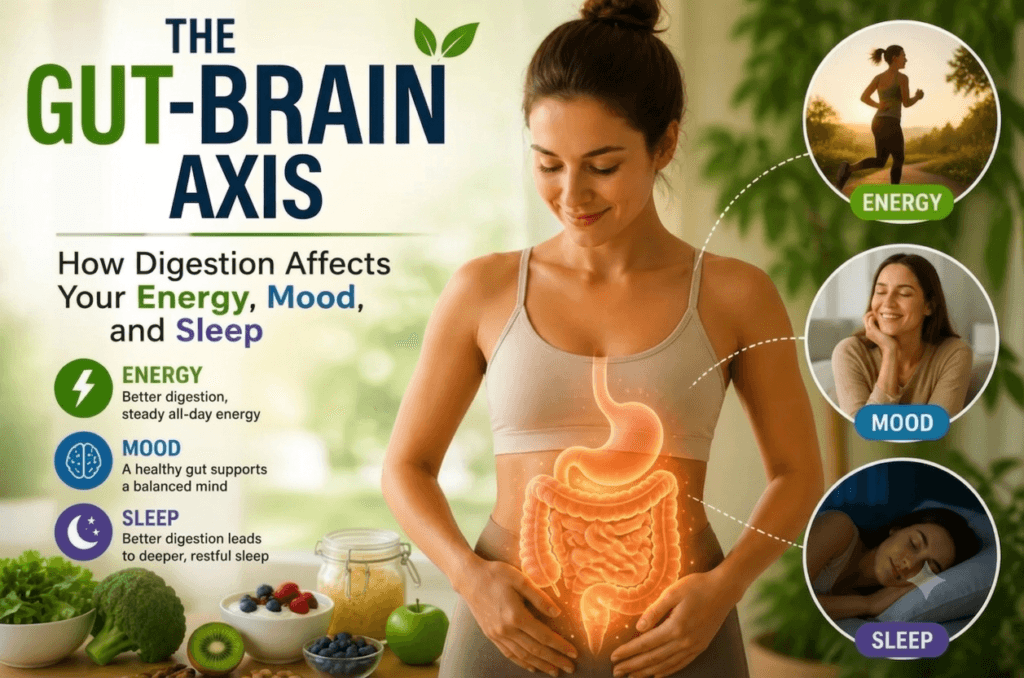
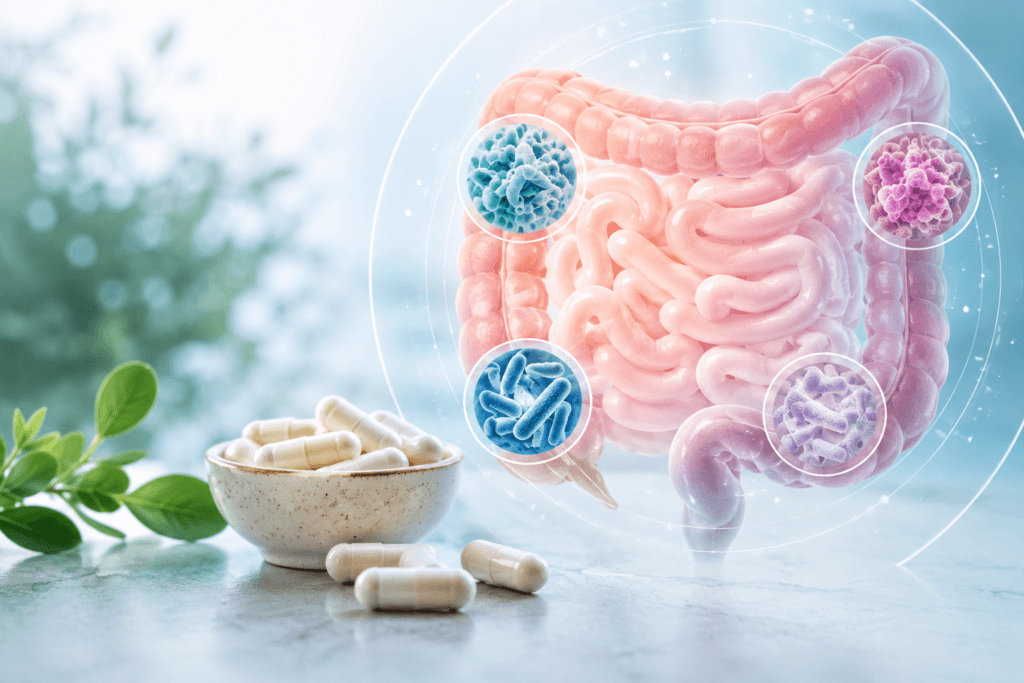
Probiotics are frequently discussed as a way to manage irritable bowel syndrome (IBS), but the evidence is more nuanced than simply saying probiotics work or do not work. Different probiotic strains, combinations, doses, treatment durations, and IBS subtypes can produce different results.
This research summary examines what current evidence says about probiotics for IBS, including IBS-C, IBS-D, bloating, abdominal pain, strain selection, dosage, safety, and why clinical guidelines remain cautious even when some studies report benefits.
In This Research Summary
Quick Answer: Do Probiotics Help IBS?
Some probiotics may help some people with IBS, but the evidence is strain- and symptom-specific. Research suggests certain strains or combinations may improve global IBS symptoms, abdominal pain, bloating, or bowel habits. However, study results are inconsistent, evidence certainty is often limited, and there is no single probiotic proven to be best for everyone with IBS.
| Question | What Current Evidence Suggests |
|---|---|
| Can probiotics help IBS overall? | Possibly; some strains and combinations show benefit. |
| Can they improve bloating or abdominal pain? | Some strains may, but results vary. |
| Do all probiotics work the same? | No. |
| Is there one best probiotic for IBS? | Not established. |
| Does IBS subtype matter? | Potentially. |
| Is a higher CFU count always better? | No. |
| Are probiotics generally well tolerated? | Usually, but individual responses vary. |
What Are Probiotics—and Why Might They Affect IBS?
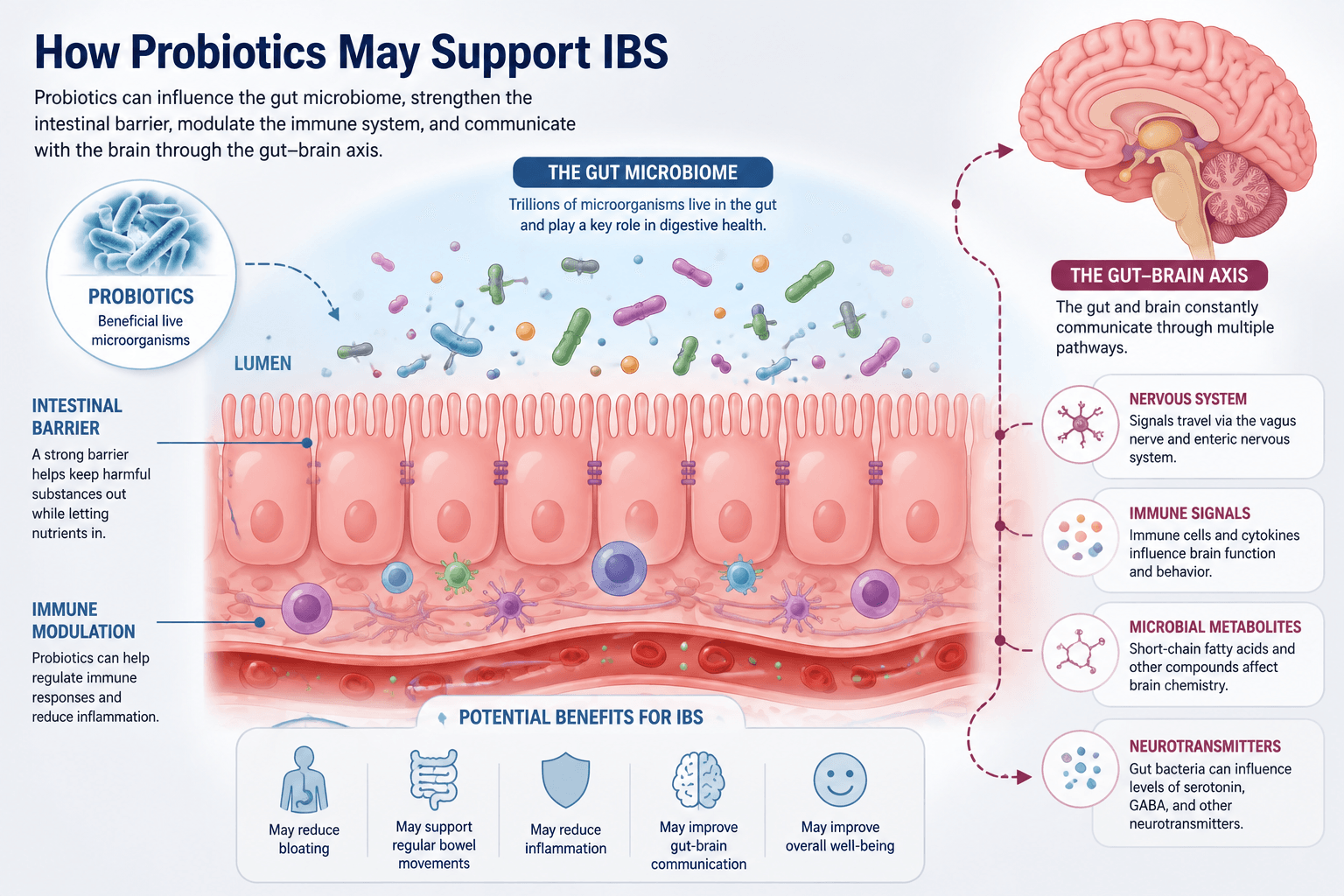
Probiotics are live microorganisms that, when administered in adequate amounts, may provide a health benefit. Researchers have investigated whether particular probiotics can influence factors relevant to IBS, including the gut microbiome, intestinal barrier function, fermentation, immune signaling, intestinal motility, and communication along the gut-brain axis.
These proposed mechanisms do not mean every probiotic will have the same effect. Benefits observed with one specific strain or formulation should not automatically be attributed to another.
What Does the Latest Research Say About Probiotics for IBS?
What Systematic Reviews and Meta-Analyses Have Found
Systematic reviews and meta-analyses have reported that some probiotic strains and combinations may improve global IBS symptoms compared with placebo. However, researchers repeatedly note substantial differences among trials, making it difficult to identify one universally effective probiotic strategy.
Which IBS Symptoms Show the Most Improvement?
Clinical trials have evaluated global IBS symptoms as well as abdominal pain, bloating, stool frequency, stool consistency, bowel habits, and quality of life. The strength and consistency of findings differ depending on the probiotic and outcome being measured.
How Strong Is the Evidence?
The overall evidence remains uncertain. Many studies are relatively small and use different organisms, combinations, doses, durations, IBS subtypes, and symptom scoring systems. These differences help explain why pooled research can appear promising while clinical guidelines remain cautious.
Which Probiotic Strains Have the Strongest Evidence for IBS?
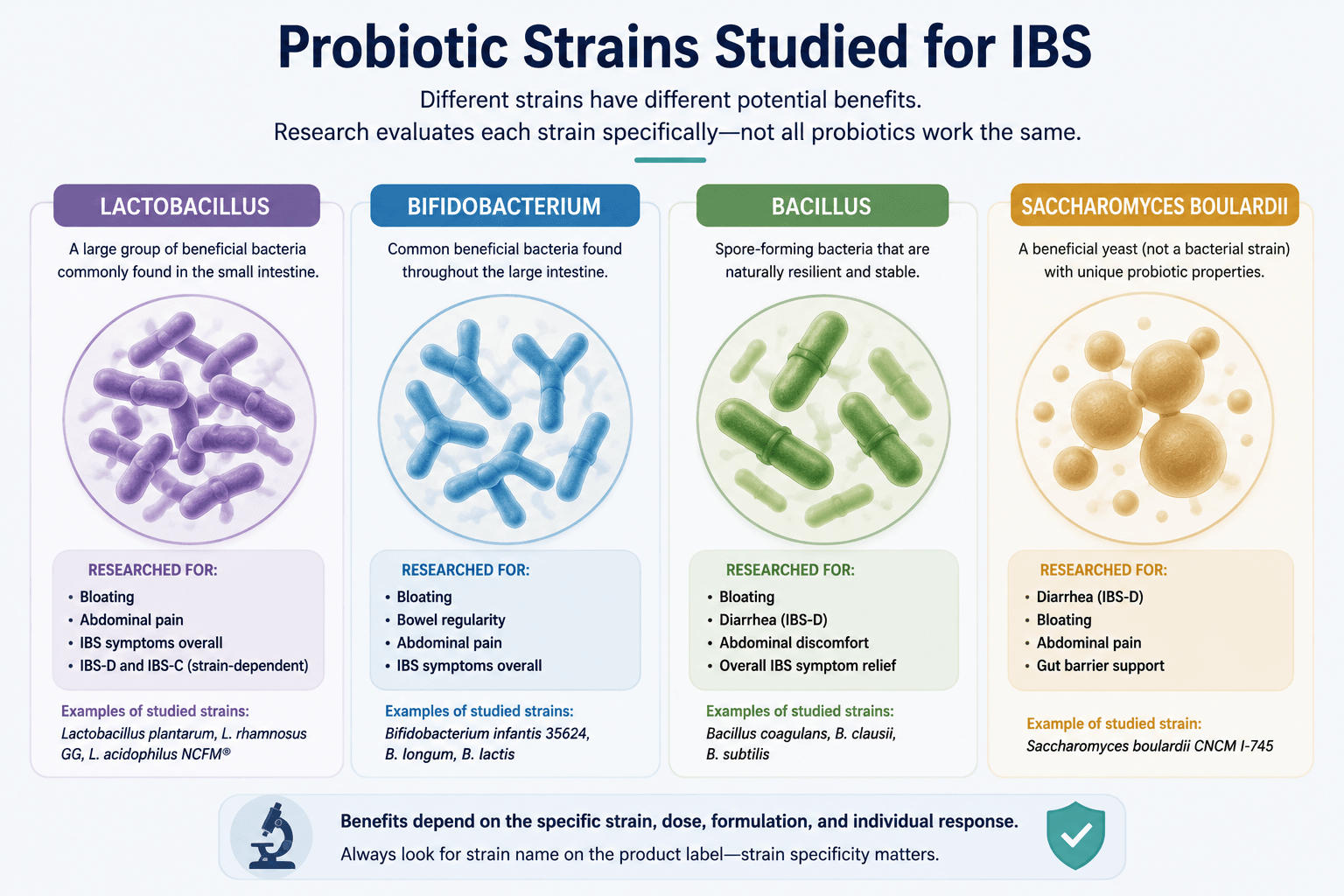
Probiotic effects should be considered at the strain level whenever possible. Two probiotics from the same species may not have identical clinical effects. Research has investigated strains and formulations involving Lactobacillus, Bifidobacterium, Bacillus, Saccharomyces boulardii, and multi-strain combinations, but the evidence is not equally strong for each.
Lactobacillus Strains
Several Lactobacillus strains have been studied for IBS symptoms, but findings from one strain should not be generalized to the entire genus or species.
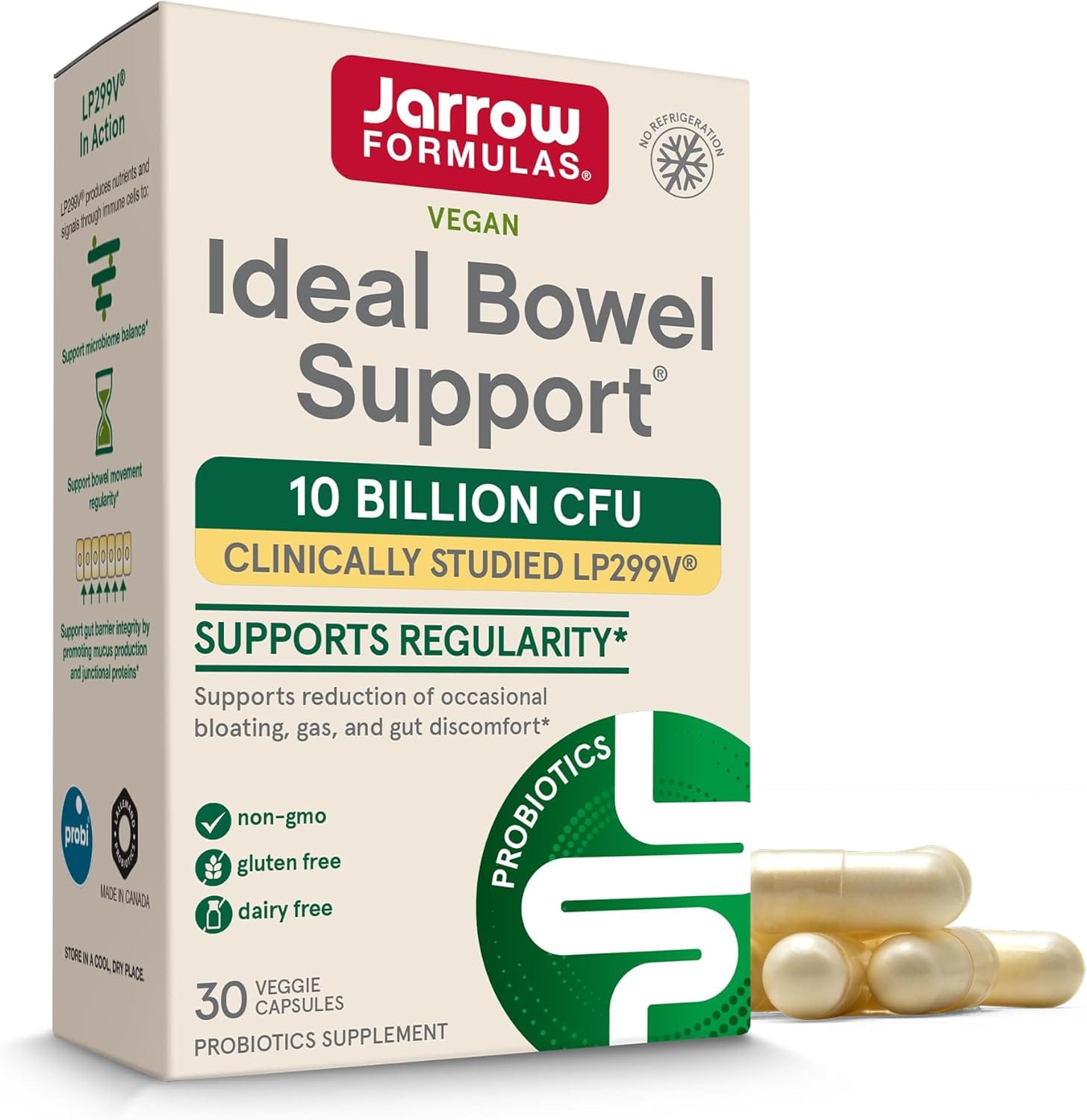
Bifidobacterium Strains
Bifidobacterium strains are among the most frequently studied probiotics in IBS research. Results vary by strain, dose, formulation, and outcome.
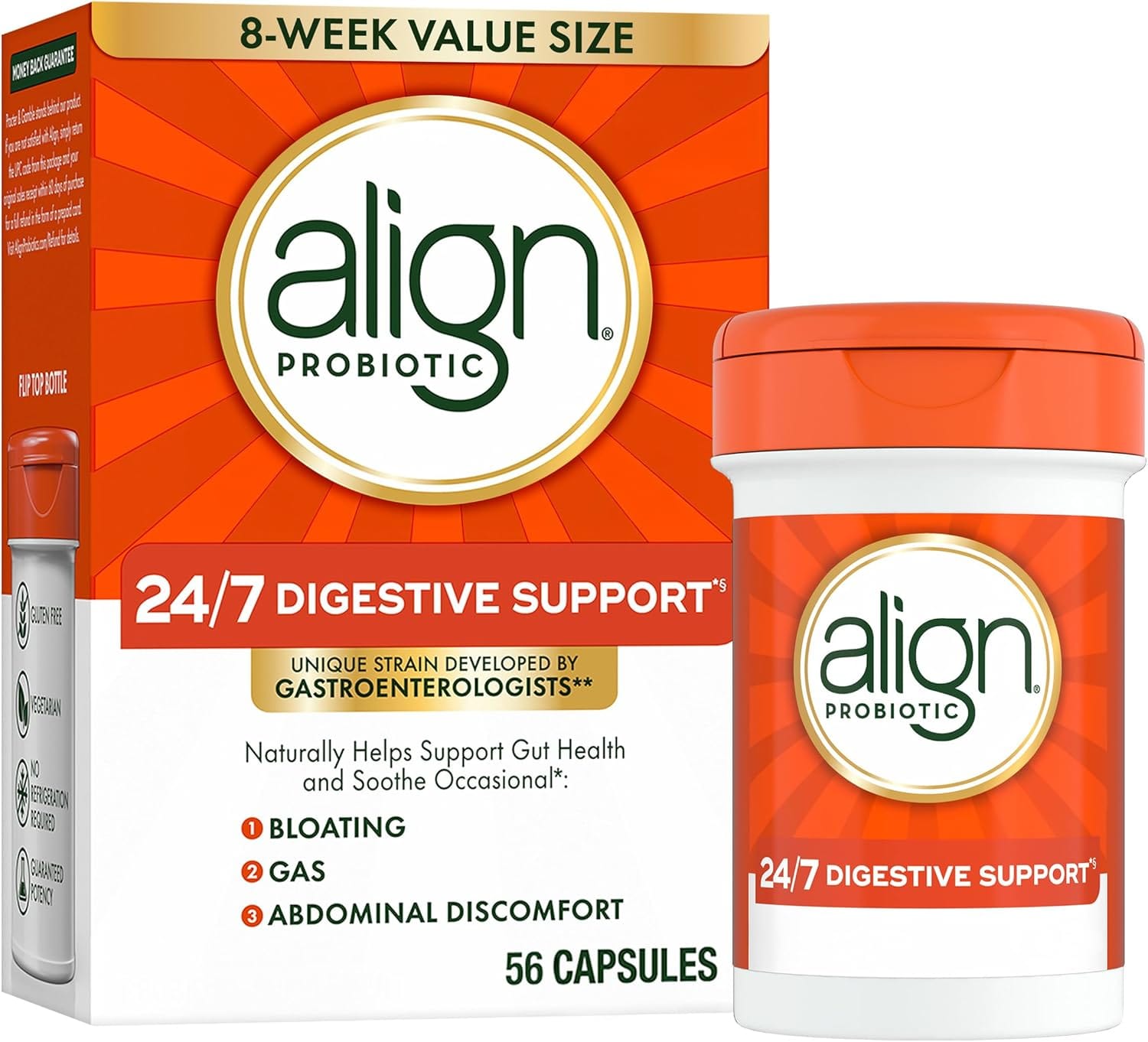
Bacillus Strains
Some Bacillus strains have shown promising results in clinical research, but additional high-quality strain-specific trials are needed.
Saccharomyces boulardii
This probiotic yeast has been evaluated in IBS and other gastrointestinal conditions, although IBS-specific results have not been uniformly positive.
Multi-Strain Probiotics
Some studies report benefits from multi-strain formulations, but combining more organisms does not automatically make a probiotic more effective.
Probiotics for IBS-D: What Does the Evidence Show?
For IBS with diarrhea (IBS-D), researchers have examined whether probiotics can improve stool consistency, bowel frequency, abdominal pain, bloating, and global symptoms. Some studies are encouraging, but evidence is not strong enough to assume that every probiotic marketed for digestive health will improve IBS-D.
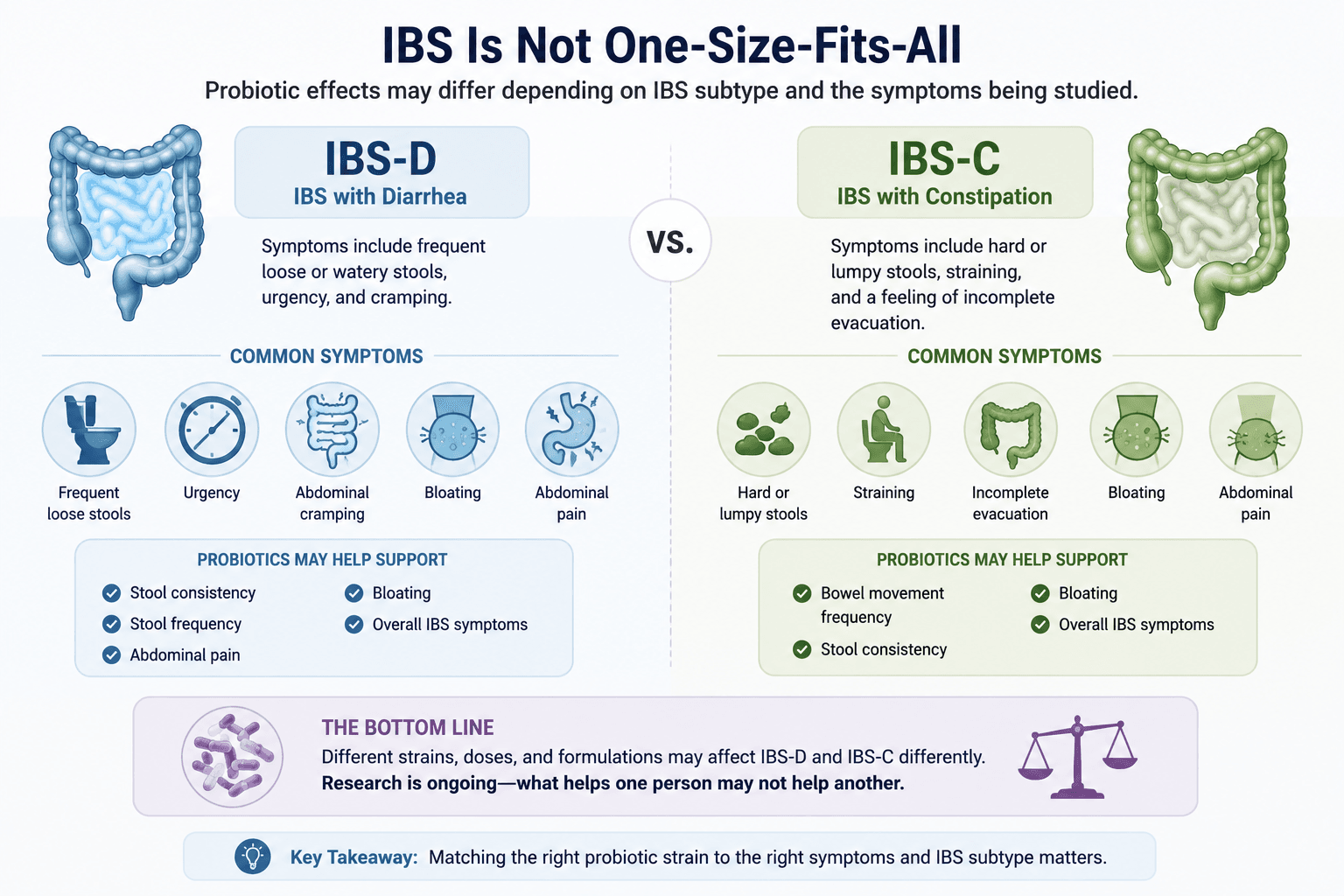
Probiotics for IBS-C: What Does the Evidence Show?
For IBS with constipation (IBS-C), studies have investigated bowel movement frequency, stool consistency, bloating, abdominal discomfort, and overall symptom severity. Outcomes vary substantially by strain and formulation, so IBS-C evidence should be evaluated separately from IBS-D evidence.
Can Probiotics Help IBS Bloating and Abdominal Pain?
Bloating, gas, and abdominal pain are common IBS symptoms and frequent outcomes in probiotic trials. Some strains have demonstrated improvements, but others have not. A product’s effectiveness for one symptom cannot be assumed from evidence involving a different symptom or probiotic strain.
Does Probiotic Strain Matter More Than CFU Count?
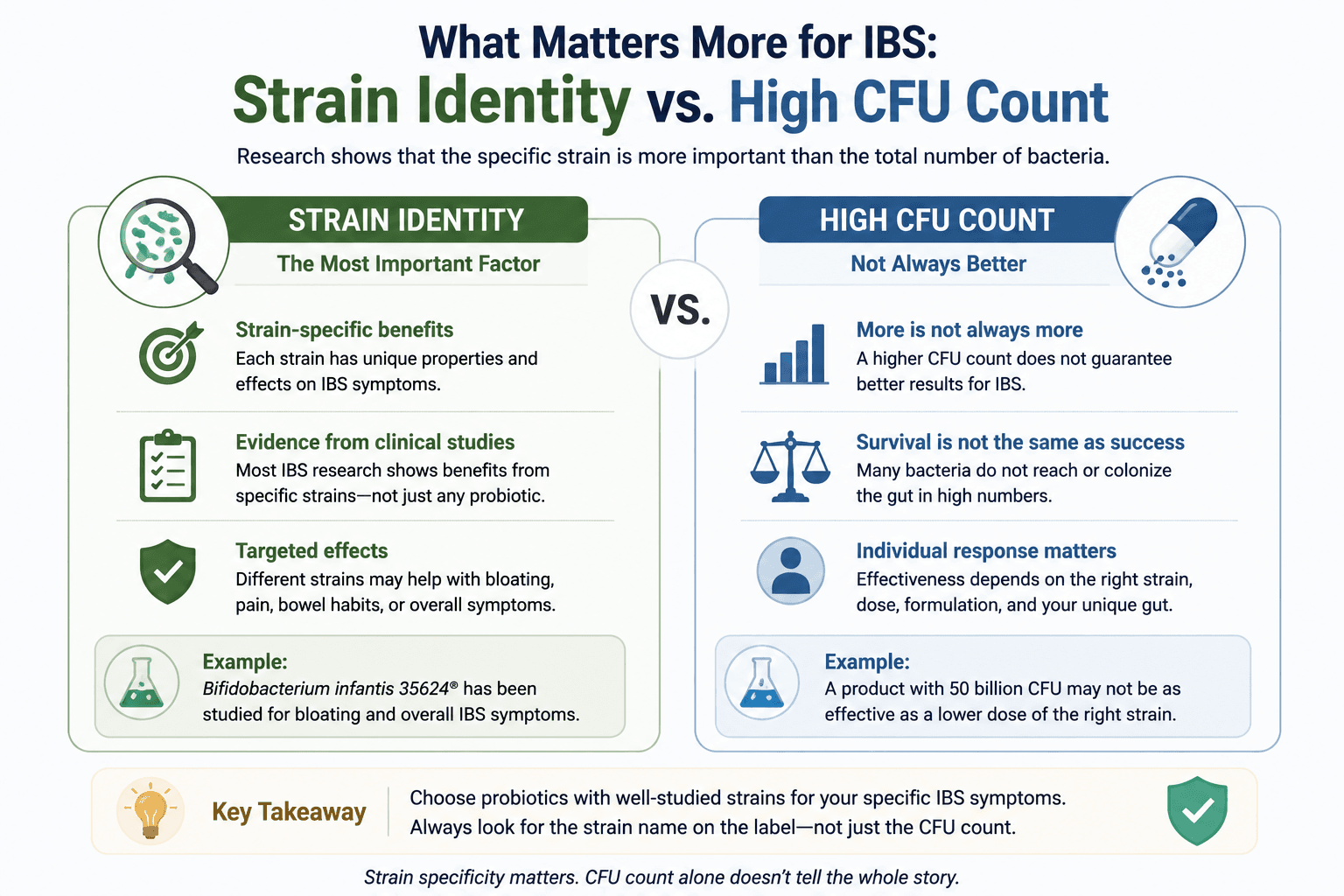
A larger colony-forming unit (CFU) number does not automatically mean a probiotic is more effective for IBS. The specific strain, dose used in clinical research, viability, formulation, and relevance of the evidence to the person’s symptoms are more informative than simply choosing the largest CFU number on a label.
What Probiotic Dosage Has Been Studied for IBS?
There is no single evidence-based probiotic dose that applies to every person with IBS. Clinical trials use widely varying doses depending on the organism and formulation. A dose supported for one strain should not automatically be applied to another.
How Long Do Probiotics Take to Work for IBS?
Probiotics are not expected to provide immediate IBS relief. Trials generally evaluate symptoms over a period of weeks rather than hours or days, and response times differ between individuals and formulations. If symptoms consistently worsen after starting a probiotic, reassessing the product and discussing persistent symptoms with a healthcare professional may be appropriate.
Capsules vs Powders: Does Probiotic Form Matter for IBS?
Probiotics are available as capsules, powders, liquids, and fermented foods. The delivery format alone does not determine effectiveness. Strain identity, viability, storage, dose, and evidence for the exact formulation are more important considerations.
Are Dairy-Free Probiotics Effective for IBS?
A probiotic does not need to contain dairy to be effective. Whether a probiotic helps IBS depends primarily on the microorganism and formulation. Dairy-free products may nevertheless be useful for people who avoid dairy or find that lactose-containing ingredients aggravate gastrointestinal symptoms.
Can Ingredients in Probiotic Supplements Trigger IBS Symptoms?
Sometimes symptoms attributed to the probiotic organism may instead relate to other ingredients in a supplement. Depending on individual tolerance, added prebiotics such as inulin or FOS, lactose, sugar alcohols, sweeteners, or other excipients may contribute to gas, bloating, or bowel changes. Reading the full ingredient list can therefore matter as much as checking the probiotic strains.
What Are the Side Effects of Probiotics for IBS?
Probiotics are generally well tolerated in healthy adults, but some people experience temporary gas, bloating, abdominal discomfort, or changes in bowel habits. People with serious underlying illness, compromised immune function, or persistent or worsening gastrointestinal symptoms should seek individualized medical advice before relying on probiotic supplementation.
Why Do Some Studies Find Benefits While Clinical Guidelines Remain Cautious?
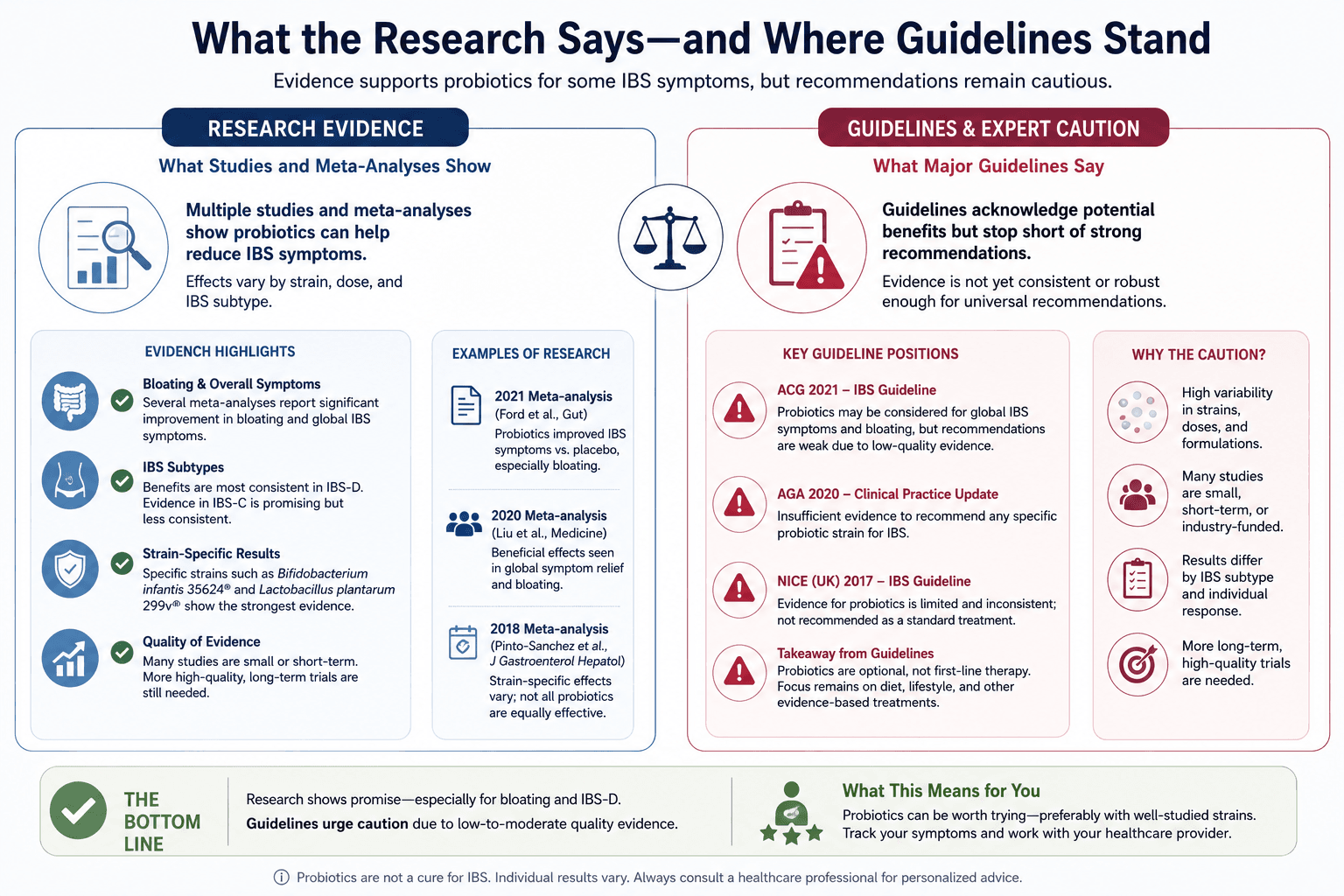
This apparent contradiction is one of the most important issues in probiotic research. Meta-analyses can find an average benefit across trials, but those trials may evaluate very different organisms, combinations, doses, durations, IBS subtypes, and endpoints.
- Different probiotic strains may have different biological effects.
- Some trials include relatively small numbers of participants.
- IBS-C, IBS-D, and mixed IBS may respond differently.
- Studies measure different outcomes and use different symptom scales.
- Treatment duration and dosage vary.
- Study quality and risk of publication bias can affect pooled estimates.
For these reasons, a positive pooled result does not mean that any probiotic purchased from a store is proven to treat IBS.
What Do Major Clinical Guidelines Say About Probiotics for IBS?
Major gastroenterology guidelines have generally taken a cautious position on probiotics for IBS because the certainty and consistency of evidence remain limited. Recommendations can differ between organizations, reflecting differences in how evidence is assessed and how much weight is placed on heterogeneity among probiotic trials.
This is why guideline recommendations should be considered alongside newer systematic reviews rather than treating either source in isolation.
How to Evaluate a Probiotic If You Have IBS
- Look for full strain identification. Species alone may not be enough.
- Check for human research on that specific strain.
- Look for evidence relevant to your IBS symptoms or subtype.
- Compare the labeled dose with the dose used in research.
- Check viability and expiration information.
- Follow storage requirements.
- Review additional ingredients that could aggravate symptoms.
- Be cautious of claims that more strains or more CFUs automatically mean better results.
More CFUs or more strains do not necessarily mean a better probiotic for IBS.
Who Might—and Might Not—Consider Trying a Probiotic?
Some adults with established IBS may choose to try a well-characterized probiotic after considering the evidence for their predominant symptoms. A probiotic should not be used to delay evaluation of new, severe, persistent, or unexplained digestive symptoms.
What Researchers Still Don’t Know
- Which individual strains provide the most reliable benefits.
- Which combinations are genuinely better than single strains.
- The optimal dose for each strain and IBS subtype.
- The ideal treatment duration.
- Whether IBS-C, IBS-D, and IBS-M require different probiotic approaches.
- Which biomarkers could predict who will respond.
- Whether benefits persist after supplementation stops.
Want Practical Gut Health Tips in Your Inbox?
Join Purely Vital Living for evidence-informed guidance on gut health, probiotics, digestion, sleep, energy, supplements, and healthy aging.
The Bottom Line
Probiotics may help some people with IBS, but the statement “probiotics work for IBS” is too broad. Current evidence suggests that effects can be strain-, formulation-, symptom-, and possibly subtype-specific. Research has identified promising options, but it has not established one universally best probiotic for IBS.
The most useful approach is to evaluate the evidence for the exact strain and formulation rather than relying solely on brand claims, CFU count, or the number of strains in a product.
Frequently Asked Questions About Probiotics for IBS
Which probiotic is best for people with IBS?
Research has not established one universally best probiotic for IBS. Evidence varies by strain, formulation, IBS subtype, and symptom.
Should you take a probiotic if you have IBS?
Some people with IBS may choose to trial a probiotic, but benefits are not guaranteed. Selecting a strain with human evidence relevant to the symptoms being targeted is more meaningful than choosing a generic probiotic.
Do probiotics help IBS or make it worse?
Some people report improvement, while others experience no change or temporary increases in gas or bloating. Individual response and the specific formulation matter.
Which probiotics have been studied for IBS-D?
Multiple bacterial and yeast strains have been evaluated for IBS-D, but results are not consistent enough to recommend all products containing a particular species. Strain-specific evidence is more useful.
Which probiotics have been studied for IBS-C?
Researchers have studied several probiotic strains and combinations for constipation-predominant IBS, examining bowel frequency, stool consistency, bloating, and global symptoms. Evidence remains formulation-specific.
How long does it take probiotics to work for IBS?
IBS trials generally assess probiotic effects over weeks rather than expecting immediate relief. The time to notice a change varies by strain, formulation, symptoms, and individual response.
How many CFUs should a probiotic for IBS contain?
There is no universal CFU target for IBS. The dose supported by research on the specific strain is more relevant than simply choosing the highest CFU count.
Can probiotics help IBS bloating?
Some probiotic strains have improved bloating in clinical studies, but results are inconsistent and should not be generalized to every probiotic.
Are dairy-free probiotics effective for IBS?
They can be. A probiotic’s potential effectiveness depends on its strains and formulation rather than whether dairy is present.
Should you take probiotics every day for IBS?
There is no universal schedule appropriate for every probiotic or every person with IBS. Use should reflect the specific product’s evidence and instructions and, when appropriate, guidance from a healthcare professional.
Related Reads
- Best Probiotics for Bloating and Gas (2026): What Actually Works?
- Best Supplements for Gut Health and Digestion
- Best Digestive Enzymes for Better Digestion
- How to Heal Your Gut Microbiome Naturally
- Living With IBS & Colonic Inertia: My 20-Year Journey
References
- Goodoory VC, Khasawneh M, Black CJ, et al. Efficacy of Probiotics in Irritable Bowel Syndrome: Systematic Review and Meta-analysis. Gastroenterology. 2023;165(5):1206-1218.
- Lacy BE, Pimentel M, Brenner DM, et al. ACG Clinical Guideline: Management of Irritable Bowel Syndrome. American Journal of Gastroenterology. 2021;116(1):17-44.
- American College of Gastroenterology. IBS Treatment: Probiotics. ACG notes that probiotics are not routinely recommended for IBS because clinical-study findings have been inconsistent.
- Su GL, Ko CW, Bercik P, et al. AGA Clinical Practice Guidelines on the Role of Probiotics in the Management of Gastrointestinal Disorders. Gastroenterology. 2020;159(2):697-705.
- National Institute for Health and Care Excellence. Irritable bowel syndrome in adults: diagnosis and management — Recommendations. NICE advises people who choose to try probiotics to use the product for at least four weeks while monitoring symptoms.
- McFarland LV, Karakan T, Karatas A. Strain-specific and outcome-specific efficacy of probiotics for the treatment of irritable bowel syndrome: A systematic review and meta-analysis. EClinicalMedicine. 2021;41:101154.
- Konstantis G, Efstathiou S, Pourzitaki C, et al. Efficacy and safety of probiotics in the treatment of irritable bowel syndrome: A systematic review and meta-analysis of randomized clinical trials using Rome IV criteria. Clinical Nutrition. 2023;42(5):800-809.
- National Center for Complementary and Integrative Health. Probiotics: Usefulness and Safety.
Medical note: This research summary is for educational purposes and is not a substitute for individualized medical advice. IBS symptoms can have multiple causes, and probiotic supplements may affect people differently.