
If you rely on coffee to get moving in the morning—or to survive the afternoon—you’re definitely not alone. Caffeine can make you feel more alert quickly, which is exactly why coffee, tea, and energy drinks become such easy habits.
But there’s an important difference between feeling stimulated and actually having sustainable energy.
I learned this distinction through my own struggles with fatigue. There were periods when I could sleep for what seemed like enough hours and still wake up tired. Later in the day, especially after meals or during long periods of sitting, my energy could drop even further. Reaching for something stimulating seemed like the obvious solution, but it never addressed why I was tired in the first place.
What helped me more was looking at energy as a bigger picture: sleep quality, hydration, food, digestion, movement, stress, and the way I structured my day.
If you’re wondering how to get energy without caffeine, that’s where I would start.
You don’t necessarily need another stimulant. Sometimes your body needs better conditions for producing and maintaining energy naturally.
In this guide, we’ll look at 11 practical ways to increase your energy without depending on coffee or energy drinks—and why some of the simplest habits can make a noticeable difference.
Table of Contents
- Can You Really Have More Energy Without Caffeine?
- Why You May Feel Tired Without Caffeine
- 1. Start With Your Sleep
- 2. Drink Water Before You Reach for Coffee
- 3. Eat for Steady Energy, Not a Quick Spike
- 4. Move When Your Energy Starts Dropping
- 5. Get Morning Sunlight to Support Your Body Clock
- 6. Keep Your Blood Sugar More Stable
- 7. Manage Stress Before It Drains Your Energy
- 8. Make Sure You’re Getting the Nutrients Your Body Needs
- 9. Don’t Ignore the Gut-Energy Connection
- 10. Use Natural Energy Boosters Strategically
- 11. Find the Reason Your Energy Is Low
- A Simple Caffeine-Free Energy Routine
- How Long Does It Take?
- Coffee Isn’t the Enemy
- Frequently Asked Questions
Can You Really Have More Energy Without Caffeine?
Yes. Caffeine isn’t required for your body to produce energy.
Your cells generate usable energy primarily from nutrients in food through processes that produce adenosine triphosphate (ATP). Sleep, hydration, physical activity, nutrient status, hormones, and overall health all influence how energetic you feel.
Caffeine works differently. Rather than supplying your body with energy, caffeine primarily blocks adenosine receptors in the brain. Adenosine is one of the chemical signals involved in building sleep pressure throughout the day. Blocking that signal can make you temporarily feel more awake.
That’s useful sometimes, but it doesn’t necessarily solve the underlying reason you’re tired.
- chronic sleep deprivation
- dehydration
- inadequate nutrition
- iron or vitamin B12 deficiency
- poor sleep quality
- prolonged stress
- an underlying health condition
The goal isn’t necessarily to eliminate caffeine completely. Moderate caffeine intake can fit into a healthy lifestyle for many people. Instead, the goal is to build enough natural energy that caffeine becomes optional rather than something you need just to function.
Why You May Feel Tired Without Caffeine
If you regularly consume caffeine, feeling unusually tired when you skip it doesn’t automatically mean your body needs caffeine. Part of the problem may simply be adaptation.
Regular caffeine consumption can lead to tolerance, meaning the same amount produces less noticeable stimulation over time. Suddenly reducing caffeine can also temporarily cause withdrawal symptoms such as fatigue, headaches, difficulty concentrating, and irritability.
But there’s another possibility: caffeine may have been masking fatigue that was already there.
When fatigue becomes persistent, the better question isn’t “What can I take to give me energy?” but “What’s draining my energy in the first place?”
1. Start With Your Sleep
If I had to choose one place to start when trying to improve energy naturally, it would be sleep. You can optimize your diet, take supplements, exercise, drink plenty of water, and build the perfect morning routine—but consistently poor sleep can undermine all of it.
For years, I assumed that getting enough hours should automatically mean waking up refreshed. My own experience taught me otherwise. You can spend seven or eight hours in bed and still wake up feeling exhausted if your sleep is fragmented or poor quality.
Focus on Sleep Quality, Not Just Hours
Most adults should generally aim for at least seven hours of sleep per night, but consistency and quality matter too.
- Keep your bedtime and wake time relatively consistent.
- Make your bedroom dark, quiet, and comfortably cool.
- Reduce bright screens close to bedtime.
- Avoid large meals immediately before bed.
- Create a predictable wind-down routine.
- Get daylight exposure earlier in the day.
- Exercise regularly, but notice whether intense late-night workouts disrupt sleep.


2. Drink Water Before You Reach for Coffee
One of the simplest things I do in the morning is hydrate. Hydration plays an important role in normal physical and cognitive function, and after several hours of sleep, you haven’t consumed fluids all night.
A Simple Morning Hydration Routine
- Drink a glass of water after waking.
- Continue drinking regularly throughout the morning.
- Increase fluids when exercising or spending time in hot weather.
- Use thirst and urine color as practical hydration cues.
What About Electrolytes?
Electrolytes such as sodium and potassium help regulate fluid balance, nerve signaling, and muscle function. Most people eating a balanced diet don’t need electrolyte drinks throughout an ordinary day, but they may be useful after prolonged sweating, intense exercise, illness involving fluid loss, or significant heat exposure.

3. Eat for Steady Energy, Not a Quick Spike
Food is one of the most obvious sources of energy, yet the way we eat can sometimes leave us feeling more tired. Instead of relying on refined carbohydrates or added sugar, I prefer meals built around a combination of protein + fiber-rich carbohydrates + healthy fats.
Examples include eggs with whole-grain toast and vegetables, Greek yogurt with berries, nuts and oats, lentils or beans with vegetables and whole grains, and salmon with vegetables and potatoes.
Pay Attention to Meal Size Too
This became especially important for me because of my digestive issues. Large meals could sometimes leave me feeling heavy, bloated, and tired afterward. Eating smaller, more manageable meals often worked better for both my digestion and my energy.
Don’t Fear Carbohydrates
Whole-food carbohydrate sources such as oats, potatoes, fruit, beans, lentils, brown rice, and whole grains also provide fiber, vitamins, minerals, and other nutrients. The goal isn’t to eliminate carbohydrates. It’s to build balanced meals that release energy more steadily.

4. Move When Your Energy Starts Dropping
When you’re tired, exercise may be the last thing you feel like doing. But movement doesn’t have to mean going to the gym for an hour. Sometimes a short walk is enough to change how you feel.
Try the 10-Minute Rule
- a 10-minute walk
- a few flights of stairs
- gentle stretching
- light bodyweight exercises
- walking outside while taking a work break
A short walk might help you feel more awake now. A consistently active lifestyle can help improve your overall capacity for energy later.
5. Get Morning Sunlight to Support Your Body Clock
Your body runs on an internal 24-hour clock known as your circadian rhythm. Light is one of the strongest signals that helps synchronize this rhythm with the outside world.
Getting natural light earlier in the day helps tell your brain that the day has started. That supports daytime alertness while also helping regulate the timing of melatonin later in the evening.
Make Morning Light Part of Your Routine
- drink your morning water outside
- take a short walk after waking
- eat breakfast near natural light
- walk the dog
- spend a few minutes outside before starting work

6. Keep Your Blood Sugar More Stable
Blood glucose naturally rises after eating. That’s normal. Problems can arise when meals and snacks rely heavily on rapidly digested carbohydrates and added sugars without much protein, fiber, or fat to balance them.
Build Meals Around Balance
A simple approach is to include protein, fiber, healthy fats, and quality carbohydrates. You don’t have to calculate every gram. The goal is simply to avoid building most of your meals around refined carbohydrates and added sugar.
7. Manage Stress Before It Drains Your Energy
Energy isn’t only physical. Mental and emotional strain can be exhausting too. Short-term stress is normal and sometimes useful, but when stress becomes constant, recovery becomes harder.
Use Small Recovery Periods During the Day
- taking a short walk
- stepping outside
- doing slow breathing for a few minutes
- stretching
- putting your phone away temporarily
- listening to music
- spending time in nature


8. Make Sure You’re Getting the Nutrients Your Body Needs
Sometimes fatigue isn’t primarily a lifestyle problem. Several nutrients are involved in normal energy metabolism, oxygen transport, muscle function, and nervous-system health, including iron, vitamin B12, folate, vitamin D, and magnesium.
If you’re already getting enough of a nutrient, taking substantially more doesn’t necessarily produce additional energy. The bigger benefit often comes when a genuine deficiency is identified and corrected.
Iron, Vitamin B12, Vitamin D and Magnesium
These nutrients all play important physiological roles, but supplements should support the foundation rather than replace it. Persistent fatigue should be properly evaluated rather than self-treated with high-dose supplements.
9. Don’t Ignore the Gut-Energy Connection
This is one area that became particularly important to me because of my own long history with digestive problems. Your digestive system helps break down food and absorb nutrients, while the gut also communicates extensively with the nervous system, immune system, and brain.
That doesn’t mean every case of fatigue is caused by an “unhealthy gut.” But digestive health can certainly be one piece of the energy puzzle.
Watch How Different Meals Affect You
Instead of chasing a supposedly perfect diet, notice what you eat, how much you eat, how your digestion responds, and how your energy feels afterward. Persistent digestive symptoms deserve proper evaluation.
10. Use Natural Energy Boosters Strategically
Once sleep, hydration, food, movement, stress, and basic nutrition are in place, there are a few additional strategies that may support energy. But I would put them after the fundamentals, not before them.
Creatine
Creatine is best known as a sports supplement and has strong evidence for improving certain aspects of exercise performance. Research is also exploring potential cognitive benefits.

Coenzyme Q10
CoQ10 is naturally present in the body and plays a role in mitochondrial energy production. Research has investigated it for fatigue in certain populations, but that doesn’t mean everyone who feels tired needs a CoQ10 supplement.
Rhodiola Rosea
Some research has investigated rhodiola for stress-related fatigue and performance, but I see it as a possible addition—not the foundation. Herbal supplements can interact with medications or be inappropriate for certain conditions.
11. Find the Reason Your Energy Is Low
This may be the most important strategy in the entire article. Don’t automatically assume that being tired means you need something to give you energy. Sometimes fatigue is a signal.
Persistent fatigue deserves curiosity, not just another cup of coffee.
If fatigue is persistent, unexplained, getting worse, or significantly interfering with everyday life, talk with a healthcare professional.
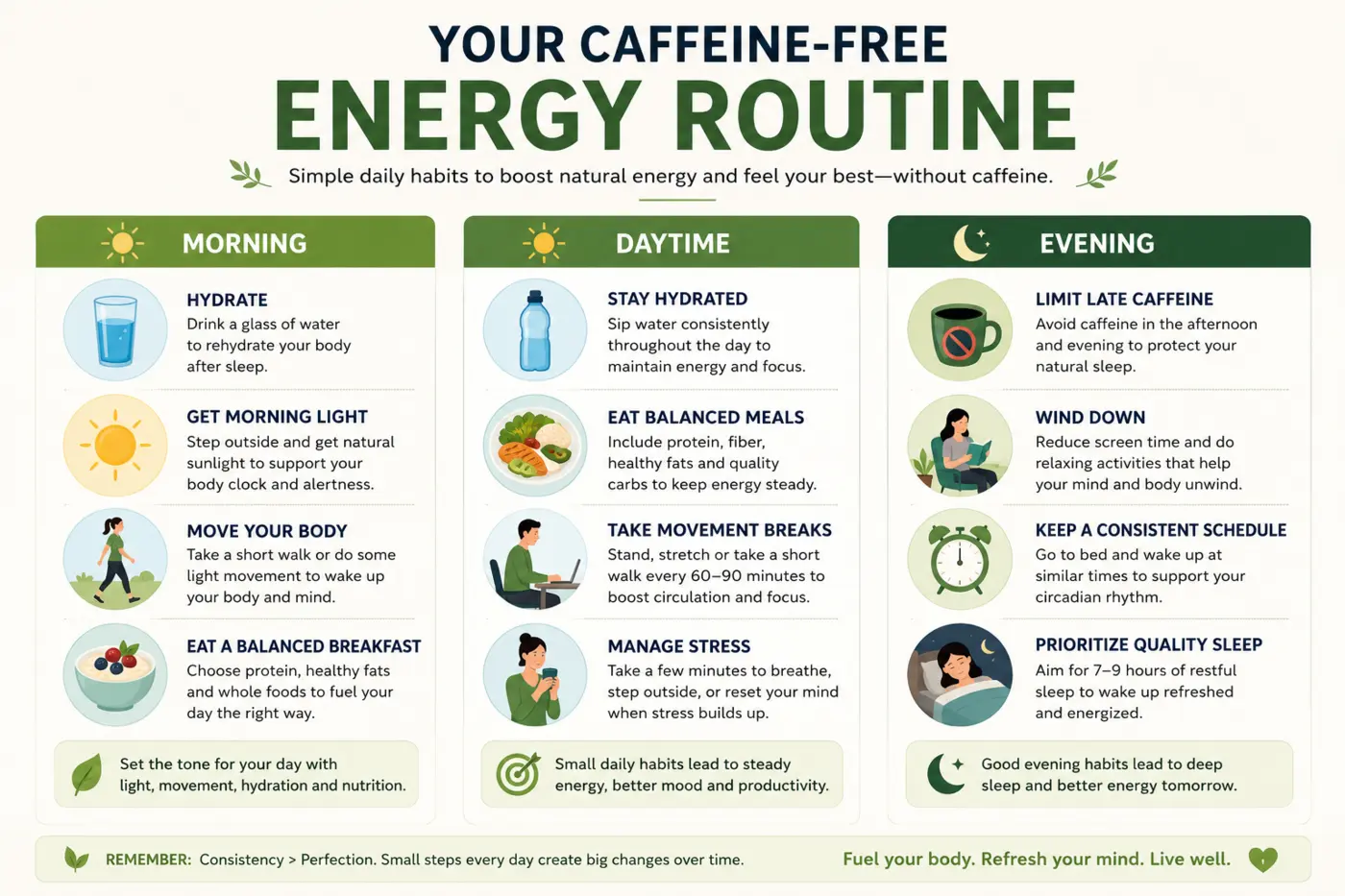
A Simple Caffeine-Free Energy Routine to Try
Morning
- Drink water after waking.
- Get outside for natural light.
- Eat a balanced breakfast if it works for you.
- Add a few minutes of walking or movement.
During the Day
- Build meals around protein, fiber-rich foods, healthy fats, and quality carbohydrates.
- Drink fluids regularly.
- Break up long periods of sitting.
- Take short recovery breaks when stress starts building.
Evening
- Avoid using late caffeine to compensate for daytime fatigue.
- Give yourself time to wind down.
- Reduce unnecessary stimulation close to bedtime.
- Keep your sleep and wake times reasonably consistent.
How Long Does It Take to Feel More Energetic Without Caffeine?
That depends on why your energy is low. Drinking water when you’re dehydrated, going outside, taking a short walk, or eating after going too long without food may help relatively quickly. Improving sleep, physical activity, eating habits, stress, or correcting a nutrient deficiency can take longer.
Coffee Isn’t the Enemy
I don’t think coffee needs to be treated as something unhealthy that everyone should eliminate. For most healthy adults, the FDA notes that around 400 mg of caffeine per day is not generally associated with negative effects, although individual sensitivity varies considerably.
A healthier approach is understanding how caffeine affects you. If you’re drinking caffeine all day just to stay functional, that’s worth looking at more closely.
Frequently Asked Questions
What naturally gives you energy fast?
Some of the quickest caffeine-free strategies include drinking water, eating a balanced snack or meal if you’re hungry, taking a short walk, getting outside in natural light, and moving after prolonged sitting.
How can I wake myself up without caffeine?
Try getting out of bed at a consistent time, drinking water, exposing yourself to outdoor morning light, and moving your body.
What can I drink for energy instead of coffee?
Water should be the first option if you’re dehydrated. Caffeine-free herbal tea can replace some of the ritual of coffee without acting as a stimulant.
What foods give you energy without caffeine?
Good choices include oats, fruit, potatoes, whole grains, beans, lentils, eggs, yogurt, fish, poultry, nuts, seeds, and vegetables. Combine protein, fiber-rich carbohydrates, and healthy fats.
How can I get energy without caffeine in the morning?
Start with four simple things: water + daylight + movement + nutritious food. Most importantly, protect the sleep that happens the night before.
How do I get energy without caffeine at work?
Break up prolonged sitting with short walks, drink water throughout the day, avoid extremely heavy lunches if they make you sleepy, and give your brain short breaks from continuous concentration.
Can you have good energy without caffeine?
Absolutely. Adequate sleep, nutritious food, hydration, regular physical activity, stress management, and overall health are much more fundamental to maintaining energy.
Why am I so tired when I don’t drink coffee?
If you regularly consume caffeine and suddenly stop, temporary caffeine withdrawal may make you feel tired. Another possibility is that caffeine was masking an existing problem such as insufficient sleep.
Should I quit caffeine completely?
Not necessarily. Many people tolerate moderate caffeine intake well. Reducing it may make sense if caffeine is disrupting your sleep, causing anxiety or jitteriness, upsetting digestion, or if you’re increasingly dependent on it.
When Tiredness Needs More Than Lifestyle Changes
Lifestyle habits matter enormously, but they can’t explain every case of fatigue. Consider talking with a healthcare professional if fatigue persists despite adequate rest, becomes noticeably worse, interferes with everyday activities, or occurs with other concerning symptoms.
Want practical tips for better energy, sleep, gut health, and healthy aging?
Join the Purely Vital Living newsletter and get science-backed wellness tips, realistic energy strategies, and healthy living ideas delivered to your inbox.
Final Thoughts: Build Energy Instead of Borrowing It
When I started paying more attention to my own fatigue, one of the biggest changes wasn’t discovering a particular supplement or secret morning routine. It was changing the way I thought about energy.
Instead of constantly asking, “What can give me energy right now?” I started paying more attention to “What is helping or draining my energy throughout the day?”
That led me back to the fundamentals—sleep, hydration, food, movement, digestion, stress, and recovery.
The goal isn’t to feel energetic every minute of every day. It’s to build habits that give your body a better chance to maintain healthy energy without constantly needing stimulation to push through exhaustion.
And if you still enjoy a cup of coffee? Enjoy it. Just try to make coffee something you choose, rather than something you feel you need.
Related Reads
- How to Get More Energy Naturally
- Best Diet for Energy: Foods That Help Prevent Energy Crashes
- Best Vitamins for Energy After 40
- Morning Fatigue: 7 Habits That Drain Your Energy Daily
References
- U.S. Food and Drug Administration (FDA). Spilling the Beans: How Much Caffeine Is Too Much?
- National Academies of Sciences, Engineering, and Medicine. Dietary Reference Intakes for Water, Potassium, Sodium, Chloride, and Sulfate.
- Centers for Disease Control and Prevention (CDC). About Sleep.
- National Heart, Lung, and Blood Institute (NHLBI). Sleep Deprivation and Deficiency.
- National Institute of Neurological Disorders and Stroke (NINDS). Brain Basics: Understanding Sleep.
- NIH Office of Dietary Supplements. Iron Fact Sheet for Health Professionals.
- NIH Office of Dietary Supplements. Vitamin B12 Fact Sheet for Health Professionals.
- NIH Office of Dietary Supplements. Vitamin D Fact Sheet for Health Professionals.
- NIH Office of Dietary Supplements. Magnesium Fact Sheet for Health Professionals.
- Kreider RB, Kalman DS, Antonio J, et al. International Society of Sports Nutrition position stand: safety and efficacy of creatine supplementation in exercise, sport, and medicine. JISSN. 2017;14:18.
- Guest NS, VanDusseldorp TA, Nelson MT, et al. International Society of Sports Nutrition position stand: caffeine and exercise performance. JISSN. 2021;18:1.
- EFSA Panel on Dietetic Products, Nutrition and Allergies. Scientific Opinion on the Safety of Caffeine. EFSA Journal. 2015;13(5):4102.
- Juliano LM, Griffiths RR. A critical review of caffeine withdrawal. Psychopharmacology. 2004;176:1–29.
- National Center for Complementary and Integrative Health (NCCIH). Rhodiola.
This article is for educational purposes only and isn’t intended to diagnose, treat, cure, or prevent any medical condition. Persistent or unexplained fatigue should be discussed with a qualified healthcare professional.