
Quick Answer
To get energy without caffeine, prioritize adequate sleep, regular food, fluids suited to your needs, daylight and activity you can tolerate. These can support alertness but do not treat every cause of fatigue. Reduce habitual caffeine gradually if withdrawal bothers you. Persistent or disabling tiredness needs assessment rather than another supplement.
Reducing caffeine works better when you plan what will replace the habit in daily life, such as a regular meal break or a more consistent bedtime. Identify when you usually reach for another cup and what you are feeling at that time. The aim is a manageable routine, while ongoing fatigue still deserves its own attention.
Below, we compare practical caffeine-free habits, discuss how to build a realistic day, and explain when persistent tiredness calls for further assessment.
When Fatigue Needs Medical Assessment
Arrange medical advice if tiredness persists for several weeks, affects daily life or worsens. Review sleep, medicines and other symptoms with a clinician; tests should follow your history rather than a universal vitamin panel. See NHS fatigue guidance.
Loud snoring, gasping or witnessed breathing pauses with daytime sleepiness need assessment for sleep apnea. Do not drive when sleepy. See NHLBI symptom guidance.
Seek urgent help for new chest pain, severe breathlessness, fainting or new confusion. Do not wait for a lifestyle plan to work.
If ordinary activity causes a delayed, prolonged worsening of symptoms, do not push through or follow automatic exercise increases. Seek assessment and adapt activity to your limits. See NICE guidance on post-exertional malaise.
Does an Energy Slump Mean Low Blood Sugar?
Sleepiness after a meal or a craving does not diagnose hypoglycemia. True low blood glucose is uncommon without diabetes and is especially relevant to insulin or certain diabetes medicines. If you have diabetes, follow your agreed monitoring and treatment plan; recurrent shaking, sweating or confusion needs medical advice. See NHS hypoglycemia guidance.
If you rely on coffee to get moving in the morning—or to survive the afternoon—you’re definitely not alone. Caffeine can make you feel more alert quickly, which is exactly why coffee, tea, and energy drinks become such easy habits.
But there’s an important difference between feeling stimulated and actually having sustainable energy.
I learned this distinction through my own struggles with fatigue. There were periods when I could sleep for what seemed like enough hours and still wake up tired. Later in the day, especially after meals or during long periods of sitting, my energy could drop even further. Reaching for something stimulating seemed like the obvious solution, but it never addressed why I was tired in the first place.
What helped me more was looking at energy as a bigger picture: sleep quality, hydration, food, digestion, movement, stress, and the way I structured my day.
If you’re wondering how to get energy without caffeine, that’s where I would start.
You don’t necessarily need another stimulant. Sometimes your body needs better conditions for producing and maintaining energy naturally.
This guide reviews 11 practical options for caffeine-free routines. They support general wellbeing but cannot identify or treat every cause of fatigue.
Table of Contents
- Can You Really Have More Energy Without Caffeine?
- Why You May Feel Tired Without Caffeine
- 1. Start With Your Sleep
- 2. Drink According to Your Needs
- 3. Eat for Steady Energy, Not a Quick Spike
- 4. Move When Your Energy Starts Dropping
- 5. Get Morning Sunlight to Support Your Body Clock
- 6. Build Meals That Suit Your Needs
- 7. Manage Stress Before It Drains Your Energy
- 8. Make Sure You’re Getting the Nutrients Your Body Needs
- 9. Don’t Ignore the Gut-Energy Connection
- 10. Use Natural Energy Boosters Strategically
- 11. Find the Reason Your Energy Is Low
- A Simple Caffeine-Free Energy Routine
- How Long Does It Take?
- Coffee Isn’t the Enemy
- Frequently Asked Questions
Can You Really Have More Energy Without Caffeine?
Yes. Caffeine isn’t required for your body to produce energy.
Your cells generate usable energy primarily from nutrients in food through processes that produce adenosine triphosphate (ATP). Sleep, hydration, physical activity, nutrient status, hormones, and overall health all influence how energetic you feel.
Caffeine works differently. Rather than supplying your body with energy, caffeine primarily blocks adenosine receptors in the brain. Adenosine is one of the chemical signals involved in building sleep pressure throughout the day. Blocking that signal can make you temporarily feel more awake.
That’s useful sometimes, but it doesn’t necessarily solve the underlying reason you’re tired.
- chronic sleep deprivation
- dehydration
- inadequate nutrition
- iron or vitamin B12 deficiency
- poor sleep quality
- prolonged stress
- an underlying health condition
The goal isn’t necessarily to eliminate caffeine completely. Moderate caffeine intake can fit into a healthy lifestyle for many people. Instead, the goal is to build enough natural energy that caffeine becomes optional rather than something you need just to function.
Why You May Feel Tired Without Caffeine
If you regularly consume caffeine, feeling unusually tired when you skip it doesn’t automatically mean your body needs caffeine. Part of the problem may simply be adaptation.
Regular caffeine consumption can lead to tolerance, meaning the same amount produces less noticeable stimulation over time. Suddenly reducing caffeine can also temporarily cause withdrawal symptoms such as fatigue, headaches, difficulty concentrating, and irritability.
But there’s another possibility: caffeine may have been masking fatigue that was already there.
When fatigue becomes persistent, the better question isn’t “What can I take to give me energy?” but “What’s draining my energy in the first place?”
1. Start With Your Sleep
If I had to choose one place to start when trying to improve energy naturally, it would be sleep. You can optimize your diet, take supplements, exercise, drink plenty of water, and build the perfect morning routine—but consistently poor sleep can undermine all of it.
For years, I assumed that getting enough hours should automatically mean waking up refreshed. My own experience taught me otherwise. You can spend seven or eight hours in bed and still wake up feeling exhausted if your sleep is fragmented or poor quality.
Protect Both Sleep Duration and Quality
Most adults should generally aim for at least seven hours of sleep per night, but consistency and quality matter too.
- Keep your bedtime and wake time relatively consistent.
- Make your bedroom dark, quiet, and comfortably cool.
- Reduce bright screens close to bedtime.
- Avoid large meals immediately before bed.
- Create a predictable wind-down routine.
- Get daylight exposure earlier in the day.
- Exercise regularly, but notice whether intense late-night workouts disrupt sleep.

2. Drink According to Your Needs
One of the simplest things I do in the morning is hydrate. Hydration plays an important role in normal physical and cognitive function, and after several hours of sleep, you haven’t consumed fluids all night.
A Simple Morning Hydration Routine
- Drink a glass of water after waking.
- Continue drinking regularly throughout the morning.
- Increase fluids when exercising or spending time in hot weather.
- Use thirst and urine color as practical hydration cues.
What About Electrolytes?
Most routine hydration does not require a high-sodium powder. Electrolytes may be useful with substantial sweating or specific losses. Seek advice with kidney or heart disease, salt restrictions or fluid restrictions.
Electrolytes such as sodium and potassium help regulate fluid balance, nerve signaling, and muscle function. Most people eating a balanced diet don’t need electrolyte drinks throughout an ordinary day, but they may be useful after prolonged sweating, intense exercise, illness involving fluid loss, or significant heat exposure.

3. Eat for Steady Energy, Not a Quick Spike
Food is one of the most obvious sources of energy, yet the way we eat can sometimes leave us feeling more tired. Instead of relying on refined carbohydrates or added sugar, I prefer meals built around a combination of protein + fiber-rich carbohydrates + healthy fats.
Examples include eggs with whole-grain toast and vegetables, Greek yogurt with berries, nuts and oats, lentils or beans with vegetables and whole grains, and salmon with vegetables and potatoes.
Pay Attention to Meal Size Too
This became especially important for me because of my digestive issues. Large meals could sometimes leave me feeling heavy, bloated, and tired afterward. Eating smaller, more manageable meals often worked better for both my digestion and my energy.
Don’t Fear Carbohydrates
Whole-food carbohydrate sources such as oats, potatoes, fruit, beans, lentils, brown rice, and whole grains also provide fiber, vitamins, minerals, and other nutrients. The goal isn’t to eliminate carbohydrates. It’s to build balanced meals that release energy more steadily.

4. Move When Your Energy Starts Dropping
When you’re tired, exercise may be the last thing you feel like doing. But movement doesn’t have to mean going to the gym for an hour. Sometimes a short walk is enough to change how you feel.
Try Brief Movement Only If Tolerated
Do not force a ten-minute target if activity worsens symptoms. Delayed or prolonged worsening after exertion needs assessment and activity adapted to your limits.
- a brief walk if tolerated
- a comfortable change of position
- gentle stretching
- light bodyweight exercises
- walking outside while taking a work break
Movement may suit some people, but is not a general fatigue treatment. If activity causes delayed or prolonged worsening, avoid pushing through and seek individualized advice.
5. Get Morning Sunlight to Support Your Body Clock
Your body runs on an internal 24-hour clock known as your circadian rhythm. Light is one of the strongest signals that helps synchronize this rhythm with the outside world.
Getting natural light earlier in the day helps tell your brain that the day has started. That supports daytime alertness while also helping regulate the timing of melatonin later in the evening.
Make Morning Light Part of Your Routine
- drink your morning water outside
- take a short walk after waking
- eat breakfast near natural light
- walk the dog
- spend a few minutes outside before starting work
6. Build Meals That Suit Your Needs
Meals can influence hunger and fullness, but feeling tired after eating does not diagnose abnormal glucose. Include varied food that meets your needs rather than using symptoms to infer a spike or low.
Build Meals Around Balance
A simple approach is to include protein, fiber, healthy fats, and quality carbohydrates. You don’t have to calculate every gram. The goal is simply to avoid building most of your meals around refined carbohydrates and added sugar.
7. Manage Stress Before It Drains Your Energy
Energy isn’t only physical. Mental and emotional strain can be exhausting too. Short-term stress is normal and sometimes useful, but when stress becomes constant, recovery becomes harder.
Use Small Recovery Periods During the Day
- taking a short walk
- stepping outside
- doing slow breathing for a few minutes
- stretching
- putting your phone away temporarily
- listening to music
- spending time in nature

8. Make Sure You’re Getting the Nutrients Your Body Needs
Sometimes fatigue isn’t primarily a lifestyle problem. Several nutrients are involved in normal energy metabolism, oxygen transport, muscle function, and nervous-system health, including iron, vitamin B12, folate, vitamin D, and magnesium.
If you’re already getting enough of a nutrient, taking substantially more doesn’t necessarily produce additional energy. The bigger benefit often comes when a genuine deficiency is identified and corrected.
Iron, Vitamin B12, Vitamin D and Magnesium
These nutrients all play important physiological roles, but supplements should support the foundation rather than replace it. Persistent fatigue should be properly evaluated rather than self-treated with high-dose supplements.

9. Don’t Ignore the Gut-Energy Connection
This is one area that became particularly important to me because of my own long history with digestive problems. Your digestive system helps break down food and absorb nutrients, while the gut also communicates extensively with the nervous system, immune system, and brain.
That doesn’t mean every case of fatigue is caused by an “unhealthy gut.” But digestive health can certainly be one piece of the energy puzzle.
Watch How Different Meals Affect You
Instead of chasing a supposedly perfect diet, notice what you eat, how much you eat, how your digestion responds, and how your energy feels afterward. Persistent digestive symptoms deserve proper evaluation.
10. Use Natural Energy Boosters Strategically
Once sleep, hydration, food, movement, stress, and basic nutrition are in place, there are a few additional strategies that may support energy. But I would put them after the fundamentals, not before them.
Creatine
Creatine has evidence for certain strength and repeated high-intensity exercise outcomes, not as a general treatment for unexplained fatigue. Cognitive research does not establish a need for every reader. See NIH exercise-supplement guidance.

Coenzyme Q10
CoQ10 is naturally present in the body and plays a role in mitochondrial energy production. Research has investigated it for fatigue in certain populations, but that doesn’t mean everyone who feels tired needs a CoQ10 supplement.
Rhodiola Rosea
Rhodiola rosea is an adaptogenic herb studied for supporting resilience to stress, mental performance and stress-related fatigue. A 2022 review reported encouraging findings from clinical studies of specific rhodiola preparations. Effects depend on the extract, dose and individual circumstances.

11. Find the Reason Your Energy Is Low
This may be the most important strategy in the entire article. Don’t automatically assume that being tired means you need something to give you energy. Sometimes fatigue is a signal.
Persistent fatigue deserves curiosity, not just another cup of coffee.
If fatigue is persistent, unexplained, getting worse, or significantly interfering with everyday life, talk with a healthcare professional.
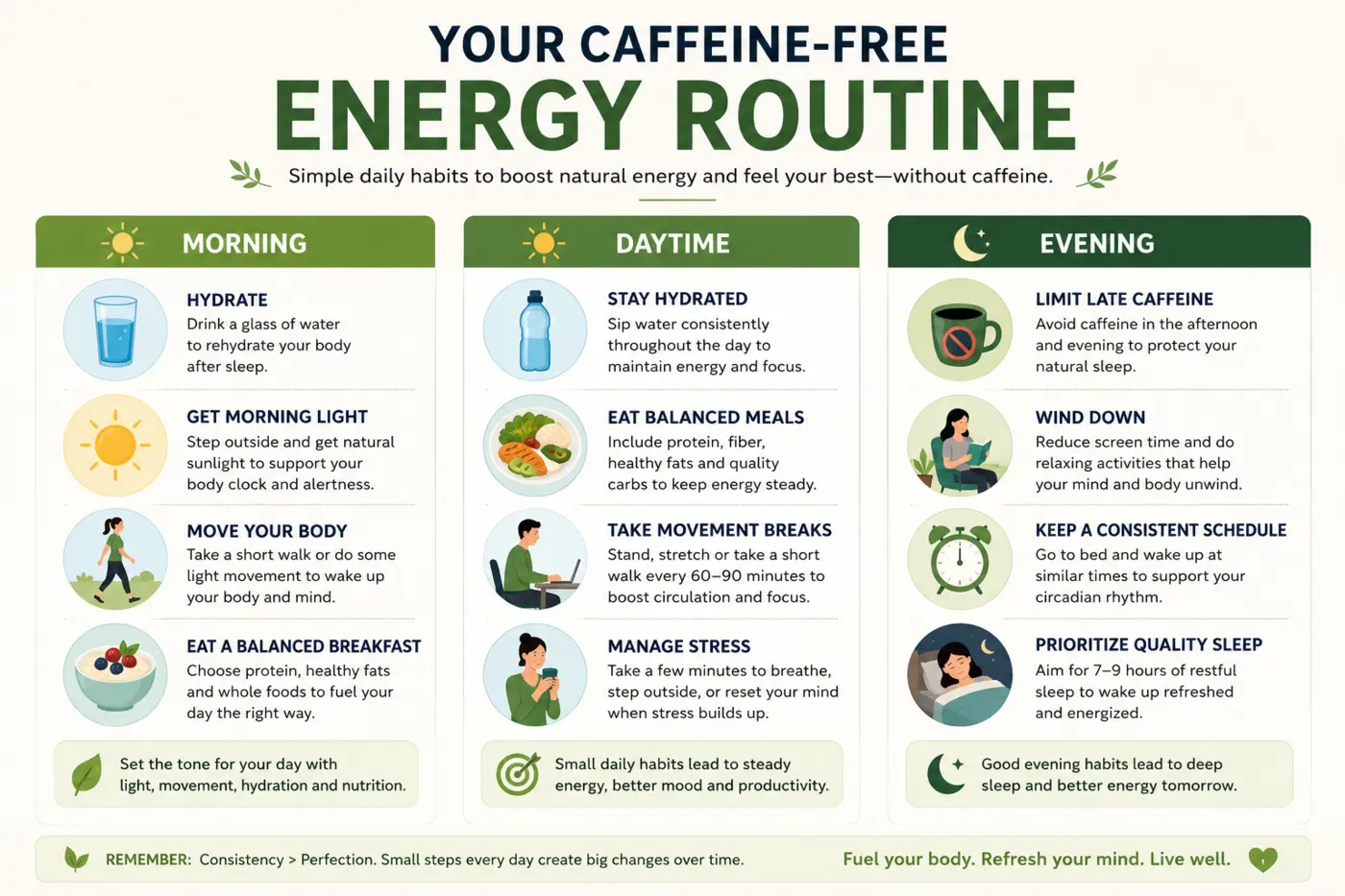
A Simple Caffeine-Free Energy Routine to Try
Morning
- Drink water after waking.
- Get outside for natural light.
- Eat a balanced breakfast if it works for you.
- Add a few minutes of walking or movement.
During the Day
- Build meals around protein, fiber-rich foods, healthy fats, and quality carbohydrates.
- Drink fluids regularly.
- Break up long periods of sitting.
- Take short recovery breaks when stress starts building.
Evening
- Avoid using late caffeine to compensate for daytime fatigue.
- Give yourself time to wind down.
- Reduce unnecessary stimulation close to bedtime.
- Keep your sleep and wake times reasonably consistent.
How Long Does It Take to Feel More Energetic Without Caffeine?
That depends on why your energy is low. Drinking water when you’re dehydrated, going outside, taking a short walk, or eating after going too long without food may help relatively quickly. Improving sleep, physical activity, eating habits, stress, or correcting a nutrient deficiency can take longer.
Coffee Isn’t the Enemy
Caffeine need not be eliminated by everyone. The FDA cites 400 mg daily for most healthy adults as an amount not generally associated with negative effects, not a target. Individual tolerance and medical circumstances differ; pregnancy and some conditions require different advice.
A healthier approach is understanding how caffeine affects you. If you’re drinking caffeine all day just to stay functional, that’s worth looking at more closely.
Frequently Asked Questions
What naturally gives you energy fast?
No caffeine-free trick reliably restores alertness for everyone. Food if hungry, appropriate fluid or a comfortable break may help in some circumstances. Severe sleepiness cannot be made safe for driving through a snack, walk or supplement. Persistent or disabling fatigue deserves assessment rather than another quick energy product.
How can I wake myself up without caffeine?
Allow enough sleep and a wake time that fits your schedule. Daylight and a comfortable routine may help some people feel ready for the day, but extra water or exercise is not automatically needed. Loud snoring, breathing pauses or ongoing unrefreshing sleep warrants assessment; do not drive when sleepy.
What can I drink for energy instead of coffee?
Water or a caffeine-free drink can be a beverage choice, but no drink treats every cause of fatigue. Coffee and tea also contribute fluid. Electrolyte powders are optional for specific needs, not routine energy drinks. Follow prescribed fluid or salt limits and check suitability of herbal ingredients with medicines.
What foods give you energy without caffeine?
Ordinary carbohydrate foods, protein sources, fats and fiber can supply dietary energy without caffeine. Examples include grains, potatoes, beans, fruit, yogurt or alternatives, nuts and eggs where suitable. Choose enough varied food for your needs; a particular ingredient cannot guarantee alertness or resolve unexplained tiredness.
How can I get energy without caffeine in the morning?
Protect sleep first, then choose manageable steps such as daylight, food if wanted, appropriate fluids or a short planning break. There is no required sequence. Adapt movement to your tolerance rather than forcing a target. Persistent morning exhaustion needs review even when you follow a consistent routine.
How do I get energy without caffeine at work?
Consider workload, sleep opportunity, regular meals and comfortable breaks. A brief change of task or position may help, but extra activity is not suitable for everyone. Avoid pushing through delayed symptom worsening. If sleepiness affects driving, machinery or other safety-critical work, stop and address the safety risk.
Can you have good energy without caffeine?
Caffeine is not required for normal nutrition or everyday functioning, and many people choose little or none. However, removing caffeine does not guarantee relief from fatigue. Sleep, medicines, health and daily demands can all matter. Seek assessment when tiredness is persistent, severe or interferes with normal activities.
Why am I so tired when I don’t drink coffee?
Withdrawal can cause temporary tiredness, headache or difficulty concentrating after reducing habitual caffeine. Caffeine may also have been masking inadequate sleep or another problem. Consider reducing gradually if withdrawal is troublesome, and do not automatically attribute prolonged or worsening fatigue to caffeine adjustment without seeking advice.
Should I quit caffeine completely?
Not everyone needs to quit caffeine. Review amount, timing, sleep and unwanted effects, and follow individualized medical advice. Reducing gradually may be more comfortable for habitual users. Coffee should not substitute for assessment when fatigue persists or when you need increasing stimulation to function safely.
When Tiredness Needs More Than Lifestyle Changes
Lifestyle habits matter enormously, but they can’t explain every case of fatigue. Consider talking with a healthcare professional if fatigue persists despite adequate rest, becomes noticeably worse, interferes with everyday activities, or occurs with other concerning symptoms.
Want practical tips for better energy, sleep, gut health, and healthy aging?
Join the Purely Vital Living newsletter and get science-backed wellness tips, realistic energy strategies, and healthy living ideas delivered to your inbox.
Final Thoughts: Build Energy Instead of Borrowing It
When I started paying more attention to my own fatigue, one of the biggest changes wasn’t discovering a particular supplement or secret morning routine. It was changing the way I thought about energy.
Instead of constantly asking, “What can give me energy right now?” I started paying more attention to “What is helping or draining my energy throughout the day?”
That led me back to the fundamentals—sleep, hydration, food, movement, digestion, stress, and recovery.
The goal isn’t to feel energetic every minute of every day. It’s to build habits that give your body a better chance to maintain healthy energy without constantly needing stimulation to push through exhaustion.
And if you still enjoy a cup of coffee? Enjoy it. Just try to make coffee something you choose, rather than something you feel you need.
Related Reads
- How to Get More Energy Naturally
- Best Diet for Energy: Balanced Foods and Meal Ideas
- Best Vitamins for Energy After 40
- Morning Fatigue: 7 Habits to Review and When to Seek Help
References
- U.S. Food and Drug Administration (FDA). Spilling the Beans: How Much Caffeine Is Too Much?
- National Academies of Sciences, Engineering, and Medicine. Dietary Reference Intakes for Water, Potassium, Sodium, Chloride, and Sulfate.
- Centers for Disease Control and Prevention (CDC). About Sleep.
- National Heart, Lung, and Blood Institute (NHLBI). Sleep Deprivation and Deficiency.
- National Institute of Neurological Disorders and Stroke (NINDS). Brain Basics: Understanding Sleep.
- NIH Office of Dietary Supplements. Iron Fact Sheet for Health Professionals.
- NIH Office of Dietary Supplements. Vitamin B12 Fact Sheet for Health Professionals.
- NIH Office of Dietary Supplements. Vitamin D Fact Sheet for Health Professionals.
- NIH Office of Dietary Supplements. Magnesium Fact Sheet for Health Professionals.
- Kreider RB, Kalman DS, Antonio J, et al. International Society of Sports Nutrition position stand: safety and efficacy of creatine supplementation in exercise, sport, and medicine. JISSN. 2017;14:18.
- Guest NS, VanDusseldorp TA, Nelson MT, et al. International Society of Sports Nutrition position stand: caffeine and exercise performance. JISSN. 2021;18:1.
- EFSA Panel on Dietetic Products, Nutrition and Allergies. Scientific Opinion on the Safety of Caffeine. EFSA Journal. 2015;13(5):4102.
- Juliano LM, Griffiths RR. A critical review of caffeine withdrawal. Psychopharmacology. 2004;176:1–29.
- National Center for Complementary and Integrative Health (NCCIH). Rhodiola.
- BioEmblem: Triple Complex Magnesium, 90 Capsules — product information.
- NCCIH: Magnesium Supplements for Sleep Disorders — evidence summary.
- Ivanova Stojcheva E, Quintela JC. The Effectiveness of Rhodiola rosea L. Preparations in Alleviating Various Aspects of Life-Stress Symptoms and Stress-Induced Conditions—Encouraging Clinical Evidence. Molecules. 2022;27:3902.
- Gaia Herbs: Rhodiola Rosea — product information.
- NCCIH: Rhodiola — evidence and safety overview.
This article is for educational purposes only and isn’t intended to diagnose, treat, cure, or prevent any medical condition. Persistent or unexplained fatigue should be discussed with a qualified healthcare professional.
Evidence Check: Routines and Fatigue
Editorial evidence check updated November 12, 2026. Routine suggestions and commercial examples do not establish treatment for unexplained fatigue. Personal experience cannot predict another reader’s response.