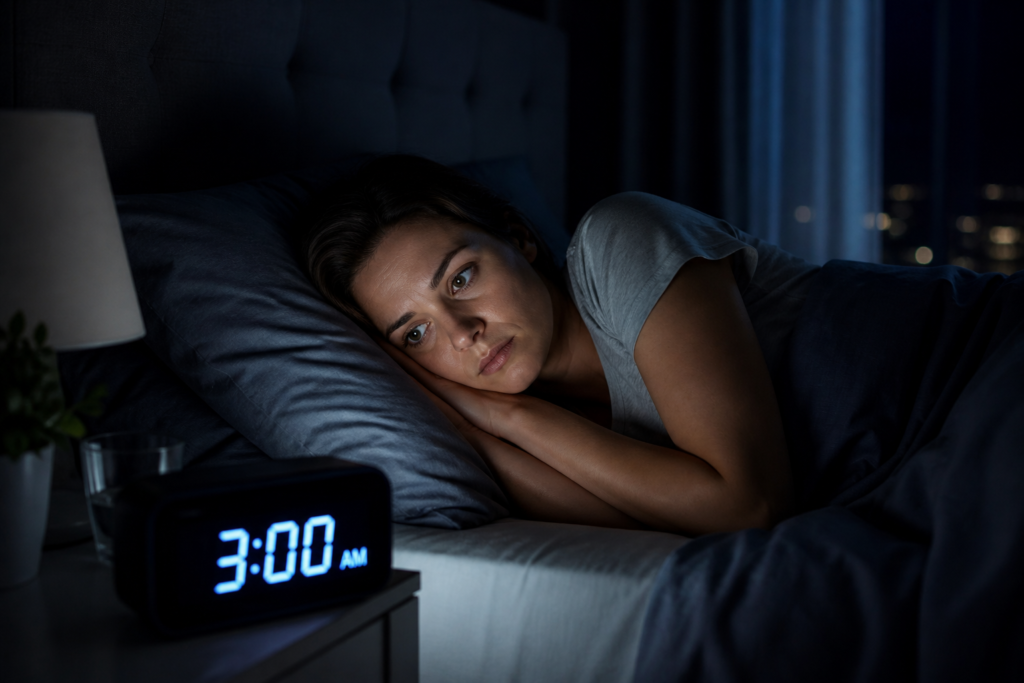
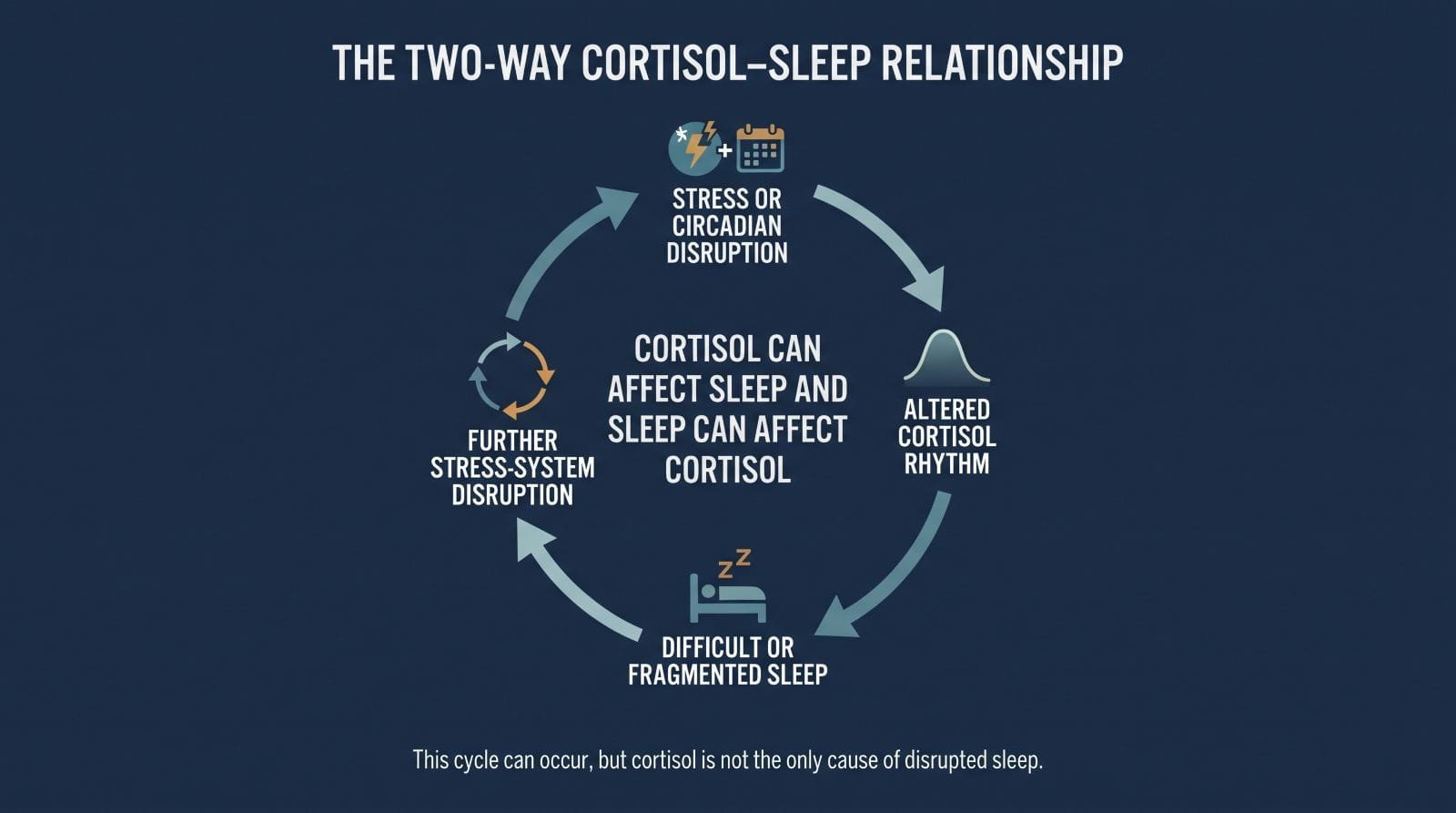
Cortisol and sleep have a two-way relationship. Cortisol normally rises toward morning to support alertness and declines toward nighttime. Stress, circadian disruption and substantial sleep loss can alter this pattern, while poor sleep can also affect cortisol regulation. However, trouble falling asleep or waking during the night does not by itself prove that cortisol is abnormally high.
- Cortisol is an essential hormone—not something the body should eliminate.
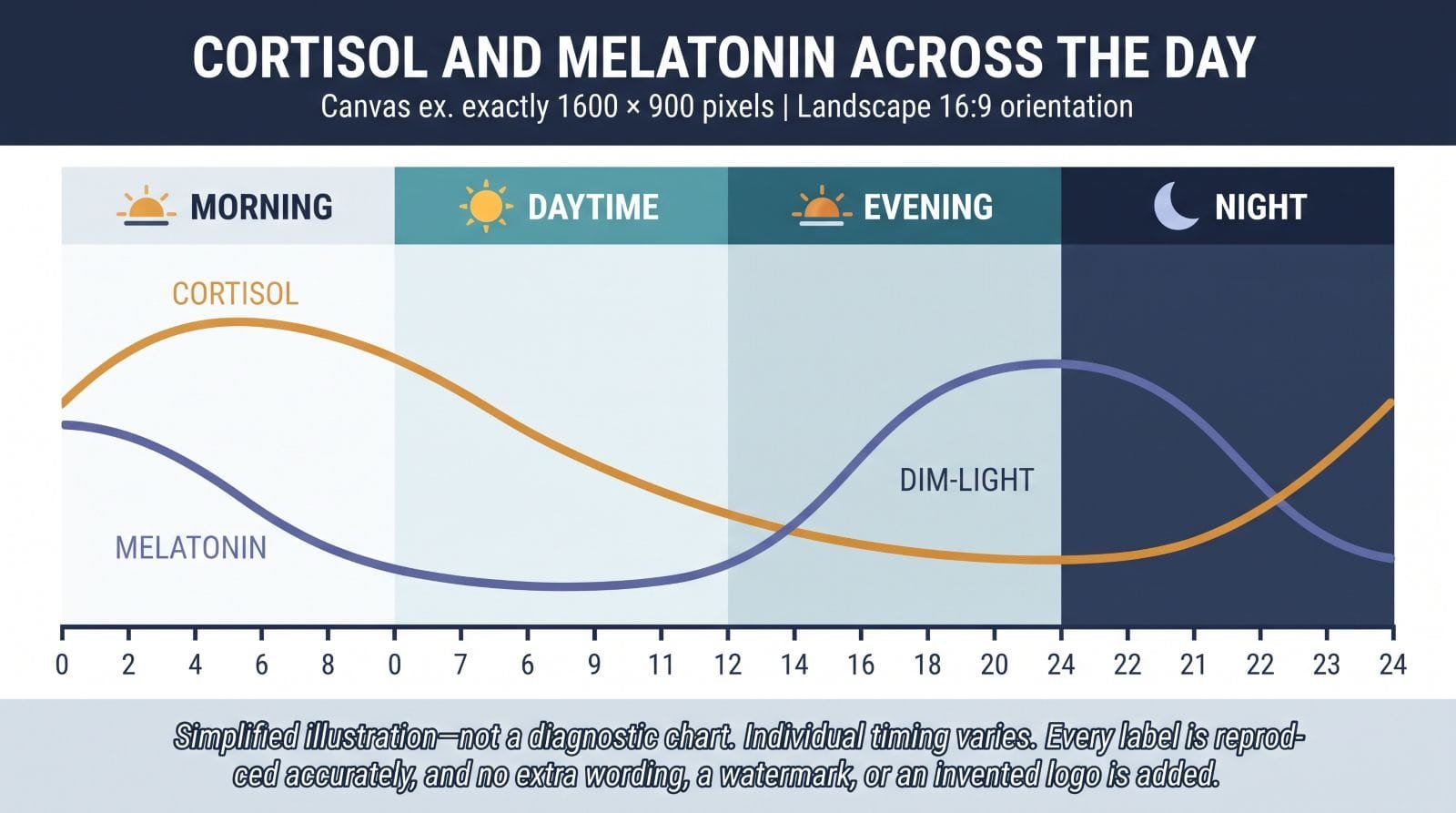
- A typical cortisol rhythm is higher around morning and lower at night.
- Cortisol can affect sleep, and insufficient or disrupted sleep can also influence cortisol regulation.
- Difficulty falling asleep or waking at 3 a.m. is not proof of high cortisol.
- Consistent timing, morning light, exercise, sensible caffeine use and an evening wind-down can support a healthier daily rhythm.
- Consumer wearables track sleep-related signals and trends, but they do not directly measure cortisol or diagnose a hormonal disorder.
When sleep feels difficult, cortisol often gets the blame—especially in claims about feeling “wired but tired” or waking at 3 a.m. Cortisol does influence alertness and the sleep-wake cycle, but the relationship is more nuanced than a single symptom or nighttime awakening.
Cortisol follows a daily rhythm that normally rises toward morning and falls toward night. Stress, irregular schedules, shift work, certain medications and medical conditions can affect this pattern. At the same time, insufficient or disrupted sleep can influence cortisol regulation, creating a two-way relationship.
- What Is Cortisol?
- What Is the Normal Cortisol Rhythm?
- How Does Cortisol Affect Sleep?
- How Can Poor Sleep Affect Cortisol?
- What Are Signs of a Disrupted Nighttime Cortisol Rhythm?
- Does Cortisol Cause You to Wake Up at 3 a.m.?
- Cortisol and Melatonin
- What Can Disrupt Your Cortisol-Sleep Rhythm?
- How Can You Support a Healthy Cortisol Rhythm?
- Can Supplements Lower Cortisol?
- Should You Test Your Cortisol?
- Can Wearables Measure Cortisol?
- When Should You Talk With a Healthcare Professional?
- Bottom Line
- Frequently Asked Questions
- Related Reads
- References
What Is Cortisol?
Cortisol is a steroid hormone made by the adrenal glands. Its release is coordinated through the hypothalamic-pituitary-adrenal axis, usually shortened to the HPA axis. This system helps the body respond to physical and psychological demands.
Calling cortisol the “stress hormone” is convenient, but incomplete. Cortisol also helps regulate blood pressure, metabolism, inflammation, immune activity and the sleep-wake cycle. Your body needs it; the issue is not eliminating cortisol but maintaining an appropriate amount and timing.
What Is the Normal Cortisol Rhythm?
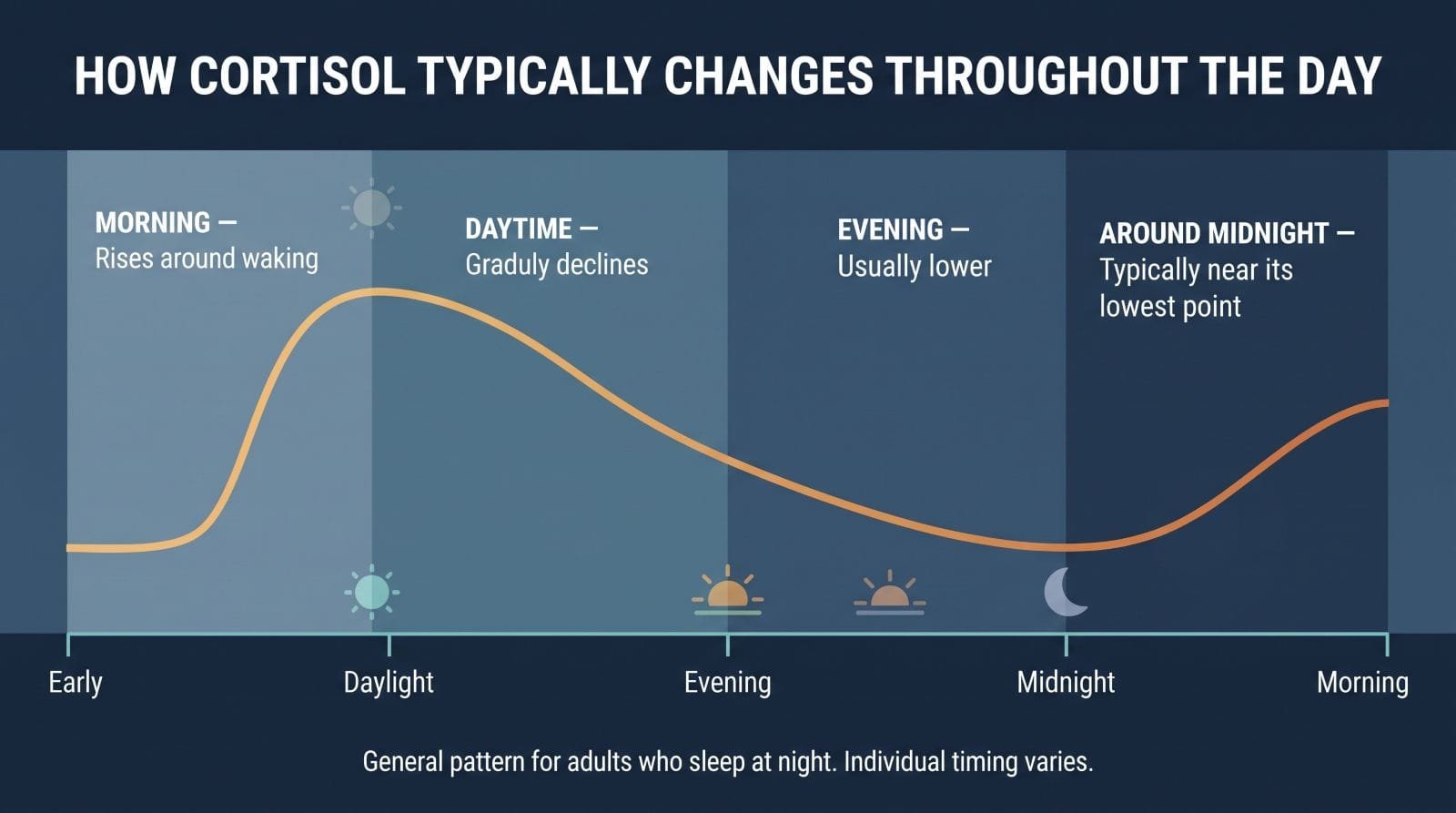
Cortisol changes across the day rather than remaining at one fixed level. For most people who sleep at night, the general pattern looks like this:
- Early morning: Cortisol rises around the usual waking period and typically reaches its daily peak.
- Daytime: Levels gradually decline while still supporting normal activity and energy regulation.
- Evening: Cortisol is generally lower as the body prepares for sleep.
- Around midnight: Levels are typically near their lowest point, although timing varies with a person’s schedule and internal clock.
This rhythm is driven strongly by the circadian system and is also influenced by sleep and waking. People who work nights, travel across time zones or keep highly irregular schedules may have a different clock-time pattern. That is why “normal” cortisol cannot be interpreted without knowing when a person sleeps, wakes and provides a test sample.
How Does Cortisol Affect Sleep?
How Can Cortisol Affect Sleep Onset and Evening Alertness?
A lower-alerting biological environment in the evening supports the transition toward sleep. If stress or circadian timing keeps the body and mind activated, falling asleep may feel harder. Cortisol can be part of that response, but so can adrenaline, anxious thoughts, behavior, light exposure and learned associations with the bed.
Can Cortisol Contribute to Nighttime Awakenings?
Cortisol secretion begins increasing later in the sleep period as morning approaches. This normal rise helps prepare the body to wake. An altered stress response may be associated with fragmented sleep, but waking at night is not a cortisol test. Noise, temperature, alcohol, pain, reflux, urinary symptoms, sleep apnea and insomnia can all interrupt sleep.
How Is Cortisol Related to Sleep Duration and Quality?
Research links higher presleep cortisol with shorter subsequent sleep and lower sleep efficiency in some settings. However, findings depend on the population, timing of measurement and degree of sleep loss. Cortisol is one component of sleep physiology—not a universal explanation for every restless night.
If your main challenge is psychological tension or racing thoughts, our guide to how stress affects sleep focuses on the behavioral stress-sleep connection.
How Can Poor Sleep Affect Cortisol?
The relationship also runs in the opposite direction. Substantial sleep restriction has been shown to increase late-afternoon or early-evening cortisol in some studies and may delay the normal quiet period of cortisol secretion. A single short night, however, does not always produce a large or consistent cortisol change; a 2024 meta-analysis found no significant overall difference after acute sleep deprivation across the included crossover studies.
The practical message is measured: repeated sleep loss and circadian misalignment can place strain on normal stress regulation, but you cannot estimate your cortisol level from how tired you feel. Supporting sufficient, regular sleep remains worthwhile even when cortisol is not the main cause of the problem.
What Are Signs Your Cortisol Rhythm May Be Disrupted at Night?
People often associate the following experiences with high cortisol at night:
- feeling unusually alert or tense at bedtime
- difficulty winding down after a demanding day
- taking a long time to fall asleep
- frequent nighttime waking
- waking earlier than intended and struggling to return to sleep
- feeling tired during the day despite being activated at night
These symptoms are not specific to elevated cortisol. Insomnia, anxiety, sleep apnea, restless legs, caffeine, alcohol, medications, menopause, pain and an uncomfortable sleep environment can create similar patterns. Symptoms can tell you that sleep needs attention; they cannot confirm the hormone responsible.
Does Cortisol Cause You to Wake Up at 3 a.m.?
Not necessarily. Cortisol normally begins rising during the later part of the night, but repeatedly waking at 3 a.m. is not enough to conclude that cortisol is the cause. The exact time of awakening may reflect sleep cycles, your bedtime, environmental disturbance or a health issue rather than a hormonal abnormality.
Look for patterns instead of assuming a diagnosis. Note your bedtime, alcohol and caffeine intake, room conditions, stress level and symptoms such as snoring or gasping. Our dedicated guide explains common reasons you may wake at 3 a.m. and when persistent awakenings deserve medical attention.
Cortisol and Melatonin: How They Work Across the Day
Cortisol and melatonin are often shown as opposites: cortisol rises in the morning while melatonin rises at night. That is a useful overview, but the biology is not a simple on/off switch.
| Time of day | Typical cortisol pattern | Typical melatonin pattern |
|---|---|---|
| Morning | Rising or near its peak | Falling after nighttime secretion |
| Daytime | Gradually declining | Generally low in bright daytime conditions |
| Evening | Usually lower | Begins rising in dim-light conditions |
| Night | Near its low point, then rises toward morning | Elevated during the biological night, then declines |
Light is a major timing signal. Bright light late at night can delay melatonin timing, while morning light helps anchor the body clock. Sleep timing, meals, activity and stress can also influence these daily patterns.
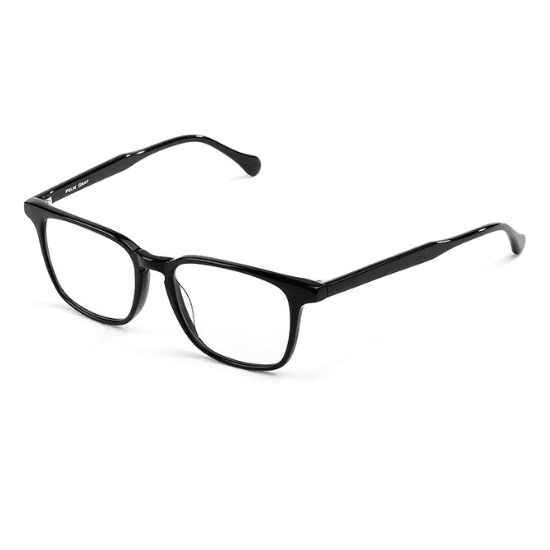
PVL Rating: 3.9/5
Premium medium-fit acetate glasses available with clear or amber lenses, prescription options, and an anti-reflective coating. The amber option may suit readers who want less bright screen exposure in the evening, but blue-light glasses are not proven to lower cortisol, treat insomnia, or guarantee improved melatonin production or sleep.
What Can Disrupt Your Cortisol-Sleep Rhythm?
- Chronic or intense stress: Ongoing demands can keep the stress-response system activated and make it harder to disengage at night.
- Irregular sleep timing: Large differences between workdays and weekends can make sleep and waking less predictable.
- Shift work and jet lag: Activity, light and sleep occurring at conflicting biological times can alter circadian hormone patterns.
- Insufficient sleep: Repeated or substantial restriction may change the timing of cortisol activity.
- Late caffeine: Caffeine can extend alertness and delay sleep, even when a person does not feel strongly stimulated.
- Alcohol close to bedtime: Alcohol may feel sedating initially but can fragment sleep later in the night.
- Glucocorticoid medications: Prescription steroid medicines affect cortisol-related pathways. Never stop them suddenly without medical guidance.
- Medical conditions: Cushing syndrome and adrenal insufficiency are examples of genuine cortisol disorders, but they require clinical evaluation and testing.
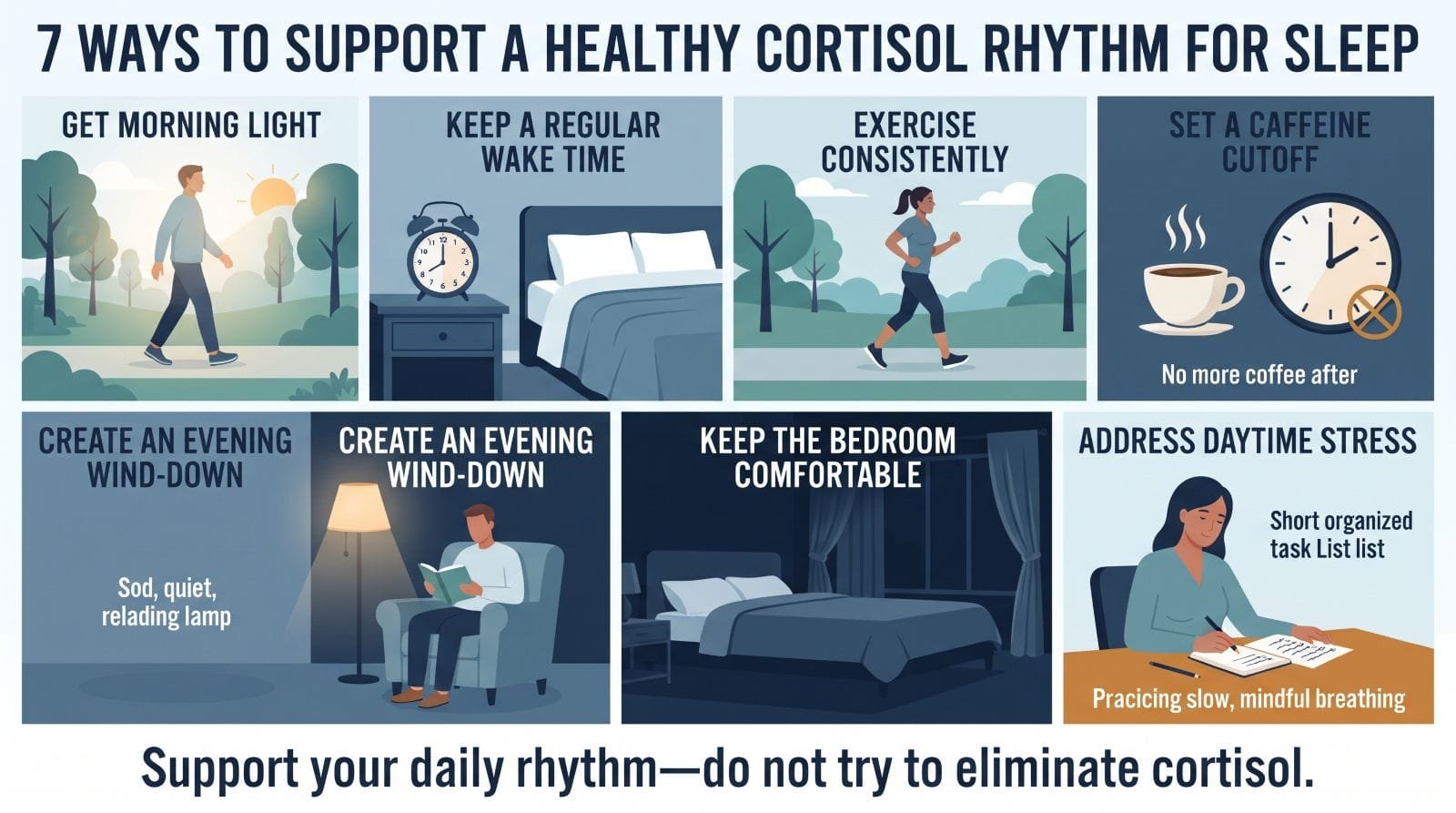
How Can You Support a Healthy Cortisol Rhythm for Better Sleep?
The goal is not to “flush” cortisol or force it as low as possible. It is to support a stable sleep-wake rhythm and reduce avoidable evening activation.
1. Get light soon after waking
Morning outdoor light provides a strong signal that helps set circadian timing. When practical, spend time outside after waking. Indoor light is generally much dimmer than daylight, even on an overcast day.
2. Keep sleep and wake times reasonably consistent
A regular waking time helps stabilize the daily cycle. You do not need minute-perfect consistency, but frequent multi-hour shifts can make it harder for your body to anticipate sleep. If your timing has drifted, use the practical steps in our two-week sleep-cycle reset plan.
3. Exercise regularly, but notice your timing
Regular physical activity supports sleep and stress management. Most people can exercise in the evening without a problem, but very intense late workouts may feel activating for some. Choose a time you can sustain and that does not delay your bedtime.
4. Set a caffeine cutoff
Caffeine can remain active for hours. If you struggle to fall asleep, experiment with stopping it at least six to eight hours before bed and assess the effect over a week rather than one night.
5. Build a repeatable wind-down routine
Create a short transition between daytime demands and sleep. Dim the lights, put unfinished tasks on tomorrow’s list, and choose a calming activity such as reading, gentle stretching or slow breathing. If sleep onset is your main difficulty, see our guide to falling asleep faster naturally.
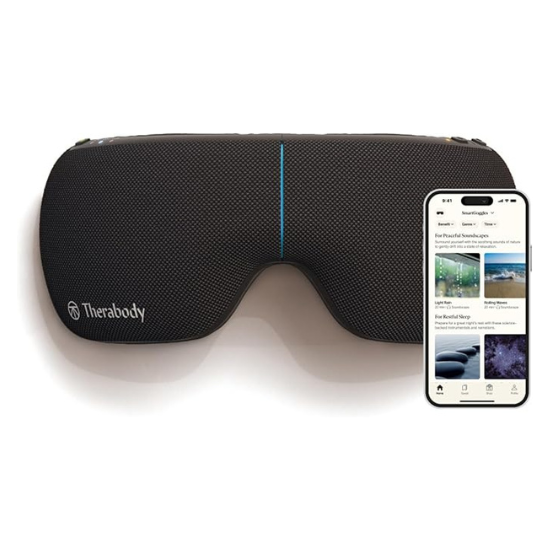
PVL Rating: 3.8/5 · $219.99 existing PVL price
A rechargeable eye and temple massager that combines blackout, heat, compression, and vibration in a 15-minute pre-bed routine. It may help some people create a repeatable transition away from screens and daytime demands, but it does not lower or measure cortisol and is not a treatment for insomnia.
As an Amazon Associate, Purely Vital Living may earn from qualifying purchases. Price shown reflects the existing PVL listing and may change.
6. Keep the bedroom supportive of sleep
A dark, quiet and comfortable room reduces unnecessary stimulation. Temperature needs vary, but overheating commonly disrupts comfort. Use the guidance in our article on the ideal sleeping temperature to test what works for you.

PVL Rating: 4.2/5
Low-profile sleep earbuds designed to play masking sounds, audio, or relaxing content when environmental noise makes the bedroom less supportive of sleep. They may suit some side sleepers, but fit and comfort are personal, and the earbuds do not lower cortisol or treat insomnia, snoring, or sleep apnea.
7. Address the stressor, not only the bedtime symptom
A relaxation technique can reduce immediate activation, but persistent work, caregiving, financial or health stress may need daytime problem-solving and support. When worry feels unmanageable, a qualified mental-health professional can help.
Can Supplements Lower Cortisol and Improve Sleep?
Some supplements and herbs are marketed for stress, cortisol or sleep, but the evidence varies by ingredient, dose, population and outcome. A study showing a change in a cortisol measurement does not automatically prove that a product treats insomnia or improves meaningful sleep outcomes.
Supplements can also interact with medications or be unsuitable during pregnancy, before surgery or with certain health conditions. Product quality is inconsistent, and “natural” does not mean risk-free. Discuss supplements with a healthcare professional or pharmacist, particularly if you take sedatives, blood-pressure medicines, diabetes medicines, anticoagulants or prescription steroids.
Behavioral treatment should not be overlooked. For chronic insomnia, cognitive behavioral therapy for insomnia (CBT-I) is a well-established first-line approach and targets the patterns that keep sleep difficulty going.
Should You Test Your Cortisol?
Do not buy a cortisol test simply because you feel stressed or wake during the night. Clinicians use cortisol testing when symptoms and medical history suggest a disorder involving too much or too little cortisol—not as a routine insomnia test.
Cortisol can be measured in blood, saliva or urine. The correct method and timing depend on the question being investigated. Because levels normally change throughout the day, a result without proper timing and clinical context can be misleading. Tests used to investigate Cushing syndrome may include late-night salivary cortisol, 24-hour urinary free cortisol or a dexamethasone suppression test; these should be interpreted by a qualified clinician.
A consumer test result should not be used to start or stop medication. In particular, abruptly stopping long-term glucocorticoid medicine can be dangerous.
Can Wearables Measure Cortisol During Sleep?
Most consumer sleep trackers do not directly measure cortisol. A watch or ring may estimate sleep duration and stages or track signals such as heart rate, heart-rate variability, skin temperature and movement. Some devices combine these into “stress,” “readiness” or “recovery” scores.
Those measurements may help you notice personal patterns, but they are not cortisol readings and cannot diagnose a hormonal disorder. Use wearable trends as prompts for observation—not as proof that your cortisol is high or low.
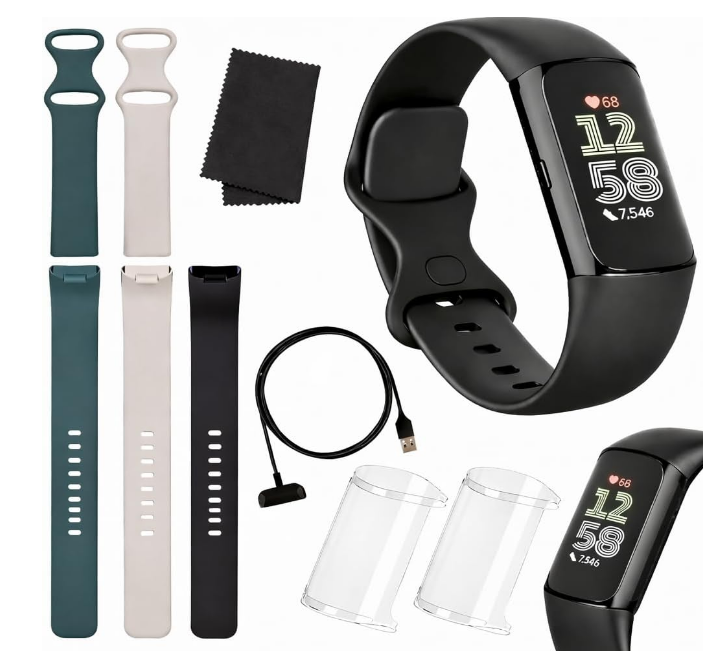
PVL Rating: 4.3/5 · $169.95 existing PVL sale price
A compact fitness tracker that can help you follow sleep duration, sleep timing, heart rate, activity, and longer-term wellness trends. These patterns may provide useful context when reviewing your routine, but the Fitbit Charge 6 does not directly measure cortisol or diagnose insomnia or a hormonal disorder.
As an Amazon Associate, Purely Vital Living may earn from qualifying purchases. Price shown reflects the existing PVL listing and may change.
When Should You Talk With a Healthcare Professional?
Seek medical guidance if sleep difficulty occurs at least several nights per week, persists for months, affects daytime safety or function, or does not improve with basic sleep habits. Evaluation is also important if you experience loud snoring, gasping, breathing pauses, severe daytime sleepiness, unusual weakness, unexplained weight or skin changes, or symptoms that began after a medication change.
Cushing syndrome involves prolonged excessive cortisol and usually produces a broader pattern than insomnia alone. Possible features include weight gain concentrated around the trunk or upper back, easy bruising, wide purple stretch marks, muscle weakness, high blood pressure and other changes. Adrenal insufficiency involves too little cortisol and can become medically serious. Neither condition should be self-diagnosed from sleep symptoms.
If you think a steroid medicine is affecting your sleep, speak with the prescriber about dose and timing. Do not change or discontinue it independently.
Bottom Line
Cortisol supports a normal sleep-wake cycle: it is generally higher around morning and lower at night. Stress, circadian disruption, shift work and substantial sleep loss can alter this rhythm, while sleep also influences cortisol regulation.
The most useful first step is usually not chasing a single hormone reading. Build regular timing, morning light, sufficient sleep, sensible caffeine use and a calming transition into bedtime. If sleep problems persist or appear alongside broader symptoms, seek an evaluation that considers the full picture.
Frequently Asked Questions
How does cortisol affect sleep?
Cortisol supports alertness and follows a circadian rhythm that is usually highest in the early morning and lowest around midnight for adults who sleep at night. Disruption of this rhythm may be associated with difficulty falling or staying asleep, while insufficient sleep can also influence cortisol regulation.
What are signs of high cortisol at night?
Difficulty winding down, unusual alertness at bedtime, trouble falling asleep, frequent waking and early-morning awakening may occur alongside stress or a disrupted cortisol rhythm. However, these symptoms are not specific to elevated cortisol; caffeine, alcohol, insomnia, sleep apnea, medications, pain and environmental disturbance can produce similar problems.
Does cortisol cause you to wake up at 3 a.m.?
No. Cortisol normally begins rising during the later part of the night, but repeatedly waking at 3 a.m. does not identify cortisol as the cause. Sleep cycles, stress, alcohol, temperature, pain, reflux, urinary symptoms, insomnia and sleep apnea are among the other possible explanations.
How can I lower cortisol before bed?
Support a healthy cortisol rhythm rather than trying to eliminate the hormone. Keep a consistent wake time, get morning daylight, exercise regularly, avoid caffeine for at least six to eight hours before bed and create a calming evening routine. Persistent sleep problems or broader physical symptoms warrant professional evaluation.
Can lack of sleep increase cortisol?
Yes, substantial or repeated sleep restriction can alter cortisol regulation and has increased late-afternoon or evening cortisol in some studies. However, results vary by study design and measurement method; a 2024 meta-analysis found no significant overall cortisol difference after acute sleep deprivation across its pooled crossover studies.
Related Reads
- Stress and Sleep: How Stress Affects Sleep Quality
- Why Do I Wake Up at 3AM Every Night?
- How to Fix Your Sleep Cycle: A 2-Week Reset Plan
- How to Fall Asleep Faster Naturally Tonight
- How to Improve Sleep Quality Naturally
- Blue Blocking Glasses: Do They Actually Improve Melatonin Production?
- PVL Sleep Score Calculator
- Sleep Debt Calculator — estimate your recent sleep-duration shortfall over 7 or 14 nights.
References
- O’Byrne NA, Yuen F, Butt WZ, Liu PY. Sleep and Circadian Regulation of Cortisol: A Short Review. Current Opinion in Endocrine and Metabolic Research. 2021.
- Wright KP Jr, et al. Influence of Sleep Deprivation and Circadian Misalignment on Cortisol, Inflammatory Markers, and Cytokine Balance. Brain, Behavior, and Immunity. 2015.
- Liu PY, et al. Rhythms in cortisol mediate sleep and circadian impacts on health. 2024.
- Chen Y, et al. The effect of acute sleep deprivation on cortisol level: a systematic review and meta-analysis. Sleep Medicine. 2024.
- Cleveland Clinic. Cortisol Test: What It Is, Purpose, Types & Results. Reviewed April 28, 2025.
- National Institute of Diabetes and Digestive and Kidney Diseases. Cushing’s Syndrome.
This article is for educational purposes and is not a substitute for diagnosis or individualized medical advice.