Blue blocking glasses do not produce melatonin. Nighttime amber, orange, or red lenses may reduce exposure to short-wavelength evening light that can suppress normal melatonin release. Their usefulness depends on the wavelengths filtered, lens fit, timing, and overall light exposure. Evidence for improved sleep is promising in some groups but remains mixed.
Blue blocking glasses may reduce evening exposure to short-wavelength light that can suppress normal melatonin release, but they do not directly produce melatonin. Their effect depends on the wavelengths filtered, lens tint, fit, timing, and how much light reaches your eyes. Amber, orange, and red lenses intended for nighttime use generally filter more short-wavelength light than clear computer glasses. Research suggests possible benefits for melatonin timing and some sleep outcomes, but the evidence is mixed and many studies are small.
That distinction matters. Blue-light filtering lenses are often marketed for eye strain, screen protection, and sleep as though these were the same claim. They are not. The most plausible sleep-related use is managing bright evening light—not curing insomnia or protecting your eyes from ordinary screen use.
Key Takeaways
- Blue blocking glasses do not make melatonin; they may reduce light-related melatonin suppression.
- For sleep, amber, orange, or red lenses are generally more relevant than clear daytime lenses.
- A blocking percentage means little unless the brand states the wavelength range tested.
- Studies have reported improvements in melatonin timing, sleep onset, or perceived sleep quality in some groups, but results are not consistent.
- Evidence does not support relying on blue-light glasses to prevent digital eye strain or eye disease.
- What Are Blue Blocking Glasses?
- Do Blue Blocking Glasses Increase Melatonin?
- How Blue Light Affects Your Circadian Rhythm
- What the Research Says About Sleep
- Daytime vs Nighttime Glasses
- Clear vs Amber vs Red Lenses
- How Much Blue Light Should Glasses Block?
- When to Wear Them Before Bed
- Digital Eye Strain
- Buying Checklist
- Night-Shift Workers
- Frequently Asked Questions
- Bottom Line
- Related Reads
- Sources
What Are Blue Blocking Glasses?
Blue blocking glasses use lenses designed to reduce the amount of short-wavelength visible light reaching the eyes. “Blue light” covers a range of wavelengths, so two products carrying the same label may filter very different amounts of light.
Clear or nearly clear lenses usually make modest changes to the light spectrum and preserve normal color perception. Strong amber, orange, or red tints typically remove more short-wavelength light, but they also change how colors look. That is why daytime computer glasses and nighttime sleep glasses should not be treated as interchangeable products.
Do Blue Blocking Glasses Increase Melatonin?
Not directly. Melatonin is a hormone your body releases as part of its normal circadian timing. Light entering the eyes—especially short-wavelength light in the evening—can signal the brain that it is still daytime and delay or suppress that release. Properly selected blue blocking glasses may reduce that signal.
In a controlled laboratory study, blue-blocking glasses attenuated LED-related melatonin suppression and reduced evening alertness compared with clear lenses, although sleep stages the following night did not change. A later randomized trial also found an earlier onset and rise of melatonin when participants blocked blue light in the evening. These findings support a biological effect, but they do not prove that every pair of glasses will improve sleep for every person.
How Blue Light Affects Your Circadian Rhythm
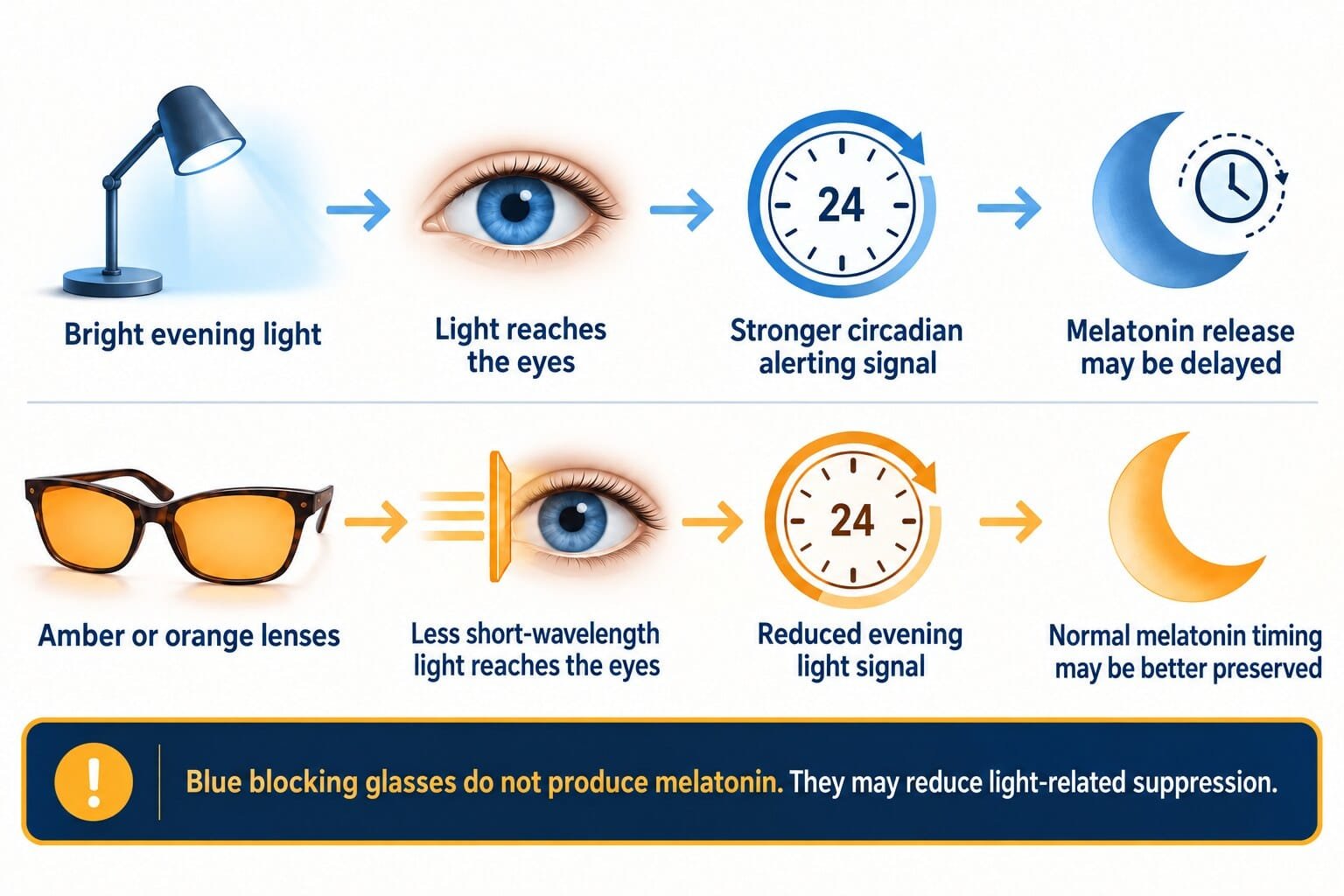
Your circadian rhythm is the roughly 24-hour timing system that helps coordinate sleep, alertness, temperature, and hormone release. Specialized retinal cells respond strongly to short-wavelength light and send timing information to the brain’s master clock.
During the day, light exposure supports alertness and a stable body clock. At night, bright light can work against the natural transition toward sleep. The effect depends on more than screen time: brightness, distance, duration, room lighting, wavelength, and individual sensitivity all matter. A brightly lit room may create more total circadian light exposure than one dim phone used briefly.
This is also why wearing dark orange or red lenses throughout the day is usually not the goal. Daytime light is an important circadian cue. The useful question is not “Is blue light bad?” but “Am I getting too much light at the wrong time?”
What Does the Research Say About Sleep?
Melatonin timing
Controlled studies show that filtering short-wavelength evening light can reduce melatonin suppression or shift the timing of melatonin release. However, the size of the effect varies with the lens, light conditions, study population, and protocol. A label such as “blue-light blocking” does not guarantee the same biological result.
Falling asleep
Some small trials are encouraging. In one randomized study of 20 adults, participants wore amber or control lenses for three hours before bed. The amber-lens group reported better sleep quality and mood. Another randomized crossover trial in adults with insomnia symptoms found that wearing amber lenses for two hours before bedtime for one week improved subjective sleep measures compared with clear lenses.
Sleep quality and duration
The broader picture is less certain. Studies use different lenses, exposure times, comparison groups, and sleep measurements. Some report subjective improvements without matching changes in objective sleep data. A 2023 Cochrane review concluded that the effects of blue-light filtering spectacle lenses on sleep quality remain unclear.
The practical interpretation
Blue blocking glasses are best viewed as an optional evening light-management tool. They may be more useful when you cannot dim the environment—for example, when working under bright lighting or using screens close to bedtime. They should not be presented as a proven treatment for chronic insomnia. If sleep problems are persistent, severe, or accompanied by loud snoring, breathing pauses, marked daytime sleepiness, or mood changes, speak with a qualified healthcare professional.
Daytime vs Nighttime Blue Blocking Glasses
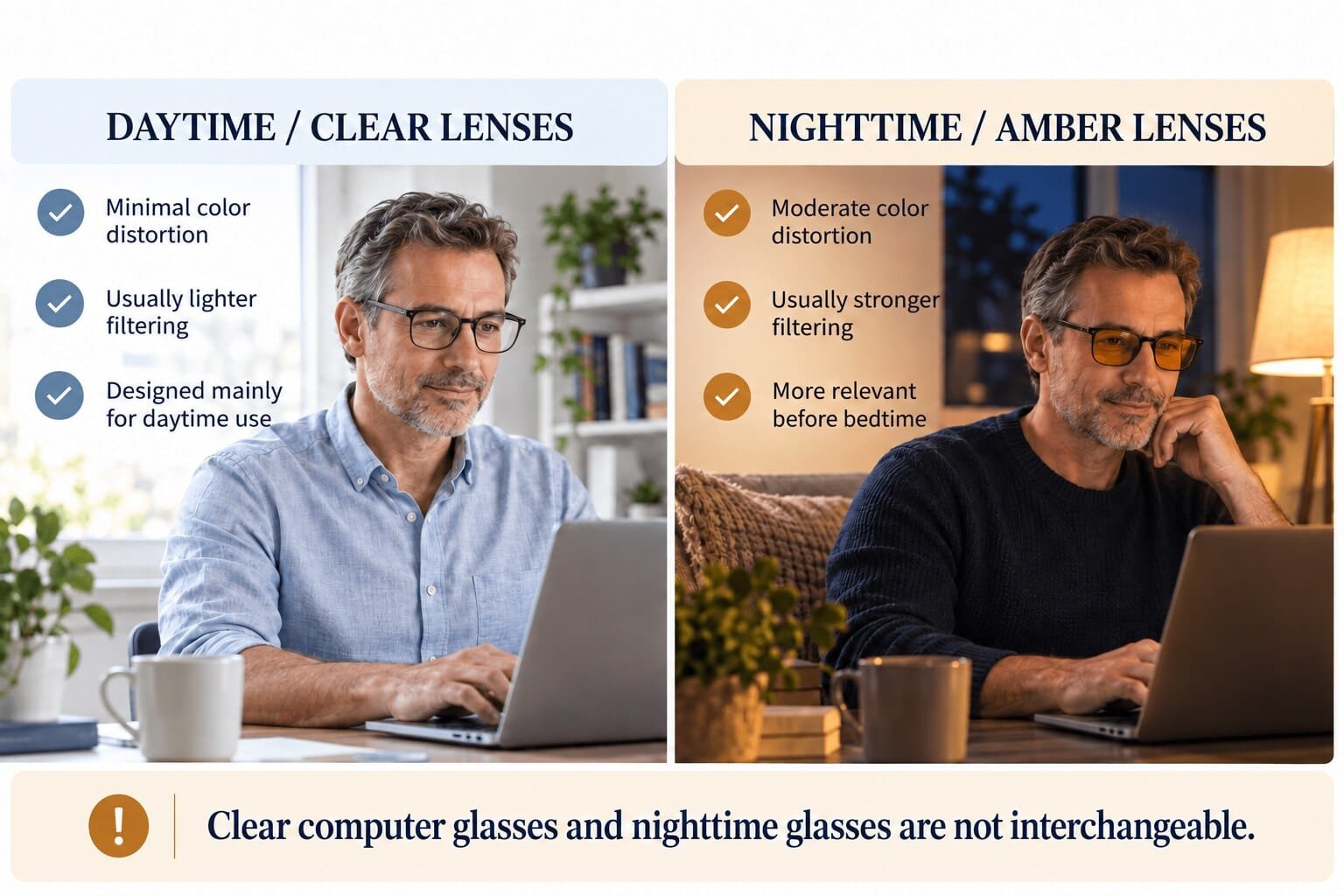
| Feature | Daytime or clear lenses | Nighttime amber, orange, or red lenses |
|---|---|---|
| Typical purpose | Comfort and modest filtering during computer work | Reduce evening short-wavelength light |
| Color distortion | Minimal | Moderate to strong |
| Filtering strength | Usually lower | Usually higher |
| Relevance to melatonin | Generally limited | More relevant when used before bed |
| Best timing | Daytime screen use, if preferred | During the evening before planned sleep |
If your main goal is sleep, do not assume that a clear lens marketed for office work provides enough filtering to meaningfully change evening circadian light exposure.
Clear vs Amber vs Red Lenses
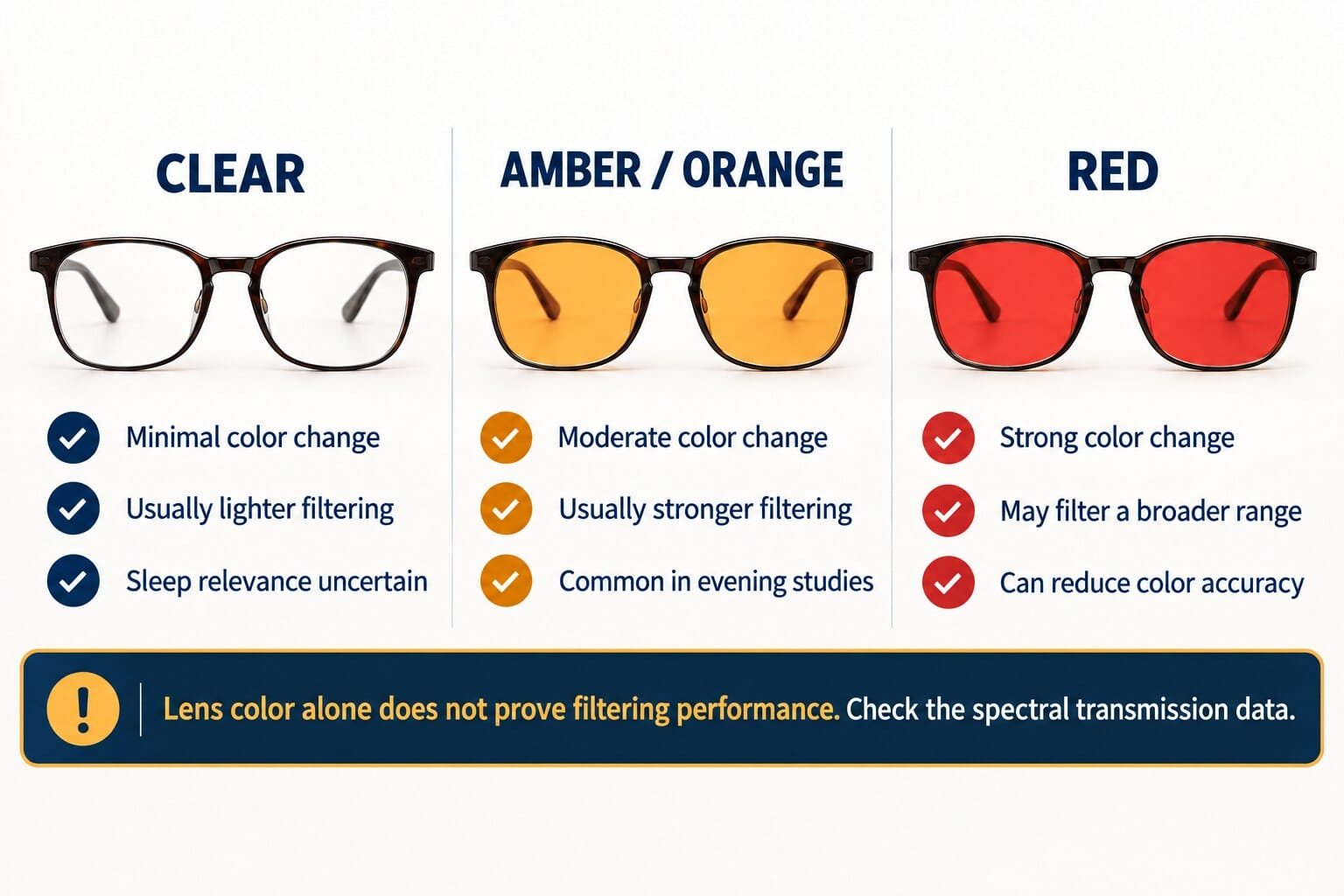
Clear lenses preserve color accuracy and may suit daytime use, but many filter only a limited portion of short-wavelength light. Their sleep relevance is uncertain.
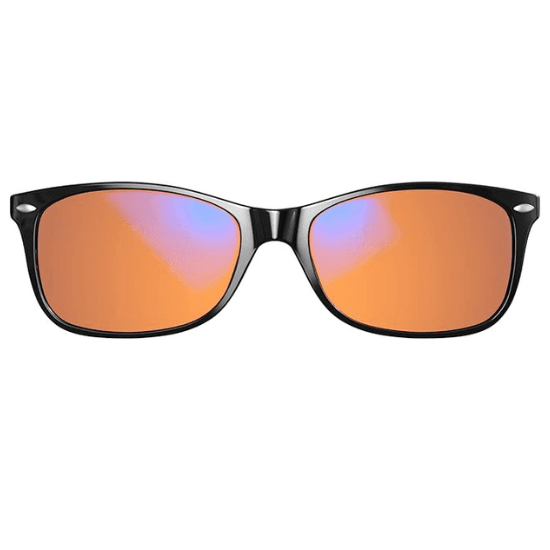
Amber or orange lenses typically block a broader portion of blue light and are commonly used in evening sleep studies. They offer a practical balance between stronger filtering and usable vision.
Red lenses can extend filtering farther across the visible spectrum and create greater color distortion. A red appearance alone is not proof of performance; the product should still provide spectral transmission data.

How Much Blue Light Should Glasses Block at Night?
There is no universal percentage that guarantees a sleep benefit. A claim such as “blocks 90% of blue light” is incomplete unless the manufacturer states which wavelengths were measured. Blocking 90% in a narrow band is different from blocking 90% across the broader range that influences circadian signaling.
When comparing glasses, look for:
- A published spectral transmission chart, not only a marketing percentage
- The wavelength range covered by the claim
- Independent laboratory testing where available
- Strong coverage around the eyes, including light entering from the sides
- A lens tint appropriate for nighttime rather than office use
Be cautious when a brand promises a precise melatonin or sleep improvement based only on its blocking percentage. Real-world results also depend on the brightness and duration of your evening light exposure.
When Should You Wear Blue Blocking Glasses Before Bed?
Many sleep studies have used blue blocking glasses for about two to three hours before bedtime. That is a reasonable practical window to test, particularly if you remain around bright lights or screens in the evening.
Put them on consistently at roughly the same time, keep other parts of your routine stable, and observe your sleep for one to two weeks. Avoid driving or doing color-critical work in strongly tinted lenses, and follow any safety instructions from the manufacturer.
If your sleep timing is irregular, start with PVL’s two-week sleep-cycle reset plan. Glasses are unlikely to compensate for widely changing bedtimes, late caffeine, or insufficient time in bed.
Do Blue Light Glasses Help With Digital Eye Strain?
Current evidence does not show a reliable short-term benefit. A randomized trial found that blue-blocking lenses did not improve signs or symptoms of eye strain compared with standard clear lenses. The 2023 Cochrane review reached a similar conclusion for short-term computer use.
Screen discomfort is often linked to reduced blinking, dryness, prolonged near focus, glare, poor contrast, and an unsuitable workstation. More useful steps may include taking regular visual breaks, blinking deliberately, adjusting text size and brightness, reducing glare, and discussing persistent symptoms with an eye-care professional.
What Blue Blocking Glasses Probably Won’t Do
- Cure chronic insomnia or an underlying sleep disorder
- Prevent all headaches, dry eyes, or screen fatigue
- Correct poor screen ergonomics or an outdated prescription
- Protect against proven retinal damage from ordinary screen use
- Replace dim evening lighting, a regular sleep schedule, and adequate sleep time
If your goal is deeper, more restorative sleep, combine light management with the habits in our guide to improving deep sleep. You can also check whether your bedroom is too warm using our guide to the best sleeping temperature.
What to Look for When Buying Blue Blocking Glasses for Sleep
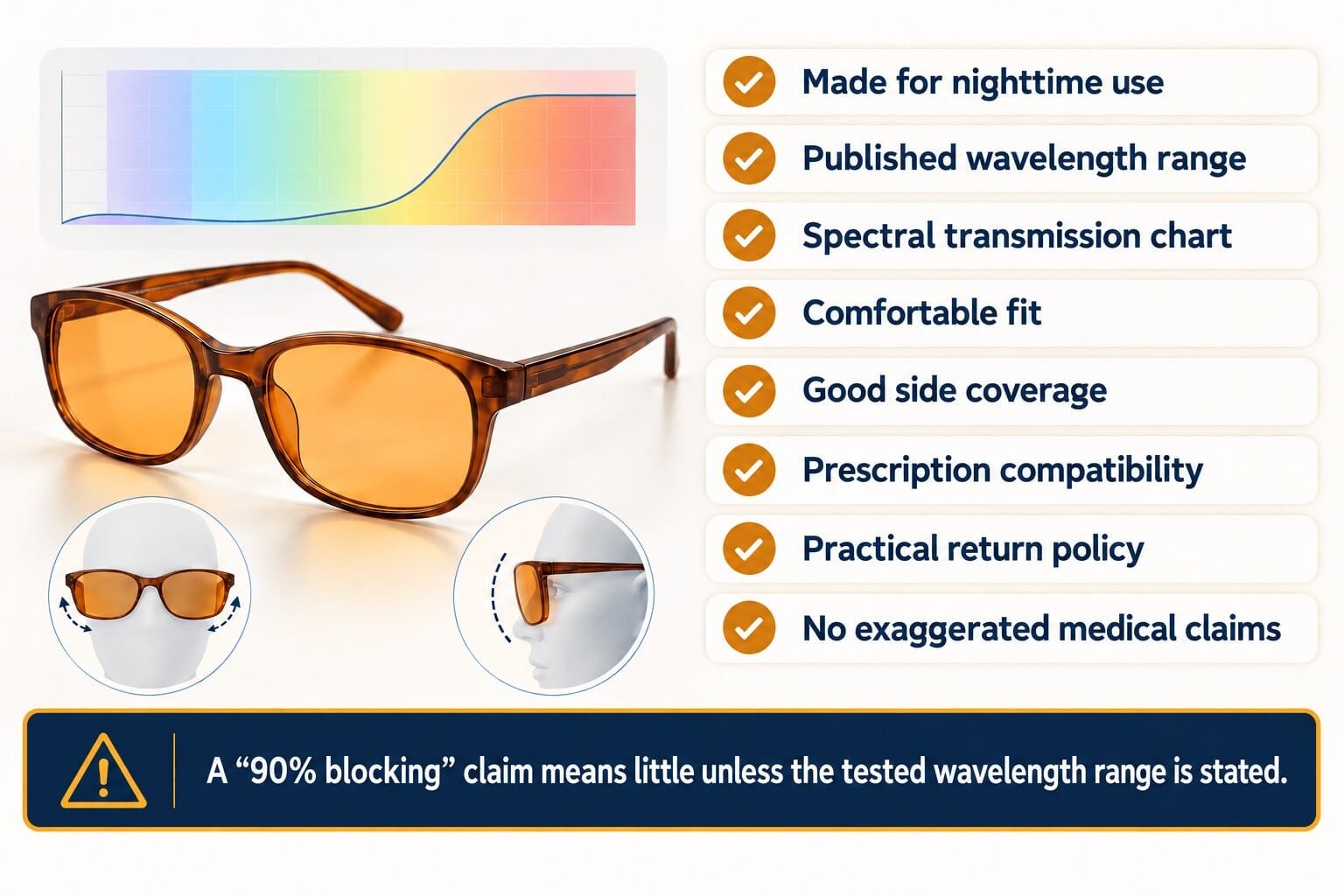
- Intended use: Choose nighttime glasses if sleep is the goal, not generic clear computer lenses.
- Spectral data: Look for a transmission chart showing which wavelengths pass through the lens.
- Lens coverage: A close-fitting or wraparound design can reduce light entering around the frame.
- Comfort: The glasses should remain comfortable for two or three hours without pressure at the nose or temples.
- Prescription compatibility: If you need vision correction, ask whether the filter can be added to your prescription or worn safely over your usual glasses.
- Return policy: Strong tints are not comfortable for everyone, so a practical trial period matters.
- Claims: Avoid products promising to cure insomnia, prevent eye disease, or guarantee a specific rise in melatonin.
Can Prescription Blue Blocking Glasses Work for Sleep?
Yes, prescription lenses can include a blue-blocking tint or coating, but the same buying rules apply. Ask the optician for the wavelength-specific transmission data and explain that your goal is evening circadian-light reduction. A subtle clear coating may be more convenient, yet it may not filter as much short-wavelength light as an amber or orange nighttime lens.
Another option is an oversized pair designed to fit over prescription glasses. Check that it does not interfere with peripheral vision, balance, or safe movement around the home.
What About Night-Shift Workers?
Shift workers have a different timing problem. They may benefit from reducing bright morning light during the trip home and before daytime sleep, but blocking light at the wrong time can make circadian adjustment harder. Work schedules, driving safety, and desired sleep timing all affect the plan. If shift-work sleep problems are ongoing, seek individualized guidance from a sleep clinician rather than copying a standard evening routine.
Other Ways to Reduce Evening Light Exposure
- Dim overhead lights two to three hours before bed.
- Use warm, low-positioned lamps rather than bright ceiling lighting.
- Lower screen brightness and enable a warmer display mode.
- Increase viewing distance and avoid holding a bright screen close to your face.
- Step away from unnecessary screens during the final 30–60 minutes before bed.
- Keep a regular wake time and seek daylight earlier in your waking period.
Glasses are only one option. For a broader routine, see what core sleep means and how to protect it.
Bottom Line
Blue blocking glasses may help preserve normal evening melatonin signaling by reducing short-wavelength light exposure; they do not directly increase melatonin production. Amber, orange, or red nighttime lenses are generally more relevant than clear computer glasses, but actual spectral performance matters more than lens color or a headline blocking percentage.
The research is promising for certain people and situations, yet it is not definitive. Treat blue blocking glasses as one part of a consistent evening light and sleep routine—not as a cure for insomnia or a proven solution for digital eye strain.
Frequently Asked Questions
Do blue blocking glasses increase melatonin?
No. Blue blocking glasses do not create melatonin or force your body to produce more. Nighttime lenses may reduce exposure to short-wavelength light that suppresses normal evening melatonin release. The effect depends on the wavelengths filtered, lens fit, timing, and the brightness of your evening environment.
Do blue light glasses actually help you sleep?
Blue blocking glasses may help some people sleep, but results are not consistent. Small trials have reported earlier sleep onset or better perceived sleep quality, particularly with amber lenses worn before bed. Benefits depend on lens performance, timing, evening light exposure, and whether another condition is causing the sleep problem.
How long before bed should you wear blue light blocking glasses?
Start wearing nighttime blue blocking glasses about two to three hours before your planned bedtime. This window is commonly used in evening-light studies and allows the lenses to reduce exposure during the period when melatonin normally begins rising. Wearing them for only a few minutes before sleep is less likely to matter.
Are clear or amber blue light glasses better for sleep?
Amber or orange lenses are generally more relevant for sleep because they usually filter a broader range of short-wavelength light. Clear lenses preserve color accuracy and may suit daytime computer use, but often provide weaker filtering. Compare published spectral transmission data instead of choosing a lens based only on its color.
What percentage of blue light should glasses block at night?
There is no universal blocking percentage that guarantees a sleep benefit. A claim such as “90% blue-light blocking” is incomplete unless the manufacturer states the wavelength range tested. For nighttime use, prioritize a published spectral transmission chart, appropriate tint, good facial coverage, and independent testing where available.
Related Reads
- How to Improve Sleep Quality Naturally
- How to Fall Asleep Faster Naturally
- How to Fix Your Sleep Cycle: A 2-Week Reset Plan
- How to Improve Deep Sleep: 10 Science-Backed Strategies
- Best Sleeping Temperature: Ideal Room Temperature for Sleep
- PVL Sleep Score Calculator
Sources
- van der Lely et al. Blue blocker glasses and evening LED exposure
- Liset et al. Randomized trial of evening blue blocking and melatonin timing
- Burkhart and Phelps. Amber lenses to block blue light and improve sleep
- Shechter et al. Blocking nocturnal blue light for insomnia
- Cochrane review of blue-light filtering spectacle lenses
- Singh et al. Blue-blocking lenses and computer eye strain
Medical note: This article is for general education and is not a diagnosis or treatment plan. Consult a qualified healthcare professional about persistent sleep or eye symptoms.