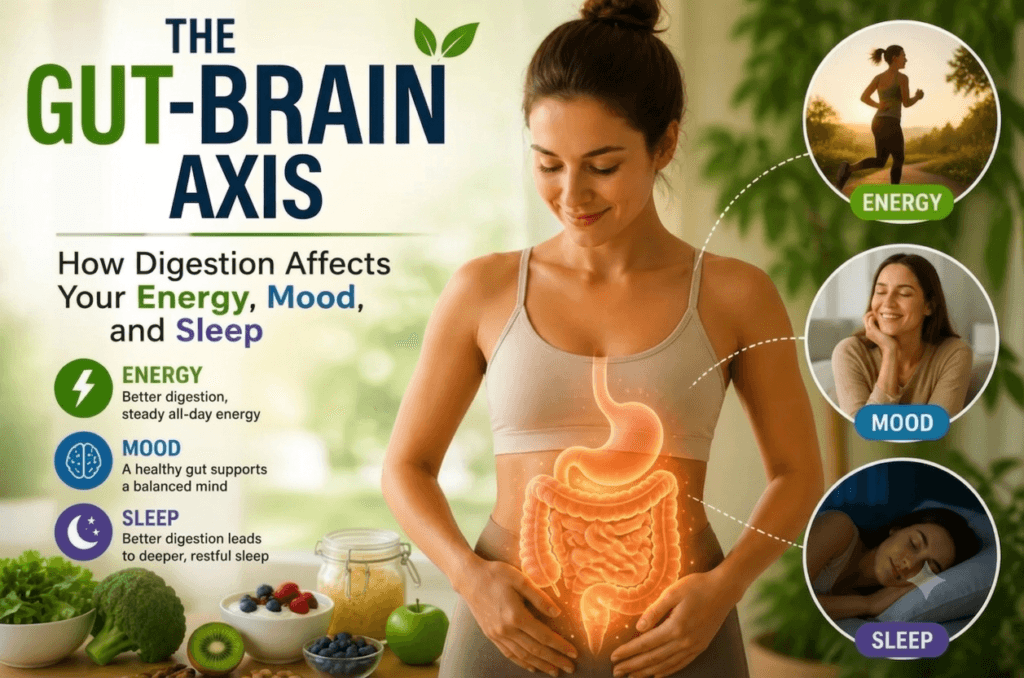

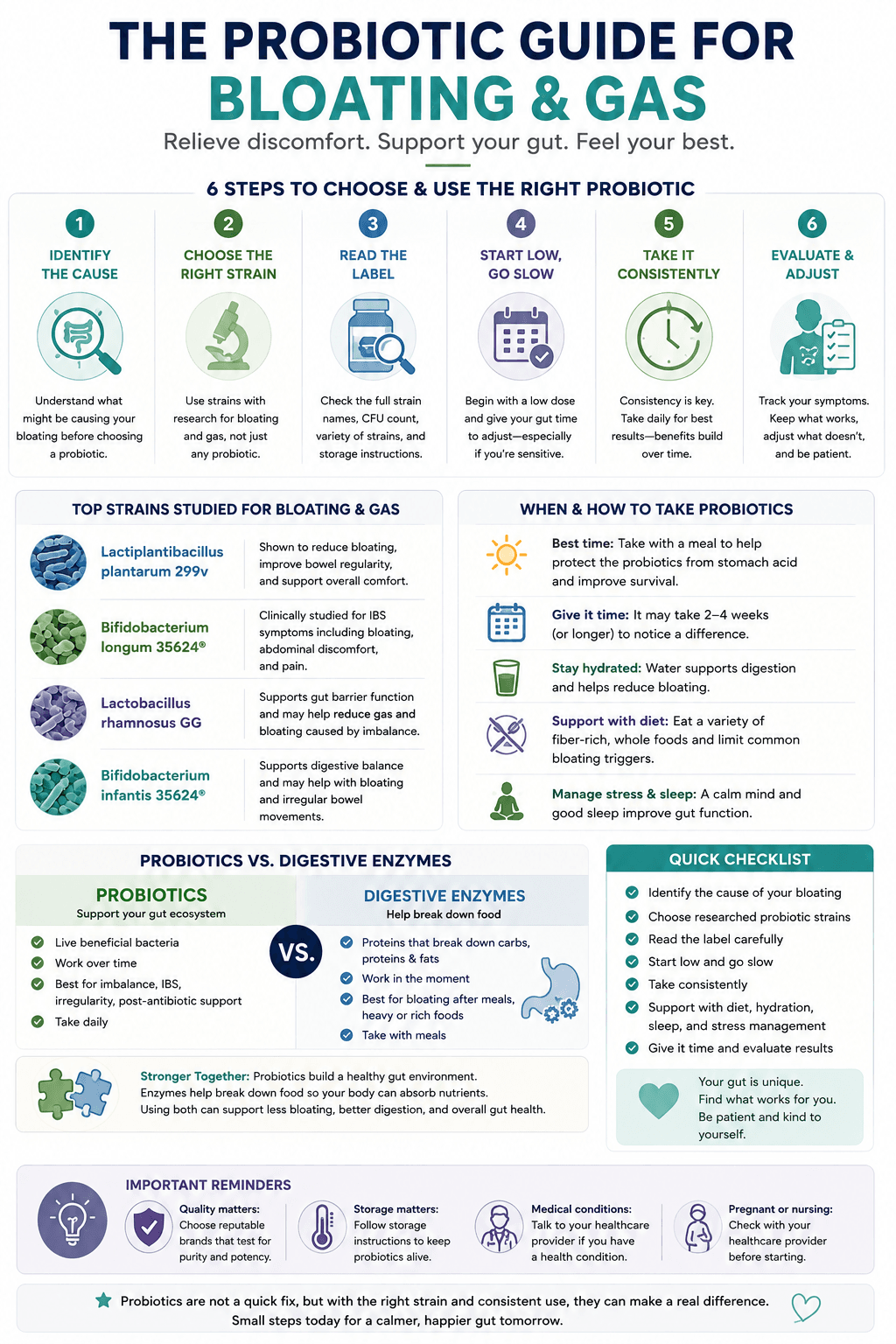
Quick Answer: There is no single probiotic that is best for every case of bloating and gas. The most useful approach is to match the exact probiotic strain to the symptom pattern and the evidence behind it, rather than choosing by brand name, CFU count, or number of strains alone. Bifidobacterium longum 35624 and Lactiplantibacillus plantarum 299v are two strain-specific options with human research relevant to digestive symptoms, but results vary and persistent bloating deserves medical evaluation.
Bloating is common, uncomfortable, and frustratingly nonspecific. It can accompany constipation, irritable bowel syndrome (IBS), food intolerance, changes in diet, or other digestive problems. That is why buying the probiotic with the biggest number on the label is not a reliable strategy.
Probiotic effects are strain-specific. Evidence for one strain cannot automatically be applied to another strain from the same species. This guide focuses on that distinction and on how to compare real products without assuming that more CFUs or more strains always means better results.
In This Guide
What Is the Best Probiotic for Bloating and Gas?
The best probiotic for bloating and gas depends on why you are bloated and which exact strain has evidence relevant to your symptoms. Two useful examples are B. longum 35624, found in Align 24/7 Digestive Support, and L. plantarum 299v (LP299V), found in Jarrow Ideal Bowel Support. Both are identifiable strains rather than generic species names.
This does not mean either product will work for everyone. Reviews of probiotics for IBS have produced mixed results, and major health guidance notes that researchers still cannot identify one probiotic, dose, or combination that is best for all people.
Best Probiotics for Bloating and Gas: Quick Comparison
| Product | Key strain | Label dose | Why it stands out | Important consideration |
|---|---|---|---|---|
| Align 24/7 Digestive Support | B. longum 35624 | 1 billion CFU at manufacture; guaranteed effective level through best-by date | Single, clearly identified strain with a long clinical research history | Contains milk components; check the current label if milk is a concern |
| Jarrow Ideal Bowel Support LP299V | L. plantarum 299v | 10 billion CFU | Exact LP299V strain used in human digestive research | Research is especially relevant to IBS-type symptoms and should not be generalized to every cause of bloating |
Why only two picks here? We prefer a short list of products whose current labels clearly identify strains with relevant evidence rather than filling a roundup with generic high-CFU blends. Product formulas can change, so always verify the current label before buying.
Our Top Probiotic Picks for Bloating
1. Align 24/7 Digestive Support — Best for a Clearly Identified Single Strain
Align 24/7 Digestive Support uses Bifidobacterium longum 35624. The manufacturer identifies the strain specifically and states that the product is shelf stable and does not require refrigeration. This is important because the evidence for a probiotic belongs to the strain studied, not automatically to every Bifidobacterium product.
Best for: readers who prefer a single-strain product with a clearly identified strain and established digestive-health research.
What to consider: Align states that the product contains milk and sodium caseinate, so people with milk allergy or concerns about lactose should check the label and discuss suitability with a healthcare professional.
Align Probiotic — Read Our Full Review
Want a closer look before deciding? Our full Align Probiotic review covers the formula, B. longum 35624 strain, key features, pros and cons, and who it may suit best.
2. Jarrow Ideal Bowel Support LP299V — Best LP299V Option
Jarrow Ideal Bowel Support provides 10 billion CFU of L. plantarum 299v per capsule according to its current product page. LP299V has been studied in people with IBS, including trials that evaluated abdominal pain and bloating.
Best for: someone specifically looking for the clinically identified LP299V strain rather than an unspecified L. plantarum blend.
What to consider: evidence from an IBS population does not prove that the same strain will solve bloating caused by food intolerance, constipation, SIBO, or another condition.
Read Our Jarrow LP299V Probiotic Review
Want a closer look at the formula, strain details, pros and cons, and who this product may suit? See our full Jarrow Ideal Bowel Support LP299V review.
Before Choosing a Probiotic, What Is Causing Your Bloating?
Bloating is a symptom, not a diagnosis. Before spending money on another supplement, consider the pattern around your symptoms.
| Symptom pattern | What to consider |
|---|---|
| Bloating with constipation | Bowel regularity and slow transit may be part of the problem. |
| IBS-type bloating | Prioritize strain-specific evidence from IBS populations rather than generic probiotic claims. |
| Gas after particular meals | Food triggers or difficulty digesting particular carbohydrates may matter more than simply adding bacteria. |
| Bloating after starting a probiotic | Check the dose, strains, and added prebiotics; worsening symptoms should not automatically be interpreted as a sign that it is “working.” |
| Symptoms after dairy | A probiotic is not a substitute for evaluating possible lactose intolerance or milk-protein issues. |
| Persistent or unexplained bloating | Seek medical evaluation rather than repeatedly switching supplements. |

Which Probiotic Strains Are Most Studied for Bloating and Gas?
A probiotic name can be thought of in three levels: genus, species, and strain. The strain is crucial. Saying a product contains “Lactobacillus” is not enough to know whether research on another Lactobacillus strain applies to it.
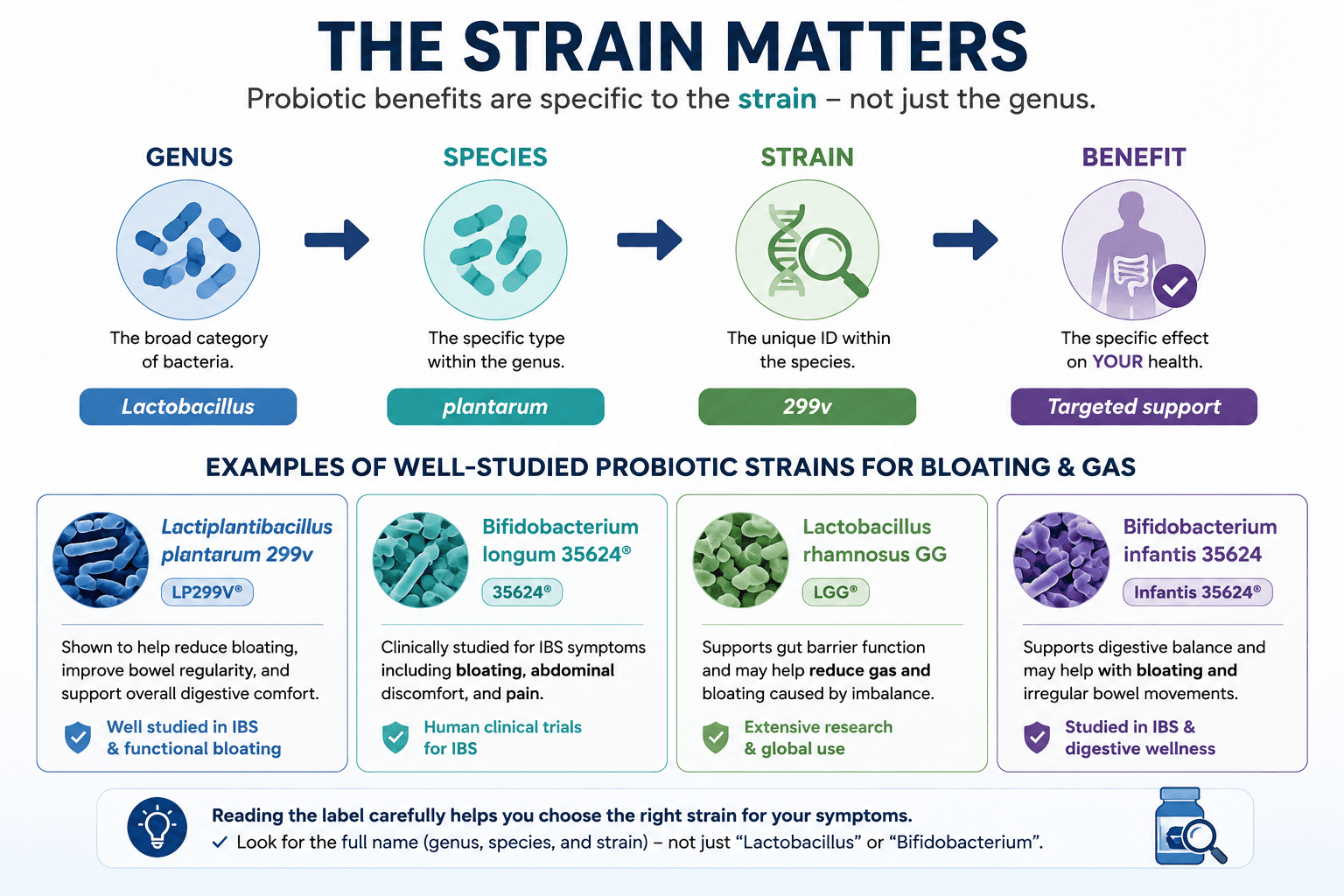
Lactiplantibacillus plantarum 299v (LP299V)
LP299V is one of the better-known strain-specific examples in digestive research. A randomized placebo-controlled study in adults with IBS evaluated the strain over four weeks and reported improvement in several gastrointestinal symptoms, including bloating. The key point is that this evidence concerns 299v, not every product labeled L. plantarum.
Bifidobacterium longum 35624
B. longum 35624, historically also described as B. infantis 35624, is the strain used in Align’s flagship digestive-support probiotic. It has been investigated for digestive symptoms, including abdominal discomfort, gas, and bloating. Again, the evidence should be attached to the exact strain rather than generalized to all Bifidobacterium products.
What About Lactobacillus rhamnosus GG and Other Strains?
LGG and many Bifidobacterium strains have substantial probiotic research behind them, but a strain can be useful for one outcome without being the best-supported choice for another. For bloating, prioritize studies that actually measured bloating, gas, abdominal discomfort, or closely related digestive outcomes in a population similar to yours.
Best Probiotics for Gas: Are They Different?
Gas and bloating often occur together, but they are not identical. Gas can come from fermentation of carbohydrates, swallowed air, constipation, changes in gut microbes, or difficulty digesting certain foods. Bloating describes the sensation of fullness, pressure, or abdominal distension and may occur even when excess gas is not the only cause.
That means a probiotic marketed for gas is not automatically the right choice. If gas consistently follows a particular food, identifying the trigger may be more useful than escalating to a higher-CFU supplement.
How to Choose a Probiotic for Bloating
Use the label as a decision tool, not just a marketing panel. The most useful details are the exact strain, the dose, added ingredients, storage requirements, and whether the product provides enough information to connect its claims to relevant evidence.
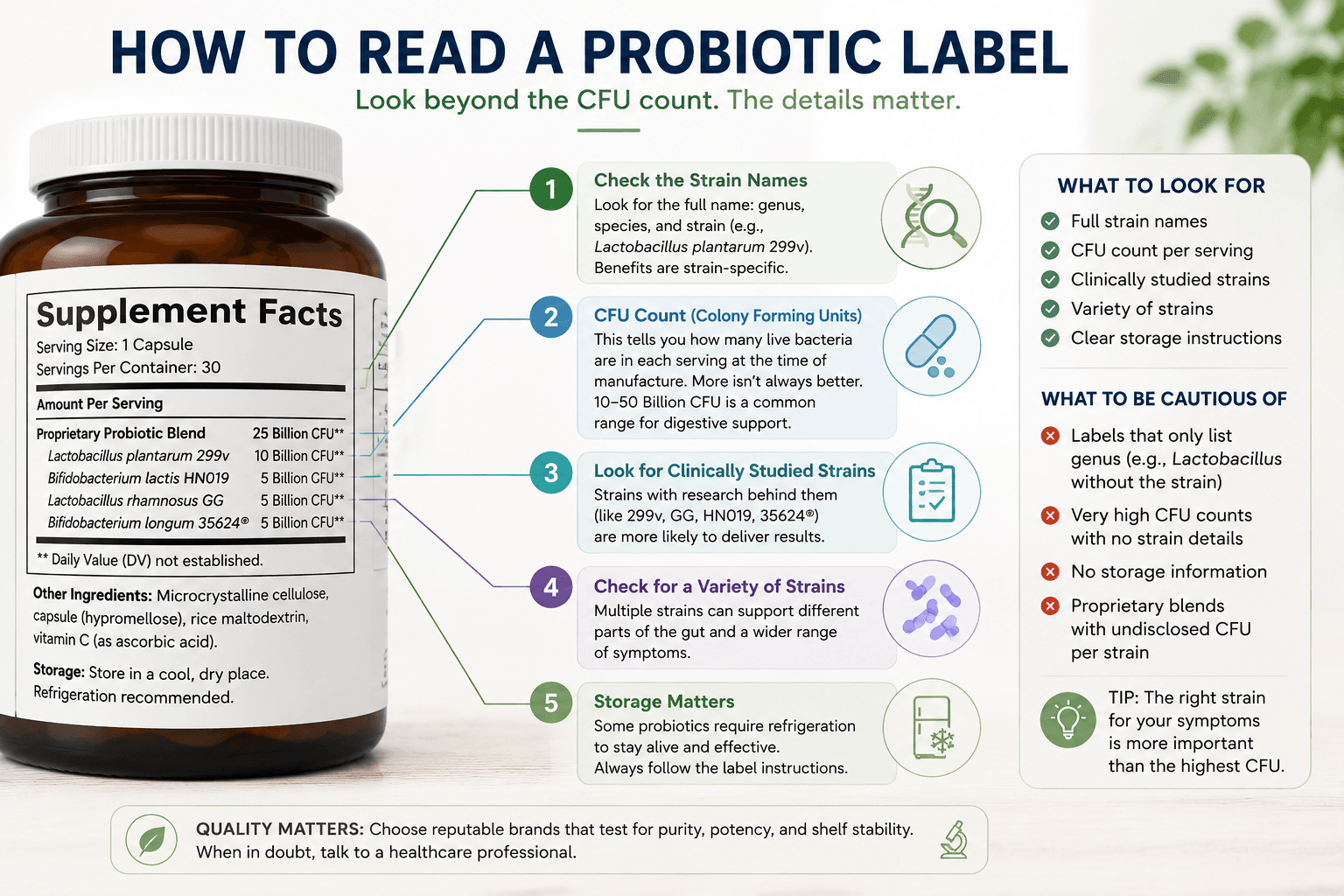
1. Look for the Exact Strain
A useful label should identify more than the genus and species. Look for the strain designation when the product is making a strain-specific evidence claim.
2. Check the Dose Used in Research
More is not automatically better. A product containing 50 or 100 billion CFU is not necessarily superior to a lower-dose product if the lower dose matches the amount used in relevant clinical research.
3. Do Not Judge by Strain Count Alone
A 12-strain blend may sound more impressive than a single-strain product, but diversity on a label does not prove effectiveness for your symptom. What matters is whether the formulation and dose have appropriate evidence.
4. Check for Added Prebiotics
Some probiotics also contain prebiotic fibers. These can be useful for some people, but certain fermentable prebiotics—especially inulin-type fructans—may increase gas or bloating in people with sensitive digestive systems or IBS.
5. Check Potency, Storage, and Label Transparency
Look for clear storage instructions, an expiration or best-by date, strain identification, and potency information. Shelf-stable and refrigerated products can both be legitimate; the important question is whether the manufacturer can maintain the declared viable amount through the product’s shelf life.
Can Prebiotics Make Bloating Worse?
Yes, they can in some people. Probiotics and prebiotics are different: probiotics are live microorganisms, while prebiotics are substrates used by microorganisms in the gut. NCCIH notes that large amounts of prebiotics can cause gas, bloating, cramps, and diarrhea, and research in IBS has found that some inulin-type fructans can increase flatulence.
For someone already struggling with bloating, “contains prebiotics” should therefore not automatically be treated as a positive feature. Read the full ingredient list and consider your tolerance.
Can Probiotics Make Bloating and Gas Worse at First?
Some people report temporary gas or bloating after starting a probiotic. However, worsening symptoms should not automatically be dismissed as a normal “adjustment” or proof that a supplement is working. If symptoms are significant, persistent, or accompanied by pain, vomiting, bleeding, fever, unexplained weight loss, or other concerning changes, stop self-experimenting and seek medical advice.
How Long Do Probiotics Take to Help With Bloating?
There is no universal timeline. Clinical studies use different strains, doses, populations, and treatment periods. Some IBS studies have evaluated outcomes after about four weeks, while others run longer. A result from one trial cannot be turned into a promise that every probiotic should work within the same number of days.
Follow the product directions, track your symptoms, and reassess whether the supplement is helping rather than continuing indefinitely because the label promises digestive support.
Probiotics vs Digestive Enzymes for Bloating
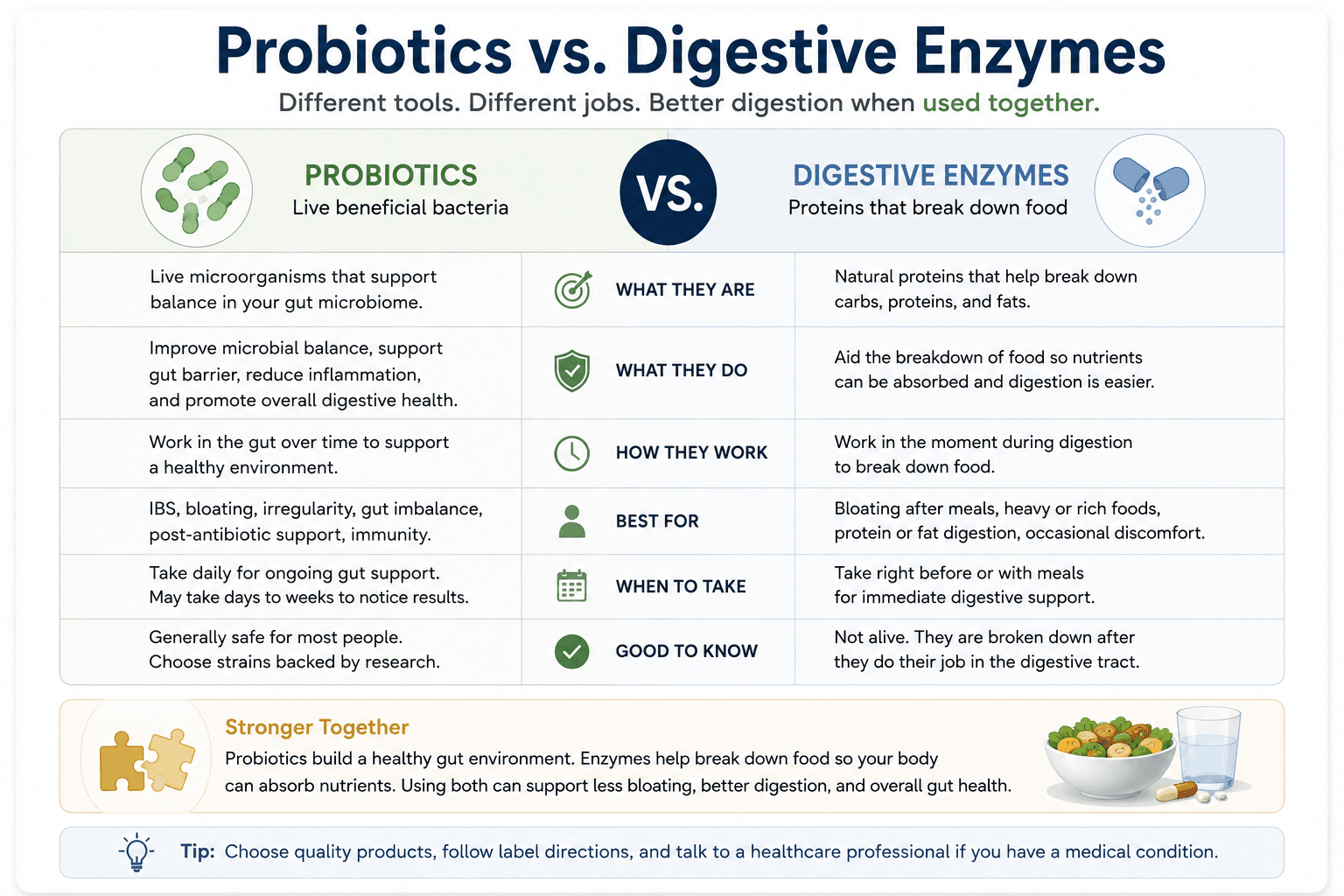
| Probiotics | Digestive enzymes | |
|---|---|---|
| What they are | Live microorganisms intended to provide a health benefit | Enzymes that help break down specific components of food |
| Best considered when | There is relevant strain-specific evidence for your digestive concern | A particular food component is difficult to digest |
| Examples | B. longum 35624, L. plantarum 299v | Lactase for lactose; alpha-galactosidase for certain fermentable carbohydrates |
| Universal fix for bloating? | No | No |
If your symptoms are closely tied to specific foods, our guide to digestive enzymes explains how enzyme choice depends on what you are trying to digest.
Digestive Enzyme Pick: BiOptimizers MassZymes
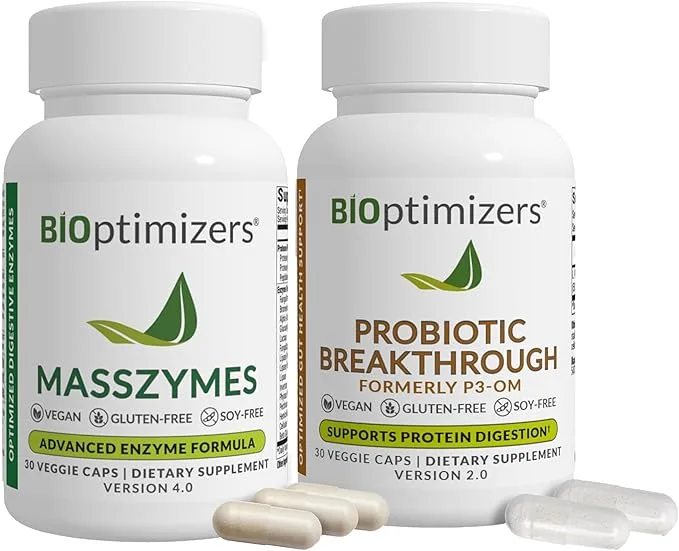
If bloating or heaviness tends to happen after meals, digestive enzymes may be worth considering alongside the probiotic discussion. MassZymes is a broad-spectrum digestive enzyme formula with a strong emphasis on protein digestion.
Best for: adults looking for broader digestive enzyme support, particularly around protein-rich or mixed meals.
Probiotic Supplements vs Probiotic Foods
Yogurt, kefir, kimchi, sauerkraut, and other fermented foods can contain live microorganisms and can be valuable parts of a varied diet. But a fermented food is not automatically equivalent to a clinically studied probiotic supplement. A supplement can identify a specific strain and dose; a food may contain a different or variable microbial profile.
If you tolerate fermented foods well, they can be a practical way to add dietary variety. If you are choosing a supplement for a specific symptom, strain identification becomes more important.
When Is the Best Time to Take a Probiotic?
There is no single timing rule that applies to every probiotic. Follow the instructions for the exact product you choose. Some products are designed to be taken with or without food, while storage and handling requirements can also differ.
Who Should Be Careful With Probiotic Supplements?
Probiotics have a long history of apparently safe use in healthy people, but safety data are not equally strong for every population. NCCIH notes that the risk of harmful effects is greater in people who are seriously ill or have compromised immune systems. If you have a serious underlying condition, are immunocompromised, or are unsure whether a supplement is appropriate for you, discuss it with a qualified healthcare professional first.
When Should You See a Doctor About Persistent Bloating?
A supplement should not become a reason to postpone evaluation of persistent digestive symptoms. Seek medical care for ongoing or worsening bloating, especially when it occurs with severe pain, repeated vomiting, blood in the stool, unexplained weight loss, fever, major changes in bowel habits, or other symptoms that concern you.
How We Chose the Best Probiotics for Bloating
For this guide, we prioritize strain-specific human evidence, transparent labels, relevant dosing information, current manufacturer formulation details, storage requirements, and practical suitability. We do not rank a probiotic higher simply because it contains more CFUs or more strains.
We also separate manufacturer claims from independent evidence. A brand’s product page is useful for verifying the current formula, but claims about symptom improvement should be judged against clinical research and authoritative health guidance.
Frequently Asked Questions
Which probiotic brand is most effective for bloating?
No brand is proven to be most effective for every person or every cause of bloating. Compare exact strains and evidence rather than relying on brand popularity.
Is 50 billion CFU better than 10 billion?
Not necessarily. A higher CFU count does not prove better symptom relief. The strain, dose used in research, formulation, and viability matter more than choosing the largest number.
Should I take probiotics every day?
Follow the directions for the specific product and consider why you are taking it. Daily use is common in clinical studies and product instructions, but that does not mean every person needs a probiotic indefinitely.
Are probiotics or digestive enzymes better for bloating?
Neither is universally better. Probiotics are strain-specific microorganisms, while digestive enzymes help break down particular food components. The better choice depends on the likely cause of your symptoms.
Can probiotics help with gas?
Some strains have been studied for digestive symptoms that include gas, but probiotics can also temporarily increase gas in some people. Match the strain and evidence to the problem rather than assuming all probiotics reduce gas.
Want Practical Wellness Tips in Your Inbox?
Join Purely Vital Living for evidence-informed gut health, sleep, supplement, and healthy-aging tips delivered straight to you.
Final Verdict
The best probiotics for bloating are not necessarily the products with the highest CFU count, the longest ingredient list, or the most aggressive marketing. Start with the symptom pattern, look for an exact strain with relevant evidence, verify that the current product contains that strain at a sensible dose, and pay attention to added prebiotics and your own tolerance.
For a clearly identified single strain, Align 24/7 Digestive Support is notable for B. longum 35624. For readers specifically interested in LP299V, Jarrow Ideal Bowel Support LP299V provides the exact L. plantarum 299v strain. Neither should be viewed as a universal solution, and persistent bloating deserves attention to the underlying cause.
Related Reads
- Best Supplements for Gut Health and Digestion
- Best Supplements for Digestive Health: The Complete Guide
- Best Digestive Enzymes for Better Digestion
- 7 Signs of Poor Gut Health and How to Fix It
- How to Heal Your Gut Microbiome Naturally
References
- National Center for Complementary and Integrative Health. Probiotics: Usefulness and Safety.
- National Center for Complementary and Integrative Health. Irritable Bowel Syndrome: What You Need To Know.
- National Center for Complementary and Integrative Health. IBS and Complementary Health Approaches: What the Science Says.
- World Gastroenterology Organisation. Probiotics and Prebiotics Global Guideline.
- Ducrotté P, et al. Clinical trial of Lactobacillus plantarum 299v in IBS. World Journal of Gastroenterology.
- Align Probiotics. Current product and strain information for Bifidobacterium longum 35624.
- Jarrow Formulas. Current product information for Ideal Bowel Support LP299V.
Medical note: This article is for educational purposes and is not a substitute for individualized medical advice. Probiotic supplements can affect people differently, and digestive symptoms can have many causes.