
Quick Answer
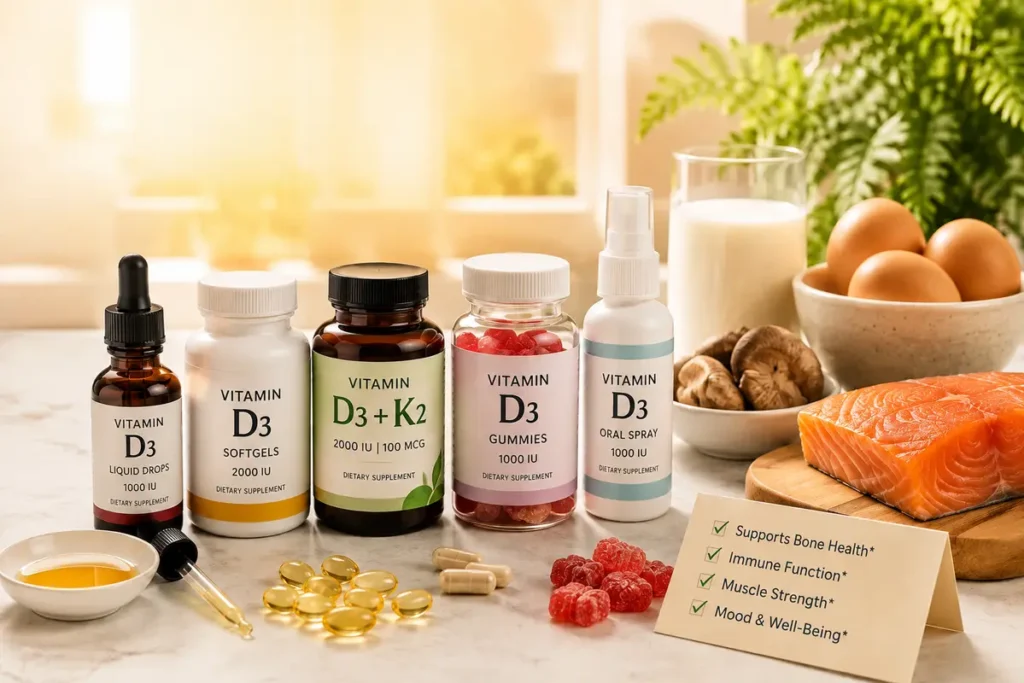
The best vitamin D3 supplement is one that provides an appropriate dose, uses cholecalciferol, clearly lists its ingredients, and has reliable quality verification. For many adults, a simple 1,000–2,000 IU softgel is practical, while liquid formulas suit flexible dosing and D3 plus K2 may fit specific bone-health goals after professional guidance.
Key Takeaways
- Vitamin D3, or cholecalciferol, is generally more effective than vitamin D2 at raising and maintaining vitamin D status.
- Most healthy adults need 600 IU daily from all sources, rising to 800 IU after age 70; supplement needs depend on diet, sun exposure, health conditions, and clinician advice.
- Do not assume that a higher dose is better. The adult upper intake level is 4,000 IU daily unless a healthcare professional recommends a different amount.
- Vitamin D is fat-soluble, so taking it with a meal that contains some fat may improve absorption.
- Look for transparent labels and credible third-party verification such as USP, NSF, or another recognized testing program.
- People taking warfarin or another vitamin K–sensitive medication should not add a D3 plus K2 formula without medical guidance.
- Introduction
- What Is the Best Vitamin D3 Supplement in 2026?
- Nature Made Vitamin D3 2000 IU
- Which Vitamin D3 Supplements Stand Out?
- How We Evaluated Vitamin D3 Supplements
- What Is Vitamin D3 and Why Does It Matter?
- Is Vitamin D3 Better Than Vitamin D2?
- Should You Choose Vitamin D3 With K2?
- Nature Made Vitamin D3 + K2
- What Is the Best Vitamin D Supplement for Women?
- What Is the Best Vitamin D3 Supplement for Older Adults?
- How Much Vitamin D3 Should You Take Daily?
- Nature Made Vitamin D3 5000 IU
- When Is the Best Time to Take Vitamin D3?
- Which Form of Vitamin D3 Is Best?
- How Do You Read a Vitamin D3 Supplement Label?
- Pure Encapsulations Vitamin D3 & K2
- Who Is More Likely to Have Low Vitamin D?
- Can You Get Enough Vitamin D From Food and Sunlight?
- Can You Take Too Much Vitamin D3?
- Which Medications Can Interact With Vitamin D?
- Does Vitamin D3 Improve Energy?
- Frequently Asked Questions About Vitamin D3 Supplements
- Final Verdict: How Should You Choose a Vitamin D3 Supplement?
Introduction
For years, I treated supplements as if the main question was simply whether an ingredient was “good.” Over time, I learned that the more useful question is whether a product matches the person, the dose, and the reason for taking it.
Vitamin D is a good example. It supports calcium absorption and plays an established role in bone and muscle health, yet supplement labels range from modest daily doses to very high-strength formulas. Some include vitamin K2, some use vegan D3 from lichen, and others come as gummies, sprays, drops, or softgels.
This guide explains how to compare those options without assuming that the most expensive or highest-dose bottle is automatically the best. The aim is to help you understand what matters, what remains uncertain, and what realistic next step makes sense for you.
What Is the Best Vitamin D3 Supplement in 2026?
For most adults seeking a straightforward daily option, the best vitamin D3 supplement is a clearly labeled cholecalciferol product in an appropriate dose, ideally with recognized third-party quality verification. A 1,000–2,000 IU softgel is convenient for many people, but the right strength depends on total dietary intake, sun exposure, age, health conditions, and professional advice.
| Best fit | Suggested format | What to look for | Important caution |
|---|---|---|---|
| Simple daily use | D3 softgel | Transparent dose and quality verification | Do not automatically choose 5,000 IU or more |
| Flexible dosing | Liquid D3 | Clear dose per drop and accurate dispenser | Count drops carefully |
| Vegan preference | Lichen-derived D3 | Vegan certification and plant-based capsule | Check all inactive ingredients |
| Bone-health formula | D3 with K2 | Clearly identified K2 form and dose | Ask a clinician if using warfarin |
| Difficulty swallowing pills | Gummy or spray | Reasonable sugar content and accurate serving size | A pleasant format does not justify excessive dosing |
Which Vitamin D3 Supplements Stand Out?
The products below represent different use cases rather than a universal ranking. Formulas, availability, and prices can change, so always confirm the current Supplement Facts panel before buying.
Nature Made Vitamin D3 2,000 IU — Straightforward Daily Softgel
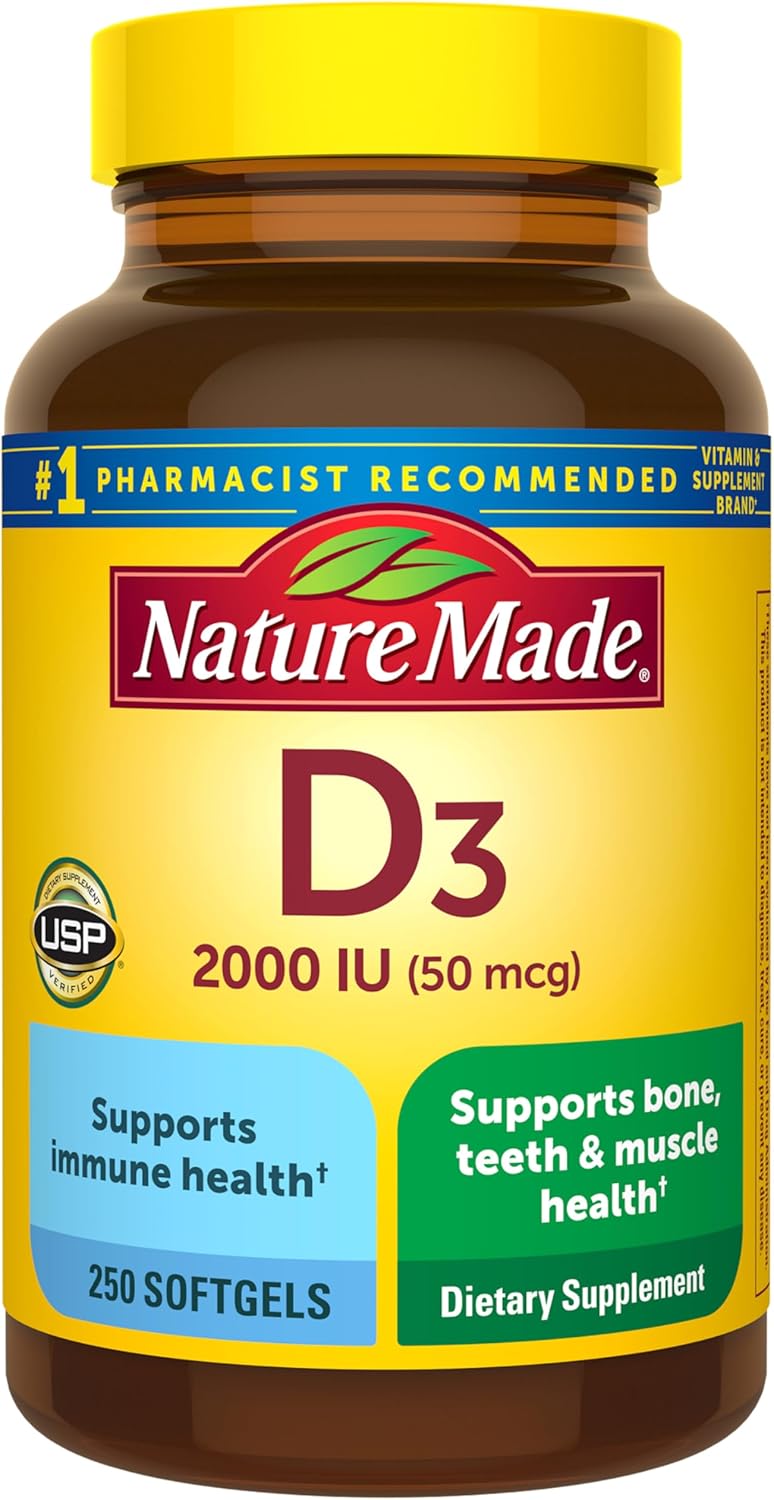
Nature Made’s 2,000 IU softgel is a simple one-per-day formula and carries USP verification. It is a practical reference point for readers who want a widely available product without added K2, herbs, or complex blends.
Best for: Adults who prefer a conventional softgel and want independent quality verification.
NOW Vitamin D3 2,000 IU — Budget-Friendly Softgel
NOW offers a straightforward 2,000 IU vitamin D3 softgel in several bottle sizes. This type of formula can suit readers who value simplicity and cost per serving, provided the dose matches their needs.
Best for: Cost-conscious shoppers looking for a basic daily D3 product.
Thorne Vitamin D + K2 Liquid — Flexible Liquid Formula
Thorne’s liquid formula provides vitamin D3 and vitamin K2 in a drop format, which makes it easier to adjust intake under professional guidance. The company states that the product is third-party tested. Because it contains vitamin K, it is not the right choice for everyone.
Best for: People who prefer liquid dosing and have discussed D3 plus K2 with a healthcare professional.
Sports Research Vitamin D3 + K2 — Vegan Combination
Sports Research combines lichen-derived vitamin D3 with K2 and MCT oil in a plant-based capsule. Several strengths are available, including doses that exceed routine daily requirements, so careful label reading matters.
Best for: Vegan shoppers specifically seeking a D3 plus K2 combination.
PVL also has a broader guide to vitamin D supplements for energy and immunity. This page focuses more narrowly on choosing a D3 product, dose, and format.
How We Evaluated Vitamin D3 Supplements
A useful supplement comparison should explain its criteria. We considered the following factors:
- Form of vitamin D: We prioritized vitamin D3, or cholecalciferol.
- Dose transparency: The amount per serving should be easy to understand in both micrograms and IU.
- Quality verification: Recognized third-party verification or clearly described quality testing improves confidence.
- Added ingredients: We considered whether K2, oils, sweeteners, or other ingredients serve a clear purpose.
- Ease of use: Softgels, liquids, gummies, and sprays suit different preferences.
- Dietary suitability: Vegan sourcing, allergens, capsule materials, and inactive ingredients matter.
- Value: Cost per serving matters, but only after dose and quality are considered.
What Is Vitamin D3 and Why Does It Matter?

Vitamin D3 is cholecalciferol, the form of vitamin D your skin produces after exposure to ultraviolet B light. It is also found in some animal-derived foods and dietary supplements. Vegan D3 is commonly sourced from lichen.
Vitamin D helps your body absorb calcium and maintain normal calcium and phosphate levels. That supports bone mineralization, muscle function, and the prevention of rickets in children and osteomalacia in adults. It also participates in immune and neuromuscular processes, but evidence for preventing many chronic diseases remains uncertain.
That distinction matters. A nutrient can be essential without every high-dose supplement claim being proven.
Is Vitamin D3 Better Than Vitamin D2?
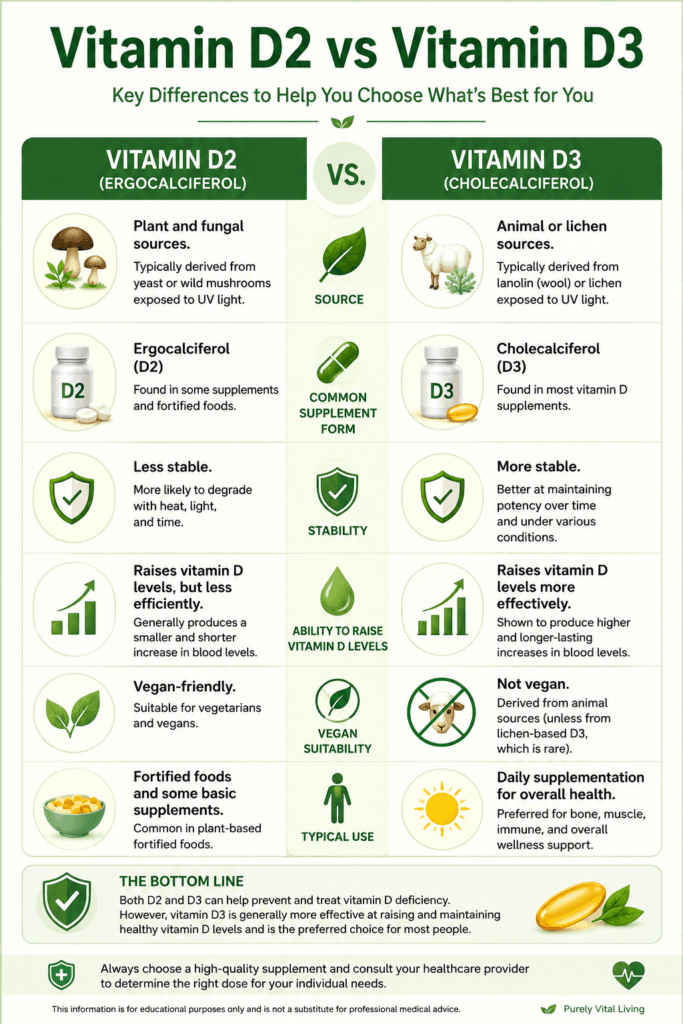
Both vitamin D2 and D3 are absorbed in the small intestine and can improve vitamin D status. However, research generally finds that D3 raises and maintains circulating 25-hydroxyvitamin D more effectively than D2. This is why D3 is commonly preferred for routine supplementation.
| Feature | Vitamin D3 | Vitamin D2 |
|---|---|---|
| Scientific name | Cholecalciferol | Ergocalciferol |
| Common source | Lanolin or lichen | Yeast or mushrooms |
| Raises vitamin D status | Generally more effective over time | Effective, but often less sustained |
| Vegan availability | Yes, when lichen-derived | Usually vegan |
Should You Choose Vitamin D3 With K2?
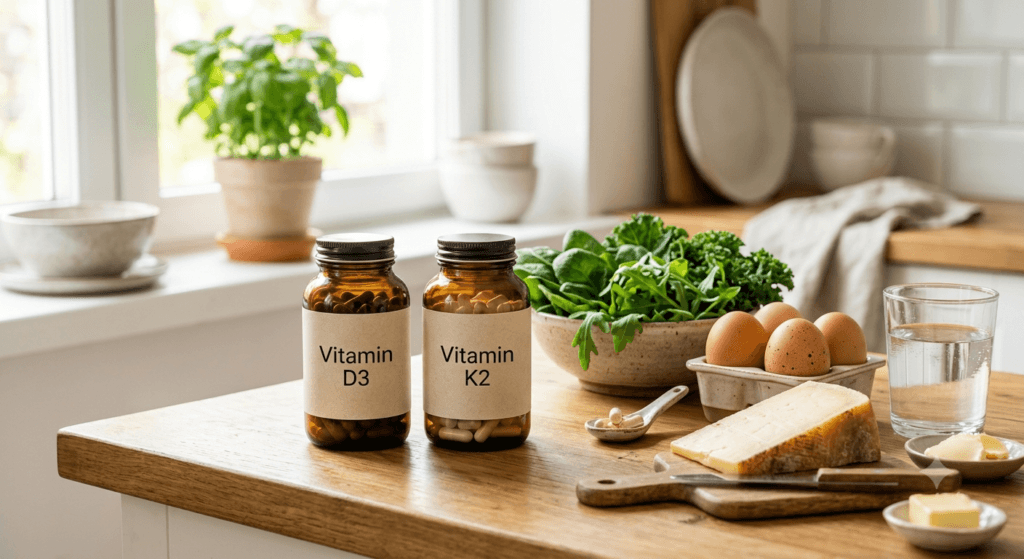
Vitamin K supports proteins involved in normal blood clotting and bone metabolism. This has led to growing interest in D3 plus K2 combinations, particularly for bone health.
However, a combined product is not automatically necessary for every adult taking vitamin D. Evidence for the clinical advantages of routine D3 plus K2 supplementation is still developing, and individual needs vary. A simple D3 product may be sufficient when diet provides adequate vitamin K.
Vitamin K can interfere with warfarin and related anticoagulant management. Anyone taking these medicines should speak with the prescribing clinician before changing vitamin K intake.

What Is the Best Vitamin D Supplement for Women?

The best vitamin D supplement for women is not a special gendered formula. It is a suitable dose of D3 that reflects age, pregnancy status, diet, sun exposure, bone-health risk, medications, and any confirmed deficiency.
Women after menopause may pay closer attention to bone health, but vitamin D should be considered alongside adequate calcium intake, resistance exercise, protein, and medical risk assessment. Pregnant or breastfeeding women should follow prenatal and clinician guidance rather than adding high-dose vitamin D independently.
What Is the Best Vitamin D3 Supplement for Older Adults?
Adults over 70 have a recommended intake of 800 IU per day from all sources. A clearly labeled daily D3 softgel or liquid may be easier to use consistently than a complex formula. The best choice should also consider swallowing ability, medication interactions, kidney health, osteoporosis risk, and whether a clinician has recommended testing.
Consistency matters more than collecting many supplements. This is also why a broader balanced lifestyle for healthy aging remains the foundation.
How Much Vitamin D3 Should You Take Daily?
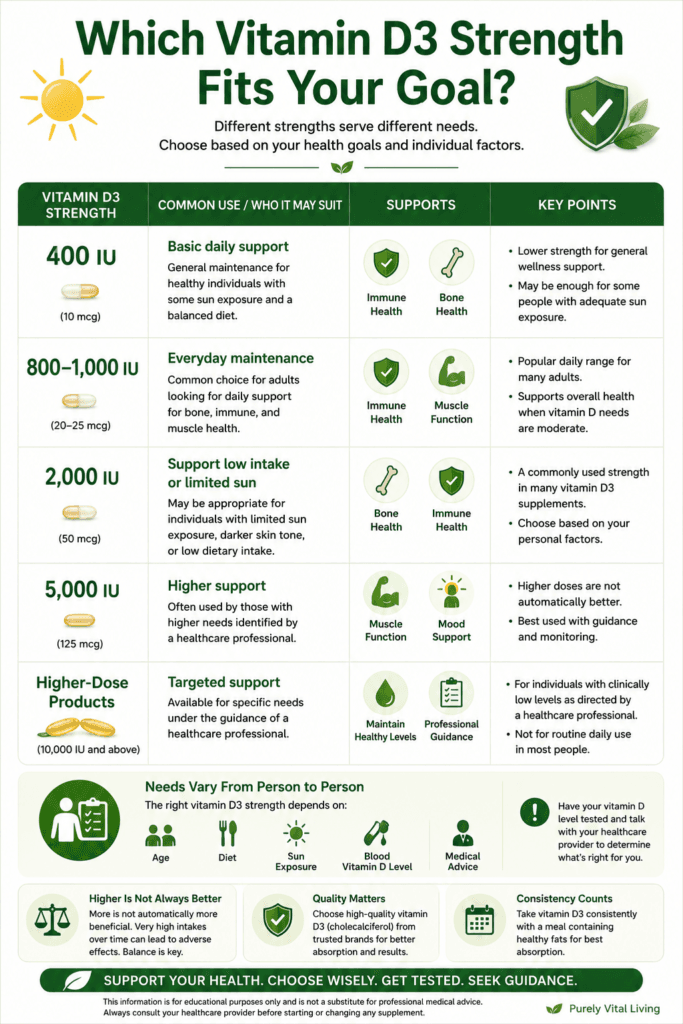
The U.S. recommended dietary allowance is 600 IU, or 15 micrograms, daily for adults through age 70 and 800 IU, or 20 micrograms, for adults over 70. These figures include vitamin D from food, fortified products, and supplements.
| Daily amount | How to interpret it |
|---|---|
| 600 IU | Recommended daily intake for most adults ages 19–70 from all sources |
| 800 IU | Recommended daily intake for adults over 70 from all sources |
| 1,000–2,000 IU | Common supplement range, but not automatically necessary for everyone |
| 4,000 IU | Adult tolerable upper intake level for routine unsupervised intake |
| 5,000 IU or more | Should not be treated as a default daily wellness dose; use professional guidance |
A blood test for 25-hydroxyvitamin D can help in selected clinical situations, but the Endocrine Society does not recommend routine screening for every healthy adult. Testing makes more sense when a clinician identifies a specific indication.
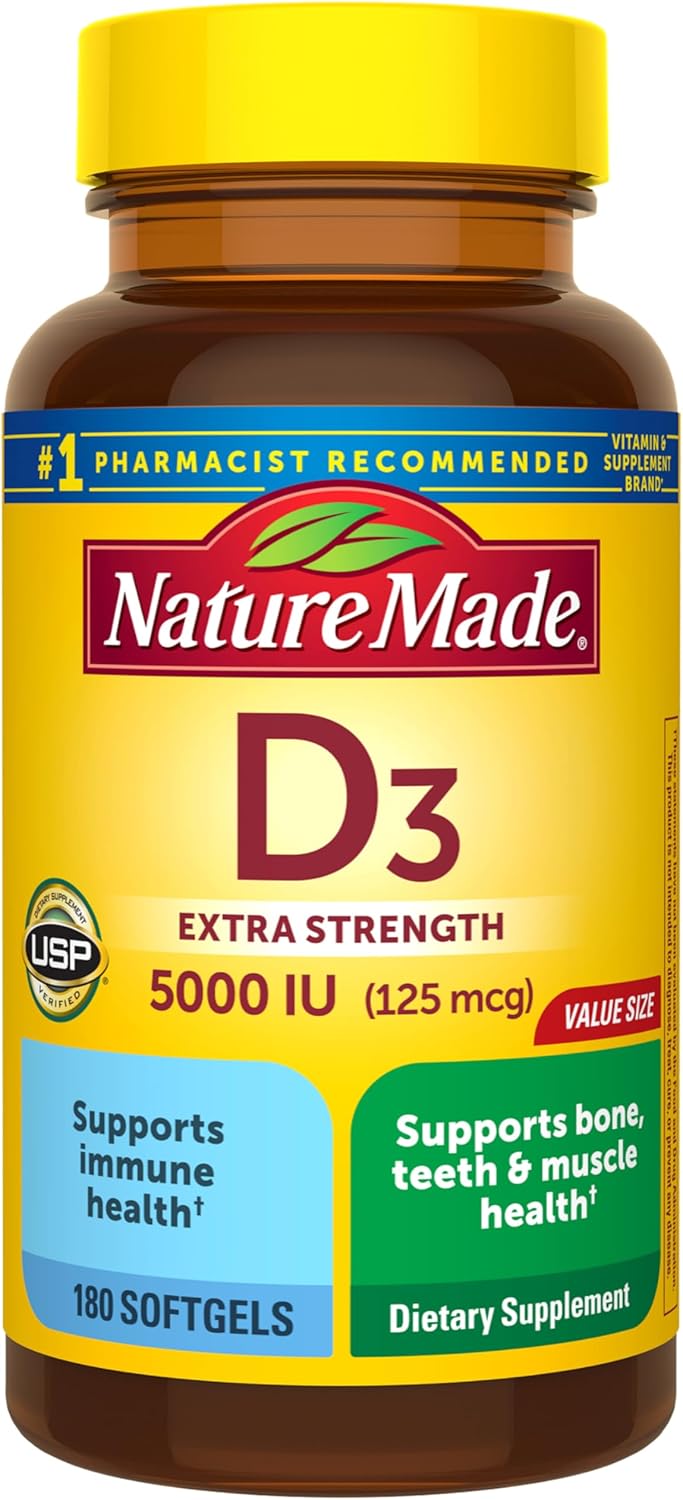
More vitamin D is not always better. For adults, 4,000 IU per day from all sources is the tolerable upper intake level for routine unsupervised use. A 5,000 IU supplement exceeds that level and should not be treated as a default daily wellness dose; it may be appropriate in specific circumstances when a qualified healthcare professional recommends and monitors the higher intake.
When Is the Best Time to Take Vitamin D3?

There is no strong evidence that morning is universally better than evening. The best time is the time you can remember consistently.
Because vitamin D is fat-soluble, taking it with a meal containing some dietary fat may improve absorption. Breakfast, lunch, or dinner can all work. If taking it late seems to affect your sleep, move it earlier, but this response is individual rather than a universal rule.
Which Form of Vitamin D3 Is Best?
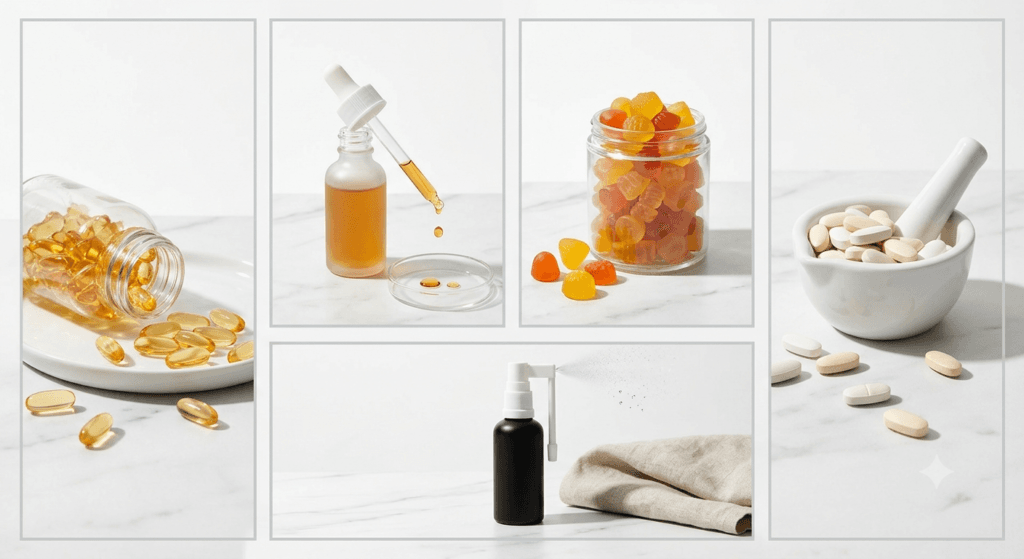
Softgels
Softgels are convenient, stable, and easy to compare by dose. Many use oil as a carrier, which suits a fat-soluble nutrient.
Liquid Drops
Liquid D3 can be useful for people who dislike pills or need flexible dosing. The main limitation is measurement accuracy, so the dose per drop must be clearly stated.
Gummies
Gummies may improve consistency for people who avoid capsules. Check added sugar, serving size, and whether the appealing format encourages accidental overuse.
Sprays
Oral sprays are convenient and may suit people with swallowing difficulties. They are not automatically superior to capsules, so judge them by dose accuracy, ingredients, and quality rather than marketing claims.
How Do You Read a Vitamin D3 Supplement Label?

- Confirm the form. Look for vitamin D3 or cholecalciferol.
- Check both units. One microgram of vitamin D equals 40 IU.
- Read the serving size. A label may list the dose per two gummies rather than per gummy.
- Review inactive ingredients. Check oils, gelatin, sweeteners, colors, and allergens.
- Look for credible verification. USP, NSF, or other recognized programs can help confirm identity and manufacturing quality.
- Question extreme doses. High strength is not the same as high quality.

Who Is More Likely to Have Low Vitamin D?
Risk can be higher among older adults, people with limited sun exposure, people with darker skin, those with obesity, and people with conditions that reduce fat absorption, such as inflammatory bowel disease or after some forms of bariatric surgery. Diets containing little fortified food, fatty fish, or animal-derived vitamin D may also contribute.
Risk does not automatically mean that everyone needs a high-dose supplement or routine screening. It means the conversation should be individualized.
Can You Get Enough Vitamin D From Food and Sunlight?

Vitamin D occurs naturally in relatively few foods. Fatty fish such as salmon, tuna, and mackerel are among the best sources. Egg yolks and liver provide smaller amounts, while fortified milk, plant beverages, cereals, and some orange juices can make a meaningful contribution.
Sunlight can stimulate vitamin D production, but the amount varies with season, latitude, time of day, skin pigmentation, age, clothing, sunscreen use, and time outdoors. It is not practical or safe to prescribe one universal amount of sun exposure, especially because ultraviolet radiation increases skin-cancer risk.
Can You Take Too Much Vitamin D3?
Yes. Vitamin D toxicity is uncommon, but it can occur when very high supplement doses cause excessive calcium in the blood. Possible symptoms include nausea, vomiting, poor appetite, weakness, confusion, frequent urination, kidney stones, and kidney damage.
The adult upper intake level is 4,000 IU per day unless a clinician recommends and monitors a different amount. Toxicity is generally caused by supplements, not ordinary food intake or sun exposure.
Which Medications Can Interact With Vitamin D?
Vitamin D can interact with or be affected by certain medications, including some anticonvulsants, corticosteroids, weight-loss medicines that reduce fat absorption, bile-acid sequestrants, thiazide diuretics, and specific cholesterol or psoriasis treatments. Vitamin K2 adds another concern for people taking warfarin.
Bring the full supplement label to your doctor or pharmacist instead of mentioning only “vitamin D.” Added K2, calcium, magnesium, or herbs can change the interaction discussion.
Does Vitamin D3 Improve Energy?
Low vitamin D can be associated with fatigue, and correcting a confirmed deficiency may help some people feel better. However, vitamin D is not a general stimulant, and taking more does not reliably create more energy in someone whose status is already adequate.
Persistent fatigue deserves a broader look at sleep, iron status, vitamin B12, thyroid health, stress, nutrition, medications, and other causes. Our guide to the best vitamins for energy after 40 explains that wider picture.
Want practical wellness guidance without exaggerated promises?
Join the Purely Vital Living newsletter for evidence-based supplement guides, energy strategies, sleep tips, and realistic healthy-living ideas.
Frequently Asked Questions About Vitamin D3 Supplements
What brand of vitamin D3 is best?
No single brand is best for everyone. Look for the correct dose, transparent ingredients, reliable quality verification, and a format you can use consistently. Nature Made, NOW, Thorne, and Sports Research illustrate different options, but the label and dose matter more than brand recognition alone.
Is 2,000 IU of vitamin D3 safe to take every day?
Two thousand IU is below the adult upper intake level of 4,000 IU, but it may still be more than some people need. Your total intake, health conditions, medications, and any clinician advice should guide the decision.
Should vitamin D3 be taken with food?
Vitamin D is fat-soluble, and taking it with a meal containing some fat may improve absorption. A consistent meal is also a practical way to remember the supplement.
Do you need vitamin K2 with vitamin D3?
Not everyone needs a combined D3 and K2 supplement. K2 may fit some bone-health plans, but evidence for routine combined use is still developing. People taking warfarin should not change vitamin K intake without medical guidance.
Is liquid vitamin D3 better than softgels?
Liquid vitamin D3 is not automatically better. It offers flexible dosing and avoids swallowing a pill, while softgels are convenient and easy to measure. Choose based on dose accuracy, ingredients, quality, and personal preference.
How do I know whether I need a vitamin D supplement?
Consider your diet, sun exposure, age, skin pigmentation, digestive health, medications, and clinician advice. Routine blood screening is not recommended for every healthy adult, but testing may be appropriate when there is a specific medical indication.
Final Verdict: How Should You Choose a Vitamin D3 Supplement?
Choose the simplest product that fits a clearly defined need. For many adults, that may be a modest-dose D3 softgel with transparent ingredients and credible quality verification. Liquid D3 can make dosing easier, while vegan and D3 plus K2 formulas serve more specific preferences.
The most important lesson is not to confuse a larger dose with a better supplement. Start with your actual needs, check the label carefully, and ask for professional guidance when using high doses, managing a health condition, or taking interacting medications.
One realistic next step is to review the vitamin D already present in your diet and current supplements before buying another bottle.
Related Reads
- Best Vitamin D Supplements for Energy & Immunity
- Best Vitamins for Energy After 40
- Best Wellness Supplements for Better Health
- Balanced Lifestyle for Healthy Aging
- How to Get More Energy Naturally
References
- NIH Office of Dietary Supplements — Vitamin D Fact Sheet for Health Professionals
- Endocrine Society — Vitamin D for the Prevention of Disease Clinical Practice Guideline
- Mayo Clinic — Vitamin D
- Mayo Clinic — Vitamin D Toxicity
- Nature Made — Vitamin D3 2,000 IU Product Information
- NOW Foods — Vitamin D3 2,000 IU Product Information
- Thorne — Vitamin D + K2 Liquid Product Information
- Sports Research — Vitamin D3 + K2 Product Information