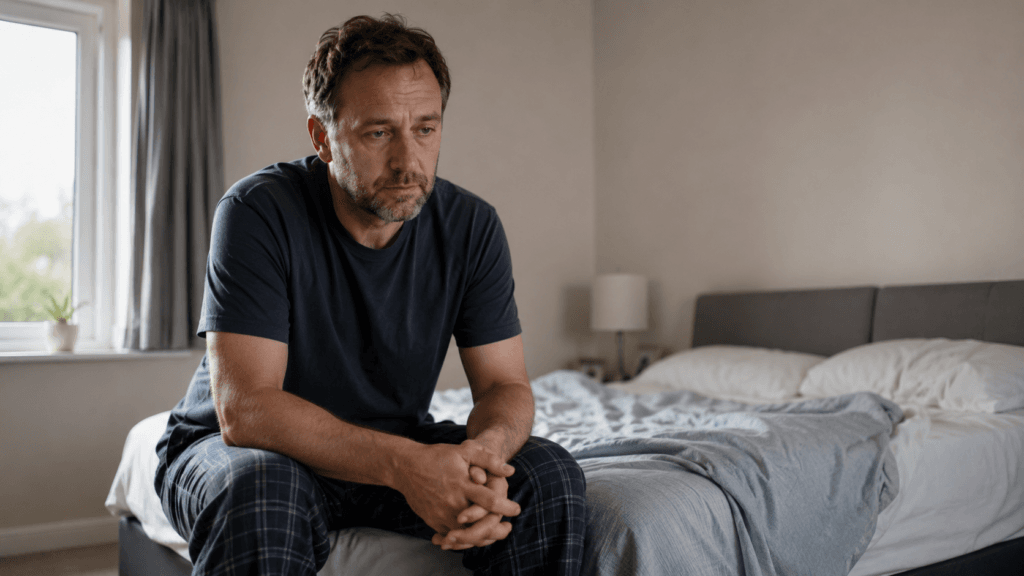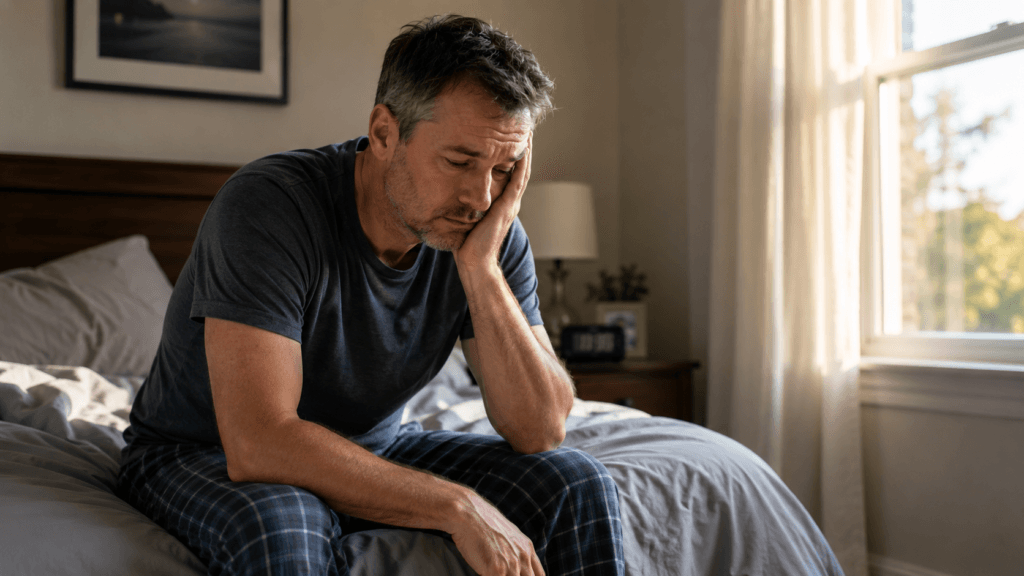

By Walid Abdin | Founder & Editor, Purely Vital Living
Quick Answer
I’ve lived with irritable bowel syndrome (IBS) and slow transit constipation (colonic inertia) for nearly twenty years. During that time I underwent countless medical investigations, experimented with elimination diets, detox programmes, supplements, pelvic floor therapy, and medications—all in search of lasting relief. Although I never found a miracle cure, I discovered that consistent daily habits, realistic expectations, and self-compassion transformed the way I live with chronic digestive illness. This is my personal story.
Key Takeaways
- Living with IBS is about learning what works for your body rather than chasing a single cure.
- My biggest challenge turned out to be slow transit constipation (colonic inertia), not IBS alone.
- Stress, sleep, movement, and meal timing influenced my symptoms as much as food choices.
- Some treatments provided temporary relief, but long-term progress came from consistent habits.
- The greatest lesson wasn’t how to eliminate every symptom—it was learning how to live with hope despite them.
“For years I believed healing meant finding the perfect treatment. Looking back, I realise healing began the day I stopped fighting my body and started listening to it.”
My Journey at a Glance
| Year | Milestone |
|---|---|
| Childhood | Frequent bloating and constipation begin. |
| 2006 | Digestive symptoms become severe enough to affect daily life. |
| 2007–2011 | Multiple doctors, medications, elimination diets, and detox programmes. |
| 2012–2018 | Colonoscopy, endoscopy, SIBO testing, colon transit studies, and pelvic floor therapy. |
| 2019–Present | Managing IBS, slow transit constipation, chronic fatigue syndrome, sleep apnea, and high blood pressure through long-term lifestyle changes and medical care. |
| 2026 | Sharing my experience through Purely Vital Living to help others feel less alone. |
Introduction
When people hear that I’ve lived with IBS and colonic inertia for nearly twenty years, they usually assume the hardest part has been the physical discomfort.
It wasn’t.
The hardest part was waking up almost every morning believing that today might finally be different.
Maybe the bloating would disappear.
Maybe my stomach would finally feel normal.
Maybe this new medication, diet, supplement, or treatment would be the breakthrough I’d been searching for.
Yet, more often than not, the same familiar symptoms returned before the day had even begun.
Looking back now, I realise that I spent years searching for a cure when what I really needed was a better understanding of my own body.
This isn’t a story about finding one miracle treatment.
It’s a story about twenty years of searching, learning, failing, adapting, and eventually discovering that healing can look very different from what we imagine.
If you’re living with IBS, slow transit constipation, colonic inertia, or another chronic digestive condition, I hope my experience reminds you that you’re not alone.
A Childhood Filled with Bloating
Growing Up with Symptoms I Couldn’t Explain

My digestive problems didn’t suddenly appear in adulthood.
When I think back, I can trace them all the way to childhood.
I remember sitting at the school lunch table with a stomach that constantly felt tight, heavy, and uncomfortable.
While other children ate without giving it a second thought, I often wondered why something as simple as eating seemed so much harder for me.
At that age I had never heard of irritable bowel syndrome.
I didn’t know what gut motility was.
I certainly had no idea what colonic inertia meant.
I simply accepted that my stomach seemed different from everyone else’s.
Constipation became normal.
So did bloating.
Like many children, I rarely spoke about it.
Digestive problems are difficult to explain, especially when there are no visible injuries for other people to see.
Most of the time I simply tried to ignore it and carried on with life.
I couldn’t have imagined that those early symptoms would become the beginning of a journey lasting more than two decades.
The Summer of 2006 Changed Everything
When My Symptoms Began Controlling My Life
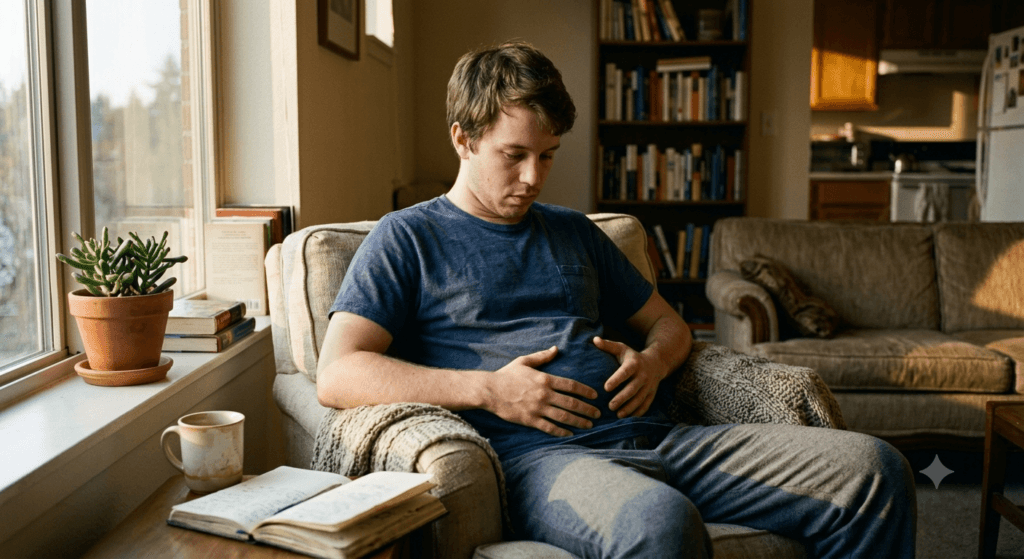
Although I had experienced digestive discomfort for years, the summer of 2006 marked the point where everything changed.
The bloating became impossible to ignore.
Some days my stomach became so distended that even loose clothing felt uncomfortable.
I occasionally avoided family outings because I simply didn’t feel well enough to leave the house.
For the first time, my digestive symptoms were no longer an inconvenience.
They were beginning to control my life.
I booked an appointment with my doctor believing I was finally about to receive an explanation.
Instead, I was advised to reduce my tea and coffee intake and prescribed medications, including Nexium and anti-gas tablets.
I followed every recommendation exactly as instructed.
I genuinely believed I was only a few weeks away from feeling normal again.
Nothing changed.
The bloating remained.
The discomfort after meals continued.
The frustration grew stronger.
I visited other doctors hoping someone would finally identify the real problem.
Each consultation began with hope.
Each prescription brought renewed optimism.
Each follow-up ended with disappointment.
Different doctors offered different opinions, but none of the treatments explained why my stomach remained swollen almost every day.
Eventually, like many people living with chronic digestive illness, I turned to the internet.
I spent countless evenings reading medical websites, searching online forums, studying digestive disorders, and looking for success stories from people who claimed they had recovered.
I honestly believed that if I researched hard enough, I could solve the mystery myself.
Without realising it, I had started a journey that would eventually shape not only my health but also the reason I would one day create Purely Vital Living.
My Obsession with Finding a Cure
Searching Everywhere for Answers
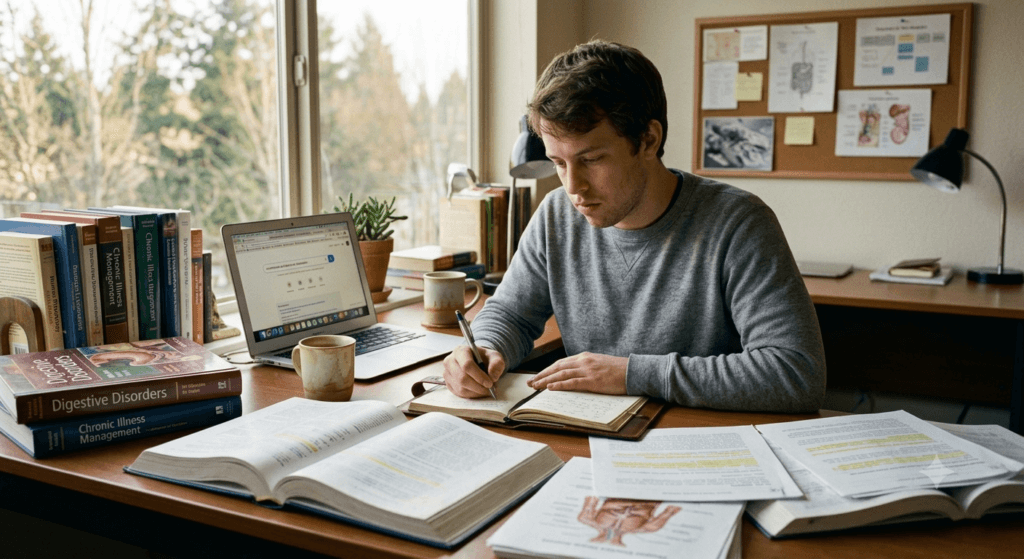
Once the medications failed, my determination to find an answer only grew stronger.
I refused to believe that I would have to live with constant bloating for the rest of my life.
Every new article I read, every online discussion, and every success story I discovered convinced me that someone, somewhere, had already solved the problem I was facing.
All I had to do was find the missing piece.
That belief became both my greatest source of hope and, eventually, one of my biggest frustrations.
I became completely absorbed in researching digestive disorders.
Most evenings were spent reading medical websites, searching scientific studies, joining online forums, and watching interviews with practitioners who claimed they understood the real causes of IBS.
I filled notebooks with ideas.
I compared diets.
I analysed supplements.
I searched for stories from people who said they had completely recovered.
Looking back, I realise I wasn’t simply researching.
I was desperately trying to regain control over a body that no longer seemed predictable.
My Obsession with Detox
Trying Every Approach That Promised Hope
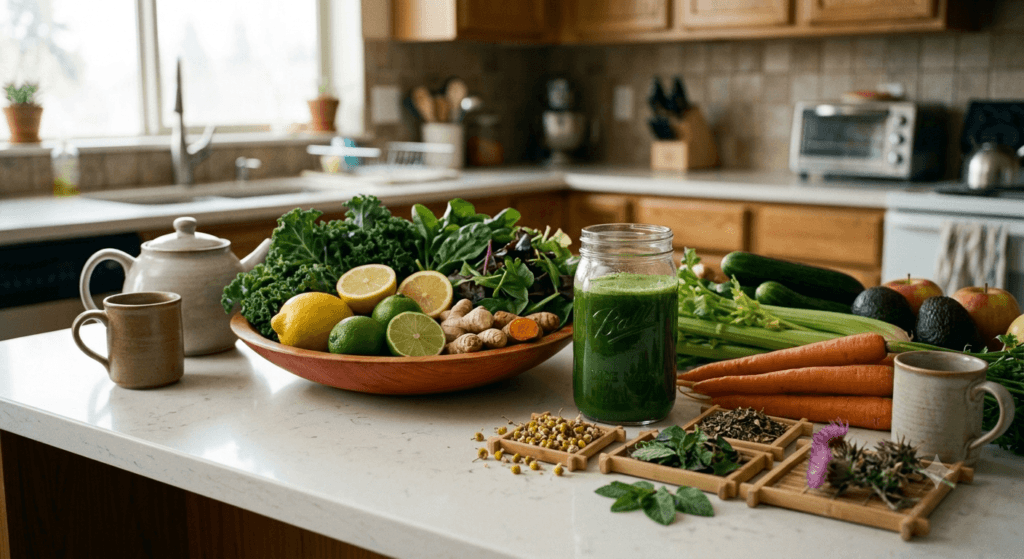
Eventually my research led me to detoxification programmes.
At the time they sounded convincing.
The idea was simple: if toxins were affecting the digestive system, then cleansing the body might finally allow it to heal.
I decided I had nothing to lose.
The first detox programme I followed lasted fourteen days and focused on cleansing the stomach, liver, and colon.
It completely eliminated sugar, dairy products, gluten, processed foods, caffeine, and many other everyday foods.
Instead, I followed a strict routine that included cleansing supplements, sea salt flushes, herbal products, and carefully planned meals.
For the first few days something remarkable happened.
My bloating improved dramatically.
For the first time in years, my stomach felt lighter.
I genuinely believed I had finally discovered the answer I had been searching for.
But the improvement didn’t last.
As soon as I gradually returned to a more normal way of eating, the familiar bloating returned.
The disappointment felt overwhelming.
I had invested so much hope in those two weeks that watching my symptoms return felt like losing everything I had gained.
Still, I wasn’t ready to stop searching.
Juicing, Fasting, and Starting Again
Over the following years I experimented with numerous juice fasts at home.
Sometimes I avoided solid food completely for several days.
Instead, I lived on freshly prepared vegetable juices, fruit juices, vegetable broth, and occasionally chicken broth.
Each new programme began with the same optimism.
Perhaps this one would finally allow my digestive system to reset.
Sometimes my symptoms improved temporarily.
The bloating became less severe.
My stomach occasionally felt calmer.
But another problem quickly appeared.
I became exhausted.
Without enough calories and protein, my energy levels dropped dramatically.
I realised that even if fasting reduced some symptoms, it wasn’t something I could realistically maintain while working and living a normal life.
For every small victory there seemed to be another compromise.
That became a recurring theme throughout my journey.
Two Weeks at a Time, Searching for a Miracle
My search eventually took me to a specialist wellness spa that offered intensive two-week detox programmes.
I still remember arriving on my first day.
The peaceful surroundings, the scent of eucalyptus, the healthy meals, and the confidence of the therapists made me feel something I hadn’t experienced for a long time.
Hope.
I committed myself completely.
I followed every instruction without question.
Each day included carefully prepared meals, herbal supplements, colon cleansing routines, massages, relaxation therapies, and nutritional guidance.
I wanted to give my body every possible opportunity to heal.
By the end of the programme I genuinely felt lighter.
The bloating had reduced.
My stomach looked flatter.
For a brief moment I allowed myself to believe that my twenty-year journey might finally be coming to an end.
But after returning home and gradually resuming everyday life, the symptoms slowly returned.
Within a few weeks my stomach looked exactly as it had before.
The cycle repeated itself.
Hope.
Improvement.
Relapse.
Disappointment.
I even completed the programme a second time because I wanted so badly to believe the first improvement hadn’t been a coincidence.
Once again I experienced temporary relief.
Once again it disappeared.
Looking back now, I don’t regret trying those programmes.
They taught me discipline, introduced me to healthier eating habits, and showed me that lifestyle changes could influence my symptoms.
What they didn’t provide was the permanent cure I had been chasing.
Becoming My Own Medical Detective
Years of Medical Tests and Specialist Visits

As the years passed, my journey shifted away from searching for miracle cures and towards searching for answers.
I spent countless hours sitting in waiting rooms, attending specialist appointments, and carrying an ever-growing folder filled with medical reports.
Every new investigation brought another wave of cautious optimism.
Perhaps this would finally explain why my digestive system behaved so differently.
I underwent allergy testing.
I had blood tests.
I underwent endoscopy and colonoscopy procedures.
I completed SIBO testing.
Later came colon transit studies and pelvic floor therapy assessments.
Each investigation ruled out certain conditions and answered one question while raising another.
Friends sometimes assumed that receiving normal test results must have been reassuring.
In reality, it often felt strangely disappointing.
If nothing serious was wrong, why did I still feel so unwell?
Each appointment followed almost the same emotional pattern.
- Hope while booking the appointment.
- Anxiety before the procedure.
- Relief when it was over.
- Excitement while waiting for the results.
- Then disappointment when no simple answer appeared.
It became an emotional cycle that anyone living with a chronic, invisible illness will probably recognise.
Little did I know that one diagnosis was still waiting to change how I understood everything that had come before.
Learning That My Biggest Challenge Wasn’t IBS Alone
For many years, I believed IBS explained everything I was experiencing.
Every doctor I visited focused on irritable bowel syndrome, constipation, bloating, or diet.
Although each explanation made some sense, none of them fully described what I was living with every single day.
I wasn’t just bloated after certain meals.
I felt permanently full.
My stomach remained swollen even when I hadn’t eaten very much.
Some mornings I woke up already bloated before breakfast.
No matter how carefully I ate, it often felt as though my digestive system simply refused to move.
Eventually, after years of investigations, one of my specialists explained that my biggest challenge wasn’t IBS alone.
It was slow transit constipation.
Later, I would come to understand that I was also living with colonic inertia, a condition where the muscles of the colon move waste through the digestive tract far more slowly than normal.
For the first time in years, the pieces of the puzzle finally started to fit together.
It didn’t cure my symptoms.
But it gave them a name.
And surprisingly, that brought a sense of relief.
After spending so many years wondering whether the problem was somehow my fault, I finally understood there was a genuine physiological reason why my body struggled the way it did.
When Food Became Something to Fear
Learning That Every Meal Could Feel Different
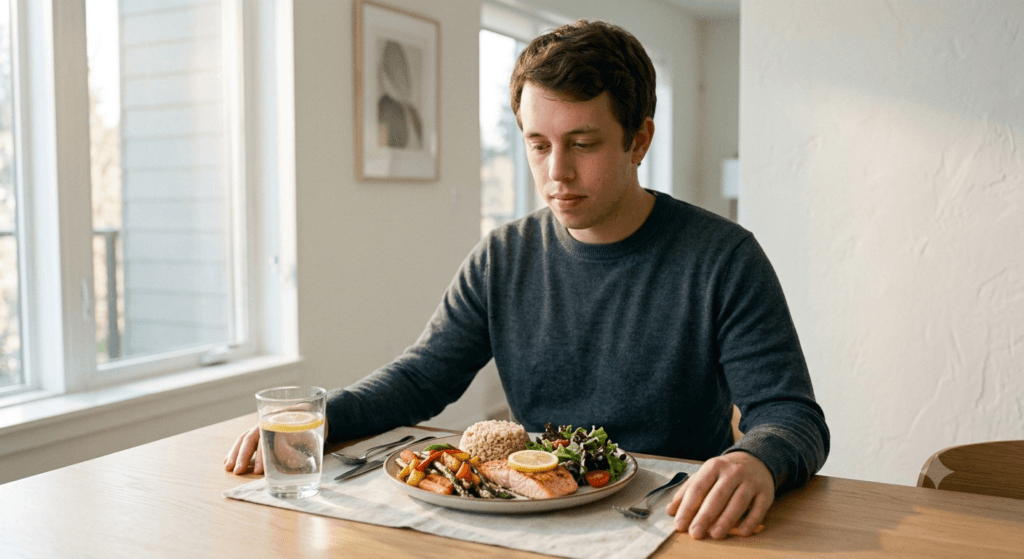
Most people think of food as something enjoyable.
For me, food gradually became something I approached with caution.
Every meal raised another series of questions.
- Would this make the bloating worse?
- Would I regret eating this in an hour?
- Should I avoid another food group?
- Was this ingredient secretly causing my symptoms?
I experimented with the Low FODMAP diet.
I eliminated dairy.
I removed gluten.
I stopped eating onions and garlic.
I reduced sugar.
I kept food diaries.
I carefully monitored almost everything I ate.
Sometimes I discovered foods that clearly made my symptoms worse.
Other times I couldn’t find any obvious pattern at all.
That unpredictability was one of the hardest parts of living with IBS and slow motility.
You could eat exactly the same meal on two different days and experience completely different outcomes.
Eventually, I stopped searching for the perfect diet.
Instead, I focused on understanding how my body responded.
I found that eating smaller meals throughout the day was often far more comfortable than eating two or three large meals.
It wasn’t a cure.
But it made everyday life a little easier.
Managing Rather Than Chasing a Cure
Building Sustainable Daily Habits
One of the biggest shifts in my thinking happened when I finally accepted that I might never discover one treatment capable of making all my symptoms disappear.
That wasn’t giving up.
It was becoming realistic.
Today my routine is very different from the one I imagined twenty years ago.
I still rely on herbal remedies that help stimulate bowel movements.
I also take prucalopride, which has become an important part of managing my slow motility.
Even with these tools, life isn’t perfect.
I still experience stomach distention.
Some days my abdomen becomes noticeably swollen despite doing everything “right.”
There are mornings when I wake up bloated before I’ve even eaten breakfast.
There are evenings when I look several clothing sizes larger than I did earlier in the day.
Years ago, those days left me feeling defeated.
Now I remind myself that symptoms don’t define my progress.
Managing a chronic condition isn’t about perfection.
It’s about doing the best you can with the body you have today.
The Invisible Weight of Chronic Illness
The Challenges Nobody Else Can See
One thing I’ve learned is that digestive disorders rarely travel alone.
As the years passed, I also found myself dealing with chronic fatigue syndrome, sleep apnea, and high blood pressure.
Some days the exhaustion felt even heavier than the bloating.
People would tell me I looked healthy.
What they couldn’t see was everything happening behind the scenes.
The planning.
The appointments.
The research.
The careful meal preparation.
The constant calculations before travelling or attending social events.
Living with chronic illness often feels like working a second full-time job that nobody else can see.
Yet life continues.
You still have work responsibilities.
You still have family commitments.
You still have dreams you want to achieve.
Learning how to carry all of those responsibilities while managing unpredictable health became one of the greatest lessons of my adult life.
What Actually Helped Me
After nearly twenty years, people often ask whether I eventually found something that worked.
The honest answer is yes—but probably not in the way they expect.
I never found one miracle supplement.
I never found one perfect diet.
I never discovered one treatment that solved everything.
Instead, I found that small habits, repeated consistently, made the biggest difference.
- Walking after meals often reduced discomfort and helped stimulate digestion.
- Eating smaller meals placed less strain on my digestive system.
- Drinking enough water became essential.
- Maintaining a consistent sleep routine improved both my energy and my ability to cope with symptoms.
- Managing stress became just as important as managing food.
- Accepting that every day would be different removed much of the frustration I had carried for years.
None of these habits sound particularly dramatic.
That’s because healing rarely happens through dramatic moments.
For me, it happened through hundreds of small decisions repeated over thousands of ordinary days.
What Didn’t Help Me
Looking back, there are also many things that didn’t provide the long-term answers I hoped they would.
- Constantly searching for miracle cures.
- Trying to eliminate every possible food.
- Repeated detox programmes expecting permanent results.
- Obsessing over every new supplement recommendation online.
- Believing the next treatment would completely solve everything.
I don’t regret trying those approaches because each one taught me something.
But I do wish I had understood much earlier that managing a chronic digestive disorder is usually about building sustainable habits rather than chasing perfect solutions.
The Day My Definition of Healing Changed
For many years, I believed healing meant waking up one morning completely symptom-free.
No bloating.
No constipation.
No medications.
No careful planning.
No fear about eating.
I spent years believing that if I could just find the right doctor, the right supplement, or the right treatment, my life could finally begin.
But somewhere along the way, something inside me changed.
I realised I had spent so much time waiting for a perfect future that I wasn’t fully living the present.
Healing stopped meaning the complete absence of symptoms.
Instead, healing became preparing nourishing meals instead of punishing my body.
Healing became taking a walk after dinner because I knew movement often helped my digestion.
Healing became respecting my need for sleep instead of constantly pushing through exhaustion.
Healing became accepting that some days would be easier than others.
Most importantly, healing became speaking to myself with compassion instead of frustration.
For years I asked myself, “Why can’t my body just work normally?”
Today I ask a different question.
“What does my body need from me today?”
That single change in perspective has brought me more peace than any detox programme ever did.
Looking Back with Gratitude Instead of Regret
If I could go back and speak to the younger version of myself sitting in those waiting rooms twenty years ago, there are many things I would say.
I would tell him not to blame himself.
I would tell him that healing isn’t a straight line.
I would tell him that setbacks don’t erase progress.
Do I wish I had found answers sooner?
Absolutely.
Do I wish I hadn’t spent so much time, money, and emotional energy chasing miracle cures?
Without question.
But I also recognise that every experience taught me something valuable.
The detox programmes taught me discipline.
The elimination diets taught me awareness.
The medical investigations taught me persistence.
The disappointments taught me resilience.
Even the treatments that didn’t provide lasting relief helped me better understand my own body.
Without realising it, I wasn’t only learning about digestion.
I was learning patience.
I was learning resilience.
And perhaps most importantly, I was learning compassion.
To Anyone Living with IBS, Slow Transit Constipation, or Colonic Inertia
If you’re reading this while struggling with IBS, slow transit constipation, colonic inertia, or another chronic digestive condition, I want you to know something.
I understand the exhaustion that comes from trying everything and still feeling unwell.
I understand what it’s like to place your hopes in another appointment, another supplement, another treatment plan, only to find yourself disappointed once again.
I understand the frustration of looking perfectly healthy on the outside while quietly fighting a battle that almost nobody else can see.
And I understand how lonely that journey can sometimes feel.
But I also want you to know this.
Your value isn’t measured by how healthy you appear.
Your progress isn’t erased because you experience a setback.
Your life doesn’t have to wait until every symptom disappears.
Keep asking questions.
Keep working with healthcare professionals you trust.
Keep listening to your body.
And above all, don’t lose hope.
Why I Started Purely Vital Living
Turning Experience into Purpose
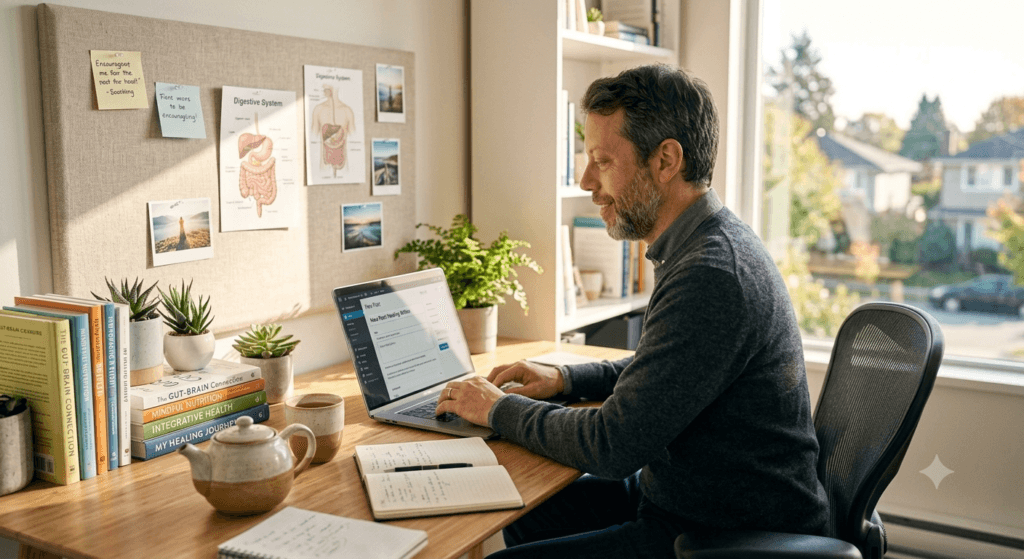
Twenty years ago, I was desperately searching for answers.
I wanted someone who truly understood what it felt like to live with chronic digestive problems, constant bloating, overwhelming fatigue, and the uncertainty that came with an invisible illness.
I found helpful doctors.
I found valuable research.
I found supportive communities.
But I rarely found one place that combined scientific evidence with genuine lived experience.
That absence stayed with me.
When I eventually created Purely Vital Living, I wasn’t trying to build just another health website.
I wanted to build the resource I wish had existed when my own journey began.
A place where evidence-based information meets real-life experience.
A place that encourages people to ask better questions, develop sustainable habits, and understand that health isn’t about achieving perfection.
It’s about making consistent choices that improve your quality of life over time.
Every article I publish is influenced by the lessons I’ve learned through my own experiences.
Some focus on sleep.
Some focus on nutrition.
Others explore gut health, energy, healthy ageing, or emotional wellbeing.
Although the topics are different, they all share the same purpose.
To help people build healthier lives one practical step at a time.

Healing Isn’t About Perfection
Nearly twenty years after my journey began, I still live with IBS and colonic inertia.
I still have mornings when I wake up bloated.
I still experience setbacks.
I still have days when my digestive system refuses to cooperate despite my best efforts.
But I no longer believe healing means becoming symptom-free.
For me, healing has become something much quieter.
It’s choosing not to give up on myself.
It’s continuing to care for my body even when it disappoints me.
It’s recognising that progress isn’t always visible from the outside.
And it’s understanding that after all these years, the greatest transformation wasn’t in my digestive system.
It was in the way I learned to treat myself.
Healing, I’ve discovered, isn’t about becoming perfect.
Sometimes it’s simply about refusing to lose hope.
Related Reads
- How to Heal Your Gut Microbiome Naturally
- Mind-Gut Connection: How Stress Affects Digestion
- 7 Signs of Poor Gut Health and How to Fix Them
- Best Supplements for Gut Health and Digestion
- Best Digestive Enzymes (2026 Guide)
- Stress Management Techniques That Actually Work
- How to Improve REM Sleep Naturally
- Best Magnesium for Sleep & Stress
References
- National Institute of Diabetes and Digestive and Kidney Diseases (NIDDK). Irritable Bowel Syndrome.
- International Foundation for Gastrointestinal Disorders (IFFGD). IBS and Chronic Constipation Resources.
- American College of Gastroenterology. Clinical Guidelines for Irritable Bowel Syndrome.
- Rome Foundation. Rome IV Diagnostic Criteria for Disorders of Gut-Brain Interaction.
- National Health Service (NHS). Irritable Bowel Syndrome (IBS).
Medical Disclaimer: This article describes my personal experience living with IBS, slow transit constipation, and colonic inertia. It should not be considered medical advice. Every person’s health journey is unique. Always consult a qualified healthcare professional for diagnosis, treatment, and personalised medical guidance.