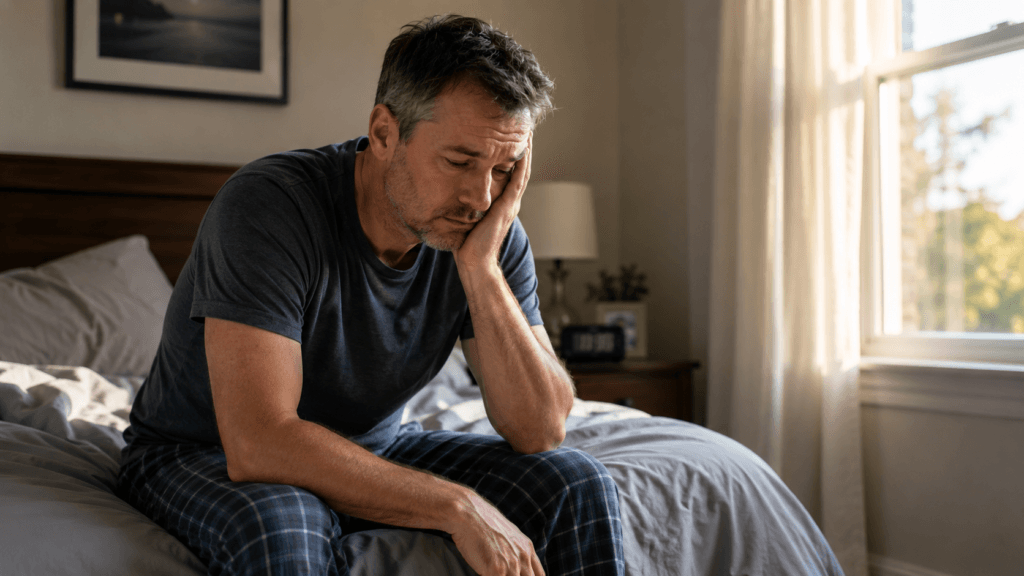
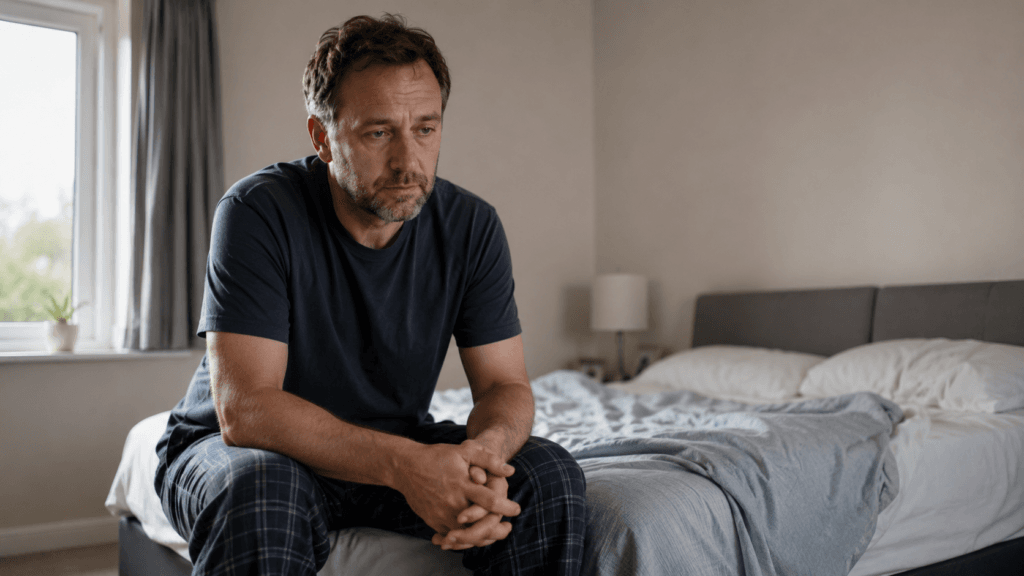
I used to think being tired meant needing a good night’s sleep. Then, around 2019, I began experiencing a kind of exhaustion that sleep did not seem to fix.
It began changing how I exercised, worked, planned my days, and thought about my own health.
Quick Answer
Chronic fatigue changed nearly every part of my daily life. What began as unusual exhaustion after exercise gradually became something much harder to ignore: persistent tiredness, heavy limbs, muscle and joint pain with fatigue, poor recovery, and days when even normal responsibilities demanded far more effort than they once had. Over time, I learned that my fatigue was connected to a much bigger health picture that included sleep problems, chronic digestive issues, and the demands of a high-pressure career. I never found one simple solution, but I did learn how to manage my energy more realistically, respect my body’s limits, and build routines that help me function better.
Key Takeaways
- Chronic fatigue felt very different from normal tiredness. Rest did not always restore my energy, and the exhaustion could affect both my body and my ability to concentrate.
- Muscle and joint pain with fatigue became part of the experience. On difficult days, my whole body could feel heavy and ordinary movement required more effort.
- Sleep eventually became an important part of the puzzle. I learned that spending enough hours in bed did not necessarily mean I was getting restorative sleep.
- Pushing harder was not always the answer. I gradually learned to distinguish between movement that helped me and activity that left me depleted.
- Managing energy became more useful than constantly fighting fatigue. Consistent sleep, hydration, smaller meals, walking, stretching, swimming, and morning light became practical parts of my routine.
“I used to think being tired meant I needed more sleep. Chronic fatigue taught me that sometimes the problem is much deeper than simply needing an early night.”
My Chronic Fatigue Journey at a Glance
| Period | What I Experienced |
|---|---|
| Before 2019 | I was used to demanding work, exercise, long days, and periods of poor sleep, but I still expected to recover normally. |
| Around 2019 | I began noticing a level of exhaustion after exercise that felt different from ordinary post-workout tiredness. |
| Following months | Fatigue became harder to ignore. Daytime sleepiness, physical heaviness, poor recovery, and difficulty maintaining consistent energy became part of everyday life. |
| Investigation period | I started looking more seriously at sleep, recovery, nutrition, stress, and other possible contributors. |
| Sleep apnea | Sleep apnea became an important piece of my own health puzzle and helped me understand why spending enough hours in bed did not always mean restorative sleep. |
| Today | I focus less on forcing productivity and more on managing energy through consistent routines, realistic expectations, and better recovery. |
When Being Tired Became Something Different
For most of my life, I thought I understood tiredness.
I had spent decades working in construction management, where long days, stressful deadlines, early mornings, late finishes, and periods of disrupted sleep were simply part of the job.
I knew what it felt like to finish a demanding day and want nothing more than a shower, a meal, and a good night’s sleep.
I also knew the normal tiredness that came after exercise.
You train hard, your muscles feel worked, you sleep, and eventually your energy returns.
What started happening around 2019 felt different.
The exhaustion did not feel proportional to what I had done.
Sometimes a workout that I would once have considered normal left me feeling drained rather than refreshed.
Instead of feeling stronger after recovery, I sometimes felt as though my body had used up energy it could not easily replace.
At first, I dismissed it.
I assumed I was overworked.
Maybe I needed more sleep.
Maybe I was dehydrated.
Maybe I had trained too hard.
Maybe stress was catching up with me.
Those explanations all seemed reasonable, and some of them probably played a role.
But the fatigue kept returning.
Over time, it became harder to treat it as an occasional inconvenience.
It was becoming part of my life.
I Thought I Was Just Tired
One of the hardest things about persistent fatigue is that the word tired sounds so ordinary.
Everyone gets tired.
People become tired after work, after travelling, after exercise, after staying up late, or after a stressful week.
Because of that, it can be difficult to explain when tiredness crosses a line and becomes something else.
For me, that line was crossed when rest stopped feeling reliable.
I could sleep for what seemed like a reasonable number of hours and still wake up feeling as though my body had not properly recovered.
Some mornings began with a heaviness that made the day feel difficult before it had even started.
There were periods when I felt sleepy during the day despite trying to maintain a normal routine.
That experience eventually made me much more interested in the difference between sleep duration and sleep quality. It is also why I later wrote about why you can still feel tired after eight hours of sleep.
At the time, however, I did not have a neat explanation.
I simply knew that something about my energy had changed.
When the Gym Started Leaving Me Exhausted
Exercise had always represented health to me.
Like many people, I believed that if I trained consistently, ate reasonably well, and stayed active, I should feel more energetic.
That expectation made the fatigue after exercise particularly confusing.
Instead of finishing a workout and feeling pleasantly tired, there were times when I felt completely depleted afterward.
The difference was difficult to describe.
It was not simply sore muscles.
It was a whole-body exhaustion.
Sometimes the fatigue seemed to settle into my arms and legs, making them feel heavier than normal.
My motivation could still be there mentally, but physically I felt as though someone had reduced the amount of energy available to me.
This created a frustrating contradiction.
I wanted to exercise because I believed movement was important.
But I also began to worry about how I would feel afterward.
For a while, I responded the way I had responded to many challenges throughout my career: I tried to push through it.
That approach did not always work.
Gradually, I began experimenting with gentler forms of movement instead of treating every session like a test of discipline.
Walking, stretching, and swimming often felt more manageable than forcing myself through intense exercise when my energy was already low.
That lesson eventually influenced the way I think about energy today: movement can be helpful, but more is not always better.

When Sleep Didn’t Seem to Restore My Energy
For years, my instinctive response to fatigue was simple: sleep more.
If I was exhausted, I assumed I needed an earlier bedtime or an extra hour in bed.
Sometimes that helped.
But sometimes I could spend enough time in bed and still wake up feeling unrefreshed.
That was one of the clues that eventually pushed me to take my sleep more seriously.
I had also been dealing with snoring and daytime sleepiness, and later sleep apnea became an important part of understanding my own health picture.
That experience changed the way I think about fatigue.
I learned that eight hours in bed does not automatically equal eight hours of restorative sleep.
Sleep quality, breathing, awakenings, stress, and routine can all affect how recovered a person feels the next day.
That is why sleep became one of the first things I began protecting more carefully.
A consistent bedtime, reducing unnecessary late nights, and taking recovery seriously became more important than trying to squeeze additional productivity out of every evening.
My experience also became one of the reasons I started writing more deeply about energy and sleep on Purely Vital Living, including my guide on how to get more energy naturally.
When Fatigue Started Affecting My Body
The exhaustion was difficult enough on its own.
What surprised me was how physical it could become.
There were periods when fatigue was accompanied by aching, stiffness, and a sense that my body was carrying more weight than usual.
That is where muscle and joint pain with fatigue became part of my experience.
I had expected tiredness to make me sleepy.
I had not expected it to make normal movement feel harder.
On lower-energy days, getting started could be the hardest part.
Once I was moving, a gentle walk might help.
But the idea of intense exercise could feel completely unrealistic.
The combination of fatigue and body discomfort also made it difficult to know how much activity was appropriate.
Was I resting too much?
Was I pushing too hard?
Would movement help me feel better, or would I regret it later?
I did not always know.
That uncertainty became another part of learning how to live with fluctuating energy.
Muscle and Joint Pain With Fatigue
When people talk about fatigue, they often focus on sleepiness or a lack of motivation.
My experience was more physical than that.
At times, my muscles felt tired before I had done very much.
There could also be joint discomfort and general body aches that made the fatigue feel heavier.
I want to be careful here because muscle pain, joint pain, and fatigue can have many different causes, and my experience is not a diagnosis for anyone else.
For me, however, the symptoms became part of the same broader pattern: poor recovery, inconsistent energy, sleep problems, and a body that sometimes seemed to demand more rest than my schedule allowed.
The phrase joint pain and fatigue sounds simple, but living with the combination can change how you plan a day.
You begin thinking about how far you need to walk.
Whether you will have somewhere to sit.
How much energy a meeting, commute, workout, or social event might require.
Those calculations are invisible to everyone else.
But when energy becomes unpredictable, they can quietly shape your entire routine.

When My Whole Body Felt Heavy
One of the sensations I remember most clearly was heaviness.
There were days when it felt as though gravity had become stronger.
My arms felt heavy.
My legs felt heavy.
Even sitting upright for long periods could feel more tiring than it should.
This was different from the normal soreness that follows a hard workout.
It was more like my body was operating with a reduced battery.
I could still function.
I could still attend meetings.
I could still complete responsibilities.
But everything required more effort.
That difference between what other people saw and what I actually felt became one of the most difficult parts of the experience.
Joint Pain and Fatigue Made Exercise Complicated
Exercise advice often sounds straightforward: move more, train consistently, and build fitness.
Living with joint pain and fatigue made the relationship much more complicated for me.
There were days when movement clearly helped.
A short walk could improve my mood and make my body feel less stiff.
Gentle stretching could make me feel more comfortable.
Swimming was particularly useful because it allowed me to move without the same impact I experienced with some other forms of exercise.
But there were also times when pushing too hard left me feeling depleted.
It took me a long time to stop judging a workout only by how hard it felt.
I began paying more attention to how I felt afterward and the following day.
That was a major change in mindset.
Exercise stopped being something I used to prove that I was still strong.
It became something I tried to use intelligently to support my body.
Some days that meant doing more.
Other days it meant walking, stretching, or resting without treating rest as failure.
The First Lesson Chronic Fatigue Taught Me
The first important lesson was that energy could no longer be taken for granted.
Before chronic fatigue entered my life, I thought mostly about time.
Did I have enough hours to complete everything I needed to do?
Afterward, I began thinking about two resources instead of one.
Time and energy.
I might technically have four free hours in an evening, but that did not necessarily mean I had four productive hours available.
That realization was uncomfortable at first.
But it would eventually change the way I approached work, exercise, recovery, and health.
The Invisible Side of Chronic Fatigue
Looking Fine While Feeling Exhausted
One of the hardest parts of living with chronic fatigue was that much of it was invisible.
I could look normal while feeling completely exhausted. I could attend a meeting, speak clearly, make decisions, and handle responsibilities while privately calculating how much energy I had left.
From the outside, people saw someone functioning. They could not feel the heaviness in my body, the effort required to concentrate, or the urge to close my eyes during the day.
This gap between appearance and reality could feel isolating. There was no simple way to show another person how depleted I felt, and at times I questioned myself. Was I genuinely exhausted, or had I become less disciplined?
Years of pushing through demanding situations had taught me to value endurance. Chronic fatigue forced me to learn that sometimes strength meant completing the task, and sometimes it meant admitting that my body needed recovery.
Managing Fatigue During a Demanding Career
My professional background made this adjustment especially difficult. I spent about 25 years in construction management, an industry that rarely slows down because someone feels tired.
Projects have deadlines. Site problems appear without warning. Clients, consultants, contractors, and workers all need decisions. The work often involved early mornings, long days, demanding projects, stakeholder pressure, travel, and periods of night work or disrupted sleep.
For years, I measured reliability by my ability to remain available and solve the next problem. When my energy became unpredictable, that identity was challenged.
I began using my clearer hours for work that demanded the most concentration. I became more conscious of breaks, meals, hydration, and sleep. None of this removed the fatigue, but it helped me work with the energy I had instead of pretending my capacity was unlimited.

The Mental Cost of Never Knowing How Much Energy I Would Have
The uncertainty carried its own mental cost.
A better day could make me think I was finally improving. A difficult day could make me question everything again. Plans that seemed reasonable when I made them could feel overwhelming when the day arrived.
I might technically have several free hours, but that did not mean I had several productive hours available. I began planning around two limited resources: time and energy.
Sometimes I spent most of my available energy on work and had very little left for exercise, family time, or anything I wanted to do for myself. The problem was not a lack of ambition. It was that my energy had become unpredictable.
Sleep Became Part of the Puzzle
The Daytime Sleepiness I Could Not Ignore
Fatigue and sleepiness are not exactly the same, although I experienced both.
Fatigue felt like low physical and mental energy. Daytime sleepiness felt like my body was trying to pull me toward sleep even when I needed to remain alert.
There were periods when the daytime sleepiness became difficult to ignore. It went beyond an ordinary afternoon dip and made me question why a full night in bed was not restoring me.
My experience is one reason I later explored why people wake up tired and why eight hours of sleep may still leave someone exhausted.

Discovering Sleep Apnea
Snoring was another clue, and sleep apnea eventually became one important piece of my own health puzzle.
Learning about it helped me understand something I had missed for years: time in bed and restorative sleep are not the same thing. Breathing interruptions and repeated awakenings can affect sleep quality even when the total number of hours looks sufficient.
I do not claim that sleep apnea explained every symptom or that it explains chronic fatigue generally. My health picture also included stress, digestive problems, recovery, and the demands of my career.
But it gave me a meaningful explanation for why “just sleep more” had never been a complete answer. It also led me to take sleep quality much more seriously.
“The turning point was realizing that time in bed and restorative sleep were not the same thing.”
What I Tried
Searching for My Energy Again
Once the fatigue became part of daily life, I kept looking for ways to feel like myself again.
I experimented with sleep changes, hydration, dietary adjustments, supplements, and different kinds of exercise. I tried walking and stretching when harder workouts felt unrealistic. I returned to swimming because it allowed me to move with less impact. I paid more attention to morning sunlight and a consistent bedtime.
This was not a smooth process. Some changes helped one part of the problem but not another. My digestive history—including IBS, bloating, slow motility, and periods of SIBO—also meant that food and energy could not always be separated.
What Actually Helped Me Manage Fatigue
Morning Sunlight
Getting natural light in the morning helped me feel more awake and gave my day a clearer rhythm. It became a simple part of the morning routine I use for energy and focus.
Hydration
Dehydration made low-energy days feel worse, so drinking water consistently became one of the basics I stopped overlooking.
Smaller Meals
Very large meals could leave me uncomfortable and sluggish. Smaller meals were often easier for my digestion and energy to manage.
Walking and Stretching
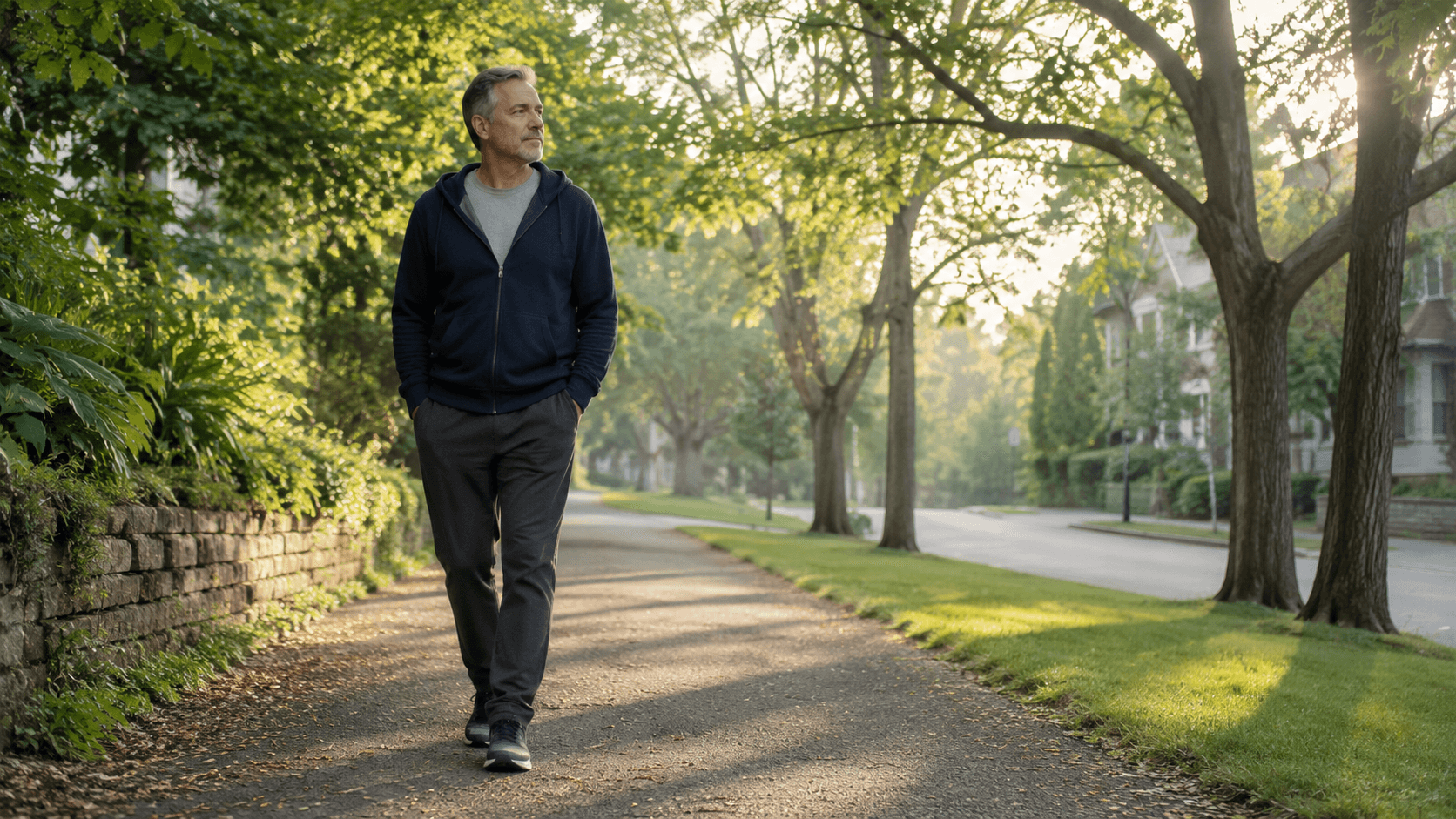
Walking helped me remain active without demanding the same recovery as an intense session. Gentle stretching helped with stiffness and kept movement from becoming an all-or-nothing decision.
Swimming
Swimming allowed me to move my whole body with less impact on uncomfortable joints. It often felt more manageable than forcing myself through a workout when my energy was already low.
Consistent Sleep
After years when work could extend into the night, I had to stop treating sleep as leftover time. A regular bedtime did not guarantee that I would wake refreshed, but irregular sleep usually made the following day harder.
Magnesium at Night
Magnesium became part of my evening routine and seemed helpful for relaxation. I do not view it as a cure, and what suits one person may not suit another, especially when medications or health conditions are involved.
No single habit solved the problem. Together, these routines helped me manage my energy more intelligently. They also shaped the practical approach behind my guide to getting more energy naturally.
What Did Not Work
The Mistake of Trying to Push Through Exhaustion
For a long time, I believed that if I forced myself to keep going, my energy would eventually return.
That mindset had helped me through difficult construction projects, but the body is not a project schedule. It does not always respond to more pressure by producing more capacity.
Pushing harder did not reliably help. Ignoring symptoms did not help. Trying to compensate for poor sleep with more caffeine was not a complete strategy. Hard exercise could feel positive in the moment but sometimes demand more recovery than I had available.
Searching for One Perfect Solution
I also searched for one change that would explain and fix everything.
My long experience with IBS had already taught me a similar lesson: complicated chronic problems rarely surrender to one supplement, one diet, or one lifestyle hack.
Some dietary changes helped particular digestive symptoms. Rest helped at times, while too much inactivity could leave me stiff. Movement could help, but too much could leave me depleted.
The lesson was not that these approaches were useless. It was that no single answer matched the complexity of my experience.
How Chronic Fatigue Changed My Life
I Had to Change My Relationship With Productivity
Before chronic fatigue, I often judged a day by how much I completed. More tasks meant a better day, and rest was something earned after the work was finished.
Living with fatigue forced me to redefine productivity. It became less about accomplishing as much as possible and more about using the energy available to me wisely.
I learned that protecting tomorrow’s energy could be more valuable than squeezing one more task into tonight. Rest was not the opposite of productivity; sometimes it was part of what allowed me to continue.
Learning to Respect My Energy
I stopped judging an activity only by whether I could force myself through it. I began asking how it would affect me later that day and the following day.
Some days that meant doing more. Other days it meant walking, stretching, changing plans, or resting without treating rest as failure.
This was pacing based on my own experience, not a universal treatment plan. It helped me recognize limitations without allowing them to define everything I could still do.
Chronic Fatigue Changed How I Think About Health
Fatigue taught me that gut health, sleep, energy, stress, and movement do not exist in separate boxes.
Poor sleep could affect my energy and concentration. Digestive discomfort could change how I ate and moved. Stress could make both sleep and digestion harder. The right amount of movement could help, while too much could increase the need for recovery.
This wider view is why I now value sustainable routines and daily stress-management practices more than dramatic promises.
Why This Experience Shaped Purely Vital Living
Purely Vital Living was not created because I had mastered health. It grew from years of trying to understand why my own body was not behaving the way I expected.
My experiences with chronic fatigue, sleep apnea, IBS, and energy problems made me want to create the kind of practical, experience-informed resource I had often searched for myself.
The site allows me to connect personal experience with careful research while remaining honest about the difference between the two. You can read more on My Wellness Journey and About Walid Abdin.
To Anyone Living With Persistent Fatigue
If you are experiencing persistent or unexplained fatigue, muscle pain, joint discomfort, heavy limbs, or excessive daytime sleepiness, please do not assume that you simply need more willpower.
These symptoms can have many possible causes. My story cannot identify the cause of someone else’s symptoms, and persistent or worsening fatigue deserves evaluation by a qualified healthcare professional—especially when it interferes with daily life.
It may help to record patterns involving sleep, daytime sleepiness, pain, exercise, meals, stress, and anything that makes the symptoms better or worse. That record can make an invisible, fluctuating experience easier to explain during an appointment.
Seek urgent medical care for symptoms such as chest pain, severe shortness of breath, fainting, sudden weakness, confusion, or thoughts of self-harm.
From my own experience, I would add one emotional lesson: you do not have to wait until you feel perfect before continuing to build a meaningful life. Progress may look different, but different does not mean meaningless.
Conclusion: Chronic Fatigue Changed More Than My Energy
Chronic fatigue changed how I worked, exercised, slept, planned my days, and thought about productivity.
But perhaps its biggest lesson was this: energy is not something I can always command.
Sometimes I have to work with the energy my body gives me rather than constantly demanding more from it.
I still value discipline, movement, responsibility, and purposeful work. But I no longer believe health is proved by how much discomfort a person can ignore.
Some days remain difficult. What has changed is the way I respond to them.
This experience is one chapter of My Wellness Journey, where I share more about the health challenges and lessons that shaped Purely Vital Living.
Related Reads
- How to Get More Energy Naturally
- Why Am I Still Tired After 8 Hours of Sleep?
- Why Do I Wake Up Tired? 7 Morning Causes and Fixes
- How to Improve Sleep Quality Naturally
- Best Morning Routine for Energy and Focus
- 7 Stress Management Techniques You Can Practice Daily
- My Wellness Journey
References
- National Heart, Lung, and Blood Institute (NHLBI): What Is Sleep Apnea?
- National Heart, Lung, and Blood Institute (NHLBI): Sleep Apnea Symptoms
- MedlinePlus: Fatigue
- Centers for Disease Control and Prevention (CDC): About Sleep
- National Health Service (NHS): Tiredness and Fatigue
This article shares my personal experience and is for educational purposes only. It is not medical advice and should not replace diagnosis or treatment from a qualified healthcare professional.