
Quick Answer
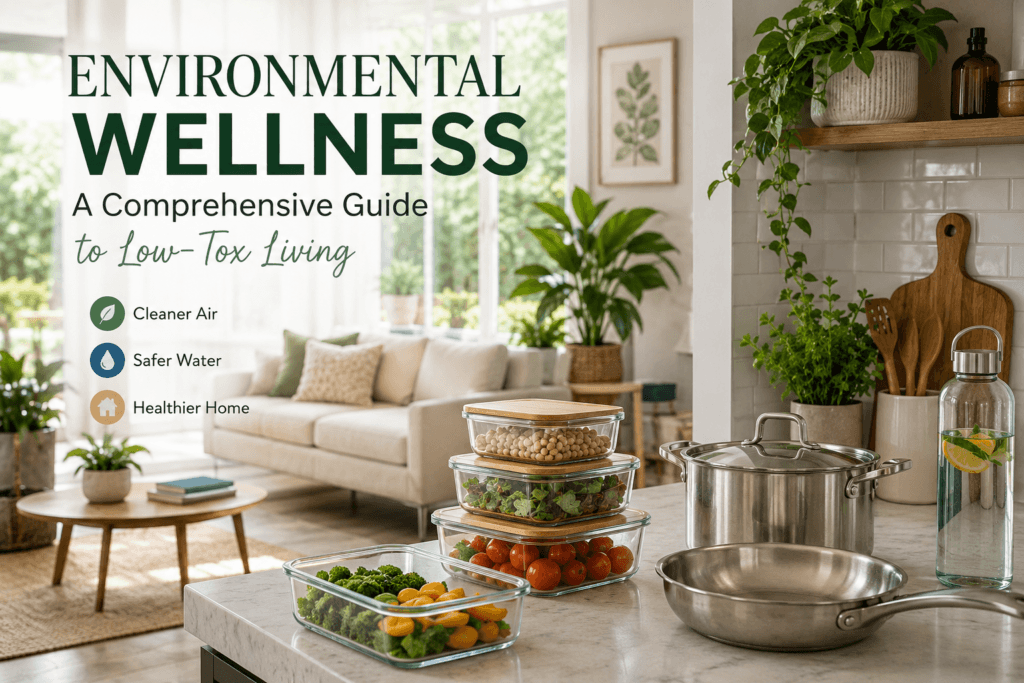
Environmental wellness is the practice of creating surroundings that support your physical, mental, and emotional well-being. It focuses on improving the environments where you live, work, and spend your time by promoting cleaner air, safer drinking water, healthier household products, better sleep environments, and sustainable daily habits. Low-tox living is a practical approach to environmental wellness that emphasizes reducing unnecessary exposures rather than striving for perfection.
To reduce toxins at home, start with frequently used products and the places where you cook, sleep, bathe, and do laundry. Practical low-tox living tips include improving ventilation, avoiding unnecessary fragrance, using products as directed, reducing food contact with damaged plastic, and replacing items gradually. A low-tox home is not toxin-free; it is simply a home where avoidable exposures are reduced through realistic choices.
Environmental Wellness at a Glance
| Aspect | Examples |
|---|---|
| Air | Improving indoor air quality, using air purifiers, opening windows |
| Water | Water filtration, drinking more water, evaluating tap water quality |
| Home Products | Choosing fragrance-free and lower-tox household products |
| Kitchen | Using glass containers and stainless steel cookware |
| Bedroom | Creating a cool, dark, sleep-friendly environment |
| Digital Wellness | Reducing screen time and creating tech-free spaces |
| Daily Habits | Decluttering, spending time outdoors, maintaining routines |
- Introduction
- Environmental Wellness: Key Facts
- What Is Environmental Wellness?
- How Your Environment Influences Your Health
- Clean Air at Home
- LEVOIT Core 300-P Air Purifier
- Cleaner, Safer Drinking Water
- Waterdrop G3P600 Reverse Osmosis System
- Building a Low-Tox Kitchen
- Caraway Nonstick Ceramic Cookware Set (12 Piece)
- Rethinking Household Products
- WoollyPals XL Wool Dryer Balls (6-Pack)
- Creating a Healthy Bedroom
- How to Create a Less Toxic Home: Room-by-Room Checklist
- What Is Digital Wellness and Why Does It Matter?
- What Are the Best Free Healthy Home Habits?
- The 30-Day Environmental Wellness Challenge
- Frequently Asked Questions
- Final Thoughts
Introduction
Environmental wellness is one of the most overlooked aspects of health. While many people focus on diet, exercise, and supplements, fewer consider how their surroundings influence the way they feel every day.
The air you breathe, the water you drink, the products you use, and even the environment where you sleep can affect your overall well-being. Although no home can ever be completely “toxin-free,” making thoughtful changes to your living space may help support better sleep, more energy, reduced stress, and healthier aging.
I didn’t always think about environmental wellness. Like many people, I spent years focusing exclusively on nutrition and exercise. It wasn’t until I began dealing with chronic fatigue, sleep issues, and digestive problems that I started paying more attention to my surroundings. Over time, I made small changes—improving my sleep environment, reducing clutter, opening windows more often, switching to glass food containers, and being more intentional about the products I brought into my home.
These changes didn’t transform my health overnight, but they became part of a broader wellness strategy that helped me feel more in control of my environment and my daily habits.
The good news is that environmental wellness isn’t about perfection. It’s about making practical, sustainable choices that support your health over time.
In this guide, you’ll learn:
- What environmental wellness means.
- How your environment may affect your health.
- Ways to improve indoor air quality.
- How to think about water filtration.
- Simple low-tox living practices.
- How to create a healthier bedroom.
- Daily habits that support a healthier home.
Environmental Wellness: Key Facts
- Environmental wellness refers to creating surroundings that support physical, mental, and emotional well-being.
- Many adults spend a significant portion of their day indoors.
- Environmental wellness is closely connected to sleep, stress, energy, and healthy aging.
- Low-tox living focuses on reducing unnecessary exposures rather than eliminating every possible risk.
- Small changes—such as improving ventilation or using glass food storage containers—can add up over time.
- A healthier home can be created gradually and on almost any budget.
- Environmental wellness is one of the eight dimensions of wellness commonly recognized in public health and wellness models.
What Is Environmental Wellness?
Environmental wellness is the practice of creating and maintaining spaces that support your health and quality of life.
This includes:
- Your home environment
- Indoor air quality
- Drinking water
- Household products
- Noise levels
- Lighting
- Digital habits
- Access to nature
- Organization and cleanliness
Environmental wellness doesn’t mean living in a perfectly minimalist home or throwing away everything you own. Instead, it means becoming more aware of the environments you interact with every day and asking a simple question:
“Does my environment support my health, or does it make healthy living more difficult?”
For example:
- A dark, quiet bedroom can support better sleep.
- Cleaner indoor air may contribute to greater comfort.
- Staying organized can help reduce daily stress.
- Reducing unnecessary clutter can make a space feel calmer.
- Drinking filtered water may provide peace of mind for some households.
Environmental Wellness vs. Environmentalism
People often confuse environmental wellness with environmentalism.
While the two overlap, they are not the same.
| Environmental Wellness | Environmentalism |
|---|---|
| Focuses on personal well-being | Focuses on protecting the planet |
| Emphasizes healthy living environments | Emphasizes sustainability and conservation |
| Includes sleep, stress, and home habits | Includes climate, recycling, and ecosystems |
| Centers on individual health | Centers on environmental impact |
Fortunately, many low-tox habits can benefit both people and the planet. Using reusable glass containers, reducing waste, and consuming less often support both environmental wellness and sustainability.
Why Environmental Wellness Matters After 35
As we get older, many of us become more aware of our health.
You may notice that:
- Sleep isn’t as restorative as it once was.
- Recovery takes longer.
- Stress feels more impactful.
- Clutter feels more overwhelming.
- Comfort becomes increasingly important.
Environmental wellness becomes especially relevant during this stage of life because it encourages us to create spaces that work with our bodies instead of against them.
For many adults, this may mean:
- Investing in a supportive mattress.
- Improving bedroom lighting.
- Choosing cookware they feel comfortable using.
- Creating a more relaxing evening routine.
- Spending more time outdoors.
Environmental wellness isn’t about fear—it’s about intention.
How Your Environment Influences Your Health
Your surroundings influence many of your daily experiences, often without you realizing it.
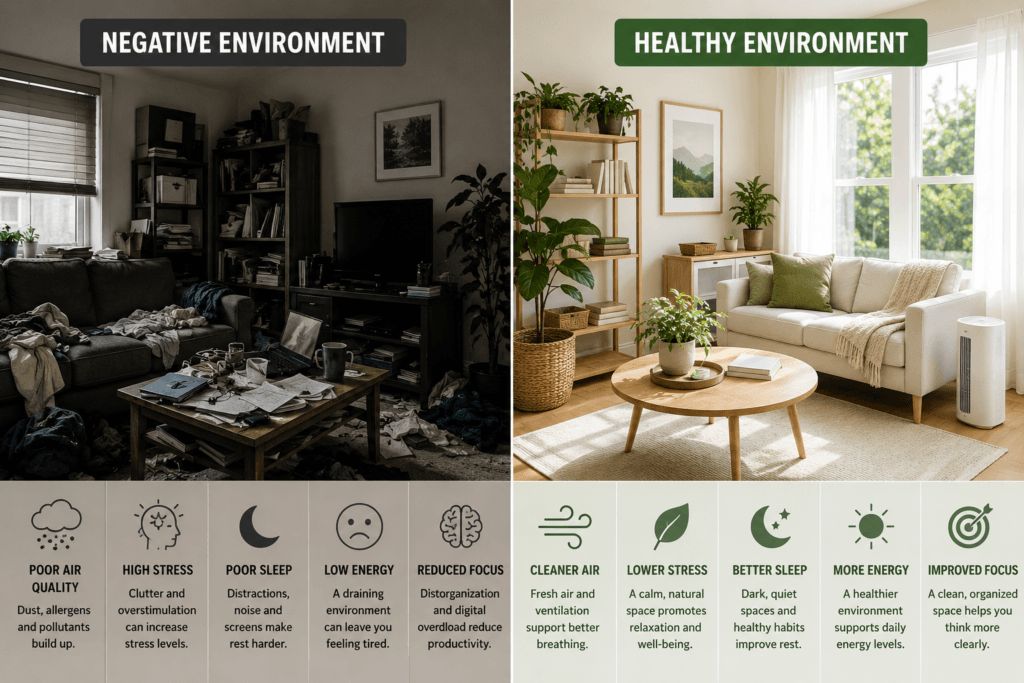
Think about the difference between these two scenarios:
Environment A
- Cluttered bedroom
- Artificial light late at night
- Constant notifications
- Poor ventilation
- Irregular sleep schedule
Environment B
- Clean, organized bedroom
- Comfortable temperature
- Fresh air
- Consistent sleep routine
- Limited screen exposure before bed
Most people would probably feel more relaxed in Environment B.
While no single factor determines health outcomes, our surroundings can influence how we sleep, focus, and manage stress.
Sleep
Sleep is one of the clearest examples of environmental wellness in action.
Factors that may affect sleep include:
- Temperature
- Noise
- Light exposure
- Mattress comfort
- Bedroom air quality
- Evening screen habits
Over the years, I’ve found that maintaining a cooler, darker bedroom and limiting screen time before bed has made a noticeable difference in my nightly routine.
Energy Levels
Have you ever walked into a stuffy room and immediately felt sluggish?
Environmental factors that may influence comfort and energy include:
- Poor ventilation
- Excessive noise
- Lack of natural light
- Disorganization
- Inconsistent routines
Creating environments that support movement, hydration, and healthy habits can make it easier to maintain energy throughout the day.
Mental Well-Being
Your environment also affects how you think and feel.
Research has shown that cluttered environments can contribute to feelings of stress and mental overload in some individuals. Likewise, spending time in nature has been associated with improved mood and reduced stress.
Simple examples include:
- Keeping frequently used spaces organized.
- Taking short walks outdoors.
- Bringing more natural light into your home.
- Creating dedicated spaces for relaxation.
Stress Management
A stressful environment doesn’t always involve major life events.
Sometimes it’s:
- Endless notifications.
- Visual clutter.
- Excessive noise.
- Feeling disorganized.
- Lack of personal space.
Environmental wellness encourages you to create spaces that feel restorative rather than draining.
Healthy Aging
Healthy aging isn’t just about adding years to your life—it’s about maintaining quality of life as you age.
Environmental wellness can support healthy aging by encouraging habits such as:
- Staying physically active.
- Prioritizing sleep.
- Spending time outdoors.
- Maintaining social connections.
- Creating safer living environments.
These are small, practical changes that can make everyday life more enjoyable.
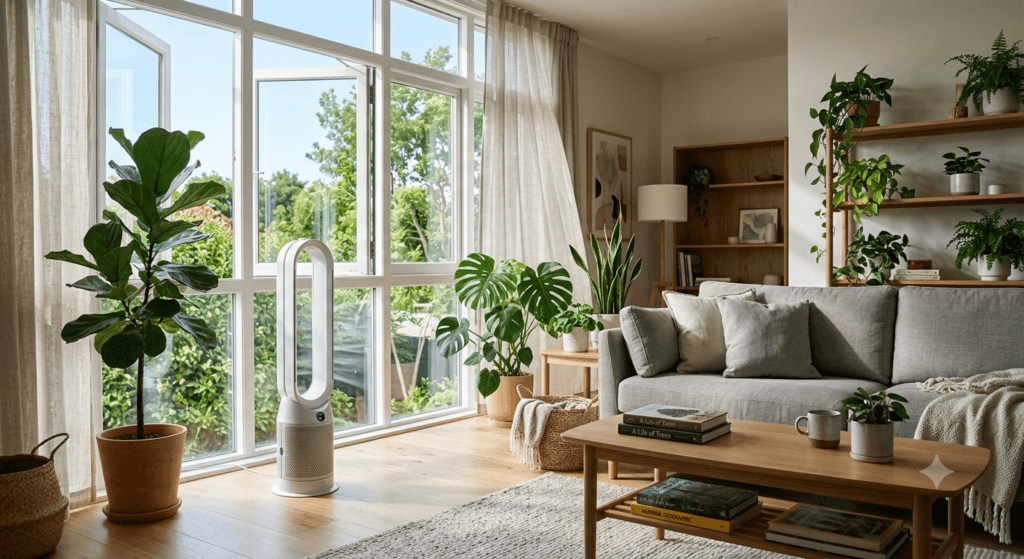
Clean Air at Home
Most of us think about outdoor pollution, but we rarely think about the air inside our homes.
Yet many people spend a large portion of their time indoors.
Key Facts
- Indoor air quality can be influenced by ventilation, dust, humidity, and household activities.
- Common indoor pollutants include dust, pet dander, smoke, and mold.
- Improving airflow is often one of the simplest ways to improve indoor comfort.
- Air purifiers may be helpful in certain situations, such as allergies or smoke exposure.
Common Indoor Pollutants
Some of the most common indoor pollutants include:
- Dust
- Pet dander
- Mold
- Smoke
- Pollen
- Volatile organic compounds (VOCs)
- Household cleaning product residues
It’s impossible to eliminate every indoor pollutant, but reducing unnecessary exposures can help create a more comfortable living environment.
Signs of Poor Indoor Air Quality
Possible signs that may indicate poor indoor air quality include:
- Persistent odors
- Excessive dust accumulation
- Frequent allergy symptoms
- Condensation on windows
- Mold growth
- Stuffy rooms
- Increased discomfort during certain seasons
These symptoms can have many causes, so it’s important not to assume indoor air quality is always responsible.
Simple Ways to Improve Indoor Air Quality
Fortunately, improving indoor air quality doesn’t always require expensive equipment.
Consider:
- Opening windows regularly.
- Using exhaust fans when cooking.
- Vacuuming frequently.
- Replacing HVAC filters as recommended.
- Maintaining appropriate humidity levels.
- Keeping pets groomed.
- Reducing indoor smoke exposure.
These habits are inexpensive and can make your home feel fresher and more comfortable.

When to Consider an Air Purifier
Air purifiers aren’t necessary for every household, but they may be worth considering if you:
- Live in an area affected by wildfire smoke.
- Have allergies.
- Have pets.
- Are concerned about indoor air quality.
- Spend significant time in a home office or bedroom.
Today, there are air purifiers designed for:
- Bedrooms
- Pet owners
- Allergies
- Smoke
- Mold concerns
We’ll explore these topics in more detail in future articles.
My Experience
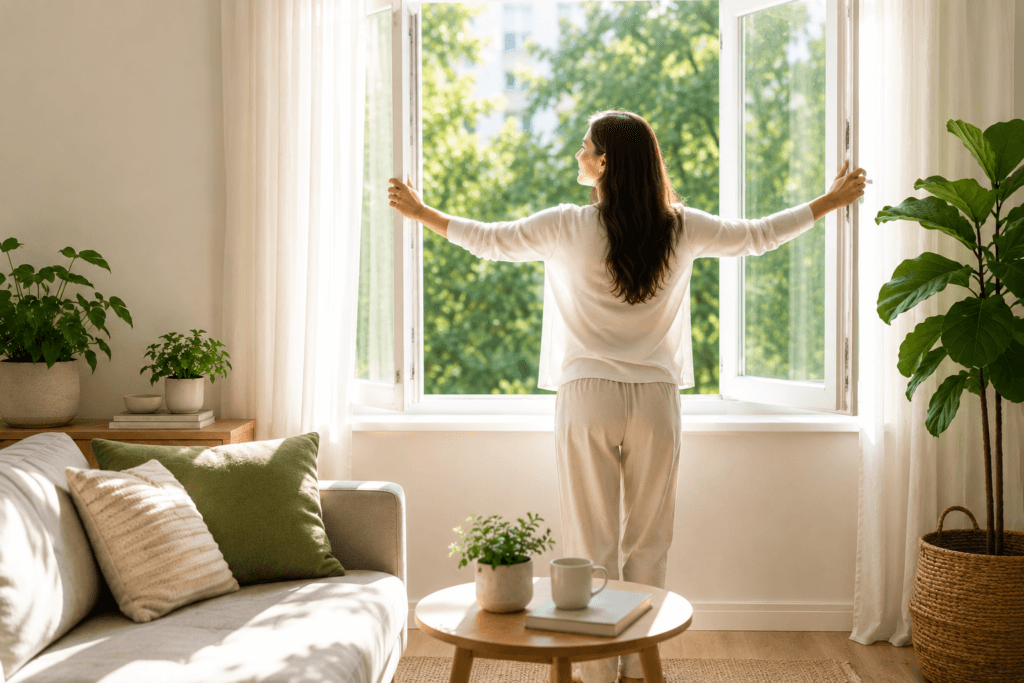
One of the simplest changes I’ve made over the years is opening windows whenever weather permits. It’s a small habit, but it’s become part of my morning routine.
Fresh air, natural light, and a few minutes away from screens help me start the day feeling more refreshed. Environmental wellness isn’t always about buying something new—sometimes it’s about rediscovering habits that cost nothing at all.
Cleaner, Safer Drinking Water
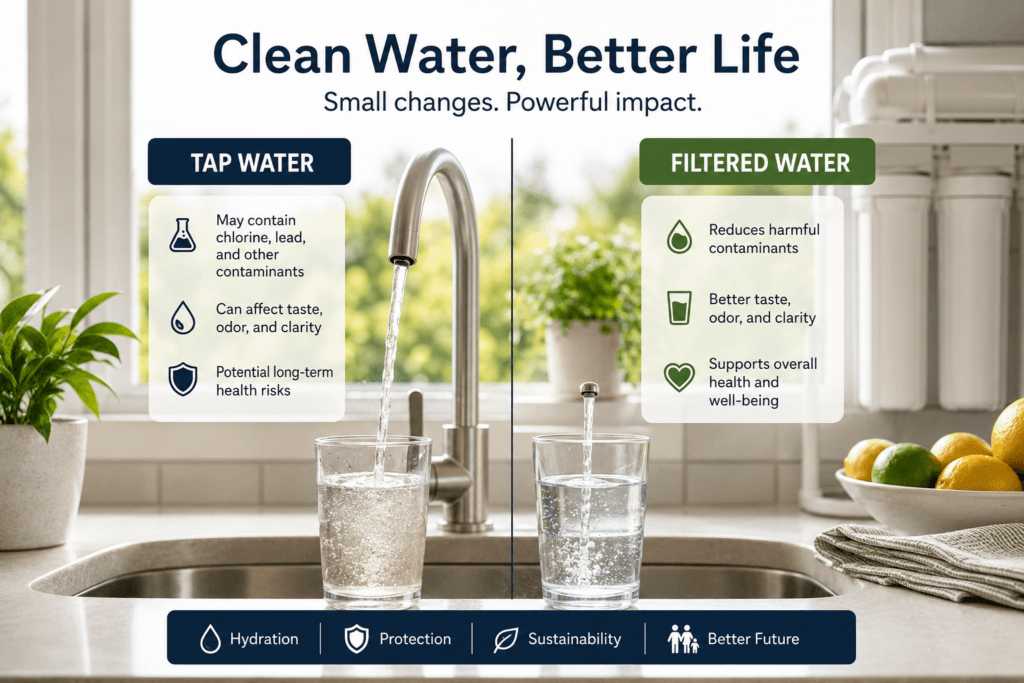
Water is essential for life, yet many people rarely think about the quality of the water they drink every day.
For most households, tap water is regulated and considered safe to drink. However, water quality can vary depending on factors such as:
- Geographic location
- Municipal treatment practices
- Plumbing systems
- Well water conditions
- Personal preferences regarding taste and odor
Environmental wellness encourages people to become informed about the water they consume without becoming overly anxious about it.
Key Facts
- Water quality varies by location and water source.
- Common filtration methods include carbon filtration and reverse osmosis.
- Whole-house and point-of-use systems serve different purposes.
- Choosing a water filtration system depends on household needs and budget.
Tap Water vs. Filtered Water
One of the most common questions people ask is:
“Is filtered water better than tap water?”
There isn’t a one-size-fits-all answer.
For some people, municipal tap water meets their needs. Others prefer filtered water because they:
- Prefer the taste.
- Want additional filtration.
- Use well water.
- Have concerns about plumbing systems.
- Want greater control over water quality.
The best approach is to understand your local water supply and choose a solution that aligns with your household’s needs.
Common Types of Water Filtration
Carbon Filters
Carbon filters are among the most popular options and are commonly found in:
- Water pitchers
- Faucet filters
- Refrigerator systems
- Under-sink units
Many households appreciate carbon filters because they are relatively affordable and easy to maintain.
Reverse Osmosis Systems
Reverse osmosis (RO) systems use multiple stages of filtration and are available in several formats:
- Countertop systems
- Under-sink systems
- Whole-home systems
These systems are often chosen by homeowners looking for a more comprehensive filtration solution.
Whole-House Filtration
Whole-house systems filter water before it enters your home’s plumbing.
They are particularly popular among:
- Families
- Homeowners with well water
- People interested in improving water quality throughout the home

Choosing the Right Water Filter
Before purchasing a filtration system, consider:
- Your water source.
- Household size.
- Maintenance requirements.
- Available space.
- Budget.
- Desired features.
Environmental wellness isn’t about buying the most expensive system—it’s about making informed choices.
Small Habit, Big Impact
Drinking more water remains one of the simplest wellness habits available.
Whether you drink tap water, filtered water, or bottled water, staying hydrated supports:
- Energy levels
- Digestion
- Physical performance
- Daily comfort
The goal isn’t perfection—it’s consistency.
Building a Low-Tox Kitchen
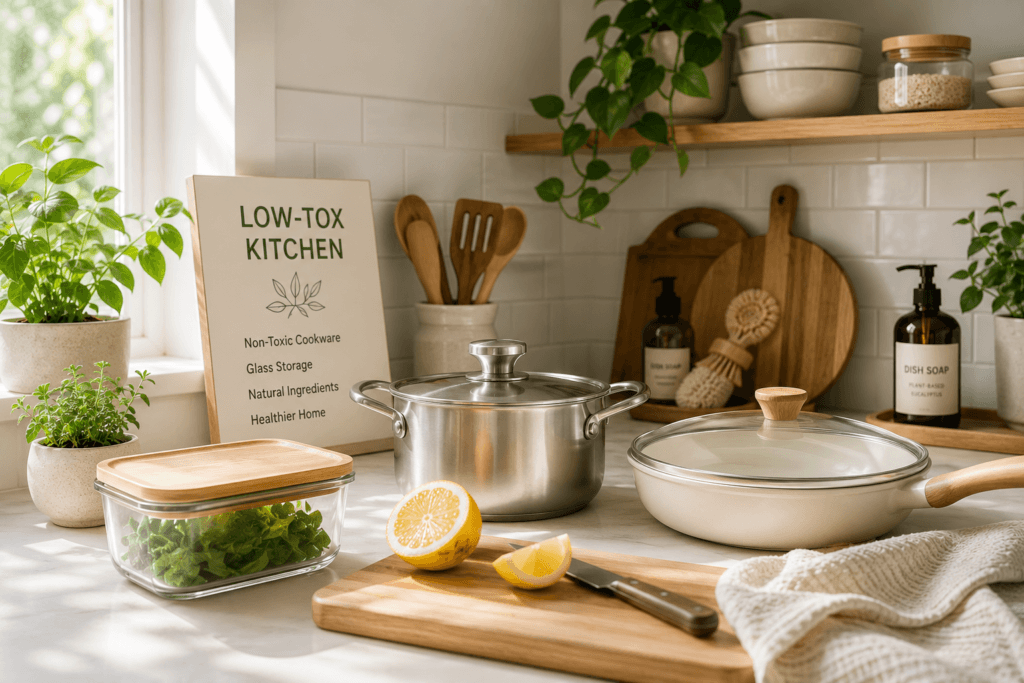
The kitchen is one of the most frequently used spaces in most homes.
It’s where we prepare meals, gather with family, and make many of our daily health decisions. Because of this, the kitchen is often the first place people begin when exploring low-tox living.
Fortunately, you don’t need to renovate your entire kitchen to make meaningful changes.
Key Facts
- Low-tox kitchens focus on practical, sustainable choices.
- Glass, stainless steel, and ceramic are commonly used materials in many households.
- Reducing single-use plastics is a common goal within the low-tox community.
- Small changes can often have a greater long-term impact than dramatic overhauls.
Glass Food Storage Containers
Glass food storage containers have become increasingly popular for several reasons:
- Durable
- Reusable
- Easy to clean
- Resistant to staining
- Suitable for many food storage needs
Many people appreciate the convenience of being able to see what’s stored inside their containers, which may also help reduce food waste.
If replacing all your plastic containers isn’t realistic, start small. Replace items gradually as they wear out rather than discarding everything at once.
Stainless Steel Cookware
Stainless steel cookware has been a staple in kitchens for decades.
It is commonly valued for its:
- Durability
- Versatility
- Longevity
- Ease of maintenance
High-quality stainless steel cookware can last for many years, making it a practical investment for many households.
Ceramic Cookware
Ceramic cookware continues to grow in popularity due to its non-stick properties and attractive designs.
When evaluating cookware, consider factors such as:
- Intended use
- Durability
- Manufacturer information
- Cleaning requirements
- Budget
No cookware material is perfect for every situation, which is why it’s helpful to understand the pros and cons of each option.

Reducing Plastic Exposure
Low-tox living isn’t about eliminating plastic entirely—an unrealistic goal for most people.
Instead, consider simple swaps:
- Reusable water bottles
- Glass storage containers
- Stainless steel lunch containers
- Reusable shopping bags
- Fewer single-use products
Over time, these small decisions can become second nature.
My Experience
One of the easiest changes I’ve made has been switching to glass food containers for leftovers and meal prep.
It wasn’t a dramatic lifestyle change, but it simplified my kitchen routine and became one of those habits I no longer think about. That’s often the best kind of wellness habit—the kind that quietly becomes part of your everyday life.
Rethinking Household Products
Many of us use dozens of household products every day without giving them much thought.
Examples include:
- Laundry detergents
- Fabric softeners
- Multi-purpose cleaners
- Air fresheners
- Dish soaps
- Personal care products
Environmental wellness encourages awareness rather than fear.
Key Facts
- Household products vary widely in their ingredients and intended use.
- Fragrance-free products are increasingly popular among consumers.
- Reading labels can help individuals make more informed purchasing decisions.
- Simpler routines are often easier to maintain over time.
Reading Ingredient Labels
Product labels can sometimes feel overwhelming.
Instead of trying to memorize every ingredient, start by asking:
- Does this product meet my needs?
- Is there a simpler alternative?
- Am I sensitive to fragrances?
- Is this a product I use daily?
Focusing on a few frequently used products can be a practical starting point.
Fragrance-Free Alternatives
Many people enjoy scented products, while others prefer fragrance-free options.
Fragrance-free products are commonly available in categories such as:
- Laundry detergents
- Hand soaps
- Cleaning sprays
- Personal care products
If you’re sensitive to strong scents, experimenting with fragrance-free alternatives may be worthwhile.
Laundry Products to Reconsider
Laundry products are often among the first items people evaluate when transitioning to a low-tox lifestyle.
Common considerations include:
- Fragrance preferences
- Product concentration
- Packaging
- Cost
- Convenience
Some people choose to explore:
- Fragrance-free detergents
- Fabric softener alternatives
- Wool dryer balls
- Concentrated formulas
Again, there is no single “right” approach.

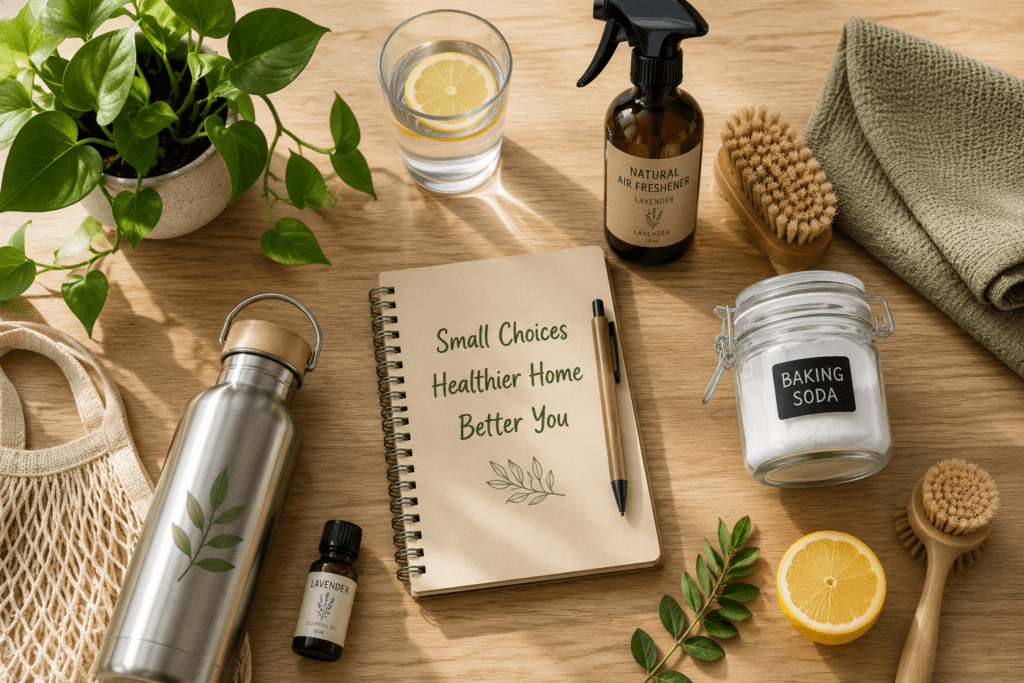
Homemade Cleaning Products
Homemade cleaning products have gained popularity in recent years.
Simple ingredients often mentioned in household cleaning discussions include:
- White vinegar
- Baking soda
- Lemon juice
- Castile soap
However, it’s important to use cleaning products appropriately and understand that homemade alternatives may not always be suitable for every cleaning task.
Keep It Simple
Environmental wellness doesn’t require replacing every product in your home overnight.
A practical approach might look like this:
- Finish what you currently own.
- Replace products as needed.
- Prioritize frequently used items.
- Avoid unnecessary purchases.
- Focus on habits rather than perfection.
Creating a Healthy Bedroom
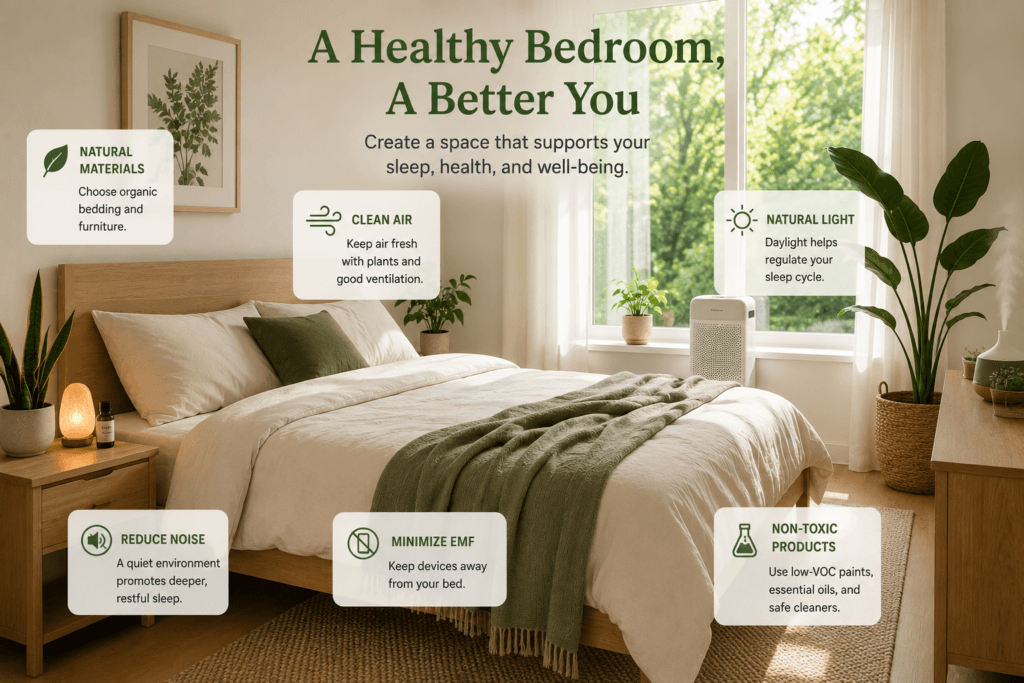
If there is one room in your home that deserves special attention, it’s the bedroom.
After all, we spend approximately one-third of our lives sleeping—or at least trying to.
A healthy bedroom supports:
- Better sleep
- Relaxation
- Recovery
- Stress management
- Consistent routines
Key Facts
- Sleep environments can influence comfort and sleep quality.
- Temperature, noise, and lighting are commonly discussed aspects of sleep hygiene.
- Reducing distractions may support healthier bedtime routines.
- Small adjustments can often make a noticeable difference.
Bedroom Air Quality
Bedroom air quality is an important consideration, especially if you:
- Have allergies.
- Sleep with pets.
- Live in an urban area.
- Spend significant time indoors.
Simple strategies include:
- Opening windows when possible.
- Cleaning regularly.
- Replacing HVAC filters.
- Using an air purifier if needed.
Light and Sleep
Light exposure plays an important role in your body’s natural sleep-wake cycle.
Consider:
- Using blackout curtains.
- Dimming lights in the evening.
- Limiting bright screens before bed.
- Increasing natural light exposure in the morning.
Noise and Comfort
Noise can be another significant factor affecting sleep.
Helpful strategies may include:
- White noise machines
- Earplugs
- Fans
- Soundproofing solutions
Many people find that consistent background noise helps create a more relaxing sleep environment.
Creating a Tech-Free Space
Modern bedrooms often include:
- Phones
- Tablets
- Laptops
- TVs
While technology has its place, many people benefit from creating boundaries around screen use before bedtime.
Try:
- Charging your phone outside the bedroom.
- Avoiding screens 30–60 minutes before bed.
- Reading a book instead.
- Establishing a relaxing bedtime routine.
The Ideal Bedroom Isn’t Expensive
One of the biggest misconceptions about environmental wellness is that it requires expensive upgrades.
In reality, a healthier bedroom may simply involve:
- Cooler temperatures.
- Less clutter.
- Better lighting.
- More consistent routines.
- Fewer distractions.
These changes cost little—or nothing at all.
How to Create a Less Toxic Home: Room-by-Room Checklist
If you are wondering how to create a less toxic home, work through one room at a time. This checklist focuses on practical ways to reduce unnecessary exposures without throwing away everything you own or assuming that every synthetic ingredient is harmful.
Kitchen Checklist
- Use glass or stainless steel containers when replacing worn plastic food-storage items.
- Avoid heating food in plastic unless the container is specifically designed for that use.
- Replace badly scratched or peeling nonstick cookware.
- Use the range hood or open a window while cooking to reduce smoke, moisture, and combustion pollutants.
- Review your local water-quality report before deciding whether a drinking-water filter is necessary.
Bedroom Checklist
- Wash bedding regularly and reduce dust with routine vacuuming or damp dusting.
- Choose fragrance-free laundry products if scents irritate your skin, breathing, or sleep.
- Ventilate the room when outdoor air quality and weather permit, and manage excess humidity.
- Limit air fresheners, heavily scented candles, and unnecessary bedroom sprays.
- Keep phones and bright screens away from the bed to support a calmer sleep environment.
Bathroom Checklist
- Use the exhaust fan during and after showers to control moisture.
- Repair leaks promptly and address visible mold rather than covering it with fragrance.
- Choose simpler or fragrance-free personal-care products as current items run out, if that suits your needs.
- Store medicines, cosmetics, and cleaning products securely and discard expired items according to local guidance.
- Never mix bathroom cleaners unless the product labels explicitly say it is safe.
Laundry Room Checklist
- Try a fragrance-free detergent and use only the amount recommended for the load.
- Skip scent boosters and fabric softeners when they are unnecessary or irritating.
- Consider reusable wool dryer balls as an alternative to disposable dryer sheets.
- Keep the washer gasket and detergent drawer dry and clean to discourage mildew.
- Ventilate the room and confirm that the dryer exhaust vents outdoors and remains unobstructed.
Cleaning Cabinet Checklist
- Keep only the cleaning products you actually use and avoid buying several overlapping formulas.
- Read labels, follow dilution and ventilation instructions, and wear recommended protective equipment.
- Never mix bleach with ammonia, vinegar, acids, or other cleaners because dangerous gases can form.
- Keep products in their original labeled containers and store them away from children and pets.
- When replacing products, consider fragrance-free options or credible safer-product certifications that fit the cleaning task.
These low-tox home changes work best when introduced gradually. Begin with ventilation, moisture control, safe product use, and the items your household uses most often.
What Is Digital Wellness and Why Does It Matter?
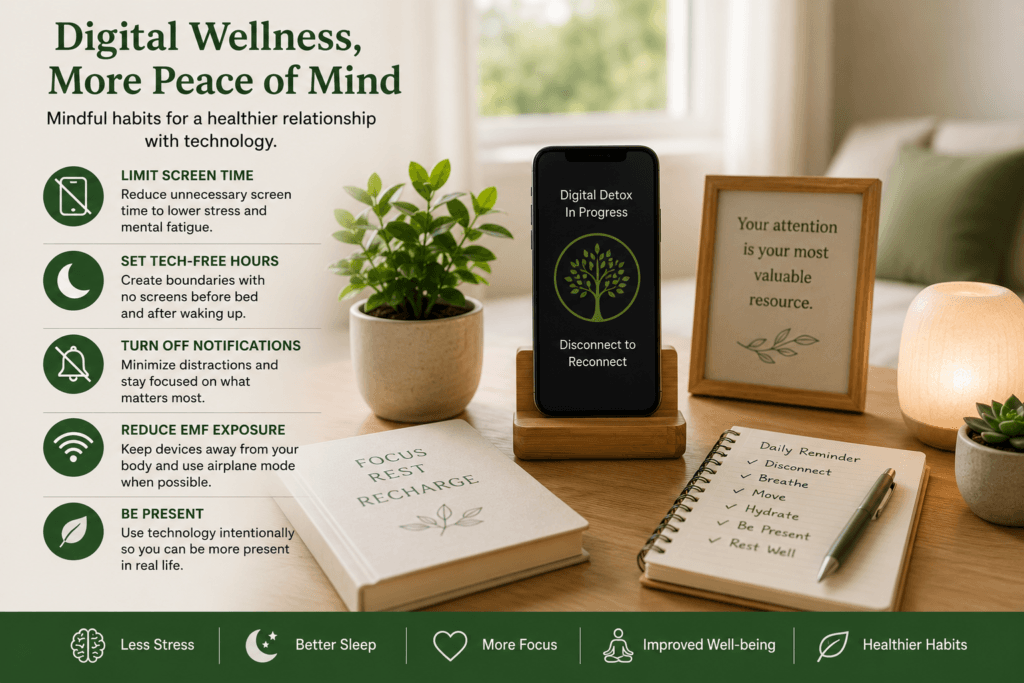
Technology has transformed the way we live, work, and communicate. While digital tools offer many benefits, they can also influence our daily routines, particularly when they begin to interfere with sleep, focus, and personal relationships.
Digital wellness is the practice of using technology intentionally in ways that support your overall well-being.
Key Facts
- The average adult spends several hours per day using digital devices.
- Excessive screen time may affect sleep, focus, and stress levels.
- Digital wellness is about balance—not eliminating technology.
- Small changes in technology habits can improve quality of life.
What Is Digital Pollution?
Digital pollution refers to the accumulation of digital distractions and habits that may negatively impact daily life.
Examples include:
- Constant notifications
- Excessive screen time
- Email overload
- Social media scrolling
- Digital clutter
- Technology use late at night
Environmental wellness extends beyond the physical environment to include the digital environments we interact with every day.
How Does Screen Time Affect Sleep?
Many people end their day the same way:
- Checking email
- Watching videos
- Scrolling social media
- Reading the news
Unfortunately, this can make it difficult to transition into a restful state before bed.
Creating boundaries around technology may help support healthier sleep habits.
Consider:
- Avoiding screens 30–60 minutes before bed.
- Using “Do Not Disturb” settings.
- Keeping devices out of the bedroom.
- Establishing a consistent bedtime routine.
What Is Blue Light?
Blue light is a type of visible light emitted by many digital devices.
During the day, blue light can be beneficial because it helps regulate alertness and supports the body’s natural sleep-wake cycle. However, exposure to bright light late in the evening may make it more difficult for some individuals to wind down before bedtime.
Practical strategies include:
- Reducing screen brightness in the evening.
- Using night mode settings.
- Prioritizing natural light exposure in the morning.
How Can You Create Tech-Free Spaces at Home?
Technology isn’t going away—and it shouldn’t.
Instead, identify spaces where you would like to be more present.
Examples include:
- The bedroom
- The dining table
- Reading areas
- Outdoor spaces
My family has found that setting simple boundaries around technology often has a greater impact than attempting a complete “digital detox.”
Environmental wellness is ultimately about creating environments that support the life you want to live.
What Are the Best Free Healthy Home Habits?
One of the best things about environmental wellness is that many of the most effective habits are completely free.
Key Facts
- Wellness habits don’t need to be expensive.
- Consistency often matters more than complexity.
- Small actions performed daily can become meaningful over time.
- Healthy homes are built through habits—not perfection.
Should You Open Your Windows Every Day?
If weather and safety permit, opening windows for even a few minutes can help improve airflow and bring fresh air into your home.
Many people find this habit particularly refreshing in the morning.
Why Is Spending Time Outdoors Important?
Spending time outdoors may help support:
- Stress management
- Physical activity
- Exposure to natural light
- Mental well-being
You don’t need to hike a mountain to experience these benefits.
A short walk around your neighborhood is a great place to start.
Does Decluttering Improve Mental Well-Being?
Clutter affects everyone differently, but many people report feeling calmer in organized spaces.
Start with one small area:
- A desk
- A kitchen counter
- A nightstand
- A closet
Progress often creates momentum.
How Does Hydration Support Wellness?
Hydration remains one of the simplest wellness habits available.
Keeping a reusable water bottle nearby can serve as a helpful reminder to drink water consistently throughout the day.
Why Are Healthy Routines Important?
Healthy routines reduce decision fatigue.
Examples include:
- Going to bed at the same time.
- Preparing meals in advance.
- Walking after dinner.
- Spending less time on screens.
- Taking breaks throughout the day.
These habits may seem small individually, but together they create a healthier lifestyle.
The 30-Day Environmental Wellness Challenge
Environmental wellness doesn’t happen overnight.
Instead of trying to change everything at once, consider focusing on one area each week.
Week 1: Air
- Open windows daily.
- Replace HVAC filters if needed.
- Vacuum frequently.
- Identify areas that may need better ventilation.
Week 2: Water
- Learn about your local water supply.
- Evaluate your current filtration system.
- Increase daily water intake.
- Clean reusable water bottles.
Week 3: Kitchen
- Replace one worn food storage container.
- Reduce single-use plastics.
- Organize your pantry.
- Plan healthier meals.
Week 4: Habits
- Create a bedtime routine.
- Reduce evening screen time.
- Spend more time outdoors.
- Declutter one room.
At the end of 30 days, don’t ask:
“Is my home perfect?”
Instead, ask:
“Is my home healthier than it was a month ago?”
If the answer is yes, you’re moving in the right direction.
Frequently Asked Questions
What is environmental wellness?
Environmental wellness is the practice of creating surroundings that support physical, mental, and emotional well-being through healthier environments and daily habits.
What is low-tox living?
Low-tox living is an approach to wellness that focuses on reducing unnecessary exposures in the home while recognizing that perfection is neither realistic nor necessary.
How can I improve indoor air quality naturally?
Simple strategies include opening windows, maintaining HVAC systems, cleaning regularly, and improving ventilation throughout the home.
Is filtered water better than tap water?
The answer depends on factors such as location, water source, plumbing, and personal preference. Many households choose filtered water for convenience or peace of mind.
What cookware is considered safest?
Glass, stainless steel, and ceramic cookware are commonly used in many kitchens. The best choice depends on your cooking needs, preferences, and budget.
How do I start creating a healthier home?
Start small:
Build consistent daily habits.
Improve your sleep environment.
Open windows regularly.
Stay hydrated.
Reduce clutter.
Does environmental wellness affect sleep and stress?
Environmental wellness can influence factors related to sleep and stress, including lighting, noise, routines, and overall comfort within the home.
Want free practical tips for better sleep, energy, gut health, and healthy aging?
Join the Purely Vital Living newsletter and get science-backed wellness tips delivered to your inbox.
Final Thoughts
Environmental wellness isn’t about creating a perfectly curated, toxin-free home.
It’s about creating a home that supports the life you want to live.
Over the years, I’ve learned that some of the most meaningful changes are also the simplest:
- Opening windows in the morning.
- Drinking more water.
- Spending time outdoors.
- Creating a comfortable bedroom.
- Putting my phone away before bed.
These habits haven’t solved every health challenge I’ve faced, but they’ve helped create an environment that supports better choices.
At its core, environmental wellness is about alignment.
When your surroundings support your goals, healthy living becomes a little easier.
And that’s ultimately what low-tox living is all about—not perfection, but progress.
Related Reads
- Best Morning Routine for Energy & Focus
- How to Improve Sleep Quality Naturally
- How to Get More Energy Naturally
- Balanced Lifestyle for Healthy Aging
- Daily Habits to Lower Stress Naturally
- How to Heal Your Gut Microbiome Naturally
References
- U.S. Environmental Protection Agency (EPA) – Indoor Air Quality
- National Institutes of Health (NIH) – Good Sleep for Good Health
- World Health Organization (WHO) – Healthy Environments for Health
- Harvard T.H. Chan School of Public Health
- National Sleep Foundation – Sleep Health Resources
- Mayo Clinic – Healthy Lifestyle Resources
- American Lung Association – Indoor Air Quality
- National Institute of Environmental Health Sciences (NIEHS) – Environmental Health Topics
- Stanford Center on Longevity – Healthy Aging Resources
Low-tox living sounds interesting. Have you tried any specific swaps that worked well for you?
Yes! A few simple swaps have worked well for me—using glass containers instead of plastic for food storage, choosing stainless steel cookware, and switching to wool dryer balls instead of dryer sheets. I’ve found that starting with everyday items is much easier than trying to change everything at once. What swap are you thinking about trying first?