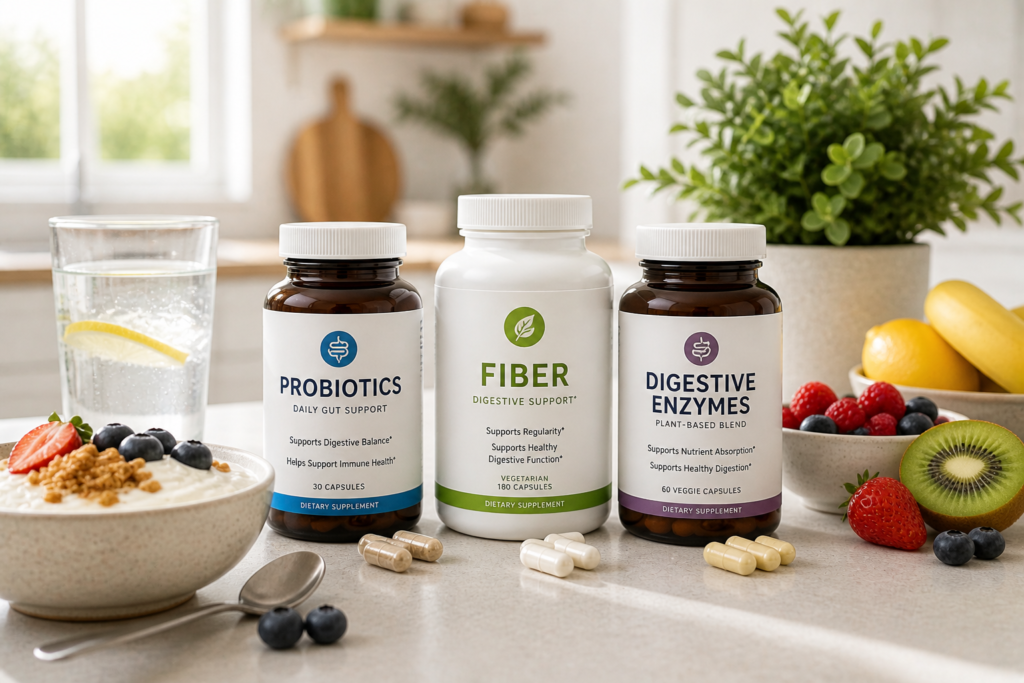
Quick Answer
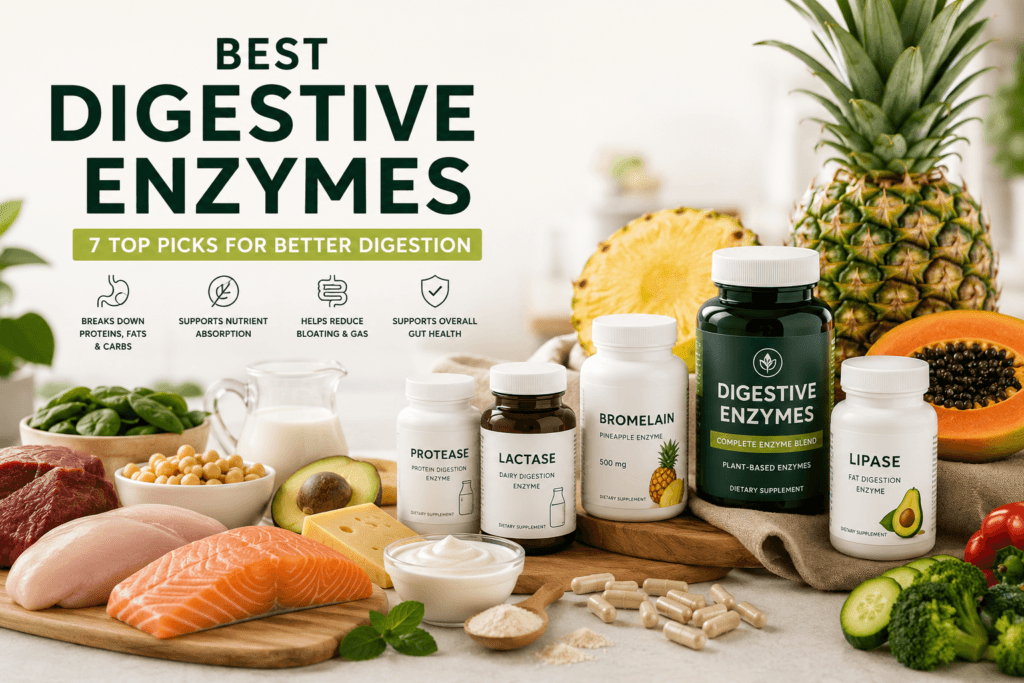
The best digestive enzyme is the one that matches the food you have trouble digesting. Choose lactase for lactose, alpha-galactosidase for gas from beans and certain complex carbohydrates, or a broad-spectrum blend with protease, lipase, and amylase for mixed meals. Most people do not need digestive enzymes every day, and persistent symptoms, weight loss, greasy stools, or suspected malabsorption should be evaluated by a healthcare professional. This digestive enzyme supplements review compares enzyme types, activity units, labels, timing, potential benefits, and safety considerations so you can match a product to a specific digestive need.
Key Takeaways
- Match the enzyme to the food: lactase targets lactose, alpha-galactosidase targets certain complex carbohydrates, and protease, lipase, and amylase target protein, fat, and starch.
- Check activity units: enzyme strength is better compared using enzyme-specific activity units, not milligrams alone.
- Take it with the relevant meal: many over-the-counter digestive enzymes work best when taken just before or with the first bites of food, according to label directions.
- More ingredients are not always better: a targeted enzyme may fit a specific trigger better than a large broad-spectrum blend.
- Know when to seek care: over-the-counter supplements do not replace prescription pancreatic enzymes or medical evaluation for persistent or severe symptoms.
- Introduction
- What Are the Best Digestive Enzymes in 2026?
- Which Digestive Enzyme Do You Need?
- BiOptimizers MassZymes
- What Are Digestive Enzymes and What Do They Actually Do?
- What Are the Main Types of Digestive Enzymes?
- How Do You Choose the Best Digestive Enzyme Supplement?
- Enzymedica Digest Gold
- How Do You Read a Digestive Enzyme Supplement Label?
- When Should You Take Digestive Enzymes?
- NOW Super Enzymes
- Do Digestive Enzymes Help With Bloating and Gas?
- Digestive Enzymes vs Probiotics: Which Is Better?
- Digestive Enzymes vs Fiber: Which Do You Need?
- Who May Benefit From Digestive Enzymes?
- Who May Not Need Digestive Enzyme Supplements?
- OTC Digestive Enzymes vs Prescription Enzymes: What's the Difference?
- Are Digestive Enzymes Safe?
- Can You Get Digestive Enzymes Naturally From Food?
- How Can You Improve Digestion Without Supplements?
- Frequently Asked Questions About Digestive Enzymes
- Final Verdict: Which Digestive Enzyme Is Best?
Introduction
Digestive enzymes are proteins that help break food into smaller components your body can absorb. Your digestive system naturally makes many of these enzymes, including amylase for starches, proteases for proteins, lipase for fats, and lactase for lactose.
That does not mean everyone needs an enzyme supplement. For many people, the most useful approach is targeted: lactase when lactose is the problem, alpha-galactosidase for certain difficult-to-digest carbohydrates, or a broad-spectrum product when a clinician or careful self-assessment suggests it fits the goal.
This 2026 guide explains how digestive enzymes work, which enzyme matches which food, how to read supplement labels, when to take enzymes, and how over-the-counter products differ from prescription pancreatic enzyme replacement therapy. For the bigger picture—including food, fiber, lifestyle habits, and the microbiome—start with our guide to healing your gut microbiome naturally.
What Are the Best Digestive Enzymes in 2026?
Rather than ranking every enzyme as if it does the same job, use the table below to match the enzyme to the food component you want to digest. Product-level rankings will be finalized after formula, availability, activity units, testing, and value are verified.
| Digestive need | Enzyme to look for | What it helps break down | Best fit |
|---|---|---|---|
| Mixed meals | Broad-spectrum blend | Protein, fat and starch | General meal-specific support |
| Protein-heavy meals | Protease | Protein | Protein digestion |
| Higher-fat meals | Lipase | Fat | Fat digestion |
| Starchy meals | Amylase | Starch | Carbohydrate digestion |
| Dairy containing lactose | Lactase | Lactose | Lactose intolerance support |
| Beans and certain complex carbs | Alpha-galactosidase | Certain oligosaccharides | Gas related to specific foods |
| Plant-focused blends | Cellulase | Cellulose | Often included in broad-spectrum formulas |
Which Digestive Enzyme Do You Need?
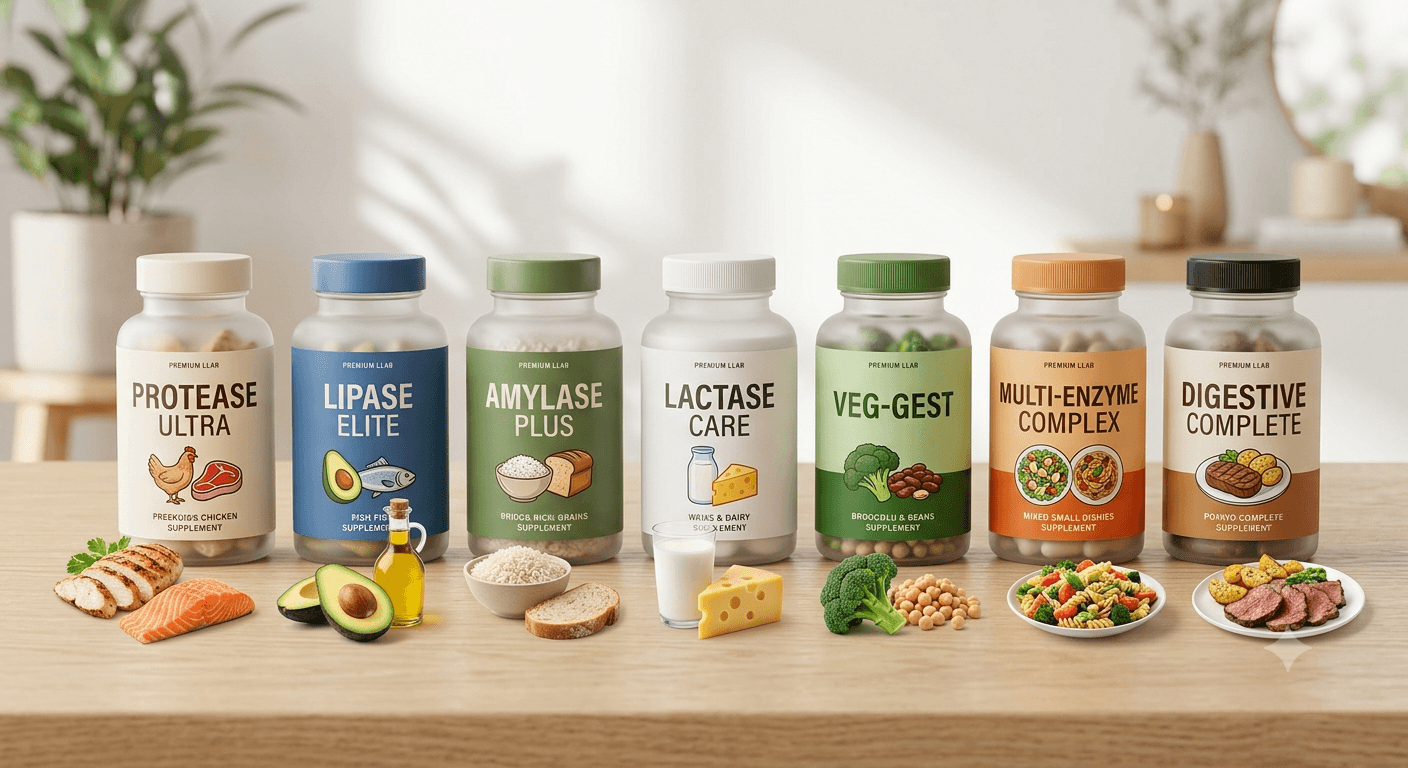
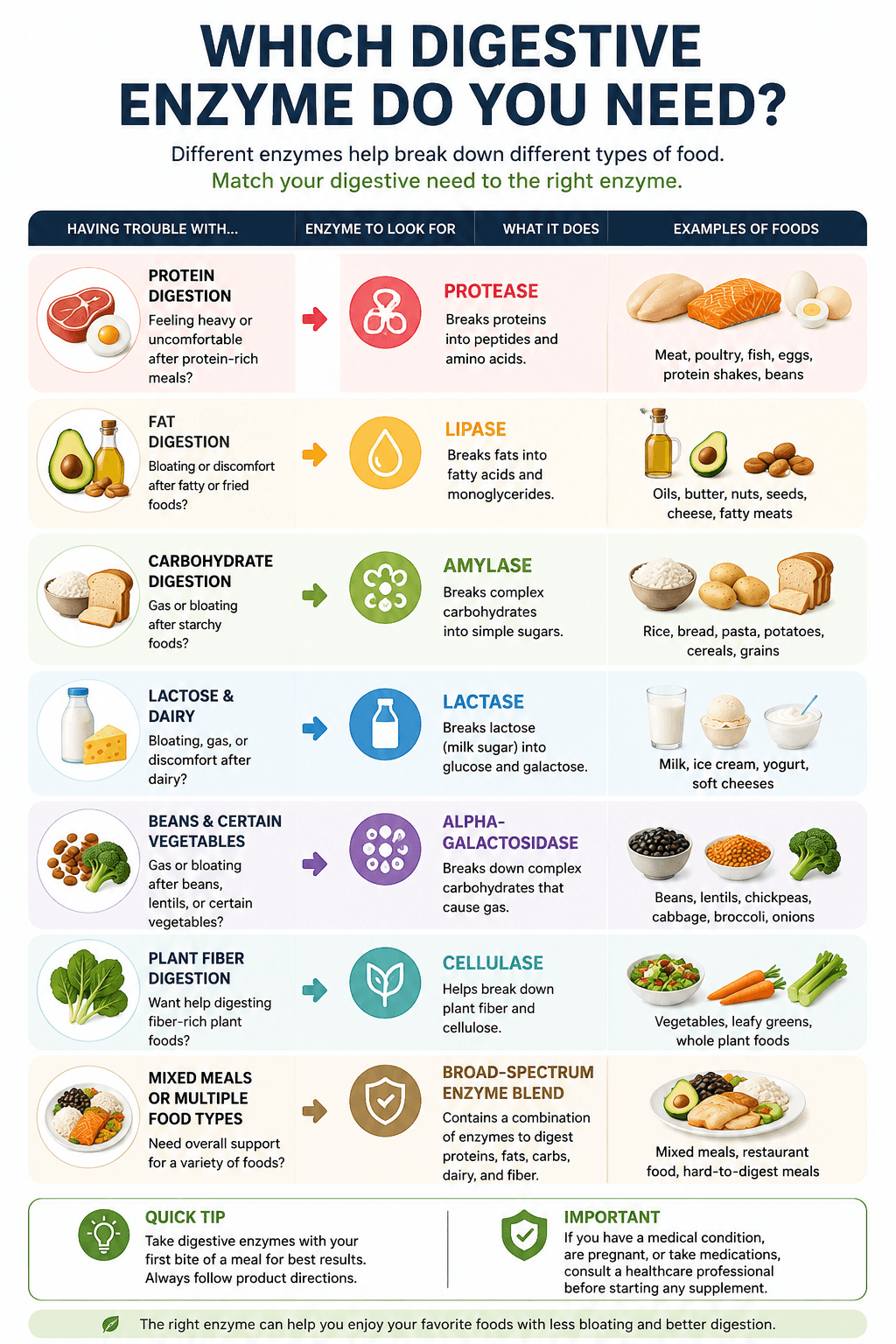
The most useful digestive enzyme is usually the one that matches the substrate causing difficulty. Digestive enzymes are not interchangeable, and a formula with more ingredients is not automatically better.
What enzyme helps digest protein?
Proteases break proteins into smaller peptides and amino acids. They are commonly included in broad-spectrum digestive enzyme blends.
What enzyme helps digest fats?
Lipase helps break dietary fats into fatty acids and other smaller components that can be absorbed. Pancreatic lipase is especially important in normal fat digestion.
What enzyme helps digest carbohydrates?
Amylase helps break starches into smaller carbohydrates. Digestion of carbohydrates also involves additional enzymes in the small intestine.
What enzyme helps digest lactose?
Lactase breaks down lactose, the sugar in milk. People with lactose intolerance have too little lactase activity to digest some amounts of lactose comfortably, which can lead to gas, bloating, cramping, or loose stools.
What enzyme helps with beans and certain vegetables?
Alpha-galactosidase can help break down certain complex carbohydrates before gut bacteria ferment them. This is why targeted products containing this enzyme are commonly used with beans and other foods that trigger gas for some people.

What Are Digestive Enzymes and What Do They Actually Do?
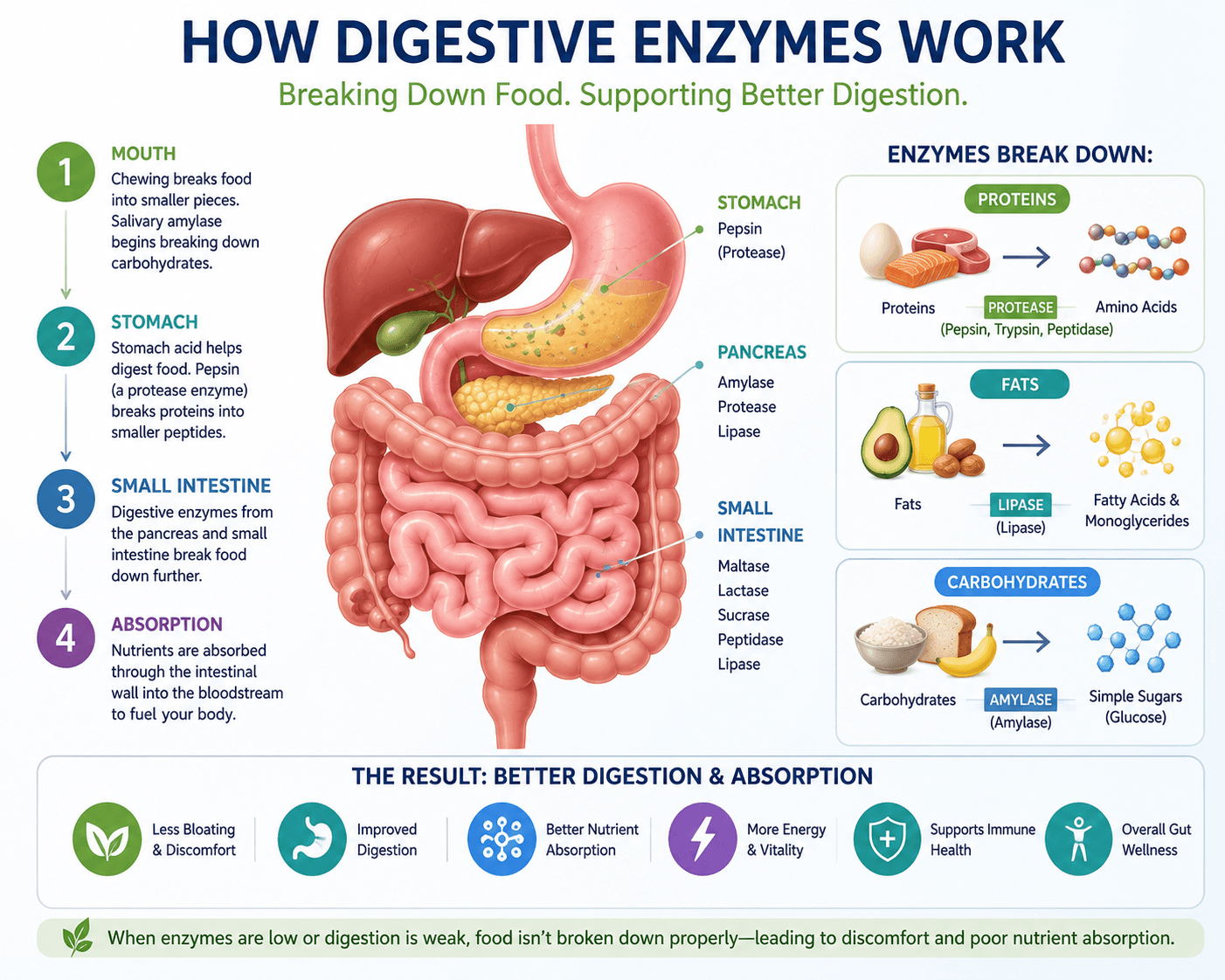
Digestion is a coordinated process involving the mouth, stomach, pancreas, small intestine, liver, and gallbladder. Enzymes speed chemical reactions that break large food molecules into smaller molecules your body can absorb and use.
- Amylase helps digest starch.
- Proteases help digest protein.
- Lipase helps digest fat.
- Lactase helps digest lactose.
- Sucrase helps digest sucrose.
- Alpha-galactosidase targets certain complex carbohydrates.
Your body normally produces the enzymes it needs. Supplementation becomes most clearly useful when a specific food component is poorly digested or when a diagnosed condition requires medical enzyme replacement.
What Are the Main Types of Digestive Enzymes?
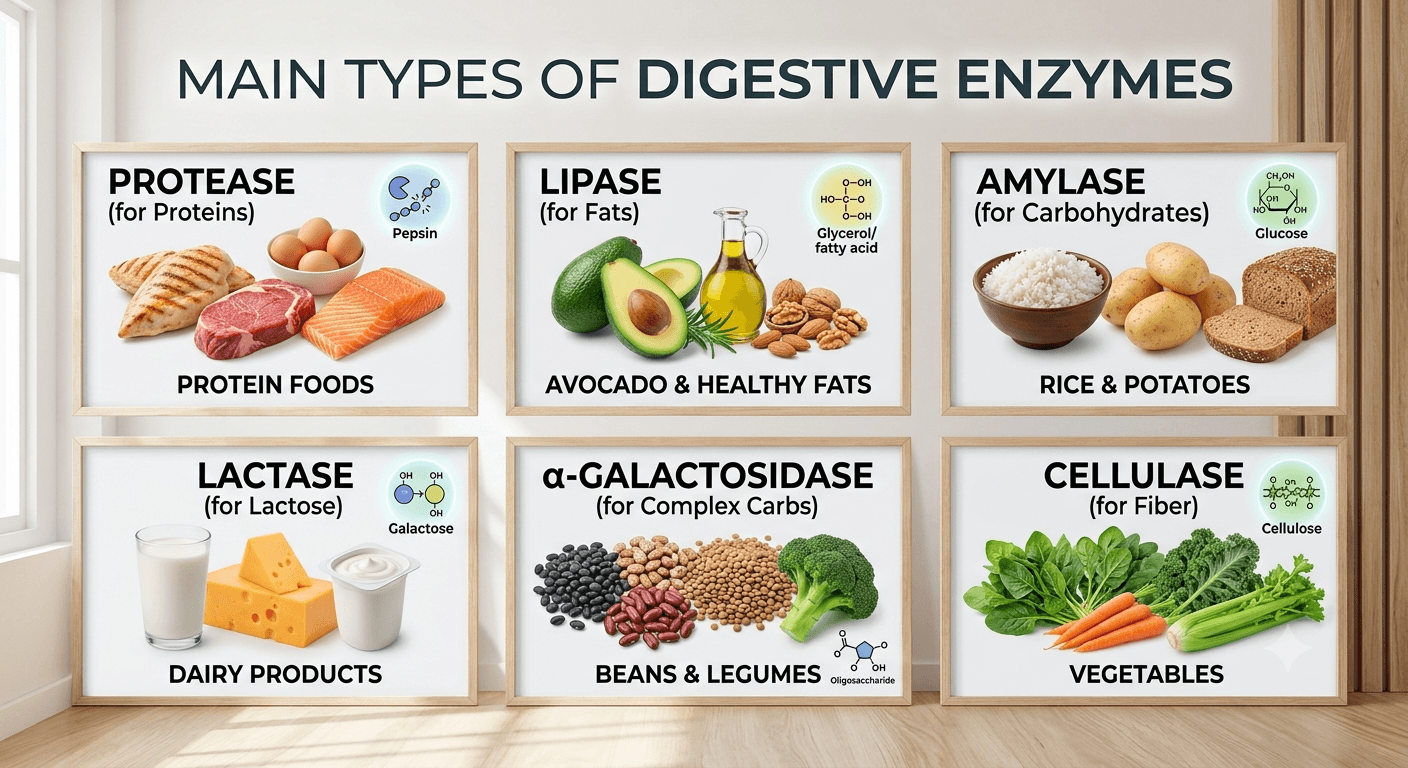
Protease — Protein Digestion
Proteases help split proteins into smaller peptides and amino acids. Broad-spectrum products may contain several proteolytic enzymes rather than a single protease.
Lipase — Fat Digestion
Lipase is essential for breaking dietary fats into absorbable components. Clinically significant pancreatic enzyme deficiency requires medical evaluation rather than self-treatment with an ordinary supplement.
Amylase — Starch Digestion
Amylase begins the breakdown of starches and is produced in the salivary glands and pancreas.
Lactase — Lactose Digestion
Lactase is produced in the small intestine and breaks lactose into simpler sugars. Supplemental lactase can be useful for people who have difficulty digesting lactose.
Alpha-Galactosidase — Certain Complex Carbohydrates
Alpha-galactosidase acts on certain carbohydrates found in foods such as beans. Taking a targeted product at the appropriate time can reduce fermentation-related gas for some people.
Cellulase — Plant Fiber
Humans do not produce cellulase in the same way we produce core pancreatic digestive enzymes. Supplemental cellulase is sometimes included in plant-based or broad-spectrum enzyme formulas.
How Do You Choose the Best Digestive Enzyme Supplement?
Start with the digestive goal, not the number of ingredients on the label. A targeted lactase product can make more sense for lactose intolerance than an expensive blend containing a dozen unrelated enzymes.
- Match the enzyme to the food. Lactase targets lactose; alpha-galactosidase targets certain complex carbohydrates.
- Check activity units. Enzyme labels may report activity using enzyme-specific units rather than relying on milligrams alone.
- Check serving instructions. Some targeted enzymes need to be taken with the relevant food.
- Prefer transparent labels. You should be able to identify the enzymes and their stated activity or amount.
- Consider allergens and dietary restrictions. Check capsule materials and other ingredients.
- Do not substitute OTC supplements for prescription treatment. Diagnosed pancreatic insufficiency requires clinician-directed care.

How Do You Read a Digestive Enzyme Supplement Label?
Why do enzyme activity units matter?
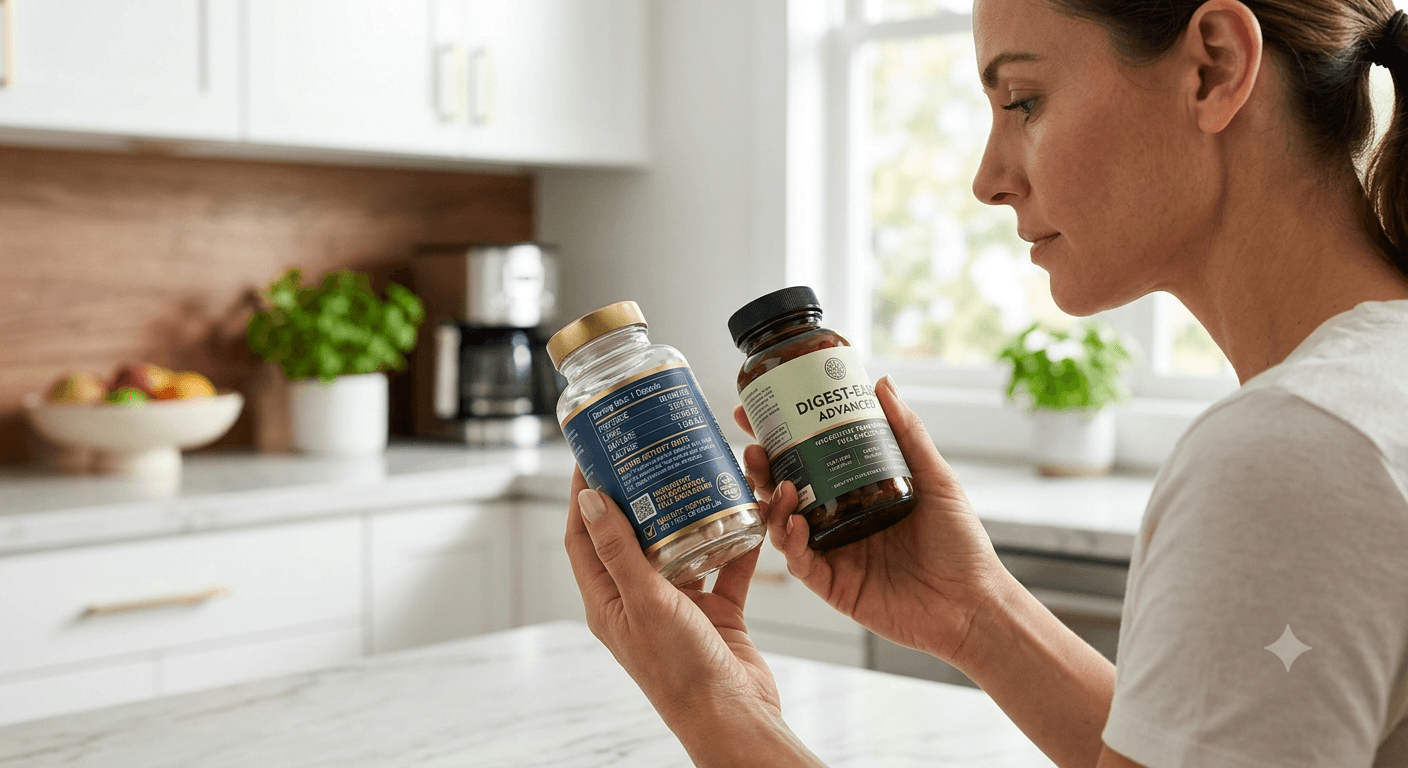
Enzymes perform chemical reactions, so potency is often described by activity rather than weight alone. Different enzymes can use different activity units. When comparing two products, do not assume that a larger milligram number automatically means stronger digestive activity.
Which enzymes are actually included?
Look for the enzymes relevant to your goal. A broad blend commonly includes protease, amylase, and lipase, while a dairy-focused product should provide lactase.
Does serving size change the comparison?
Yes. Compare the amount or activity per recommended serving, not simply per capsule. One formula may require one capsule while another requires several.
What about proprietary blends?
Proprietary blends can make direct comparisons difficult when the label does not clearly show the contribution of individual ingredients. Greater transparency makes it easier to evaluate whether a formula fits your needs.
When Should You Take Digestive Enzymes?
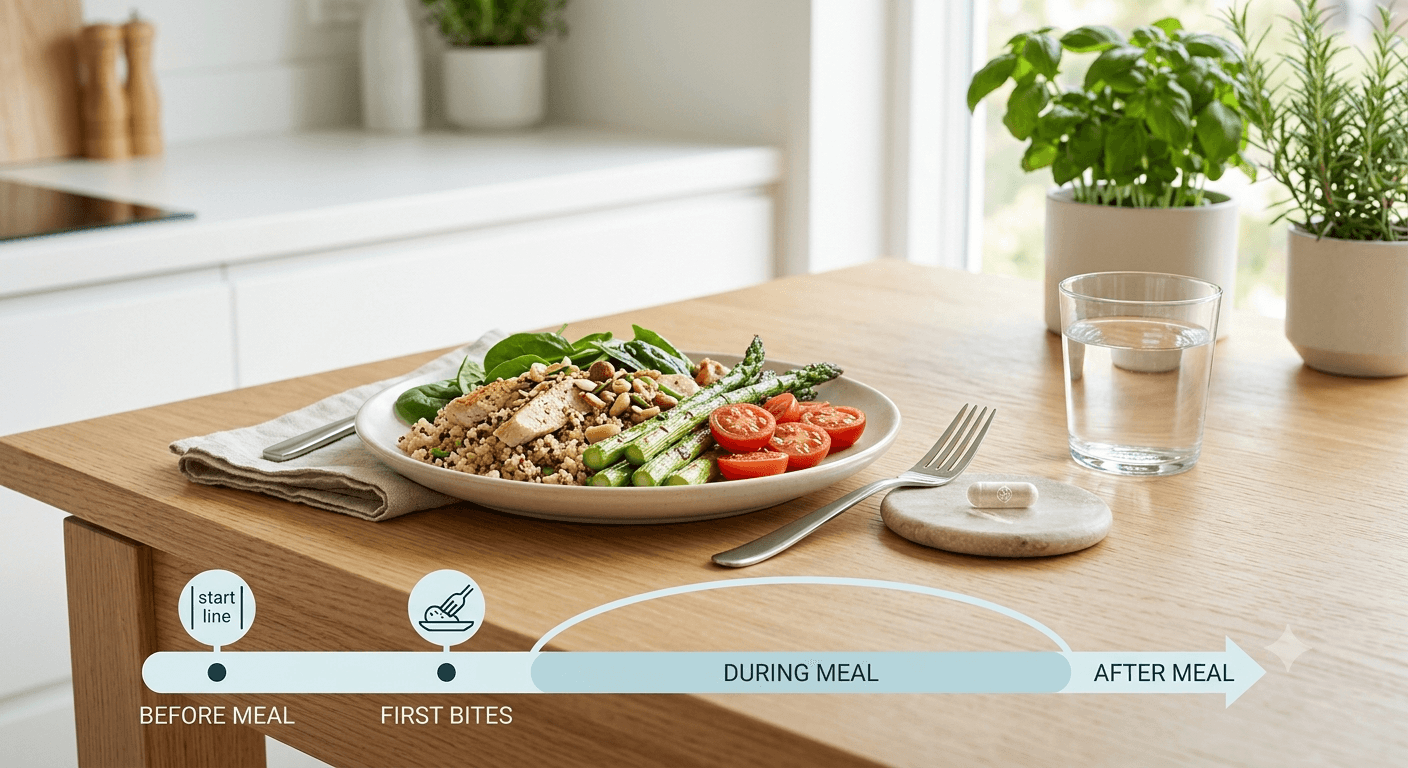
Quick answer: Timing depends on the enzyme and product. Food-targeted enzymes generally need to be present when the relevant food is eaten. For example, lactase is used with lactose-containing foods, while alpha-galactosidase products are typically taken immediately before eating or with the first bites of the triggering food. Always follow the product label or clinician’s instructions.
Should you take digestive enzymes before or after eating?
For enzymes intended to act on a meal, taking them according to label directions around the start of the meal generally makes more sense than waiting until digestion is well underway. Exact instructions vary by formula.
Can you take digestive enzymes on an empty stomach?
If the purpose is to digest a particular food, there is little reason for the enzyme to be separated from that food unless the product or clinician specifically instructs otherwise.
Do you need digestive enzymes with every meal?
Not necessarily. Someone using lactase may only need it with lactose-containing foods. People prescribed pancreatic enzyme replacement therapy follow a different medical dosing plan and should use it exactly as directed.

Do Digestive Enzymes Help With Bloating and Gas?
They can help when bloating or gas is linked to a food component that a specific enzyme targets. Lactase can help people with lactose intolerance digest lactose, and alpha-galactosidase may reduce gas caused by certain carbohydrates in beans and similar foods.
But bloating does not automatically mean enzyme deficiency. Gas, constipation, food intolerances, eating patterns, gastrointestinal conditions, and other factors can produce similar symptoms. Persistent or worsening symptoms deserve evaluation rather than repeatedly adding supplements.
If you are comparing enzymes with probiotics specifically for bloating and gas, see our guide to the best probiotics for bloating and gas.
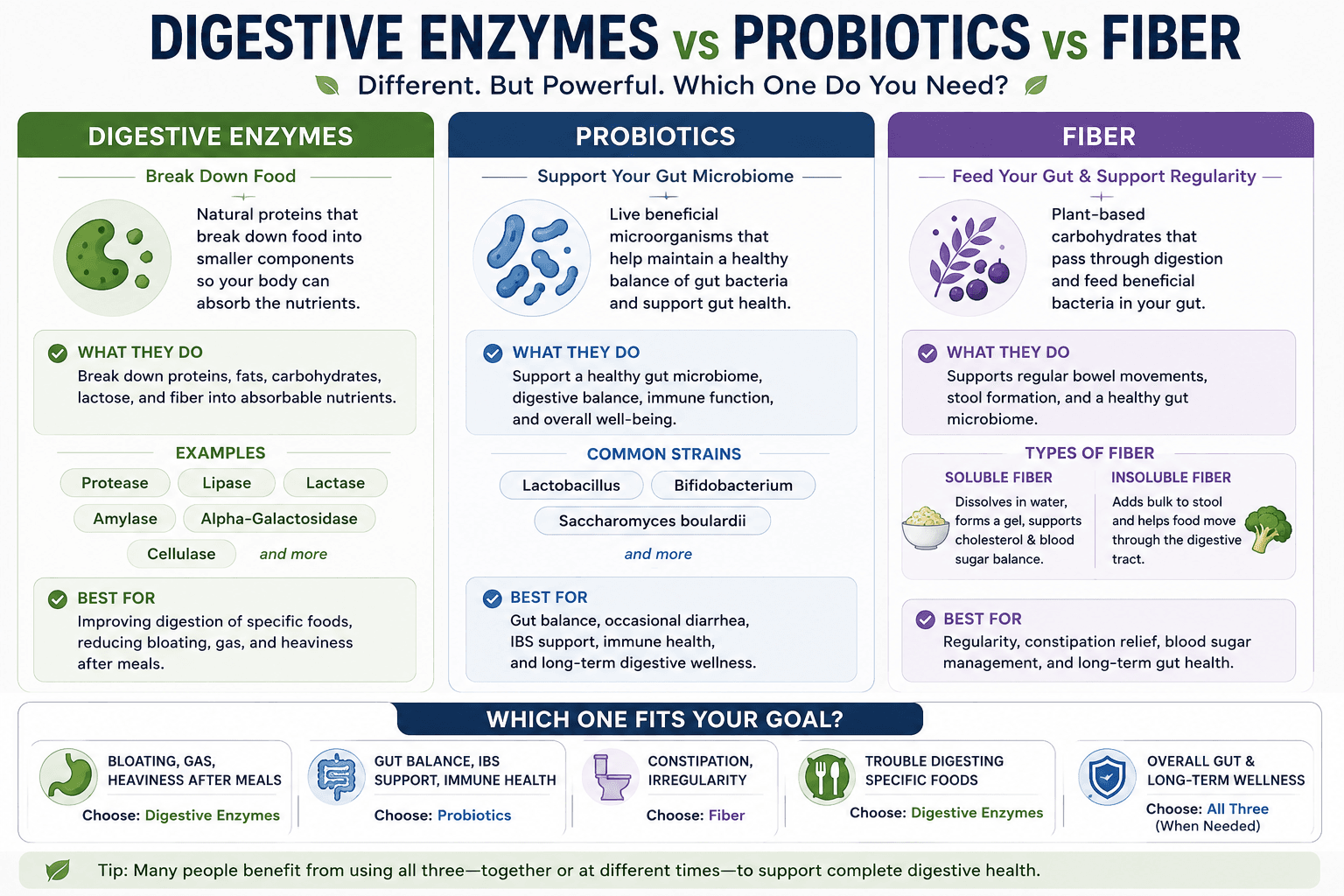
Digestive Enzymes vs Probiotics: Which Is Better?
| Digestive enzymes | Probiotics | |
|---|---|---|
| Main role | Help break down food components | Provide live microorganisms intended to support the microbial environment |
| Examples | Lactase, lipase, protease, amylase | Strain-specific bacteria or yeasts |
| Best question to ask | What food component am I trying to digest? | What strain and outcome am I targeting? |
| Timing | Often meal-related | Depends on product |
Can you take probiotics and digestive enzymes together?
They perform different jobs, and some products combine them. Whether you need both depends on your goal. Avoid assuming that combining more gut-health ingredients automatically produces a better result. Our gut health supplement guide compares enzymes with probiotics, fiber, and other common options.
Digestive Enzymes vs Fiber: Which Do You Need?
Digestive enzymes and fiber solve different problems. Enzymes help break down specific food components. Fiber can support stool bulk, regularity, and the gut microbial environment depending on the type. If your primary concern is constipation or low fiber intake, adding an enzyme may not address the underlying issue.
Who May Benefit From Digestive Enzymes?
- People with lactose intolerance who use lactase with lactose-containing foods.
- People who develop gas after foods containing carbohydrates targeted by alpha-galactosidase.
- People with a diagnosed enzyme deficiency under medical guidance.
- People with exocrine pancreatic insufficiency who are prescribed pancreatic enzyme replacement therapy.
The last category is fundamentally different from ordinary wellness supplementation. Exocrine pancreatic insufficiency can cause maldigestion and malabsorption and requires medical diagnosis and treatment.
Who May Not Need Digestive Enzyme Supplements?
If you digest foods normally and do not have a relevant intolerance, deficiency, or clinical indication, there is no automatic reason to add a broad-spectrum digestive enzyme supplement. Occasional digestive discomfort can have many causes, and persistent symptoms should not be self-diagnosed as low digestive enzymes.
OTC Digestive Enzymes vs Prescription Enzymes: What’s the Difference?
Over-the-counter digestive enzyme supplements are consumer products used for goals such as helping digest lactose or certain carbohydrates. Prescription pancreatic enzyme replacement therapy, or PERT, is medical treatment for conditions such as exocrine pancreatic insufficiency.
PERT contains pancreatic enzymes and is prescribed in doses tailored to a patient’s medical needs. It is taken with meals and snacks as directed. OTC enzyme supplements should not be treated as substitutes for prescription PERT.
Are Digestive Enzymes Safe?
Safety depends on the ingredient, dose, product quality, and your health circumstances. Read labels carefully and check with a qualified healthcare professional if you take medications, have a digestive or pancreatic condition, are pregnant or breastfeeding, or have persistent symptoms.
When should you see a doctor about digestive symptoms?
Seek medical evaluation for persistent or worsening digestive problems, unexplained weight loss, greasy or unusually foul-smelling stools, ongoing diarrhea, significant abdominal pain, signs of malnutrition, or other symptoms that concern you. These can require diagnosis rather than an OTC supplement.
Can You Get Digestive Enzymes Naturally From Food?
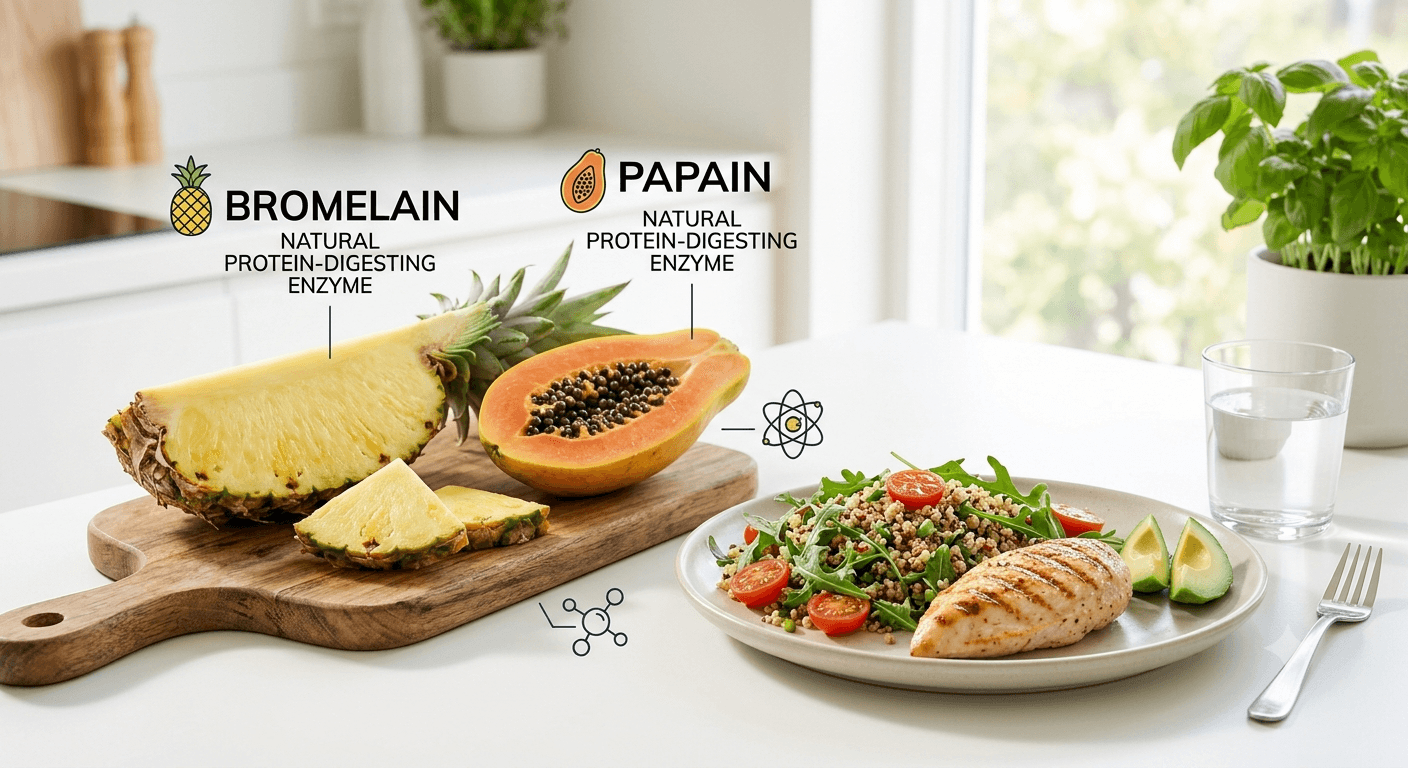
Some foods naturally contain enzymes, such as bromelain in pineapple and papain in papaya. However, eating enzyme-containing foods is not equivalent to treating a diagnosed enzyme deficiency, and these foods should not be presented as substitutes for prescription enzyme therapy.
How Can You Improve Digestion Without Supplements?
- Eat a varied diet with adequate fiber if tolerated.
- Stay adequately hydrated.
- Chew food thoroughly and avoid rushing meals.
- Move regularly.
- Build consistent sleep habits.
- Use stress-management strategies.
- Track foods that repeatedly trigger symptoms instead of eliminating large food groups without a clear reason.
Supplements can be useful tools, but they work best when the digestive problem and the intended solution are clearly defined. For food-first ideas, explore these gut-healthy recipes that support digestion naturally.
Frequently Asked Questions About Digestive Enzymes
What is the best digestive enzyme to take every day?
There is no single digestive enzyme everyone should take daily. The best choice depends on what you have difficulty digesting. Lactase targets lactose, alpha-galactosidase targets certain complex carbohydrates, and broad-spectrum blends combine enzymes for several macronutrients.
What digestive enzyme is best for bloating?
The answer depends on the trigger. Lactase may help bloating caused by lactose intolerance, while alpha-galactosidase may help gas and bloating after certain beans and complex carbohydrates. Persistent bloating has many possible causes and should not automatically be treated as an enzyme deficiency.
Should I take digestive enzymes before or after meals?
Food-targeted enzymes generally need to be present when the relevant food is eaten, but exact timing varies by product. Follow the label. Prescription pancreatic enzymes should be taken according to the clinician’s instructions, typically with meals and snacks.
Can I take digestive enzymes and probiotics together?
Some products combine enzymes and probiotics because they serve different purposes. Enzymes help break down food components, while probiotics are used to support the gut microbial environment. Whether you need both depends on your individual goal.
How do I know if I need digestive enzymes?
A clear food-specific pattern can point toward a targeted enzyme, such as lactase for lactose intolerance. Persistent diarrhea, weight loss, greasy stools, significant pain, or suspected pancreatic problems require medical evaluation rather than self-diagnosis with supplements.
Want more science-backed tips for better digestion, gut health, energy, and overall wellness?
Join the Purely Vital Living newsletter and receive practical wellness strategies, supplement guides, and healthy living tips delivered directly to your inbox.
Final Verdict: Which Digestive Enzyme Is Best?
The best digestive enzyme is not necessarily the formula with the longest ingredient list. It is the enzyme that matches the food component or diagnosed digestive problem you are trying to address.
For lactose intolerance, lactase is the targeted option. For gas triggered by certain complex carbohydrates, alpha-galactosidase may be useful. Broad-spectrum products typically combine enzymes such as protease, lipase, and amylase for mixed meals, but they are not necessary for everyone.
If symptoms are persistent, severe, or associated with weight loss, greasy stools, ongoing diarrhea, or suspected malabsorption, the next step is medical evaluation rather than simply choosing a stronger supplement.
Related Reads
- Best Supplements for Digestion: Top 5 Picks (2026)
- Best Supplements for Digestive Health: The Complete Guide (2026)
- How to Heal Your Gut Microbiome Naturally: Complete Guide
- 15 Gut Healthy Recipes to Support Digestion Naturally
- Mind-Gut Connection: How Your Gut Affects Sleep and Energy
References
- National Institute of Diabetes and Digestive and Kidney Diseases — Exocrine Pancreatic Insufficiency
- NIDDK — Treatment for Exocrine Pancreatic Insufficiency
- Cleveland Clinic — Digestive Enzymes: What They Are and Supplements
- Harvard Health Publishing — Digestive Enzymes: How Supplements Like Lactaid and Beano Can Help With Digestion
- Harvard Health Publishing — Lactose Intolerance