Quick Answer
NAD+ injections deliver nicotinamide adenine dinucleotide directly into the body, typically by subcutaneous or intramuscular injection. NAD+ is essential for cellular energy metabolism and DNA repair, but human evidence that injections improve energy, slow aging, promote weight loss, or provide other advertised wellness benefits remains limited. Compounded NAD+ injections are not FDA-approved drugs.
Key Takeaways
- NAD+ is essential for cellular energy metabolism, but that does not prove NAD injections improve energy or slow aging.
- Human evidence for injectable NAD+ and common wellness claims remains limited.
- There is no standardized, evidence-based injection dose or schedule for general wellness.
- Product sourcing, sterility, concentration, and qualified medical oversight are important safety considerations.
- Persistent fatigue or brain fog should be evaluated for common lifestyle, nutrient, sleep, medication, and medical causes first.
- Key Takeaways
- Introduction
- What Are NAD Injections and What Are They Used For?
- How Do NAD Injections Work in the Body?
- Why NAD+ Has Become Part of the Healthy-Aging Conversation
- How Do NAD Injections Increase NAD+ Levels?
- Timeline Mitopure Urolithin A
- What Are the Benefits of NAD Injections?
- NAD Injections for Energy and Fatigue
- Pure Encapsulations Mitochondria-ATP
- NAD Injections for Healthy Aging
- NAD Injections and Brain Fog: Can They Improve Mental Clarity?
- Can NAD Injections Help With Weight Loss?
- NAD Injections Before and After: What Should You Realistically Expect?
- What Is the Typical NAD Injection Dosage?
- NAD Injection Risks and Side Effects
- Are NAD Injections Safe? What Experts Say
- How Much Does NAD Therapy Cost?
- NAD Injections Near Me: How to Choose a Provider
- NAD Injections vs. NAD IV Therapy
- NAD Injections vs. NAD Supplements: Which Is Better?
- TRU NIAGEN NAD+ Supplement 300mg
- Who Should Avoid NAD Injections?
- Are NAD Injections Worth It?
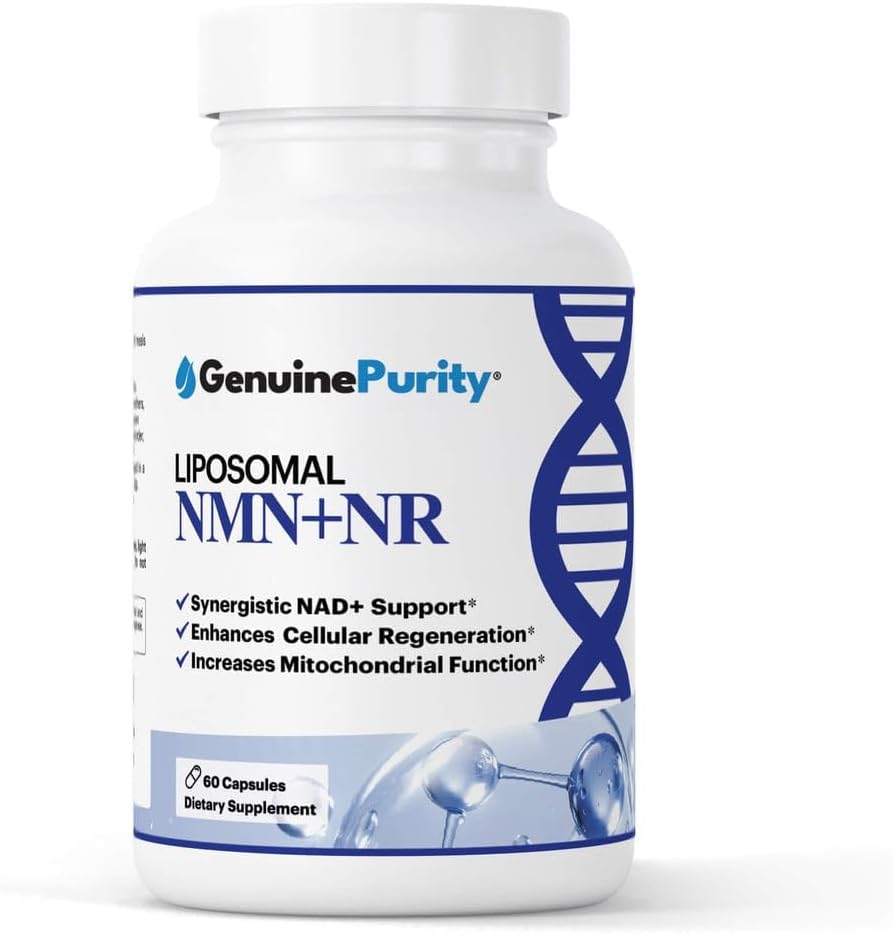
- GenuinePurity Liposomal NMN + NR Supplement
- Frequently Asked Questions (FAQ)
- Should You Try NAD Injections? Final Verdict
Introduction
If you spend enough time reading about energy, healthy aging, or longevity, eventually you come across NAD+.
I first became interested in cellular energy for a practical reason: fatigue. After years of long workdays, stress, disrupted sleep, and trying to understand why energy can change so much as we get older, I became more interested in what was happening beneath the obvious advice to “sleep more” or “drink another coffee.”
That’s where NAD+ becomes interesting.
Today, NAD injections are promoted by wellness clinics for everything from energy and mental clarity to recovery and healthy aging. The promises can sound impressive. But whenever a health treatment becomes popular quickly, I think it’s worth asking a more useful question:
What does the evidence actually show?
NAD+ is genuinely important to human biology. Your cells need it for energy metabolism and other essential processes. But that does not automatically mean injecting more NAD+ will make you feel younger, eliminate fatigue, or produce the dramatic transformations sometimes described online.
This guide looks at both sides. We’ll cover what NAD injections are, how they are supposed to work, their potential benefits, costs, side effects, dosing questions, and how injections compare with IV therapy and oral NAD+ precursors.
What Are NAD Injections and What Are They Used For?
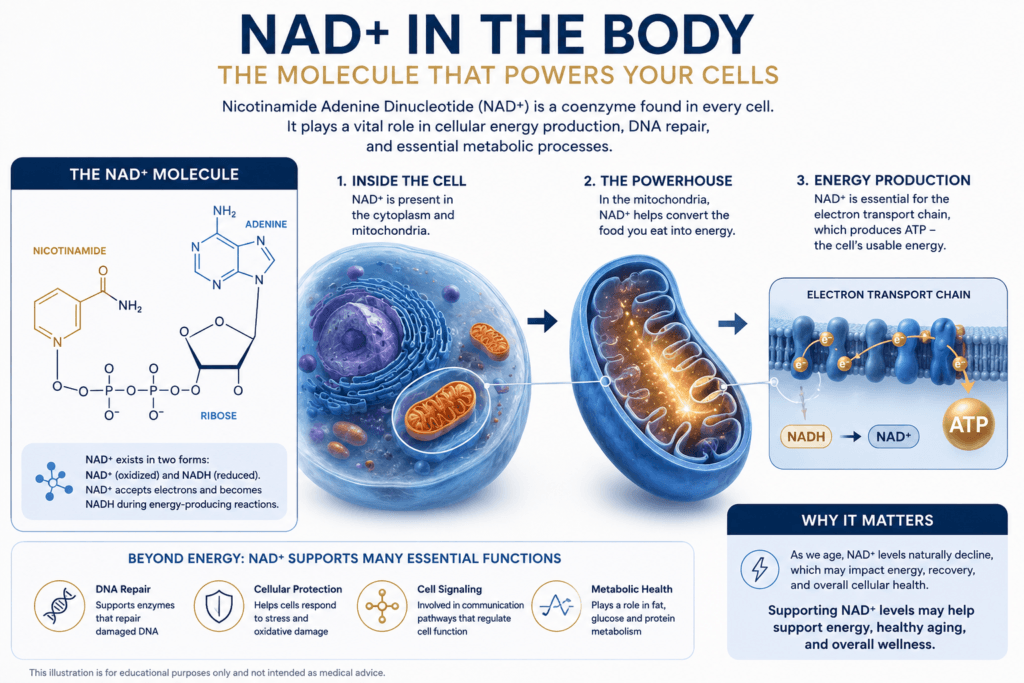
NAD stands for nicotinamide adenine dinucleotide, usually discussed in its oxidized form, NAD+.
Despite the complicated name, the basic concept is straightforward. NAD+ is a molecule found throughout your body that helps cells carry out essential chemical reactions.
One of its best-known roles involves energy metabolism.
When you eat carbohydrates, fats, and proteins, your body has to convert those nutrients into energy your cells can actually use. NAD participates in the reactions that make that process possible.
But NAD+ does more than support energy metabolism.
It is also used by enzymes involved in processes such as:
- DNA repair
- Cellular signaling
- Metabolic regulation
- Mitochondrial function
- Stress responses
- Inflammatory pathways
This explains why NAD+ has attracted so much attention in healthy-aging research.
What Is an NAD+ Injection?
An NAD+ injection is a preparation containing NAD+ that is administered by injection rather than swallowed as a supplement.
Depending on the clinic or provider, you may encounter terms such as:
- NAD injection
- NAD+ injection
- NAD shot
- NAD+ shot
- Subcutaneous NAD+
- Intramuscular NAD+
These terms are sometimes used loosely, so it is important to understand exactly what a provider is offering.
A subcutaneous injection delivers the preparation into tissue beneath the skin. An intramuscular injection delivers it into muscle.
That is different from NAD IV therapy, where NAD+ is administered into a vein over a period of time.
The distinction matters because route, dose, absorption, tolerability, and available evidence are not necessarily interchangeable.
NAD+ Is Not a Peptide
Another question you may see online is: Is NAD+ a peptide?
No.
Peptides are chains of amino acids. NAD+ is a coenzyme involved in cellular metabolism.
The confusion is understandable because NAD injections are sometimes offered by the same longevity or wellness clinics that provide peptide therapies.
They are different categories of compounds.
Why Are NAD Injections Becoming Popular?
The appeal is easy to understand.
People want more energy. They want to recover better, think clearly, remain active as they age, and feel more like themselves.
Injectable treatments can also create the impression that they are more powerful than a capsule because the digestive system is bypassed.
But route of administration alone does not establish a health benefit.
That distinction becomes especially important with NAD+, because much of the excitement around the molecule comes from laboratory research, animal research, and human trials involving NAD+ precursors such as nicotinamide riboside (NR) and nicotinamide mononucleotide (NMN)—not necessarily from trials showing that NAD+ injections deliver the same clinical outcomes.
How Do NAD Injections Work in the Body?
To understand NAD injections, it helps to understand what NAD+ normally does inside your cells.
Think of your body as an enormous network of construction sites.
Materials can arrive every day, but materials alone don’t build anything. You still need workers, equipment, coordination, and energy to turn those materials into something useful.
Food works in a similar way.
Calories provide fuel, but your cells need complex metabolic pathways to convert that fuel into usable cellular energy. NAD is one of the molecules involved in keeping those pathways operating.
NAD+ and Cellular Energy
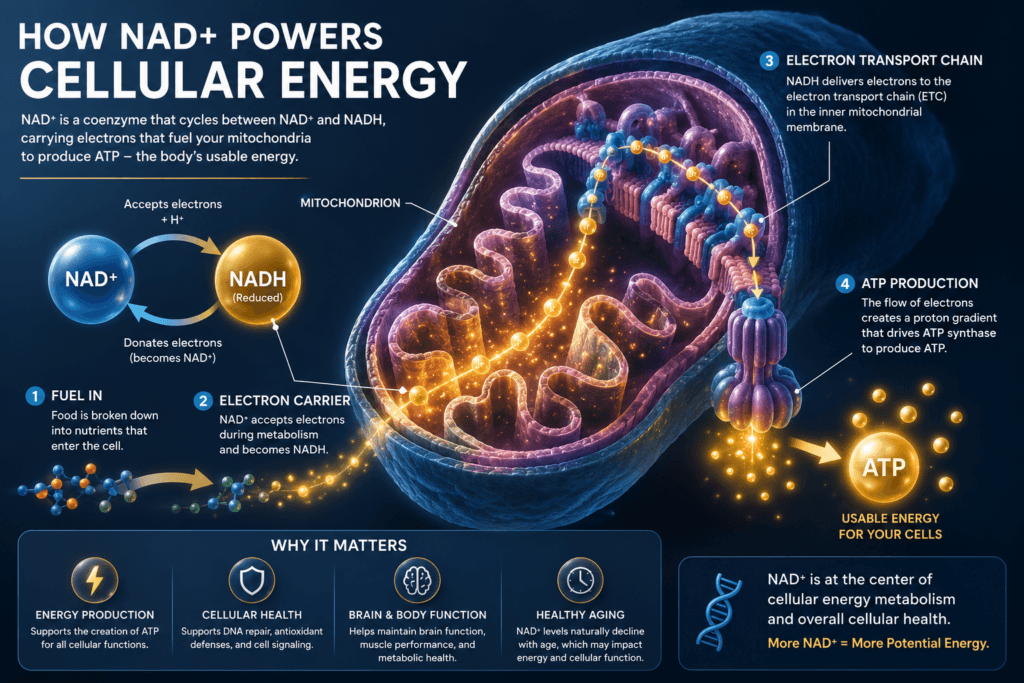
Inside your cells, NAD+ participates in oxidation-reduction reactions.
During metabolism, NAD+ can accept electrons and become NADH. NADH can then carry those electrons into processes associated with mitochondrial energy production.
Mitochondria are often called the powerhouses of cells. That description is simplified, but it captures their central role in producing ATP—the form of energy cells use for many biological processes.
Without adequate NAD metabolism, normal cellular energy production would not function properly.
This is one reason the connection between NAD and fatigue sounds so compelling.
But there is an important distinction:
Knowing that NAD+ is required for energy metabolism does not prove that NAD+ injections increase energy in otherwise healthy people.
The first statement is established biochemistry.
The second requires clinical trials.
That difference will come up repeatedly throughout this guide.
Why NAD+ Has Become Part of the Healthy-Aging Conversation
Much of the interest in NAD+ comes from research into aging.
Studies in animals and some human tissues suggest NAD metabolism can change with age. Researchers have proposed several explanations, including changes in NAD synthesis and increased activity of NAD-consuming enzymes.
That has led to an attractive hypothesis:
If lower NAD availability contributes to age-related cellular dysfunction, perhaps restoring NAD could support healthier function.
It is a reasonable scientific question.
It is not yet the same thing as demonstrating that NAD injections slow human aging.
This distinction matters because the evidence in humans is more complicated than many wellness advertisements suggest. Researchers have observed age-related changes in NAD+ in certain human tissues, but the pattern is not uniformly established across every tissue or every individual.
So when you see a statement like “NAD levels collapse as you age,” treat it as an oversimplification.
The biology is more nuanced.
📖 You Might Also Like
-
Why Am I Tired All the Time?
Discover common causes of persistent fatigue and practical, science-backed strategies to improve your daily energy. -
How to Get More Energy Naturally
Explore evidence-based lifestyle habits that support steady energy without relying on stimulants.
How Do NAD Injections Increase NAD+ Levels?
The rationale behind injectable NAD+ is that administering NAD+ directly may make more of the molecule or its metabolites available to the body without depending on digestion.
That sounds straightforward, but NAD metabolism isn’t as simple as filling an empty fuel tank.
Cells regulate NAD through several interconnected pathways. NAD+ can be synthesized, recycled, consumed, broken down, and rebuilt from precursor molecules.
Researchers are still working to understand how externally administered NAD+ behaves in humans and how much intact NAD+ reaches particular tissues.
A small human study of intravenous NAD+ found changes in NAD-related metabolism during a six-hour infusion, but it was a pharmacokinetic study—not evidence that the treatment improves fatigue, longevity, brain function, or other clinical outcomes.
That’s an important limitation.
When evaluating NAD injections, I would separate three questions:
Does NAD+ matter biologically?
Yes.
Can NAD-related interventions alter NAD metabolism?
Human research with precursors such as NR and NMN suggests they can.
Do NAD injections reliably produce meaningful health benefits?
We do not yet have strong clinical evidence to answer that with confidence.
That is a much less exciting answer than some advertisements offer, but it is the more useful one.
What Are the Benefits of NAD Injections?
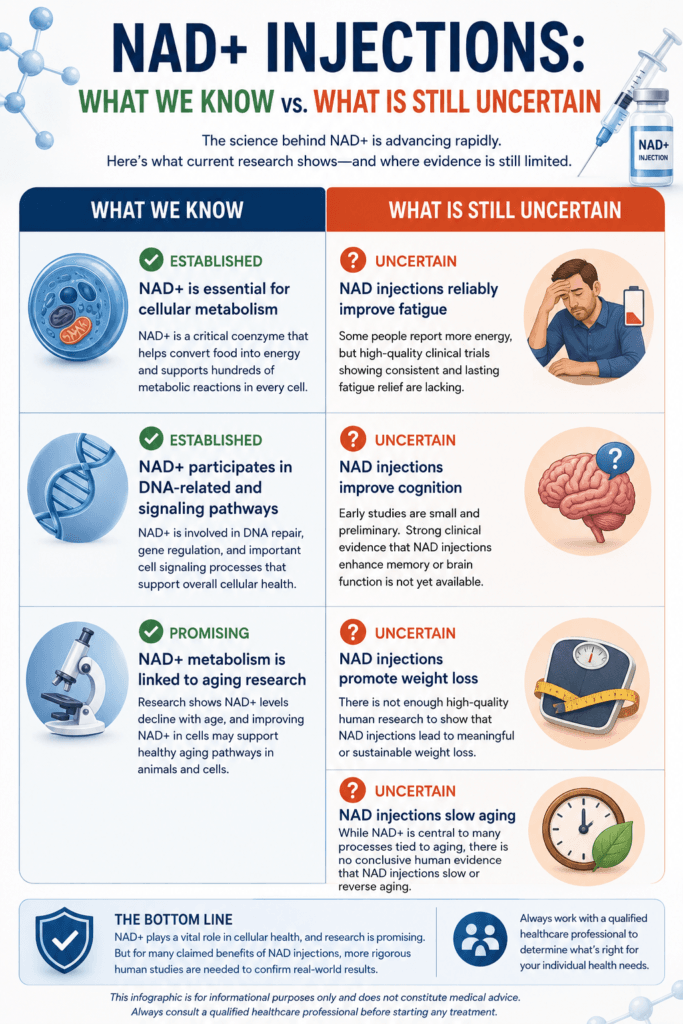
Although NAD injections are promoted for energy, healthy aging, mental clarity, and metabolic health, current human research is still limited. The strongest evidence relates to NAD+ biology rather than proving that injectable NAD+ consistently produces these outcomes.
When people search for NAD injections benefits, they often encounter a long list of wellness claims. These proposed benefits should be separated from outcomes that have actually been demonstrated in human clinical trials.
Common claims include:
- More energy
- Better mental clarity
- Improved exercise recovery
- Healthy aging
- Better metabolism
- Reduced fatigue
- Improved mood
- Weight management
- Cellular repair
Some of these claims originate from legitimate research into NAD biology.
The problem is the jump from “NAD participates in this biological process” to “injecting NAD will improve this outcome.”
Those statements are not equivalent.
What We Know About NAD+ Biology
NAD+ is involved in several processes relevant to health and aging.
For example, enzymes called sirtuins depend on NAD+. NAD+ is also used by PARP enzymes involved in responses to DNA damage.
Research has therefore explored whether altering NAD metabolism might influence age-related biological processes.
Animal studies have generated considerable interest, and clinical trials of oral NAD precursors have shown that compounds such as NR and NMN can alter NAD-related biomarkers in humans.
However, changing a biomarker does not necessarily mean someone will feel more energetic, live longer, think more clearly, or recover faster.
Human outcomes matter.
What Human Research Says So Far
A 2026 systematic review examined human and animal intervention studies involving NAD-related compounds.
The overall picture was mixed.
In human studies, oral NR and NMN generally demonstrated biological activity and were reasonably well tolerated over the periods studied. But improvements in functional, metabolic, vascular, and other health-related outcomes were inconsistent.
More importantly for this article, the review found no eligible clinical outcomes trials evaluating intravenous or intramuscular NAD+ itself for anti-aging or wellness indications.
That should influence how we talk about NAD injection benefits.
The treatment may eventually prove useful for certain purposes. But based on current evidence, claims that NAD injections reliably restore youth, eliminate fatigue, or substantially improve health go beyond what human clinical research has established.
NAD Injections for Energy and Fatigue
Energy is probably one of the biggest reasons people become interested in NAD therapy.
I understand the appeal.
When you’ve experienced periods where you wake up tired, push through the afternoon, and wonder why your body isn’t recovering the way it once did, the idea of improving energy at the cellular level sounds much more appealing than simply adding another coffee.
NAD+ genuinely plays a central role in cellular metabolism.
But fatigue is not simply a symptom of “low NAD.”
It can result from:
- Poor sleep
- Sleep apnea
- Iron deficiency
- Vitamin B12 deficiency
- Thyroid disorders
- Chronic stress
- Inadequate calorie intake
- Dehydration
- Medication effects
- Depression
- Infection
- Other medical conditions
That is why I would be cautious about treating unexplained fatigue with an NAD injection before understanding why the fatigue exists.

Could NAD Injections Increase Energy?
Biologically, there is a plausible connection between NAD metabolism and energy production.
Clinically, we don’t yet have strong evidence demonstrating that NAD injections consistently improve fatigue or stamina in the general population.
Research into oral NAD precursors is further along, but even there, raising NAD-related biomarkers has not consistently translated into noticeable improvements across health outcomes.
The practical lesson is simple:
Don’t confuse a plausible mechanism with a proven result.
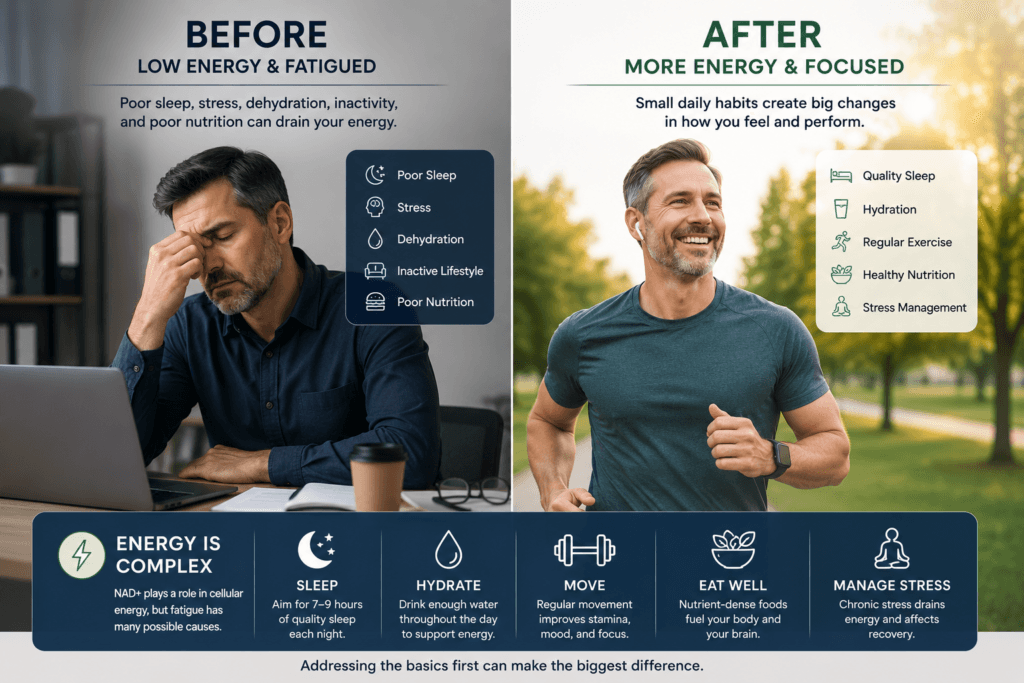
If you are tired all the time, improving sleep, nutrition, hydration, physical activity, and stress management remains important—and persistent or unexplained fatigue deserves medical evaluation.
An injection should not replace finding the underlying cause.
NAD Injections for Healthy Aging
Healthy aging is probably where NAD+ has received the most attention.
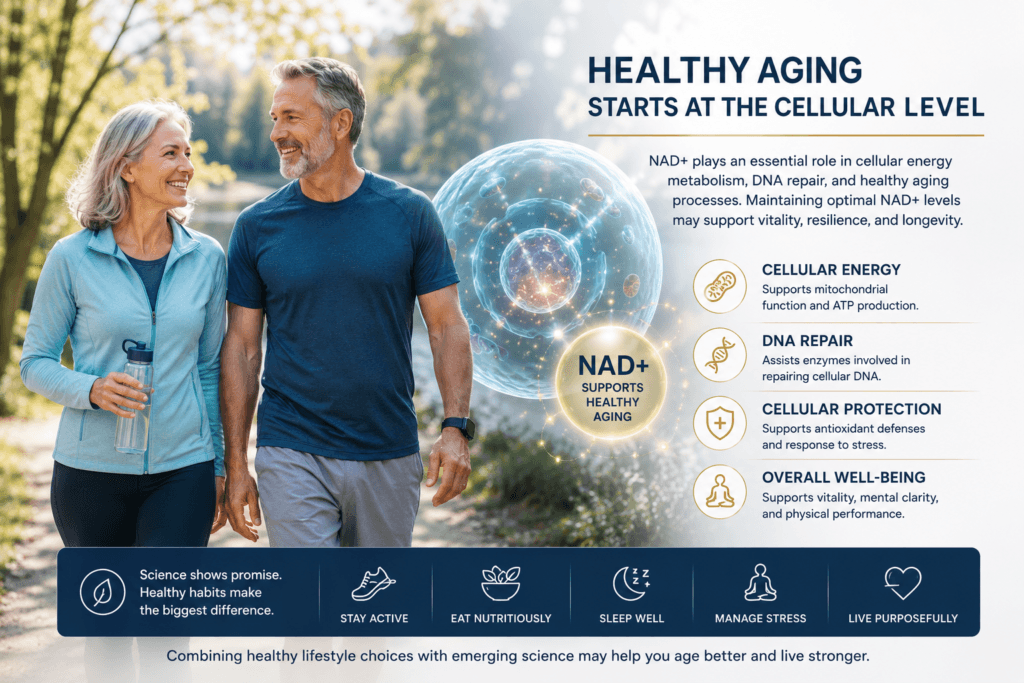
The idea is attractive. NAD+ is involved in cellular metabolism, DNA repair, and enzymes associated with the body’s response to stress. If NAD metabolism changes as we age, restoring it might help cells function more effectively.
That possibility has generated exciting research.
But there is a difference between studying a pathway involved in aging and proving that an injection slows aging in humans.
Does NAD+ Decline With Age?
You will often read that NAD+ levels decline dramatically as we get older.
There is some evidence supporting age-related changes in NAD metabolism, particularly from laboratory and animal research. Human evidence is less complete, and changes may vary depending on the tissue being studied.
That matters because the human body is not one large NAD+ reservoir.
Levels measured in blood do not necessarily tell us exactly what is happening in muscle, brain, liver, or other tissues.
Researchers are still trying to understand those differences.
Can NAD Injections Slow Aging?
At this point, we don’t have good evidence showing that NAD injections slow biological aging, extend human lifespan, or reverse normal aging.
A lot of the enthusiasm comes from preclinical research and studies of NAD+ precursors such as NMN and NR.
Human trials have shown that these precursors can affect NAD-related biomarkers. However, measurable improvements in physical function, metabolic health, vascular function, and other healthspan outcomes have been inconsistent.
The evidence for injectable NAD+ itself is even more limited.
So I would view NAD injections as an emerging area of wellness medicine rather than an established anti-aging treatment.
For adults over 35, the fundamentals still matter far more than any single molecule: regular movement, resistance training, adequate sleep, nutritious food, maintaining muscle, avoiding smoking, managing stress, and staying metabolically healthy.
Those habits are less exciting than an injection.
They also have much stronger evidence behind them.
NAD Injections and Brain Fog: Can They Improve Mental Clarity?
Brain fog is another reason people explore NAD therapy.
When your concentration disappears halfway through the afternoon or simple decisions suddenly require more effort, it is tempting to assume your brain simply needs more energy.
There is some biological logic behind the NAD connection.
The brain has high energy demands, and neurons depend on normal mitochondrial function. NAD+ also participates in cellular processes involved in maintaining healthy cells.
But again, the mechanism and the treatment are two separate questions.
What Does the Research Show?
There is currently not enough high-quality human evidence to conclude that NAD injections improve brain fog, memory, concentration, or cognitive performance in otherwise healthy adults.
That doesn’t mean researchers have found NAD biology irrelevant to the brain.
Quite the opposite.
NAD metabolism remains an active area of research in neuroscience and aging. The limitation is that promising cellular and animal findings cannot automatically be translated into a recommendation for injections.
Brain fog can also have many causes, including:
- Poor sleep
- Chronic stress
- Medication effects
- Nutrient deficiencies
- Dehydration
- Blood sugar fluctuations
- Anxiety or depression
- Hormonal changes
- Medical conditions
If mental fatigue persists, understanding the cause is more useful than assuming low NAD+ is responsible.
Looking back at my own periods of poor energy and mental clarity, the basics often mattered more than I wanted them to. Poor sleep, stress, inconsistent recovery, and long workdays could all show up the next day as reduced concentration.
There wasn’t one switch to flip.
That is worth remembering whenever a wellness treatment promises a simple explanation for a complicated symptom.
📖 You Might Also Like
-
Best Diet for Energy
Discover which foods support steady energy levels, reduce afternoon crashes, and help you stay energized throughout the day. -
Best Vitamins for Energy
Learn which vitamins and minerals have the strongest evidence for supporting energy production and reducing fatigue.
Can NAD Injections Help With Weight Loss?
Weight loss is another area where NAD injections are increasingly marketed.
The reasoning usually goes something like this:
NAD+ supports metabolism. Metabolism influences energy expenditure. Therefore, increasing NAD+ should help you lose weight.
The first two statements are reasonable.
The third requires evidence.
Does NAD Help With Weight Loss?
NAD+ is deeply involved in metabolic processes, including reactions that help cells use carbohydrates and fats.
Researchers are therefore interested in NAD-targeted interventions for metabolic health.
But there is currently insufficient clinical evidence showing that NAD injections produce meaningful weight loss in humans.
That means NAD injections should not be viewed as a proven weight-loss treatment.
Even research on oral NAD precursors has produced mixed results for metabolic outcomes despite successfully changing NAD-related biomarkers in many studies.
This is another example of why improving a biological marker and producing a visible health outcome are not necessarily the same thing.
What About Combining NAD+ With Weight-Loss Treatments?
Some clinics may offer NAD+ alongside other wellness or weight-management treatments.
That does not establish that NAD+ improves the effectiveness of those treatments.
If multiple therapies are being used simultaneously, it also becomes difficult to determine which intervention is responsible for any change.
For sustainable weight management, the foundations remain familiar:
- Appropriate calorie intake
- Adequate protein
- Resistance training
- Regular movement
- Quality sleep
- Stress management
- Long-term consistency
NAD research may eventually add another piece to the metabolic-health puzzle.
Right now, it should not replace the pieces we already understand.
NAD Injections Before and After: What Should You Realistically Expect?
Search interest around NAD injections before and after has grown quickly.
You may see testimonials describing dramatic increases in energy, clearer thinking, improved workouts, better sleep, or even changes in appearance.
Personal experiences can be interesting.
They are not the same as controlled evidence.
Why Testimonials Can Be Misleading
Imagine someone starts NAD injections at the same time they:
- Improve their diet
- Begin exercising
- Reduce alcohol
- Start sleeping eight hours
- Take other supplements
Three weeks later, they feel significantly better.
Was it NAD+?
Possibly.
Was it the improved sleep, nutrition, exercise, reduced alcohol, another supplement, expectation of benefit, or a combination of everything?
Without controlled research, we cannot know.
This is why before-and-after stories should be interpreted cautiously, especially when they come from companies selling the treatment.
What Might Happen After an Injection?
Experiences can vary.
Some people report subjective changes in energy or mental clarity. Others may notice little or no difference.
Because robust clinical trials of injectable NAD+ for wellness outcomes are lacking, there is no reliable timeline such as:
“Energy improves after three injections.”
or:
“You will notice results within seven days.”
Claims like these should raise questions unless they are backed by evidence for the specific treatment, dose, route, and population being discussed.
If you are considering NAD injections, ask the provider what outcome you are trying to improve and how progress will be evaluated.
That makes the treatment easier to assess objectively.
What Is the Typical NAD Injection Dosage?
This is one section where caution is especially important.
Search online and you will find specific NAD+ injection protocols expressed in milligrams, units, injections per week, or even daily schedules.
I would not treat those numbers as universal recommendations.
There Is No Established Wellness Dose
There is currently no standardized, evidence-based NAD+ injection dosage for goals such as:
- Increasing energy
- Reducing fatigue
- Improving cognition
- Supporting healthy aging
- Losing weight
- Improving exercise recovery
Different clinics may use different preparations, concentrations, routes, and schedules.
That makes copying a protocol from a website or social media particularly risky.
Why Concentration Matters
A number such as “100 mg” tells you the amount of substance.
A syringe marked in “units” tells you volume according to the syringe scale.
Those are not interchangeable measurements.
The concentration of the preparation determines how much NAD+ is contained in a particular volume.
This is one reason injectable therapies should come with clear instructions from an appropriately qualified healthcare professional.
What About NAD+ Dosage Per Day or Per Week?
The same problem applies.
There is not enough clinical evidence to establish an optimal daily or weekly injectable NAD+ schedule for general wellness.
A provider recommending injections should be able to explain:
- What product is being used
- Where it comes from
- Its concentration
- The route of administration
- Why that dose was selected
- How often it should be used
- What side effects to watch for
- How treatment will be reassessed
If those questions cannot be answered clearly, I would be cautious.
More is not automatically better.
NAD Injection Risks and Side Effects
Any injectable treatment deserves a serious discussion of safety.
The fact that NAD+ naturally exists in your body does not mean every injectable preparation is automatically safe.
Route, dose, sterility, concentration, manufacturing quality, and individual health factors all matter.
Potential Side Effects
There is not enough high-quality clinical research to define a complete side-effect profile for NAD injections used for wellness.
Reported reactions associated with injectable NAD+ have included symptoms such as:
- Chills
- Shaking
- Nausea or vomiting
- Fatigue
- Injection-related discomfort
Other reactions may depend on the specific formulation, route, dose, or contaminants.
This is an area where product quality matters enormously.
Compounded NAD+ and Sterility
Many injectable NAD+ products encountered in wellness settings are compounded products.
Compounding has legitimate roles in medicine when a patient has a specific need that cannot be met by an available approved product.
But compounded drugs are not FDA-approved in the same way as commercially approved medications. They do not undergo FDA premarket review for safety, effectiveness, and quality.
Sterile products introduce another concern: contamination.
Anything injected through the skin bypasses some of the body’s natural barriers. Poor sterile technique or inappropriate ingredients can therefore create risks that do not exist in the same way with an ordinary dietary supplement.
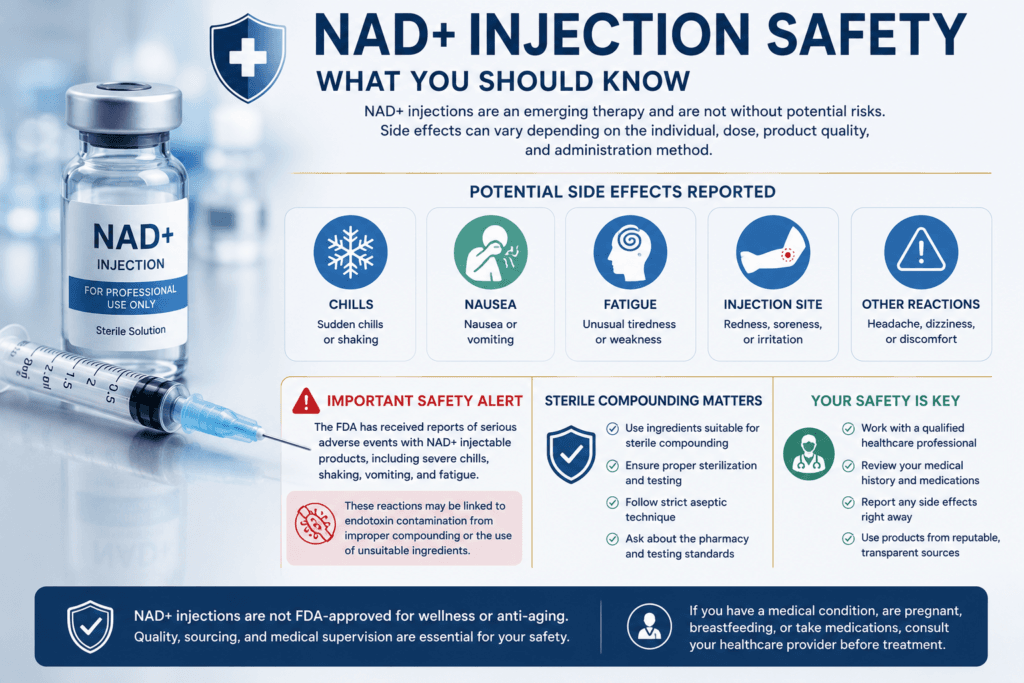
FDA Concerns About Injectable NAD+
The FDA has specifically warned compounders about the use of food-grade NAD+ ingredients in sterile compounded products.
Food-grade ingredients are not automatically suitable for sterile injection.
The agency has also received adverse-event reports following NAD+ injectable products, including severe chills, shaking, vomiting, and fatigue. Some cases required medical treatment.
The FDA noted that these reactions were consistent with excessive endotoxin exposure.
That concern became more concrete in a January 2026 FDA warning letter involving one compounding facility. FDA reported that patients developed low blood pressure, uncontrollable shaking, shivers, and body aches after receiving an NAD+ product from the same vial and were directed to an emergency room. Testing of an unopened vial from that lot later found excessive bacterial endotoxins. This was a finding involving a specific facility and lot—not evidence that every compounded NAD+ product has the same problem—but it illustrates why sterile compounding and product-source verification matter.
This does not prove that every compounded NAD+ injection is unsafe.
It does show why sourcing and sterile manufacturing standards matter.
Are NAD Injections Safe? What Experts Say
The most accurate answer is:
We don’t yet have enough high-quality evidence to describe the long-term safety of NAD injections used for wellness with confidence.
That is different from saying they are inherently dangerous.
It means uncertainty remains.
Questions to Ask Before Considering NAD Injections
If you’re exploring treatment through a clinic, ask:
- Who prescribed the treatment?
- Where was the NAD+ preparation compounded?
- What is the exact concentration?
- What route will be used?
- What evidence supports the proposed dose?
- What side effects should I expect?
- What happens if I experience a reaction?
- What health conditions or medications could make treatment inappropriate?
- What outcome are we measuring?
- When will treatment be reassessed?
A reputable provider should be comfortable answering these questions.
Who Should Be Especially Cautious?
Because evidence is limited, people who are pregnant or breastfeeding, have significant medical conditions, take prescription medications, or have a history of reactions to injectable therapies should discuss NAD+ treatment with their healthcare professional rather than relying on generalized wellness advice.
The same applies if fatigue, weakness, or brain fog is unexplained.
Those symptoms can sometimes point to conditions that need proper diagnosis rather than supplementation.
My Practical View
When I look at NAD injections, I see an interesting therapy built around legitimate biology but moving faster commercially than the clinical evidence.
That doesn’t make the research unimportant.
It means expectations should match what we actually know.
If better energy is the goal, I would first look at sleep quality, nutrition, hydration, movement, stress, medications, and possible medical causes of fatigue. If NAD injections are still something you want to explore after that, approach them as an emerging therapy—not a proven shortcut to younger cells.
Treat your health like your most valuable asset.
That includes being curious about new treatments without lowering the standard of evidence you expect from them.
How Much Does NAD Therapy Cost?
NAD therapy cost varies widely because there is no standardized wellness protocol or single national price. Published clinic prices can change, and estimates should not be treated as medical or insurance quotes.
There is no single standard price for NAD injections. What you pay can vary based on the provider, location, formulation, dose, consultation requirements, and whether treatment is purchased individually or through a membership program.
Unlike an ordinary supplement, the real cost may include more than the NAD+ itself.
Depending on the provider, you may be paying for:
- Medical consultation
- Prescription or treatment plan
- Compounded NAD+
- Injection supplies
- Follow-up appointments
- Laboratory testing
- Shipping for at-home treatment
- Clinic administration
This makes direct price comparisons difficult.
NAD Injection Cost vs. NAD IV Therapy
IV therapy is generally a more involved process because it requires intravenous administration, equipment, staff time, and often a longer clinic visit.
Some wellness clinics charge hundreds of dollars for a single NAD+ IV session, and higher-dose or longer protocols can cost considerably more.
Injections may appear more convenient because they do not require sitting through an infusion. Some services also offer prescribed injections for home use.
But lower cost or greater convenience does not establish effectiveness.
Before paying for either option, I would ask a simple question:
What measurable benefit am I expecting for this expense?
If the answer is simply “better wellness,” it may be difficult to know whether the treatment is doing anything.
If the goal is specific—such as addressing fatigue—it makes more sense to investigate common causes of fatigue first and establish what improvement would actually look like.
NAD Injections Near Me: How to Choose a Provider
Searches for NAD injections near me have grown alongside interest in longevity clinics and IV wellness centers.
Location matters, but it should not be the first criterion.
I would rather travel farther for qualified medical oversight than choose a clinic simply because it is ten minutes away.
What to Look for in an NAD+ Provider
Before receiving an injection, find out who is responsible for your care.
Ask:
- Is a licensed healthcare professional evaluating me?
- Is a prescription required?
- Where does the injectable NAD+ come from?
- Which pharmacy compounded it?
- What is the concentration?
- How is it stored?
- What route of administration is being recommended?
- What training will I receive if injecting at home?
- What should I do if I experience a reaction?
The answers should be specific.
“Medical-grade NAD+” is not enough information by itself.
Be Careful With Online NAD+ Injections
Convenience has made telehealth wellness services increasingly popular.
In some cases, patients may complete an online consultation and receive injectable products at home.
That makes provider and pharmacy verification even more important.
You should know exactly what is being prescribed, who prescribed it, where it was compounded, how it should be stored, and how it should be administered.
I would be particularly cautious with injectable products purchased from sources that bypass appropriate medical oversight or are marketed as “research use only.”
Saving money is not worth taking unnecessary risks with something you inject into your body.
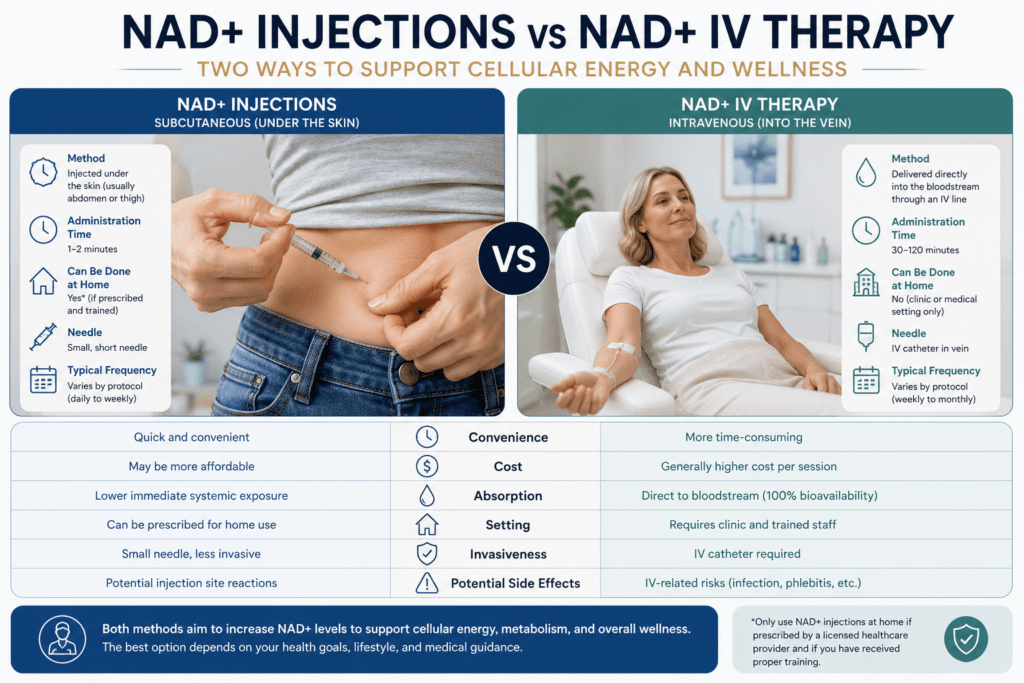
NAD Injections vs. NAD IV Therapy
These treatments are often discussed as though they are interchangeable.
They are not.
NAD Injections
NAD+ injections may be administered subcutaneously or intramuscularly, depending on the prescribed preparation and treatment plan.
Potential practical advantages include:
- Shorter administration time
- No IV line
- Potential home administration when appropriately prescribed
- Greater convenience
The disadvantage is the same fundamental limitation we’ve discussed throughout this guide:
There is insufficient clinical evidence showing that NAD injections provide the broad wellness benefits commonly attributed to them.
NAD IV Therapy
NAD IV therapy administers a preparation intravenously.
Because the treatment enters the bloodstream directly, clinics often market IV delivery as a way to achieve greater exposure.
But direct delivery into the bloodstream should not be confused with proven superiority.
A small pharmacokinetic study has examined NAD-related metabolism during IV administration, but this does not establish that NAD IV therapy improves energy, cognition, longevity, or other wellness outcomes.
IV therapy also requires more time and clinical resources and can be expensive.
Which Is Better?
Based on current evidence, I don’t think we can confidently say NAD injections or NAD IV therapy are “better” for general wellness.
There simply isn’t enough comparative clinical research.
If a clinic claims one method is significantly more effective, ask to see human clinical evidence comparing the two for the outcome you care about.
That question can cut through a lot of marketing.
📖 You Might Also Like
-
Balanced Lifestyle for Healthy Aging
Discover everyday habits that support healthy aging, better energy, and long-term wellness. -
How to Improve REM Sleep Naturally
Learn practical strategies to improve REM sleep, enhance recovery, and wake up feeling more refreshed.
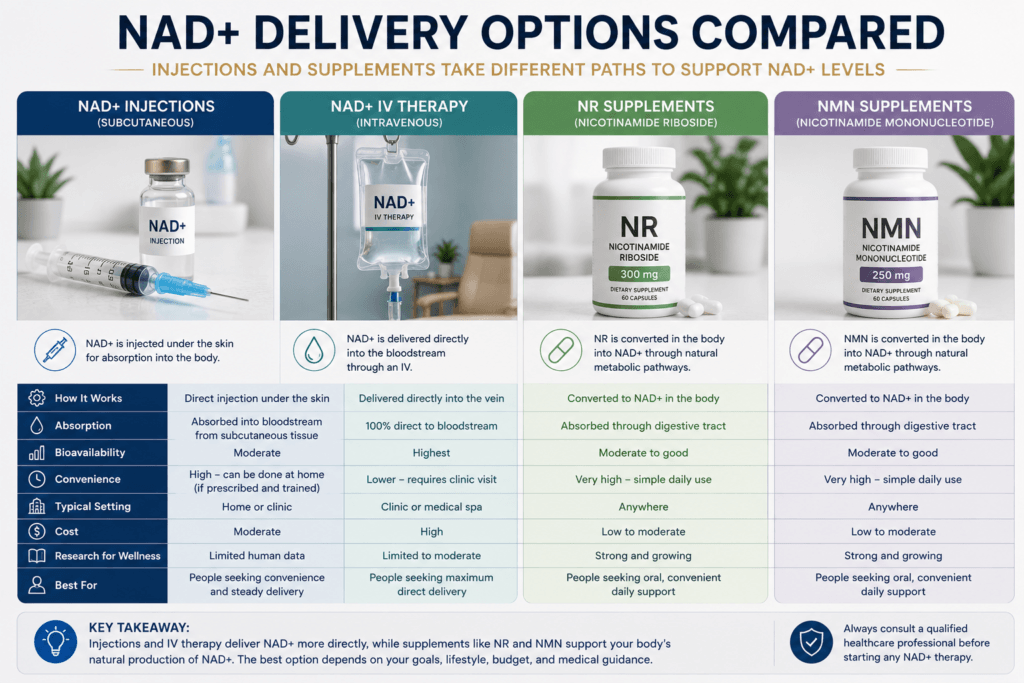
NAD Injections vs. NAD Supplements: Which Is Better?
This comparison is more interesting because the evidence base is different.
Most products sold as “NAD supplements” are designed to influence NAD metabolism rather than deliver injectable NAD+.
You may encounter ingredients such as:
- Nicotinamide riboside (NR)
- Nicotinamide mononucleotide (NMN)
- Niacin
- Nicotinamide
These compounds participate in pathways the body can use to synthesize NAD+.
Product card HTML ——————
Oral NAD+ Precursors
NR and NMN have received considerable research attention.
Human trials show that these compounds can increase NAD-related biomarkers under certain conditions.
That gives oral NAD precursors a larger human evidence base than injectable NAD+ for wellness applications.
However, there is still an important limitation.
Increasing NAD+ biomarkers does not guarantee better health outcomes.
Clinical studies have produced inconsistent results for outcomes such as physical performance, metabolic health, and other measures associated with healthy aging.
Are Supplements Better Than Injections?
We don’t have enough evidence to say that universally.
But oral precursors offer several practical advantages:
- No injection
- Easier daily use
- Usually lower cost
- More human research
- No injection-site complications
Injectable NAD+ may offer a different pharmacokinetic profile, but we still need stronger research showing that this translates into meaningful clinical benefits.
For most people interested in NAD+ because of healthy aging or energy, I would understand the evidence for both approaches before assuming the more invasive and expensive option must be better.
Who Should Avoid NAD Injections?
There is no universal list covering every situation because NAD injection protocols and formulations vary and long-term safety data for wellness use remain limited.
That uncertainty itself is a reason for caution.
Medical guidance is particularly important if you:
- Are pregnant or breastfeeding
- Have a significant chronic medical condition
- Take prescription medications
- Have previously reacted to injectable treatments
- Have unexplained persistent fatigue or weakness
- Are receiving treatment for a serious illness
This is also not an area where I would recommend self-diagnosing “low NAD.”
Fatigue, brain fog, poor recovery, and low motivation are nonspecific symptoms.
They can occur for many reasons.
If something has changed significantly in how you feel, identifying the cause should come before choosing a trendy treatment.
Are NAD Injections Worth It?
For general wellness or anti-aging, it is difficult to conclude that NAD injections are worth the cost because meaningful clinical benefits, standardized dosing, and long-term safety have not been established. A qualified healthcare professional can help assess a specific medical rationale, alternatives, product source, and personal risk.
If you view NAD injections as an emerging wellness treatment built around an interesting area of aging and metabolic research, discussing them with a qualified healthcare professional is reasonable.
If you expect injections to reverse aging, melt away body fat, eliminate chronic fatigue, or reliably restore youthful energy, the current evidence does not support those expectations.
Start With the Foundations
Before spending heavily on NAD therapy for energy, I would look at:
- Sleep quality
- Nutrition
- Hydration
- Physical activity
- Strength training
- Stress
- Alcohol intake
- Recovery
- Potential nutrient deficiencies
- Underlying medical causes of fatigue
These factors may not have the novelty of NAD+.
But they influence health every day.
Over time, I have learned that sustainable health usually comes from getting those fundamentals right rather than constantly searching for the next intervention.
New therapies can have a place.
They should add to the foundation, not replace it.
Frequently Asked Questions (FAQ)
What are NAD injections?
NAD injections contain nicotinamide adenine dinucleotide, a coenzyme involved in cellular energy metabolism and other biological processes.
They are typically administered subcutaneously or intramuscularly depending on the product and treatment plan.
NAD+ is essential to human biology, but that does not mean injectable NAD+ has been proven to deliver all the wellness benefits sometimes associated with it.
What are the benefits of NAD injections?
NAD injections are marketed for energy, healthy aging, mental clarity, metabolism, recovery, and other wellness goals.
NAD+ itself is involved in cellular energy metabolism, DNA-related processes, and cell signaling.
However, strong human clinical evidence demonstrating that NAD injections reliably produce these wellness benefits is currently lacking.
That distinction is important when evaluating marketing claims.
Do NAD injections really work?
That depends on what “work” means.
There is strong scientific evidence that NAD+ is biologically important. There is also human evidence that certain NAD+ precursors can change NAD-related biomarkers.
What we do not yet have is strong evidence showing that NAD injections consistently improve energy, slow aging, promote weight loss, or enhance cognition in generally healthy adults.
More clinical research is needed.
How quickly do NAD injections work?
There is no well-established evidence-based timeline for when someone should expect benefits from NAD injections.
Some people report subjective changes after treatment, while others report little difference.
Testimonials cannot establish a predictable treatment response.
Be cautious with claims promising specific results within hours, days, or a set number of injections.
How often should you take NAD injections?
There is currently no standardized injection frequency established for general wellness, energy, healthy aging, or weight management.
Protocols can vary between providers.
The frequency should therefore come from an appropriately qualified healthcare professional who understands the formulation, concentration, route of administration, your medical history, and the purpose of treatment.
What is the NAD+ injection dosage?
There is no universally established wellness dose of injectable NAD+.
You may see protocols online describing milligrams, syringe units, daily doses, or weekly doses, but these should not be treated as universal instructions.
Concentration and preparation matter.
Do not convert milligrams into syringe “units” without instructions specific to the prescribed product.
What are the side effects of NAD injections?
The full safety profile of NAD injections for wellness has not been established through large clinical trials.
The FDA has received adverse-event reports after NAD+ injectable products involving severe chills, shaking, vomiting, and fatigue, with some patients requiring medical treatment.
Product quality and sterility are particularly important for compounded injectable preparations.
Are NAD injections FDA-approved?
NAD+ injections marketed for wellness should not be assumed to be FDA-approved treatments for fatigue, anti-aging, weight loss, or similar claims.
Compounded drugs are not FDA-approved, and the FDA does not conduct the same premarket review of compounded products for safety, effectiveness, and quality that it performs for approved drugs.
Ask your provider exactly what product is being prescribed and where it comes from.
Are NAD injections better than NAD IV therapy?
We currently do not have sufficient comparative clinical evidence to conclude that injections are better than IV therapy—or vice versa—for general wellness.
They differ in administration, convenience, cost, and potentially pharmacokinetics.
Claims of superiority should be supported by clinical evidence rather than assumptions about the route of administration.
Are NAD injections better than supplements?
Human research on oral NAD+ precursors such as NR and NMN is more developed than research on injectable NAD+ for wellness.
These precursors can affect NAD-related biomarkers, although clinical benefits remain inconsistent.
Supplements are also less invasive and generally more convenient.
That does not prove they are superior, but it is worth considering before assuming injections provide better results simply because they are injectable.
Can NAD injections help with fatigue?
NAD+ is essential to cellular energy metabolism, which makes the connection scientifically interesting.
However, we do not currently have strong clinical evidence demonstrating that NAD injections reliably treat fatigue.
Persistent fatigue can have many causes, including poor sleep, nutrient deficiencies, medication effects, stress, sleep disorders, and medical conditions.
Finding the cause matters.
Can NAD injections help with weight loss?
There is insufficient evidence to recommend NAD injections as a proven weight-loss treatment.
NAD metabolism is connected to cellular metabolism, but that does not establish that injections produce clinically meaningful fat loss.
Nutrition, physical activity, sleep, and appropriate medical care remain much better-established approaches to weight management.
Should You Try NAD Injections? Final Verdict
NAD+ deserves scientific attention.
It plays an essential role in cellular energy metabolism and participates in biological pathways connected to DNA repair, cellular signaling, metabolism, and aging.
That makes NAD+ research genuinely interesting.
NAD injections are a different question.
Right now, the popularity of injectable NAD+ has moved ahead of the clinical evidence supporting many of its wellness claims.
That does not mean future research will find no benefit.
It means we should be comfortable saying, we don’t know yet.
If you’re considering NAD injections, understand why you want them. Discuss the decision with a qualified healthcare professional, verify where the injectable product comes from, understand the possible risks and costs, and set realistic expectations.
And if low energy is what brought you here, don’t overlook the fundamentals while searching for a cellular solution.
Sleep well. Eat well. Move regularly. Stay hydrated. Protect your recovery. Investigate persistent fatigue when necessary.
Then evaluate newer options from a stronger foundation.
Treat your health like your most valuable asset.
“`html
Related Reads
- How to Get More Energy Naturally: Beat Fatigue and Boost Energy (2026) — A practical guide to improving daily energy through better sleep, hydration, nutrition, movement, stress management, and recovery.
- Why Am I Tired All the Time? — Explore common lifestyle and health factors that may contribute to persistent fatigue and low energy.
- Why Do I Wake Up Tired? — Learn why spending enough hours in bed does not always mean you are getting restorative sleep.
- Best Foods for Steady Energy Without Sugar Crashes — Discover foods that combine protein, fiber, healthy fats, and complex carbohydrates to support more consistent energy.
Coming Next in the NAD+ Series
- NAD Benefits: What Does the Science Actually Show?
- NAD IV Therapy: Benefits, Cost, Side Effects, and Evidence
- Best NAD Supplements: NR, NMN, and Other NAD+ Boosters Compared
- Liposomal NAD+: Does It Work?
- NAD Injections Before and After: What Can You Realistically Expect?
References
- U.S. Food and Drug Administration (FDA). FDA Reminds Compounders to Use Ingredients Suitable for Sterile Compounding. The FDA discusses concerns about ingredients used in sterile compounded NAD+ products and reports adverse events associated with some injectable NAD+ preparations. Read the FDA guidance .
- Gallagher C, Emmanuel OO. NAD+ Supplementation for Anti-Aging and Wellness: A PRISMA-Guided Systematic Review of Preclinical and Clinical Evidence. Ageing Research Reviews. 2026;116:103057. This systematic review evaluates NAD+-boosting approaches and highlights the limited clinical evidence for parenteral NAD+ for wellness and anti-aging outcomes. View on PubMed .
- U.S. Food and Drug Administration. Human Drug Compounding. FDA resources explain how compounded medications differ from FDA-approved drugs and outline important quality and safety considerations. FDA Human Drug Compounding Resources .
- National Center for Biotechnology Information (NCBI). PubMed. Peer-reviewed research database containing studies on NAD+ metabolism, mitochondrial function, NAD+ precursors, cellular aging, and related biological pathways. Search PubMed .
Medical Disclaimer: This article is for educational purposes only and is not intended as medical advice, diagnosis, or treatment. NAD+ injections are medical interventions and should be discussed with an appropriately qualified healthcare professional. Do not use dosing information from websites, social media, or other general sources as a substitute for individualized medical guidance.
“`