Quick Answer
The best recovery shoes for tired, sore feet combine comfortable cushioning, a secure fit and enough room for your toes. KANE Revive is a versatile closed-toe option, while OOFOS OOahh Sport Flex and HOKA Ora Recovery Slide 3 are convenient slides for changing out of workout shoes. Crocs Mellow is a lower-cost slide alternative. For longer walks, consider the cushioned HOKA Bondi 9 sneaker. Women who prefer covered toes can also compare the fleece Topo Athletic Revive slipper and molded Nike ReactX Rejuven8.
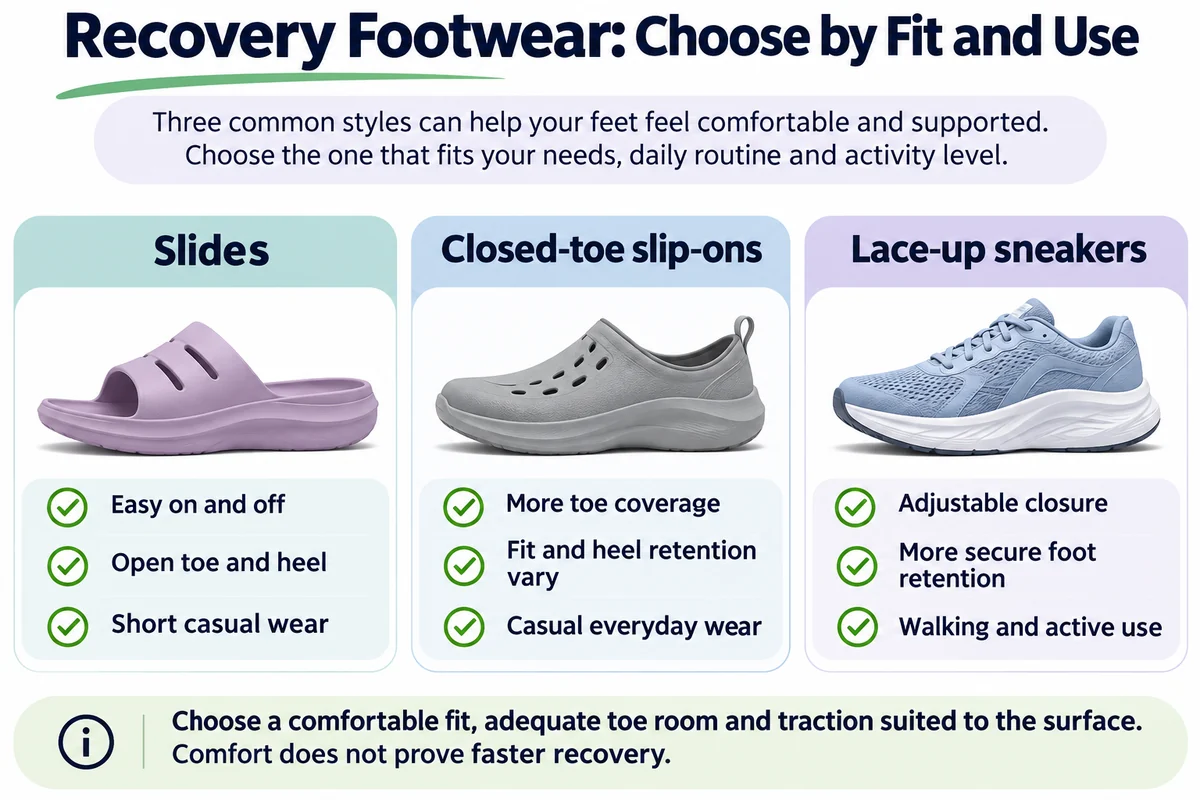
Choose according to your foot shape, preferred arch contour, walking needs and budget rather than cushioning alone. A softer sole is not necessarily better if it feels unstable, and slides generally offer less foot retention than securely fitted sneakers.
Recovery footwear may make feet feel more comfortable after activity, but evidence that it speeds muscle repair is limited. Persistent or worsening foot pain warrants qualified professional assessment.
Table of Contents
- Key Takeaways
- Best Recovery Shoes at a Glance
- How PVL Selected These Recovery Shoes
- The Best Recovery Shoes: Detailed Picks
- Do Recovery Shoes Actually Speed Up Recovery?
- How to Choose the Right Pair
- Which Recovery Shoes Fit Your Routine?
- What If You Have Plantar Fasciitis?
- Are Recovery Shoes Worth Buying?
- Head-to-Head: Kane Revive, OOFOS OOahh Sport Flex and HOKA Ora 3
- Five Mistakes to Avoid Before Buying
- A Practical At-Home Fit Check
- PVL Final Buying Recommendation
- Frequently Asked Questions
- Related Reading
- Editorial Notes and Sources
Key Takeaways
Recovery slides are easy to change into after exercise; closed-toe styles provide more coverage. A softer sole is not always a better choice if it feels unstable. Choose based on where you will wear the shoe, your foot shape and your preference for arch contouring. Product descriptions are based on published features and editorial comparison, not hands-on testing by PVL.
Best Recovery Shoes at a Glance
| Pick / selected version | Style | Practical feature | Main trade-off |
|---|---|---|---|
| KANE Revive | Closed-toe slip-on | Ventilated molded upper | Check heel fit and sizing |
| OOFOS OOahh Sport Flex | Adjustable slide | Adjustable upper strap | Open heel |
| HOKA unisex-adult Ora Recovery Slide 3 | Slide | Easy post-run change | Fixed upper; compare fit |
| HOKA Bondi 9 | Lace-up sneaker | Adjustable closure for walking | Bulkier than a slide |
| Crocs Mellow Recovery Slide | Slide | Simple casual slip-on | Limited foot retention |
| Topo Athletic Revive (women’s listing) | Fleece mule | Covered toes; open heel | Warm upper; heel unsecured |
| Nike ReactX Rejuven8 (women’s listing) | Molded slip-on | Covered toes and ventilation | Non-adjustable upper |
How PVL Selected These Recovery Shoes
This is a research-based buying guide, not a laboratory test or a claim that PVL wore every model. We compared the intended use, coverage, cushioning approach, footbed shape, likely fit considerations and everyday practicality described by manufacturers and established footwear reviewers. Exact prices, colors, availability and return policies can change. We do not assign unsupported test scores or claim clinical outcomes.
The Best Recovery Shoes: Detailed Picks
1. KANE Revive — Best overall
Why consider it: A ventilated, closed-toe foam shoe with a roomy shape. A practical choice when you want more coverage than a slide.
Trade-off: Fit can feel different from a conventional sneaker; check sizing and return terms.
PVL verdict: Consider this model if you want one versatile recovery-focused shoe for post-training errands and downtime. Verify sizing and current specifications before ordering.
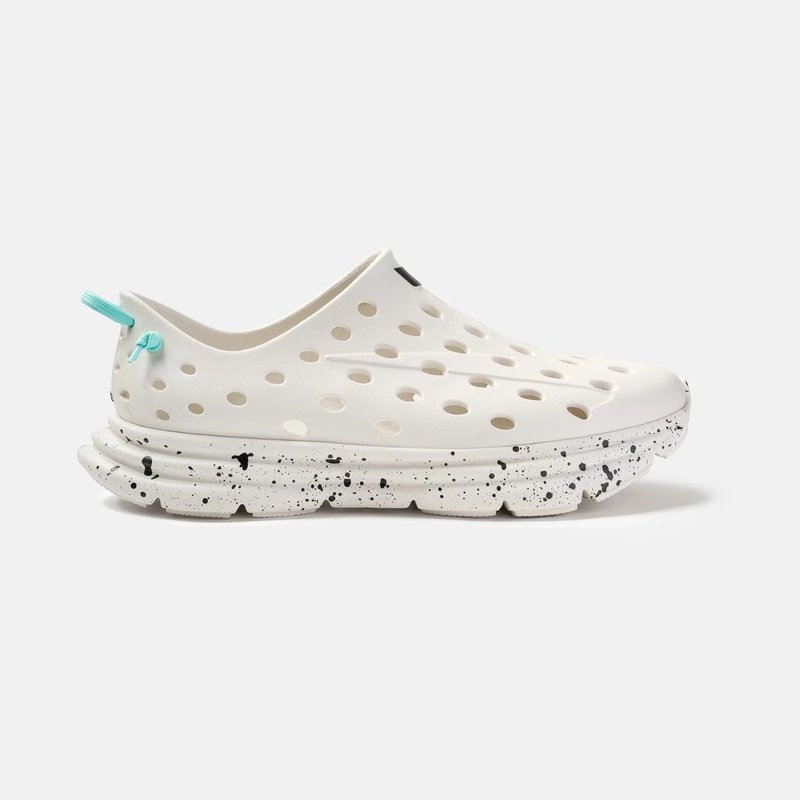
PVL rating: 4.5/5 — Research-based editorial assessment. Reference price: $85 (may change).
2. OOFOS OOahh Sport Flex — Best adjustable cushioned slide
Why consider it: An adjustable-strap recovery sandal with a contoured footbed and OOfoam cushioning for changing out of training shoes.
Trade-off: An open back provides less security for brisk walking or uneven ground; the adjustable strap also costs more than the standard OOahh.
PVL verdict: Consider this model if you mainly want a convenient slide after exercise. Verify sizing and current specifications before ordering.
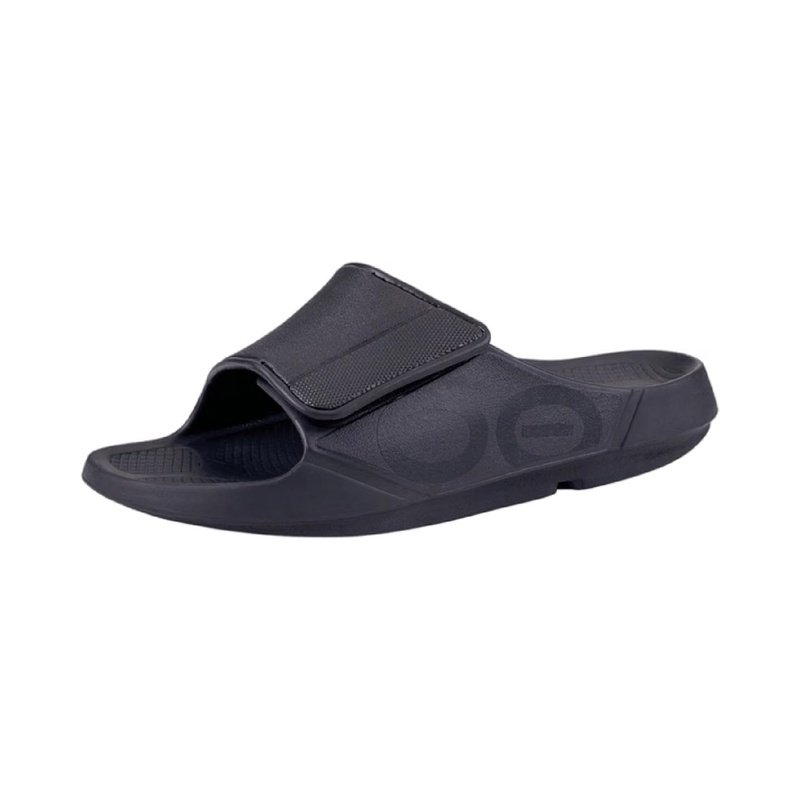
PVL rating: 4.4/5 — Research-based editorial assessment.
3. HOKA Ora Recovery Slide 3 — Best after running
Why consider it: A rocker-shaped recovery slide with a broad platform, designed for convenient post-run wear.
Trade-off: The pronounced shape and cushioning feel may not suit every foot.
PVL verdict: Consider this model if you want a slide to change into after runs. Verify sizing and current specifications before ordering.
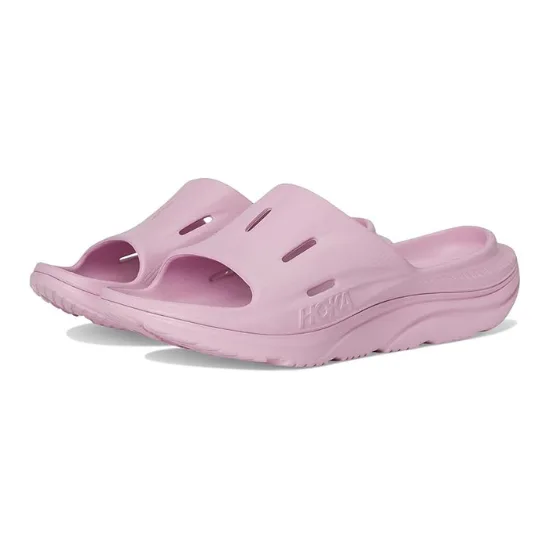
PVL rating: 4.1/5 (provisional) — Research-based editorial assessment.
Price note: Amazon flagged the selected Pink Twilight listing as higher priced than typical. Compare current sizes, colors and buying options before ordering.
4. HOKA Bondi 9 — Best for active recovery walks
Why consider it: A highly cushioned running sneaker for people who want a regular shoe they can also walk in.
Trade-off: It is a full sneaker rather than an easy-on recovery slide, and costs more.
PVL verdict: Consider this model if you plan to take easy walks rather than simply rest after training. Verify sizing and current specifications before ordering.
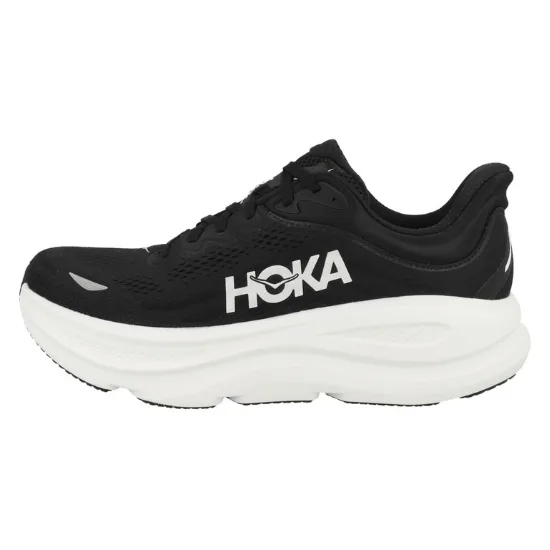
PVL rating: 4.2/5 (provisional) — Research-based editorial assessment.
5. Crocs Mellow Recovery Slide — Best budget-minded option
Why consider it: A roomy, soft-feeling slide for relaxed indoor or casual use.
Trade-off: Check traction, fit and whether the softness feels stable enough for you.
PVL verdict: Consider this model if you want a soft casual slide without paying for a premium specialist model. Verify sizing and current specifications before ordering.
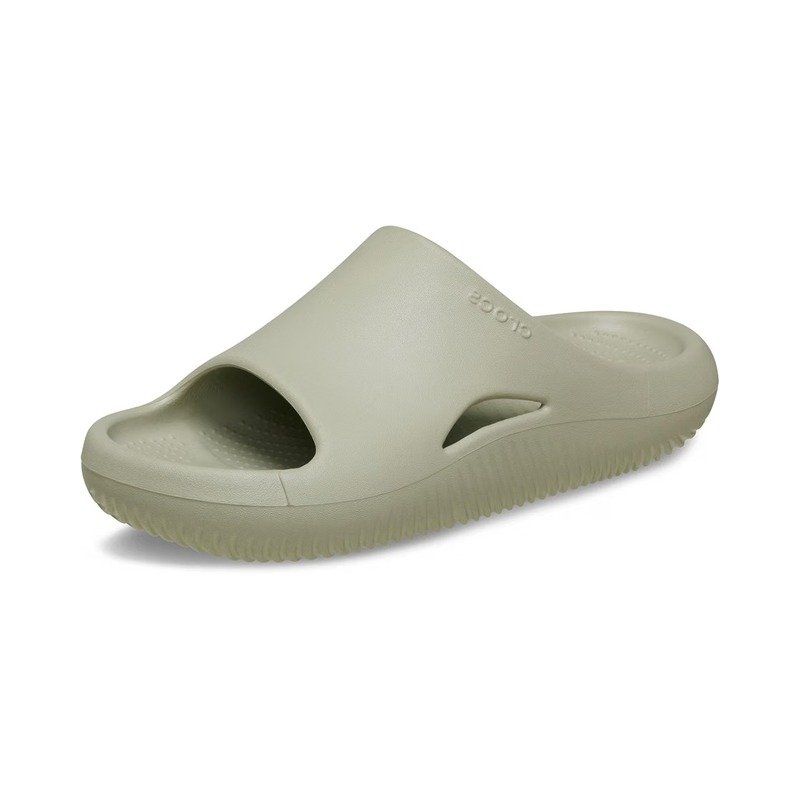
PVL rating: 4.3/5 — Research-based editorial assessment. Reference price: $39.99 (may change).
6. Topo Athletic Women’s Revive — Best closed-toe recovery slipper for women
Why consider it: A recycled fleece upper, roomy toe box, textured OrthoLite insole and Vibram outsole offer a covered-toe alternative to recovery slides. The listed heel-to-toe drop is 3 mm.
Trade-off: The open heel provides less retention than a lace-up shoe, and fleece may feel warm in hot weather. This recommendation covers the women’s model only.
PVL verdict: Consider it for relaxed post-workout comfort or casual wear when you prefer a warm, slipper-like design.
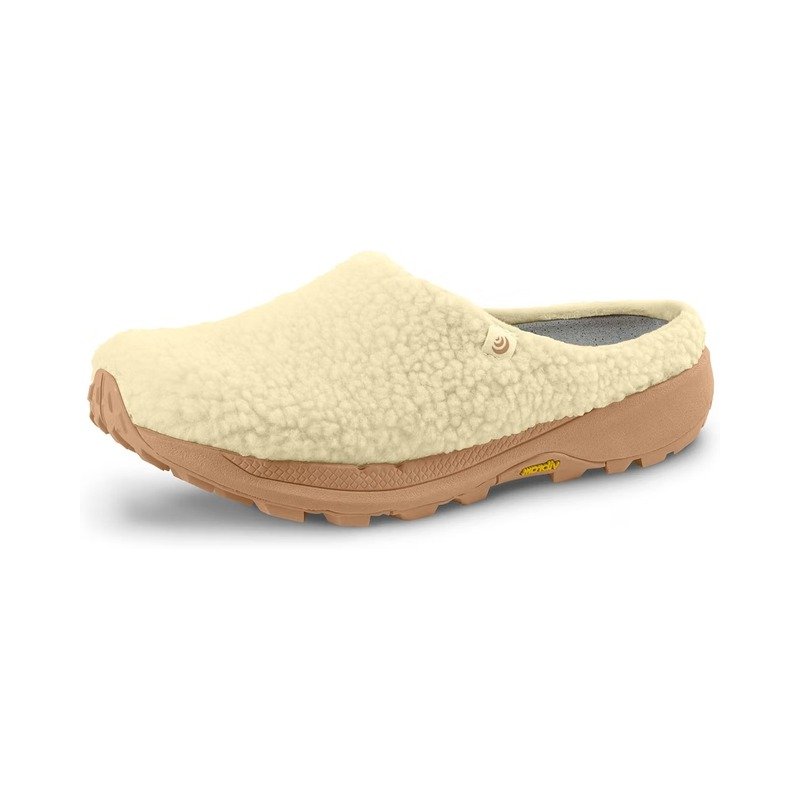
PVL rating: 4.1/5 (provisional) — Research-based editorial assessment. Reference price: $124.95 (may change).
7. Nike ReactX Rejuven8 Women’s — Best casual alternative for women
Why consider it: A molded ReactX slip-on with covered toes, ventilation openings and a distinctive sculpted design for relaxed everyday comfort.
Trade-off: The fixed upper limits fit adjustment. The selected Elemental Pink Amazon offer was $138.24; compare current prices and sizes before buying.
PVL verdict: Consider the women’s version if you prefer a covered-toe casual alternative to recovery slides.
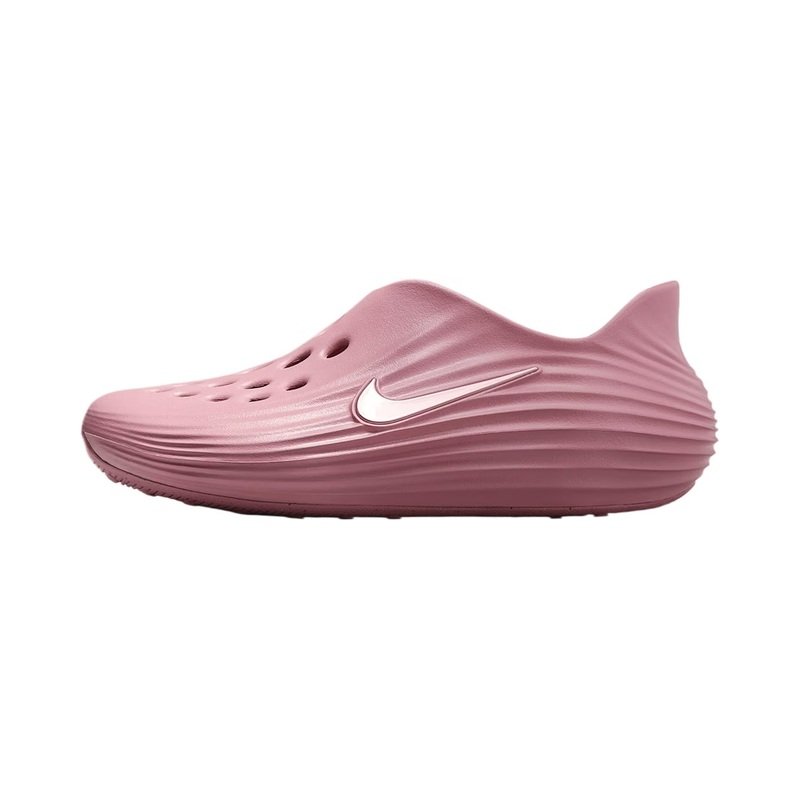
PVL rating: 4.0/5 (provisional) — Research-based editorial assessment. Reference price: $138.24 (may change).
Recovery shoes and slides emphasize post-activity comfort and ease of wear. Running sneakers must also accommodate repeated movement, traction and the demands of running. Some highly cushioned sneakers, such as the Bondi 9, can be comfortable for easy walking, but that does not make them interchangeable with slides for every activity.
Do Recovery Shoes Actually Speed Up Recovery?
Soft cushioning and supportive shapes may make tired feet feel more comfortable after exercise. That is different from demonstrating faster muscle repair, reduced delayed-onset muscle soreness or improved training outcomes. Evidence for broad physiological recovery claims from footwear alone is limited; treat claims such as “recover faster” as marketing unless supported by appropriate independent research. Sleep, nutrition, training load and rest remain important parts of recovery.
How to Choose the Right Pair
Cushioning and stability
A thick foam platform may feel comfortable as soon as you put it on, but the first impression does not tell you how it behaves while walking. Very soft footwear can compress unevenly and feel unstable during turns. Look for a secure, predictable platform that does not make your toes grip to keep the shoe on. More cushioning is not automatically better for every person or every activity.
Fit and toe room
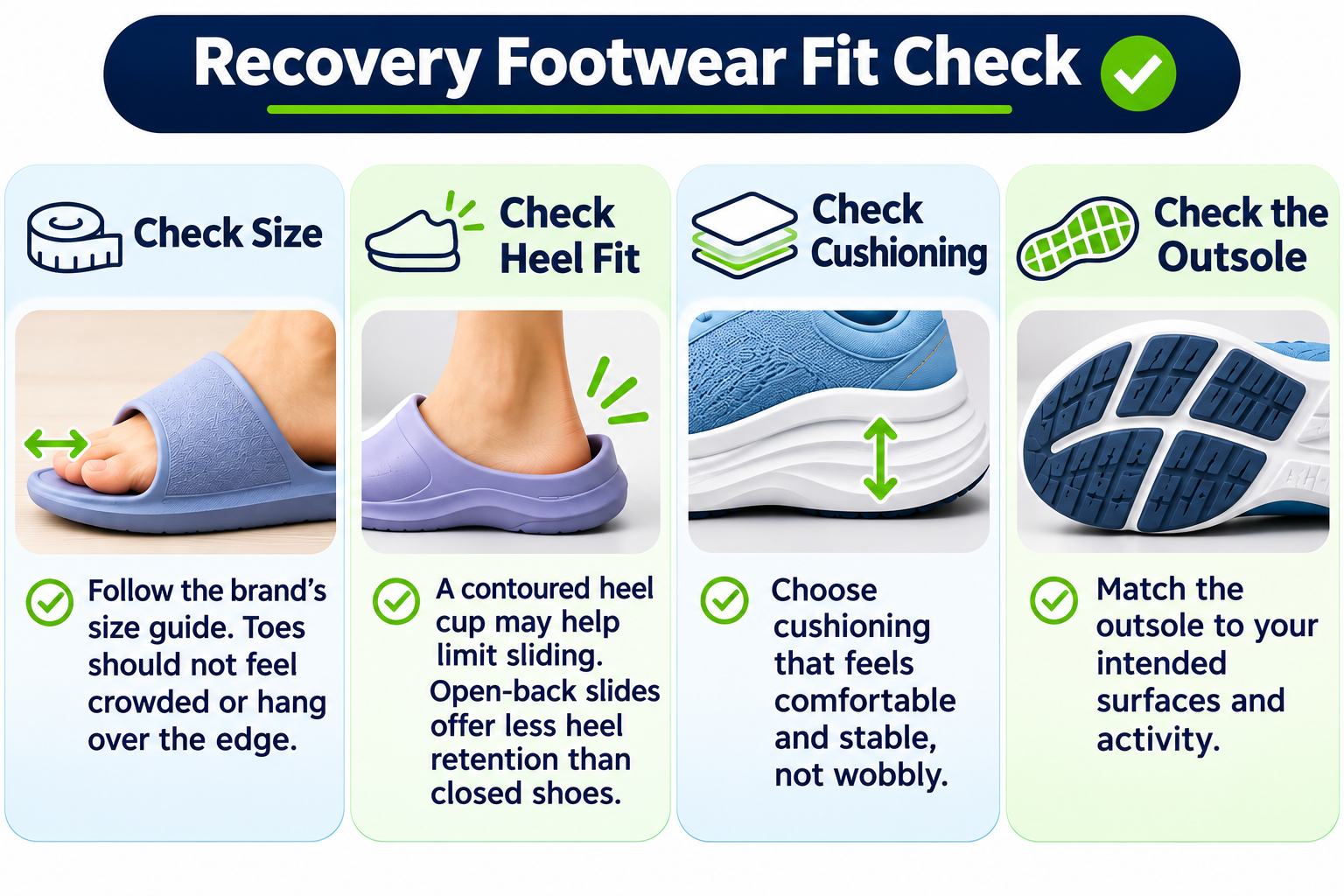
Your toes should be able to rest naturally rather than being squeezed by the upper. At the same time, excessive room can make a shoe feel sloppy. In a slide, check whether the heel stays on the platform and whether the band rubs the top of your foot. In closed-toe shoes, evaluate heel movement, instep pressure and toe clearance. Brand sizing varies considerably.
Arch contour
Some recovery designs have noticeable arch contouring or textured footbeds. One person may enjoy that shape while another finds it intrusive. A raised arch is not a universal measure of support, and footbed texture is not evidence of increased circulation or faster muscle repair. Try footwear indoors and pay attention to pressure under the arch, heel and forefoot.
Open vs. closed toe
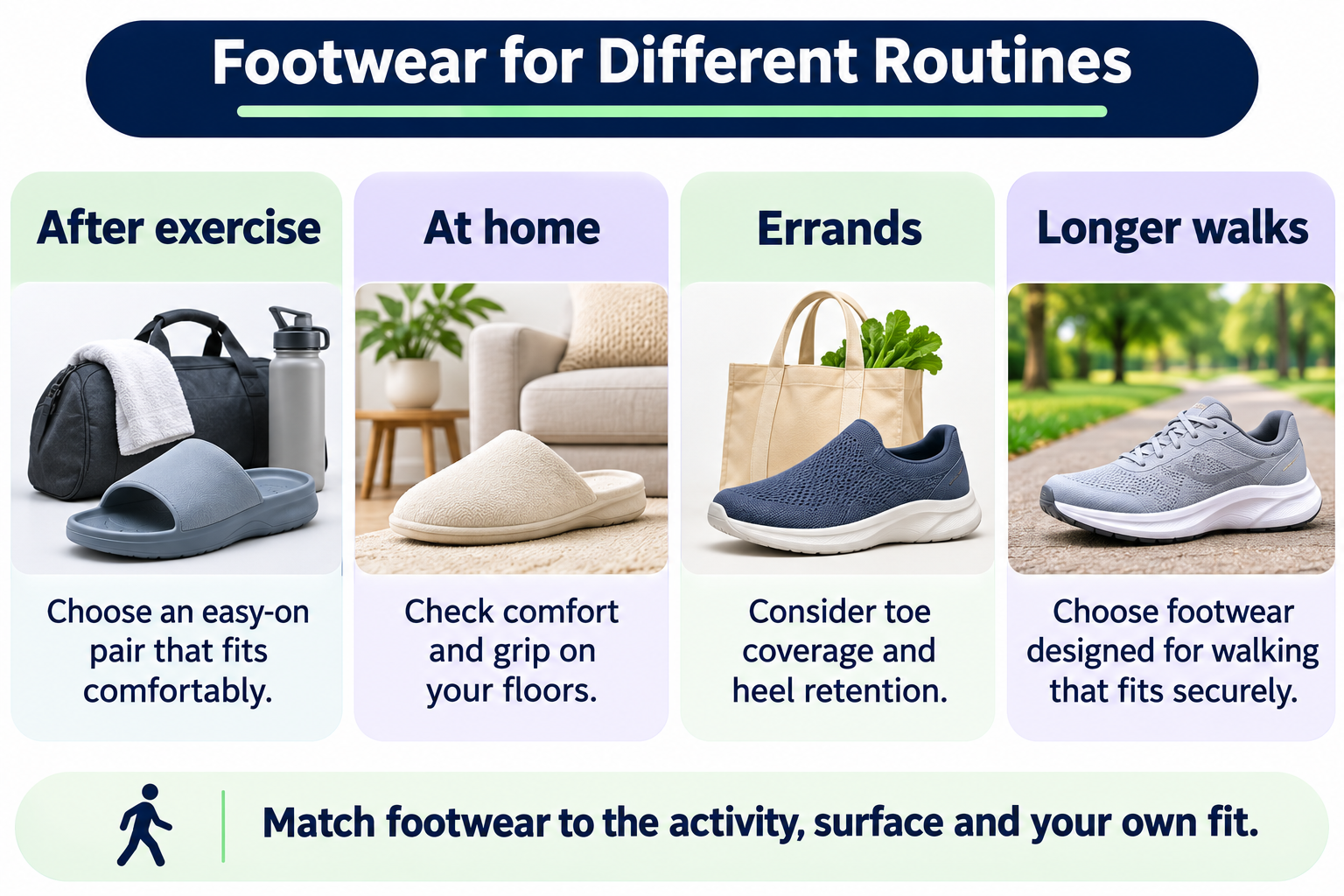
Slides are convenient for locker rooms and home; closed shoes offer more coverage for errands and cooler weather.
Grip and intended surface
A rocker sole curves through the front of the shoe and changes the sensation of rolling through a step. It can feel smooth to some wearers and unfamiliar to others. Consider how you move on stairs, wet tiles and uneven pavement. A thick sole does not guarantee traction. Follow manufacturer guidance for the surfaces and activities for which each shoe is intended.
Price and returns
Compare the total delivered price and actual return conditions rather than relying on an advertised discount.
Which Recovery Shoes Fit Your Routine?
After a Run or Gym Session
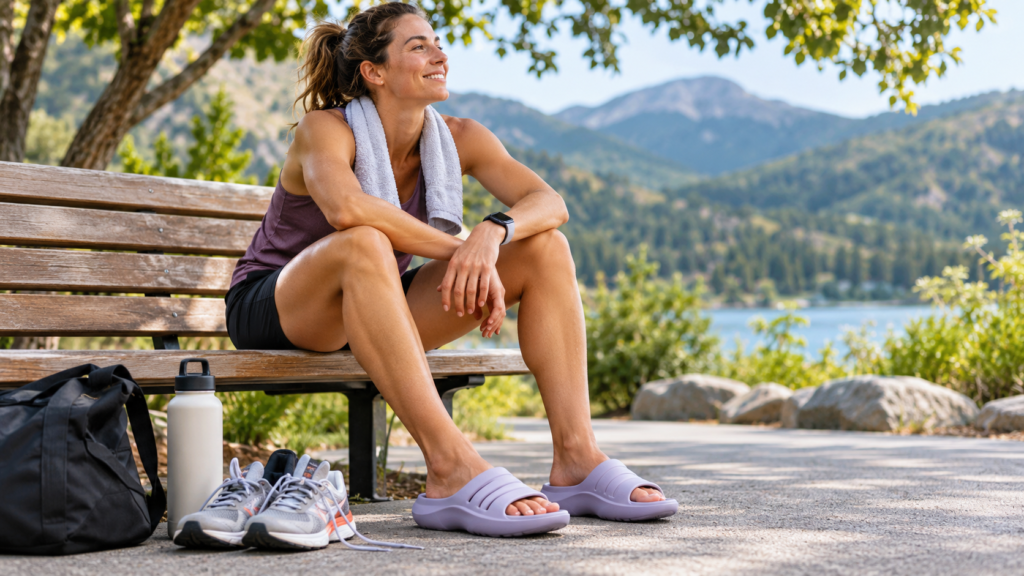
For changing out of training shoes quickly, consider OOFOS OOahh Sport Flex, HOKA Ora Recovery Slide 3 or Crocs Mellow. If you need to walk farther afterward, compare the security and coverage of Kane Revive.
For Easy Recovery Walks
A conventional, well-fitting walking or running sneaker such as HOKA Bondi 9 may be more appropriate than a loose slide for sustained outdoor movement. Match the shoe to the terrain and your walking needs.
For Wide or Tired Feet
Prioritize adequate toe space and a non-pinching fit rather than assuming every foam clog is wide enough. Foot shape, volume and brand sizing vary.
For Long Shifts on Your Feet
Post-workout slides and shoes intended for prolonged standing are not necessarily interchangeable. Workplace rules, slip resistance, stability and all-day fit may matter more than a plush underfoot feel.
What If You Have Plantar Fasciitis?
Some people with heel discomfort prefer cushioned or contoured footwear, but no recovery shoe universally treats plantar fasciitis. The most comfortable option depends on your symptoms and foot mechanics. Seek advice from a qualified clinician for persistent, worsening or significant pain, and follow medical instructions after surgery rather than choosing footwear from a general shopping guide.
Are Recovery Shoes Worth Buying?
They can be worthwhile if you regularly want a convenient, comfortable alternative to sweaty training shoes. They may be unnecessary if you already own footwear that fits well and feels comfortable after exercise. Choose the model that solves a practical problem rather than paying for an unproven recovery promise.
Head-to-Head: Kane Revive, OOFOS OOahh Sport Flex and HOKA Ora 3
When Kane Revive makes more sense
Kane is worth considering if you prefer coverage over the toes and want a recovery-oriented shoe for casual errands as well as post-workout downtime. Its ventilated design is different from a traditional fabric sneaker, but it still needs to fit securely. It is not automatically a substitute for work shoes or technical athletic footwear. Consider how easily the molded upper cleans and whether you prefer wearing socks.
When OOFOS OOahh Sport Flex makes more sense
The OOahh Sport Flex features an adjustable instep strap and is a straightforward choice for slipping into after a gym session. Its contoured footbed and foam feel are central to the experience. OOFOS advertises specific impact-absorption characteristics, but a manufacturer’s foam test is not the same as independent proof that wearing the slide speeds recovery. Compare the arch sensation and how securely the slide stays on during walking.
When HOKA Ora Recovery Slide 3 makes more sense
The Ora Recovery Slide 3 is especially relevant to runners who like a rocker-inspired shape. Its open format is convenient for changing shoes after a run. Check whether the upper fits your instep and whether the rolling sensation feels natural. A slide is not necessarily the best option if you need to walk long distances, navigate uneven surfaces or carry heavy bags.
Which one represents better value?
Value depends on your use rather than brand reputation alone. A less expensive slide may meet the needs of someone who only wears it at home. A closed-toe design may offer greater everyday versatility, but it can cost more and be less convenient immediately after training. Compare current prices, return conditions and the fit of the exact model before choosing.
Five Mistakes to Avoid Before Buying
Choosing the softest pair without walking in it
Extreme softness can make a memorable first impression but may not remain comfortable when turning or walking. If possible, test the shoe indoors for several minutes. Notice whether the platform feels balanced and whether the upper holds your foot without pressure. A shoe that feels unstable is not a good match merely because reviewers describe it as plush.
Assuming more arch support always means better comfort
Arch contour is a personal fit characteristic, not a universal score. An aggressive contour may feel helpful to some people and uncomfortable to others. If the arch presses in the wrong place, look for a different shape. A clinical foot condition may call for professional advice, especially if pain is persistent or worsening.
Ignoring the actual walking surface
A foam slide for a dry home floor may not be suitable for wet tile, gravel or prolonged outdoor use. Read product guidance and inspect traction before buying. Think about stairs, public transport and the distance you will walk. The best shoe for relaxing after training may not be the safest shoe for every errand.
Confusing testimonials with research
Customer reviews can reveal sizing patterns and durability complaints, but they cannot establish that a shoe improves muscle repair or treats an injury. Marketing claims about cushioning technologies should be attributed to the manufacturer. PVL’s recommendations focus on fit, comfort and intended use rather than unsupported physiological recovery outcomes.
Overlooking return terms
Foam footwear can fit differently from conventional sneakers. Before buying online, confirm whether the retailer permits indoor try-ons, whether discounted items are final sale and who pays return shipping. Check the specific color and size because terms and availability can vary. A generous return policy is especially useful when the footbed has an unfamiliar contour.
A Practical At-Home Fit Check
First five minutes
Try the footwear on a clean indoor surface while following the retailer’s return conditions. Stand naturally, take short steps and turn gently. Look for toe clearance, heel security and comfortable pressure under the foot. Your toes should not have to grip to keep the shoe in place. If the arch feels sharply intrusive or the sole feels unstable, that is useful feedback.
Next fifteen minutes
If the first impression is positive, wear the shoes indoors a little longer. Notice whether the upper rubs, the footbed creates hot spots or the shoe becomes less comfortable as you move. Compare the feeling with footwear you already own. You are looking for consistent comfort, not a dramatic sensation of sinking into foam.
Before keeping the pair
Verify that the delivered shoe matches the exact model and size you ordered. Review the care instructions and check whether its outsole is appropriate for your intended use. Ask whether it solves a genuine comfort or convenience problem. If your current shoes already meet that need, the additional purchase may not be necessary.
PVL Final Buying Recommendation
Start with the type of footwear you actually need. For a versatile closed-toe recovery shoe, compare Kane Revive and Topo Athletic Revive. For quick changes after running, compare OOFOS OOahh Sport Flex and HOKA Ora Recovery Slide 3 by footbed contour, fit and stability. Crocs Mellow is worth examining when budget matters. HOKA Bondi 9 is better treated as a cushioned sneaker for active walking, while Nike ReactX Rejuven8 offers a casual alternative. No model is universally best, and none should be purchased on the assumption that it independently speeds muscle repair.
Frequently Asked Questions
What are the best recovery shoes for runners?
Kane Revive is a closed-toe option, while OOFOS OOahh Sport Flex and HOKA Ora Recovery Slide 3 are popular post-run slides. The best choice depends on whether you need quick changes, outdoor coverage or a particular footbed feel.
What features should I look for in recovery shoes?
Look for cushioning that feels comfortable and stable, enough toe room, a suitable arch contour, secure fit and traction appropriate to the surfaces where you will wear them.
Do recovery shoes help muscle recovery?
They may improve perceived foot comfort after activity, but that does not establish that they accelerate muscle repair or reduce delayed-onset soreness. Avoid interpreting a comfortable shoe as a substitute for rest and recovery habits.
How are recovery shoes different from sneakers?
Recovery slides and slip-ons often emphasize easy wear and underfoot comfort after activity. Regular athletic sneakers are built for movement-specific demands such as secure fit, grip and repeated loading.
Are slides or closed-toe shoes better after running?
Slides are convenient for short periods after training; closed-toe shoes may be more practical for errands, cooler weather or situations requiring greater coverage. Fit and stability should decide.
Which recovery shoes have the most cushioning?
OOFOS, HOKA and Crocs all offer notably cushioned recovery-oriented models, but foam softness and comfort are subjective. Try the fit rather than assuming the softest-feeling model is best.
Can I wear recovery shoes all day?
It depends on the design, your comfort and your activity. A slide that feels great at home may not be ideal for long walks, slippery floors or workplaces requiring secure footwear.
Can recovery shoes help plantar fasciitis?
Some people find cushioned or contoured footwear more comfortable, but recovery shoes are not a proven universal treatment. Persistent heel pain deserves individualized clinical advice.
Related Reading
- 10,000 Steps in Miles: Calculate Your Walking Distance
- How Many Steps a Day to Lose Weight?
- Best Wellness Products — PVL Review Pillar
Editorial Notes and Sources
Product positioning should be checked against the latest manufacturer product pages for KANE Footwear, OOFOS, HOKA, Crocs, Topo Athletic and Nike before purchase. This guide does not claim hands-on wear testing or clinical effectiveness. PVL may earn commissions through qualifying purchases; see the site’s affiliate disclosure.
Manufacturer specification: KANE Revive materials, care and sizing. Manufacturer descriptions establish product features, not independent evidence of faster physiological recovery.