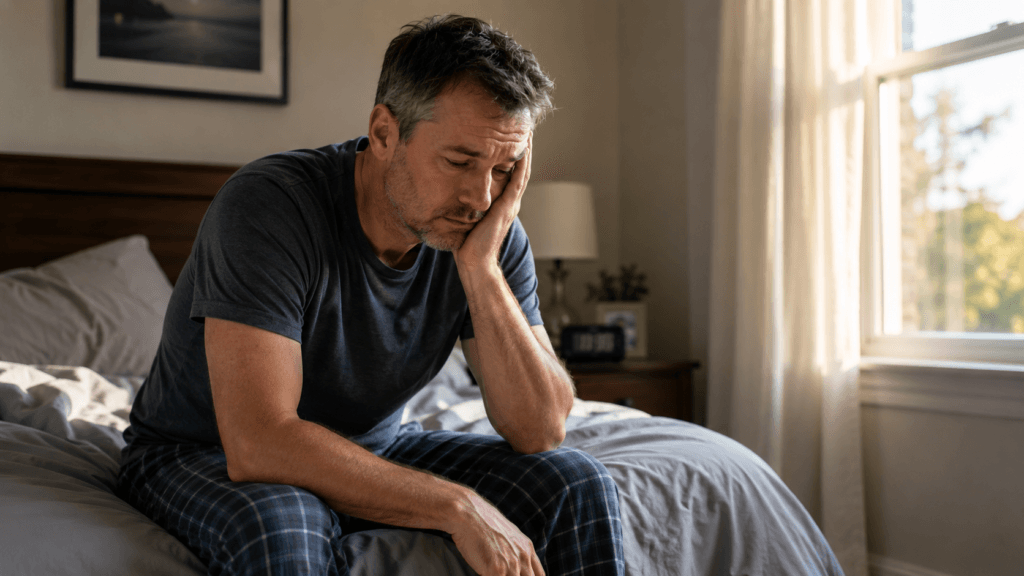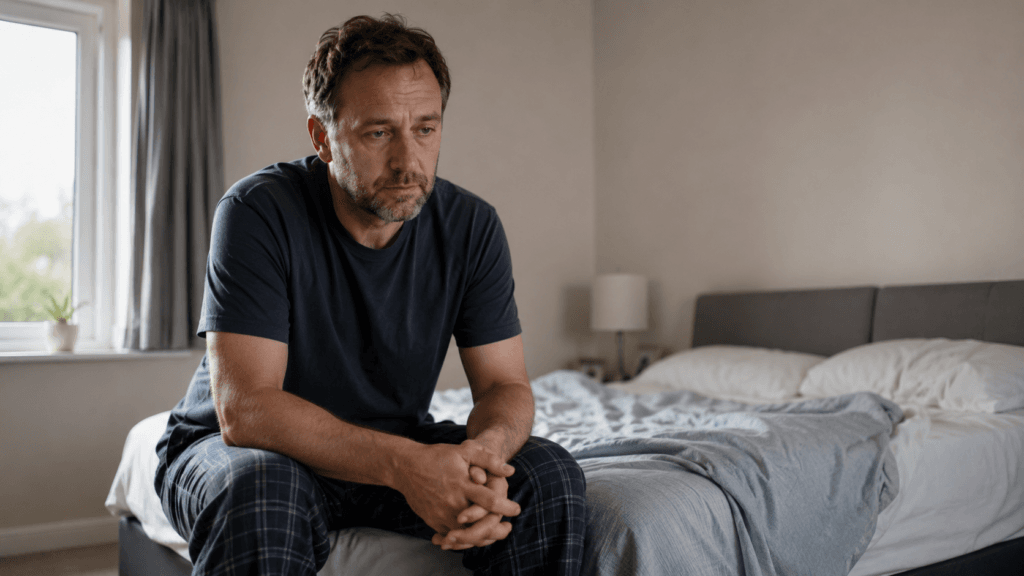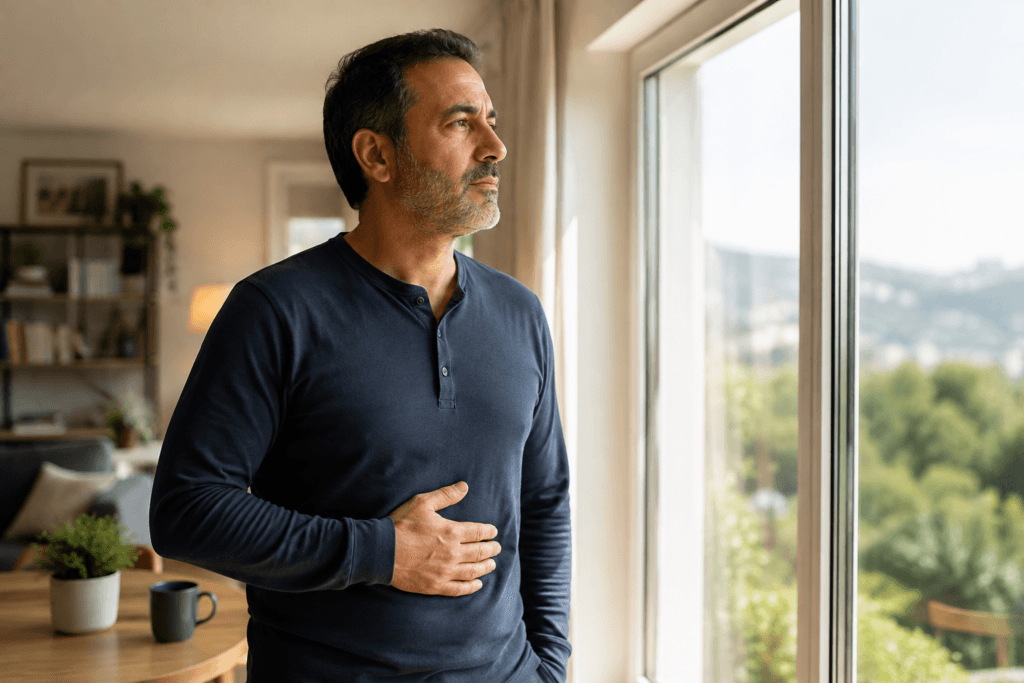
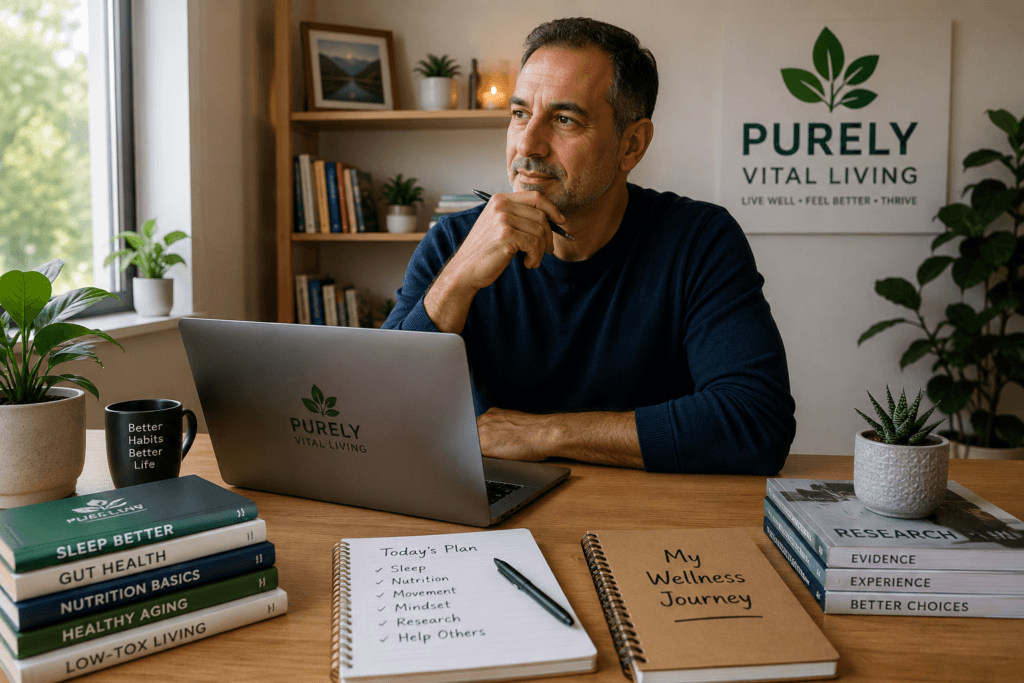
Purely Vital Living did not begin because I simply decided to start another wellness website. It grew out of years of trying to understand my own health—digestive problems, chronic fatigue, poor sleep, work stress, and the frustration of searching for answers that often seemed disconnected from one another.
Over time, my idea of a wellness lifestyle changed. I stopped expecting one treatment, supplement, diet, or routine to solve everything. Instead, I began paying more attention to the everyday choices I could realistically maintain: how I slept, ate, moved, recovered, managed pressure, and responded to what my body was telling me.
Purely Vital Living grew from that experience. I created it to share what I have learned, examine wellness information more carefully, and help make complicated health topics more understandable—while being clear about the difference between personal experience and medical evidence.
Table of Contents
- My Health Journey Started Long Before Purely Vital Living
- My Construction Career Changed How I Thought About Health
- I Spent Years Looking for the Answer
- Why I Stopped Looking for Quick Fixes
- What a Wellness Lifestyle Means to Me
- Why I Started Purely Vital Living
- What I Want Purely Vital Living to Stand For
- The Areas of Wellness I Focus on Today
- Sustainable Wellness Matters More to Me Than Perfect Wellness
- What I’m Still Learning
- Frequently Asked Questions
- Final Reflection: Why Purely Vital Living Exists
My Health Journey Started Long Before Purely Vital Living
My interest in health was not theoretical. It developed because health problems had been part of my life for many years. Long before I created Purely Vital Living, I was already trying to understand why I felt the way I did and what I could realistically change.
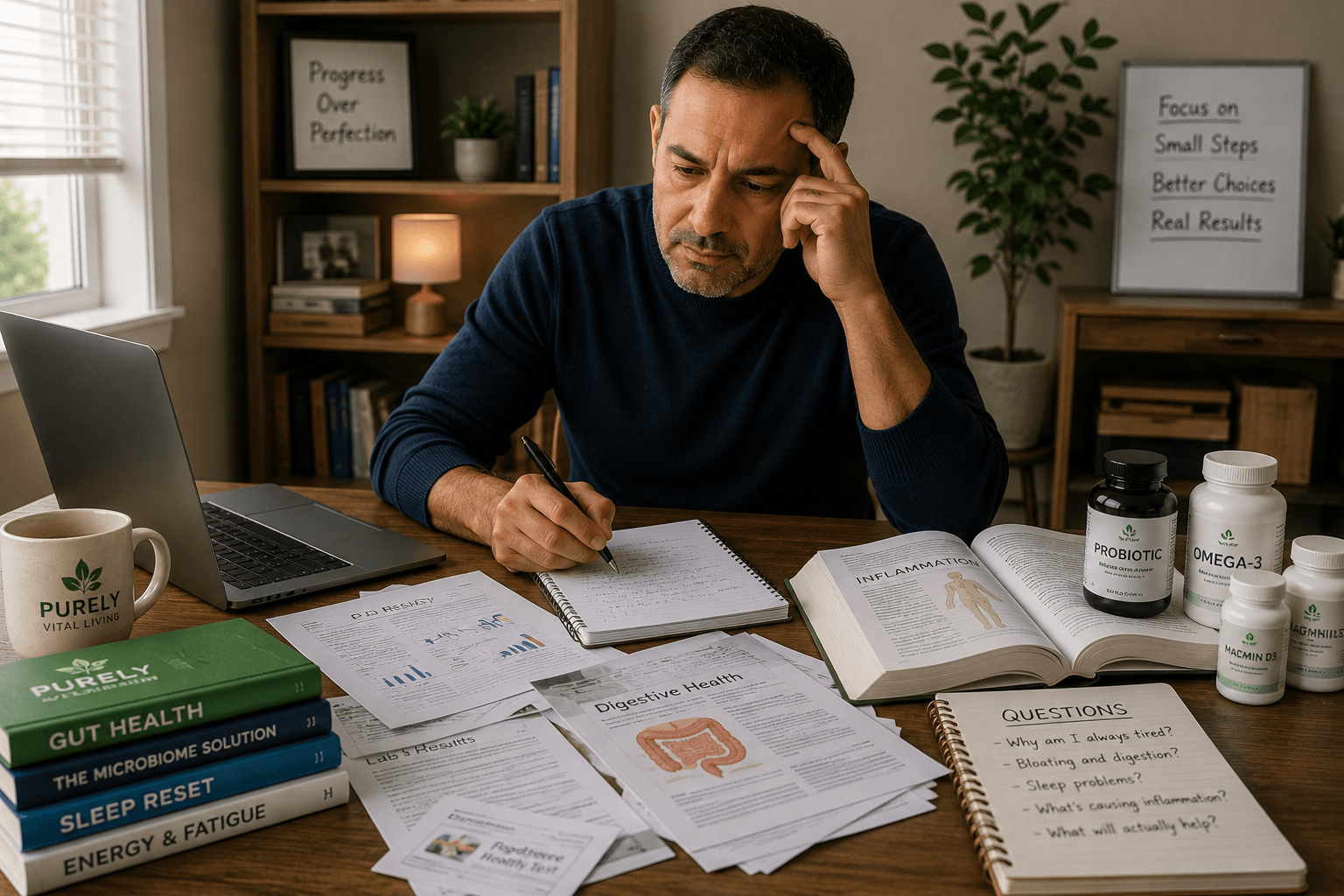
Years of Digestive Problems
Digestive symptoms were among my earliest and longest-running health challenges. What began with bloating and discomfort eventually became a much more complicated journey involving IBS, slow motility, testing, dietary changes, therapies, and years of trial and error.
I tell that story in more detail in My 20-Year IBS Journey: Living With IBS, Colonic Inertia, and Hope. The important point here is that it taught me early that health problems are rarely as simple as a quick online answer makes them appear.
When Chronic Fatigue Changed Everyday Life
Later, chronic fatigue changed what I could do physically and how I planned ordinary days. Exercise became harder. Recovery took longer. There were periods when tiredness was accompanied by muscle and joint discomfort, and I had to reconsider routines I had previously taken for granted.
That experience became another part of my story in How Chronic Fatigue Changed My Life.
When Sleep Became Part of the Puzzle
Sleep eventually became impossible for me to ignore. Feeling tired despite spending enough time in bed made me look more closely at sleep quality and, eventually, sleep apnea. It helped me understand that daytime energy cannot always be separated from what happens overnight.
I explore that part of the journey in Living With Sleep Apnea.
My Construction Career Changed How I Thought About Health
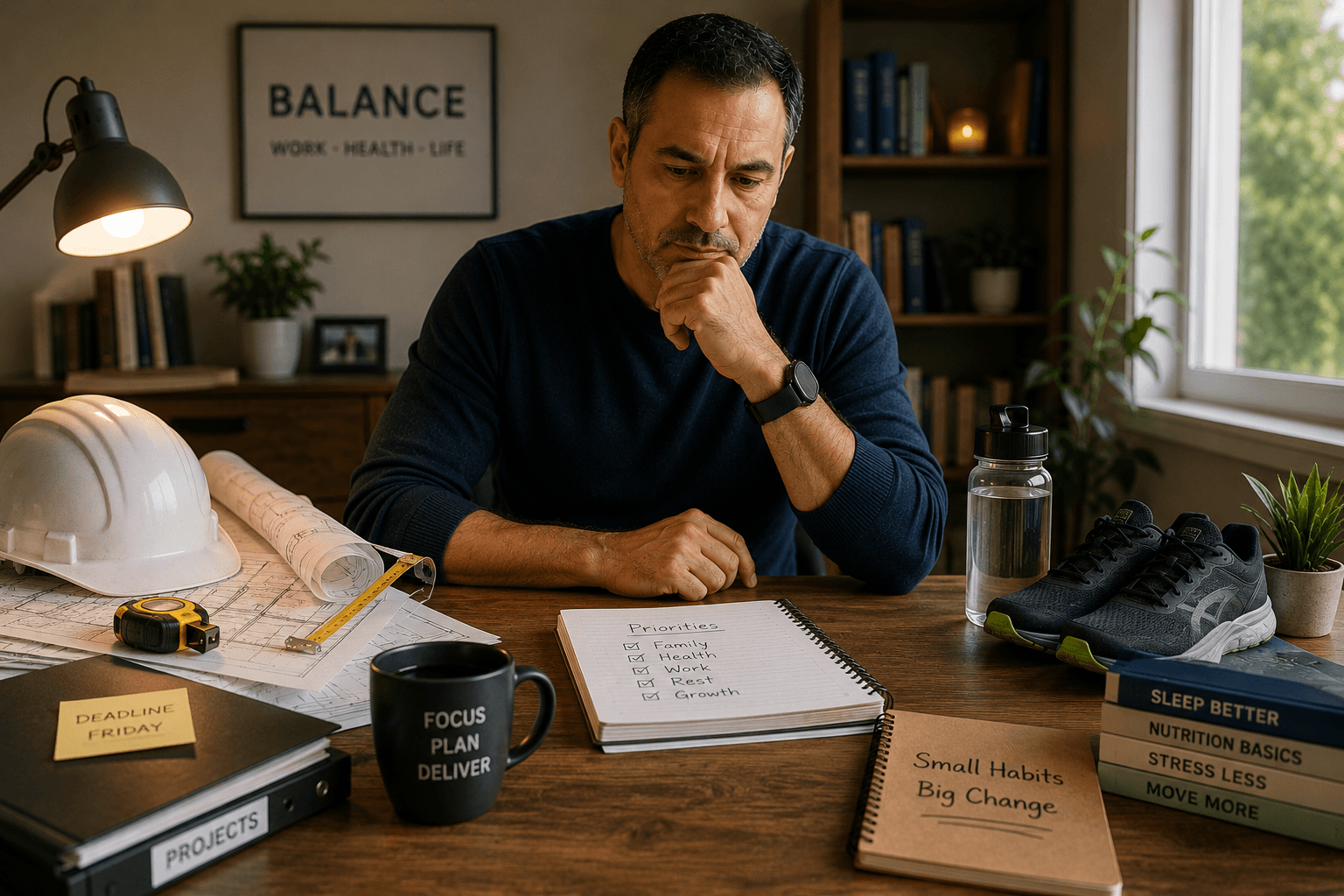
For roughly 25 years, I also worked in construction management. It was a career built around responsibility: deadlines, budgets, coordination, safety, clients, contractors, changing site conditions, and problems that rarely waited for a convenient time.
For a long time, I treated pressure as simply part of the job. Health was something I would deal with after the next deadline, after the next project problem, or when life became less busy. The difficulty was that there was always another problem to solve.
I describe that experience more fully in 25 Years in Construction: How Work Stress Changed My Health. Looking back, one of the biggest lessons was that sleep, energy, digestion, movement, recovery, and stress were not living in separate boxes. They were interacting with the same life.
I Spent Years Looking for the Answer
Like many people dealing with persistent symptoms, I wanted an explanation and a solution. Over the years I went through medical investigations, dietary changes, different therapies, supplements, exercise approaches, changes to my routines, and a great deal of reading and searching.
Some experiences were useful. Others did not give me what I hoped for. What became clear was how easy it is to move from one possible answer to another when you are tired of feeling unwell.
I kept hoping I would eventually discover the one thing that would make everything fall into place. But my health did not behave like a problem with one missing piece.
That realization gradually changed the questions I was asking. Instead of only asking, “What will fix this?” I began asking, “What can I realistically do each day that supports my health without making my life even harder?”
Why I Stopped Looking for Quick Fixes
There was no dramatic moment when I suddenly had everything figured out. The change was slower. I became more interested in manageable routines than extreme interventions.
Depending on what I was dealing with at the time, that could mean paying closer attention to sleep, eating in a way I could tolerate, taking short walks, stretching, swimming when I was able, allowing more recovery, or reducing unnecessary pressure where possible.
These were not cures, and I do not present them as treatments for anyone else’s medical condition. They were simply part of learning how to work with my circumstances rather than constantly fighting them.
That shift became one of the ideas behind Purely Vital Living: useful wellness advice has to work in real life. A routine that looks impressive on paper but cannot be maintained is unlikely to help someone for very long.
What a Wellness Lifestyle Means to Me
For me, a wellness lifestyle means making realistic choices that support my health across sleep, nutrition, movement, stress, recovery, and everyday habits—without expecting perfection or constantly searching for a single quick fix.
That definition is deliberately practical. Wellness can easily become another source of pressure when every meal, workout, supplement, morning routine, sleep score, and health metric starts feeling like something that has to be optimized.

It Doesn’t Mean Being Perfect
I no longer think wellness requires a perfect routine. Real life includes busy periods, poor nights of sleep, stressful days, travel, changing responsibilities, and times when health itself limits what you can do.
Small Habits Have to Fit Real Life
A habit becomes more valuable when it is realistic enough to repeat. For me, that often meant choosing a smaller action I could maintain instead of an ambitious routine I would abandon.
Wellness Is More Than One Part of Health
Sleep affects energy. Stress can influence how we feel physically. Food affects more than hunger. Movement, recovery, mental wellbeing, our working environment, and the products we use can all become part of the bigger picture. A wellness lifestyle, to me, is about seeing those connections without pretending we can control every variable.
Why I Started Purely Vital Living
Years of searching taught me how overwhelming wellness information can become. One source says one thing, another says the opposite, and somewhere between them is a product promising to solve the problem completely.
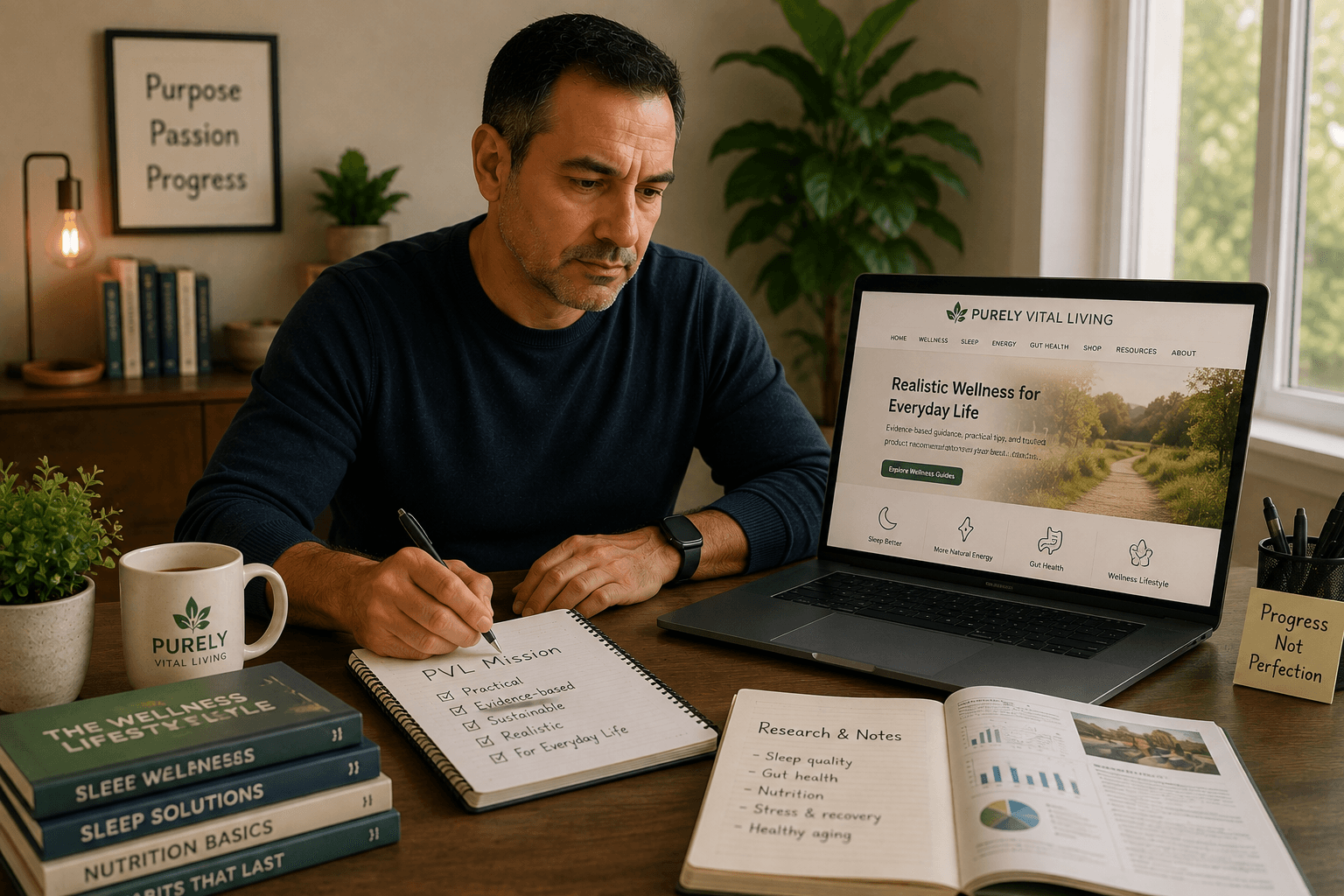
I wanted Purely Vital Living to be different. My goal was not to create a site that pretends there is one perfect way to be healthy. I wanted a place where I could combine lived experience, research, practical explanations, useful tools, and careful product evaluation.
That means personal stories have a place here, but they are identified as personal experiences. When an article makes factual health claims, those claims should be supported by credible research. When I review a product, the question should be whether it genuinely fits a reader’s needs—not whether it happens to be the newest wellness trend.
Purely Vital Living became a way to organize what I was learning and turn years of searching into something potentially useful for other people navigating sleep, energy, gut health, nutrition, healthy aging, recovery, and everyday wellness.
What I Want Purely Vital Living to Stand For
Evidence Before Hype
Wellness trends move quickly. I want PVL to slow that process down enough to ask what the evidence actually supports, what remains uncertain, and what readers should know before making a decision.
Experience Without Pretending It’s Medical Evidence
My experiences matter because they explain why I care about these subjects and can help me understand the questions readers may be asking. But what happened to me does not prove that the same thing will happen to someone else. Personal experience and scientific evidence have different roles, and I want PVL to respect that distinction.
Practical Changes Over Perfection
I am more interested in useful changes people can realistically maintain than in presenting wellness as an idealized lifestyle. Small improvements still count.
Better Decisions About Wellness Products
Products can be useful, but buying products is not the same as being well. PVL’s product coverage should help readers understand what an item does, who it may suit, where its limitations are, and whether there are simpler alternatives worth considering.
The Areas of Wellness I Focus on Today
Sleep
Sleep became central to my understanding of energy and recovery. PVL explores practical sleep habits, common sleep questions, and tools designed to help readers understand their own routines more clearly.
Energy
My experience with fatigue made energy a natural focus. I am interested in the everyday factors that influence how we feel, including sleep, food, movement, hydration, recovery, and stress.
Gut Health
After living with digestive problems for so long, gut health remains deeply personal to me. PVL approaches it through both research and clearly labeled lived experience.
Nutrition
I want nutrition content to be practical rather than perfectionistic: helping readers understand food choices and habits without turning every meal into another test they can fail.
Healthy Aging and Longevity
As I have grown older, maintaining strength, mobility, recovery, and independence has become increasingly important. That makes healthy aging a natural extension of the site’s broader wellness focus.
Low-Tox Living
I also became more thoughtful about the products and environments that form part of everyday life. The goal is not fear or trying to eliminate every possible exposure; it is making informed, proportionate choices where they make sense.
Sustainable Wellness Matters More to Me Than Perfect Wellness
When I use the phrase sustainable wellness in this context, I mean health-supporting habits that are realistic enough to continue. The term can also be used in relation to environmental sustainability, but here I am talking specifically about whether a routine can survive the demands of ordinary life.
An extreme plan may feel productive for a short period. But if it leaves someone exhausted, overwhelmed, or unable to continue, it may not be a useful long-term strategy. I would rather build a modest routine I can repeat than chase a perfect one I cannot maintain.
What I’m Still Learning
Starting a wellness blog does not mean I have finished my own health journey. I am still learning. Research changes, new questions emerge, and my own routines continue to evolve with age, work, health, and life.
Some ideas that once seemed promising have become less important to me. Other simple habits have proved more valuable than I expected. That willingness to update my thinking is something I want reflected across Purely Vital Living.
I do not want the site to become a record of fixed opinions. I want it to become more useful as the evidence improves and as I continue learning from both research and experience.
Frequently Asked Questions
What is a wellness lifestyle?
A wellness lifestyle is an approach to everyday life that supports overall wellbeing through choices and habits related to areas such as sleep, nutrition, movement, stress, recovery, and mental wellbeing. For me, the key is making those choices realistic enough to maintain rather than trying to follow a perfect routine.
Why did you start Purely Vital Living?
I started Purely Vital Living after years of dealing with digestive problems, fatigue, sleep challenges, work stress, and the difficulty of sorting through conflicting wellness information. I wanted to turn what I was learning into practical, research-aware content that could help other people make more informed decisions.
What does a healthy wellness lifestyle include?
There is no single routine that fits everyone, but a broad wellness lifestyle can include adequate sleep, nutritious food, appropriate physical activity, stress management, recovery, supportive relationships, and attention to the environments and habits that affect everyday wellbeing.
Is a wellness lifestyle about following a perfect routine?
No. I think perfection can make wellness harder to sustain. A more useful approach is to choose habits that fit your circumstances and make reasonable improvements consistently.
What is sustainable wellness?
The phrase can have different meanings, including environmental sustainability. In the context of my personal approach, sustainable wellness means building health-supporting habits and routines that are realistic enough to maintain over time.
How did your health journey influence Purely Vital Living?
My experiences with digestive health, chronic fatigue, sleep problems, and work stress shaped the subjects I wanted to understand better. They also taught me to distinguish between what I experienced personally and what research can reasonably support.
Is Purely Vital Living medical advice?
No. Purely Vital Living provides educational wellness content, research summaries, product information, tools, and personal experiences. It is not a substitute for individualized medical diagnosis or treatment from a qualified healthcare professional.

Final Reflection: Why Purely Vital Living Exists
I did not create Purely Vital Living because I had finally found all the answers. In many ways, I created it because finding good answers had been so difficult.
Years of health problems taught me how frustrating it can be to search for clarity when you are already tired, uncomfortable, or overwhelmed. They also taught me that personal experience can be meaningful without becoming universal advice, and that evidence matters even when it does not provide the simple answer we hoped to find.
My idea of a wellness lifestyle is much simpler today than it once was. I want to understand my health better, make informed choices, build habits I can maintain, and keep learning. Purely Vital Living grew from that philosophy.
If you would like to understand more about the experiences behind the site, visit My Wellness Journey, where I share the personal stories that shaped the way I approach health today.
Related Reads
- My 20-Year IBS Journey: Living With IBS, Colonic Inertia, and Hope — The digestive-health story that shaped much of my interest in gut health and practical wellness.
- How Chronic Fatigue Changed My Life — How persistent fatigue changed my routines, exercise, recovery, and everyday life.
- Living With Sleep Apnea — My experience learning that time in bed and genuinely restorative sleep are not always the same thing.
- 25 Years in Construction: How Work Stress Changed My Health — What decades of deadlines, responsibility, and pressure taught me about work, recovery, and wellbeing.
- My Wellness Journey — Explore the personal stories behind Purely Vital Living in one place.
References
- Global Wellness Institute — What Is Wellness? — Overview of wellness as an active, multidimensional pursuit involving lifestyle choices and holistic health.
- World Health Organization — Stress — Overview of stress, common signs, effects on mind and body, and approaches to coping.
- World Health Organization — Mental Health at Work — Evidence-based overview of workplace psychosocial risks and approaches to protecting mental health at work.
- World Health Organization — Guidelines on Mental Health at Work — WHO recommendations on organizational and individual interventions to promote and protect mental health at work.
Want practical ideas for building a healthier wellness lifestyle?
Join the Purely Vital Living newsletter for evidence-informed guidance on sleep, energy, gut health, healthy habits, and realistic everyday wellness.
Medical Disclaimer: This article describes my personal experiences and general approach to wellness. It is provided for educational purposes and should not be considered medical advice. Always consult a qualified healthcare professional about your own health, symptoms, diagnosis, or treatment.