Quick Answer
Brisk walking, indoor marching, and other aerobic exercises can help reduce waist circumference over time. Full-body strength exercises such as chair sit-to-stands and wall push-ups can build strength alongside that routine. Planks and crunches strengthen the muscles you use, but they cannot reliably target the fat around your belly.
If you are new to exercise, start with ten minutes of low-impact movement at home. Take smaller steps or rest longer if the pace feels too challenging. For moderate aerobic activity, use the talk test: you should be able to talk but not sing. The strength portions can move at a slower, controlled pace.
Start with the timed routine below, then use the starter week to decide when to walk and when to practice strength exercises again. As the sessions become easier to repeat, add a few minutes to a walk before increasing the pace. Keep track of sessions completed weekly.
Table of Contents
- Quick Answer
- 10-Minute Low-Impact Workout at Home
- Which Aerobic Exercises Can Help Reduce Belly Fat?
- How to Add Full-Body Strength and Core Work
- How Often Should You Exercise? Two Sample Weeks
- How to Make the Workout Easier at Home
- What Progress Can You Track in the First Week?
- Key Takeaway
- Frequently Asked Questions
- Workout Resources
- Newsletter
- Related Reads
- References
10-Minute Low-Impact Workout at Home
Clear a small space and set a stable chair against a wall. Follow the timed sequence once. During strength blocks, do a few controlled repetitions and use the remaining time to rest. Pause the timer if you need more recovery.
| Time | What to do | Easier option |
|---|---|---|
| 0:00–2:00 | Warm up with easy walking or marching in place. | Take smaller steps. |
| 2:00–3:30 | March for 60 seconds, then walk slowly for 30 seconds. | Lift each foot just off the floor. |
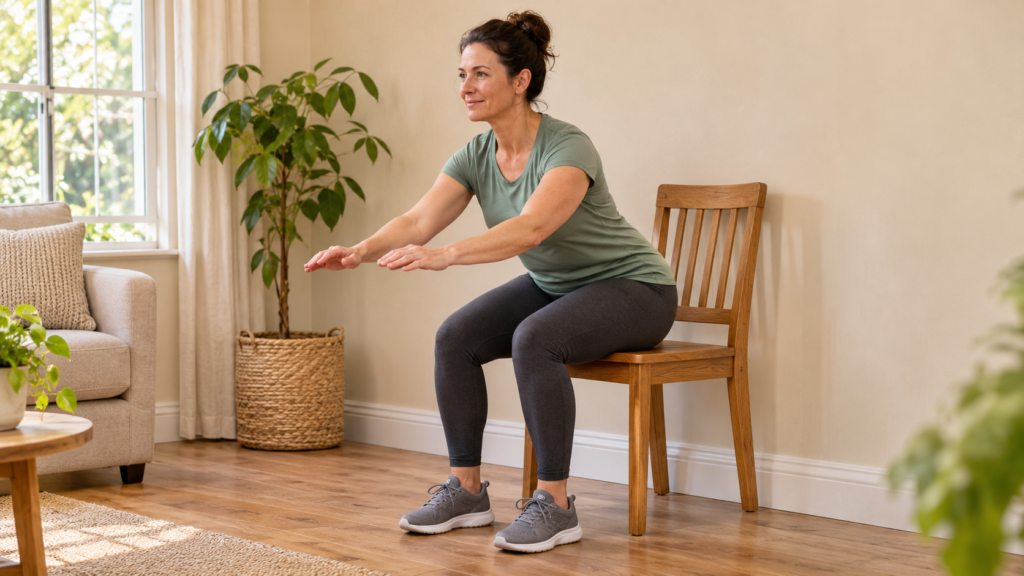
| 3:30–5:00 | Do 5–8 chair sit-to-stands. Sit back gently between reps and rest for the remaining time. | Use a higher, stable seat or push lightly through the armrests. |
| 5:00–6:30 | Step side to side for 60 seconds, then walk slowly for 30 seconds. | Tap one foot to the side without fully shifting your weight. |
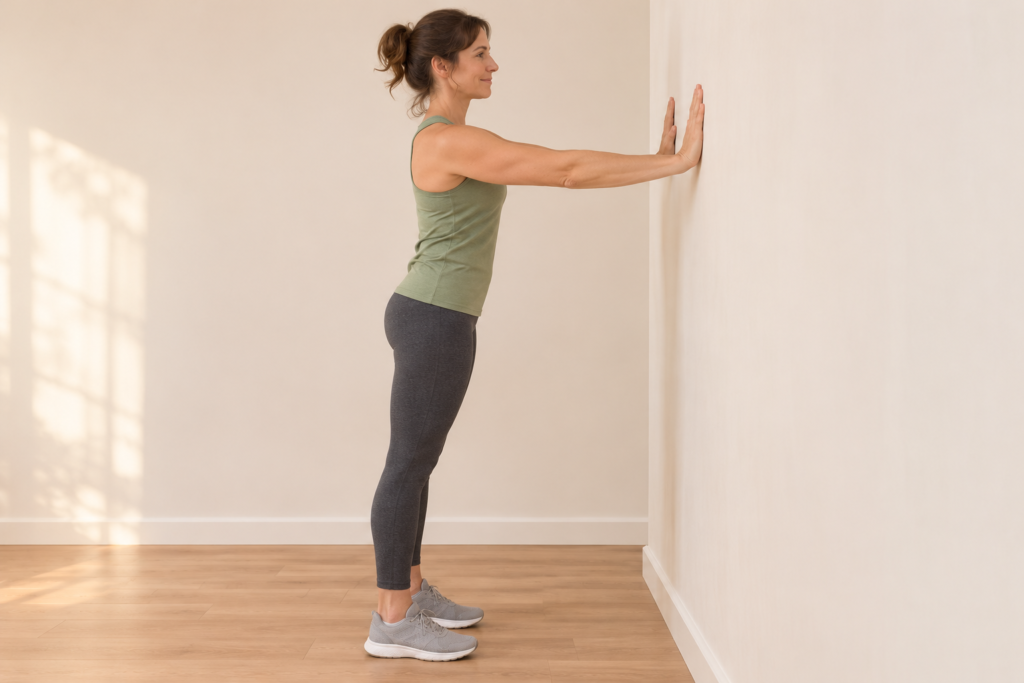
| 6:30–8:00 | Do 5–8 wall push-ups. Keep your body straight as you bend and straighten your elbows. Rest for the remaining time. | Stand closer to the wall. |
| 8:00–10:00 | Cool down with easy walking, gradually slowing your pace. | March slowly in place or sit and tap your heels. |
Marching and side steps are the aerobic portions. The chair and wall exercises are strength practice. If the session feels manageable, use the starter week below to plan your next workout.
Set a timer where you can see it and leave room to step to either side of the chair. Next time, use the same chair and wall position so you can tell whether the strength moves feel easier. If you finish the first session comfortably, your next scheduled activity is a short walk. The starter calendar below shows where it fits.
Which Aerobic Exercises Can Help Reduce Belly Fat?
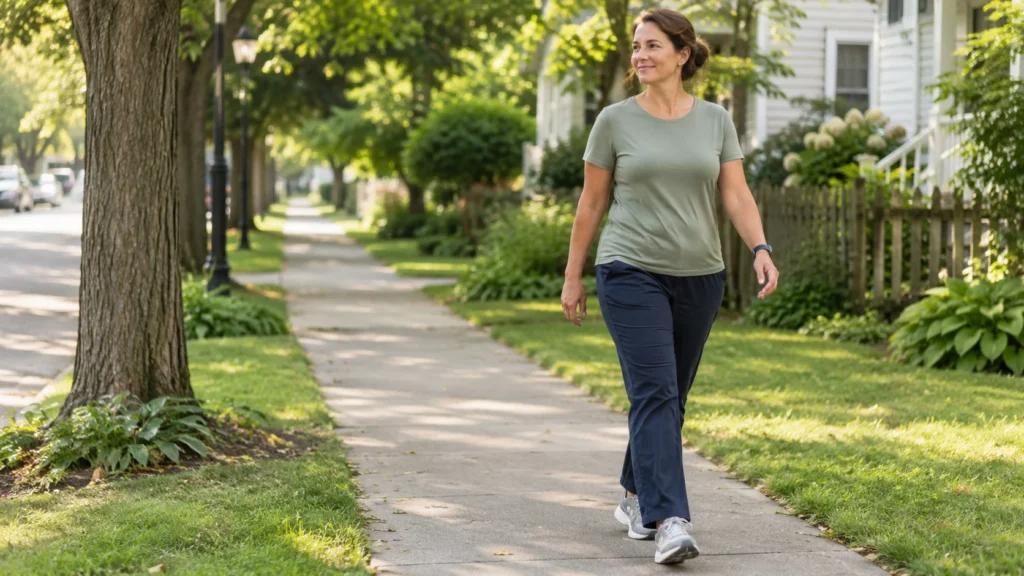
Brisk walking, indoor marching, and stationary cycling are low-impact aerobic options that can help reduce waist circumference over time. A review of 116 trials in adults with overweight or obesity found that regular aerobic exercise was associated with reductions in waist circumference and body fat. The trials lasted at least eight weeks. Pick a form of cardio you can do regularly and use the talk test to gauge your effort. JAMA Network Open review · CDC guide to exercise intensity
| Activity | When it fits | How to start |
|---|---|---|
| Brisk walking | You have a walking route or treadmill. | Start easy, then speed up until you can talk but would struggle to sing. |
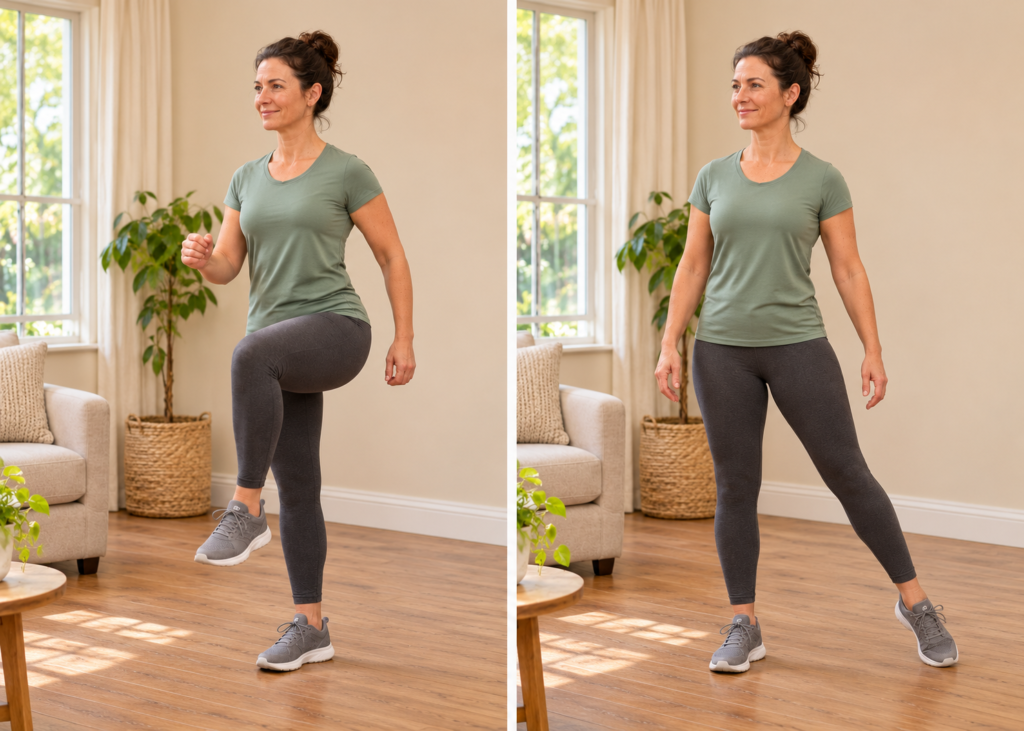
| Indoor marching or side steps | You have a small space or want to stay indoors. | Alternate marching and step-touches. Keep steps small and add time as you get comfortable. |
| Stationary cycling | You have a bike and prefer seated cardio. | Start with light resistance. Adjust your pace using the talk test. |
If you count daily steps, use your usual activity as a starting point. See how many steps a day may support weight loss for help setting a walking goal.
Low impact describes how the movement lands on your joints. Your effort depends on the pace. Indoor marching can count as moderate exercise when it raises your breathing enough for the talk test. If you can sing easily, try moving a little faster or swinging your arms naturally. If conversation becomes difficult, slow down.
High-intensity intervals are optional. A review comparing interval training with moderate continuous exercise found little to no difference in waist circumference in sedentary adults. For beginners, brisk walking or cycling at a steady pace offers a straightforward way to build aerobic minutes. Cochrane review on interval training
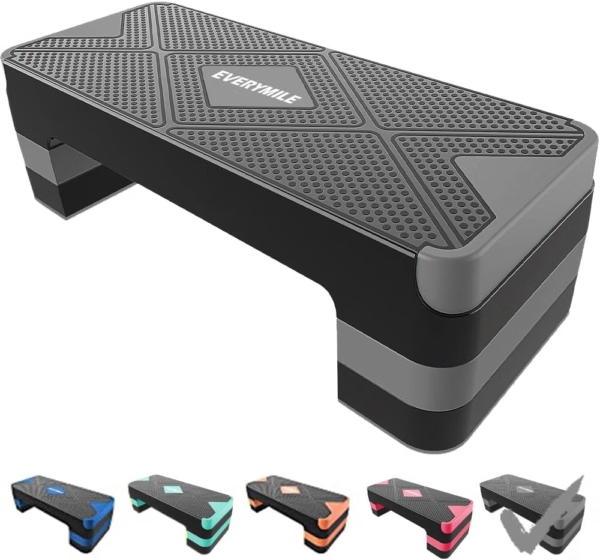
PVL pick — Aerobic step platform
EVERYMILE Aerobic Step Platform
PVL rating: 4.0/5 (provisional)
If you want another indoor cardio option after you’re comfortable with floor-based marching, try basic step-ups at the 4-inch setting. The platform also adjusts to 6 and 8 inches.
How to Add Full-Body Strength and Core Work
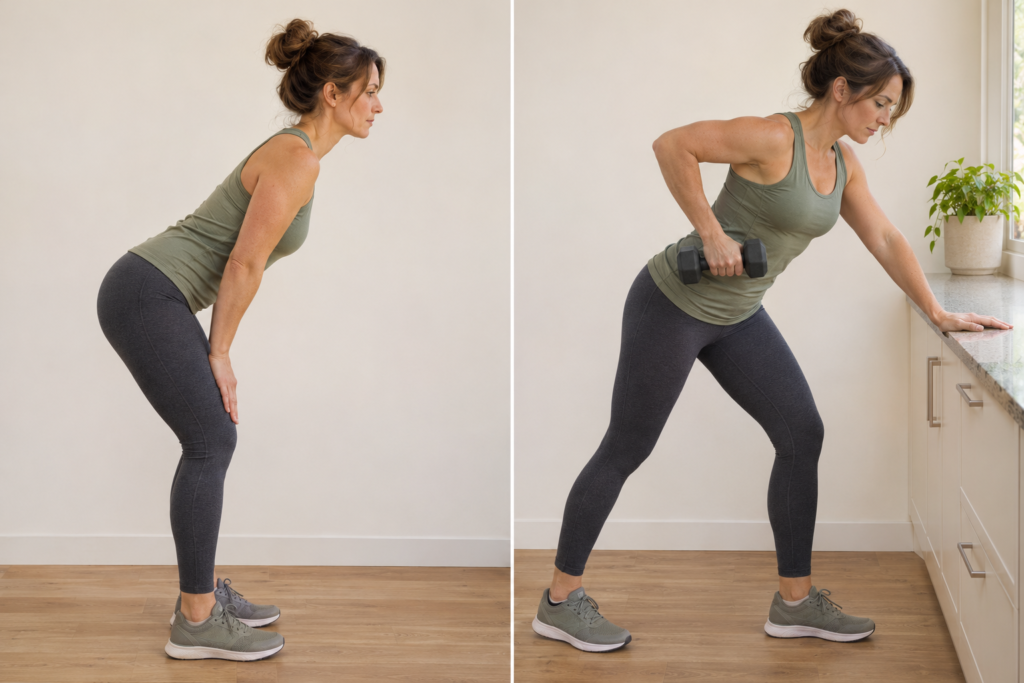
The starter session introduces a lower-body move and an upper-body push. On strength days, add a hip hinge and a row as those first two movements become familiar. To practice a hip hinge, soften your knees and move your hips back gently. For a row, support one hand on a sturdy counter and draw a light water bottle toward your ribs with the other. Start with a few controlled repetitions on each side.
For optional core practice, place your hands against a wall and step back slightly for a short wall plank. Keep breathing and hold for a few comfortable seconds. Core exercises help build strength, while regular aerobic activity can help reduce abdominal fat over time. British Heart Foundation guidance
For the chair sit-to-stand, plant both feet and lean forward slightly before standing. Lower under control until you touch the seat. For a wall push-up, place your hands around shoulder height and bend your elbows as your chest moves toward the wall. Breathe out as you push away. Choose a range you can control through the last repetition.
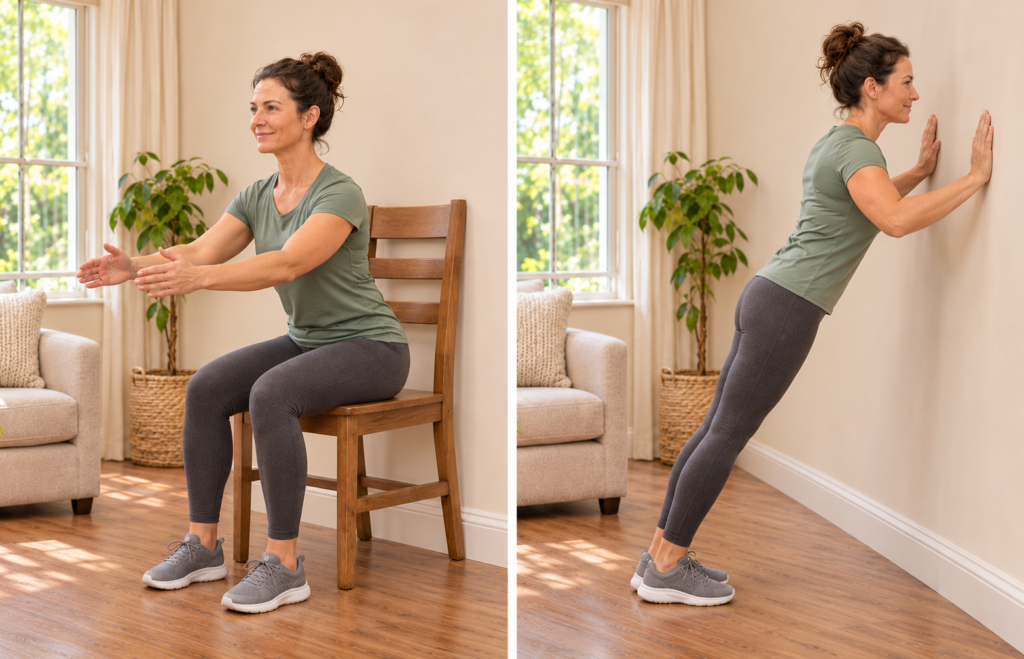
On each strength day, begin with one set of the moves you know. Once those repetitions feel steady, add the hip hinge and supported row. Keep the setup consistent from session to session so you can tell when each movement becomes easier.
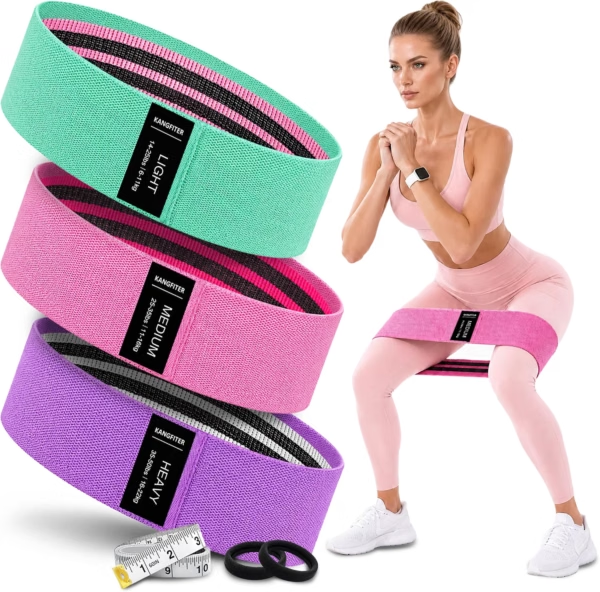
PVL pick — Fabric loop bands
KANGFITER Fabric Resistance Bands, 3-Pack
Once regular side steps feel comfortable, try the lightest loop for added resistance. The set includes light, medium, and heavy bands for lower-body exercises.
How Often Should You Exercise? Two Sample Weeks
Use the starter week if you’re coming back from a break or can manage only short sessions. Build toward the second week as the routine becomes comfortable. The general adult guideline is at least 150 minutes of moderate aerobic activity and two days of muscle strengthening per week. Moderate minutes can be spread across shorter walks. CDC adult activity guidelines
| Day | Starter week | Week to build toward |
|---|---|---|
| Monday | 10-minute home workout | 30-minute brisk walk plus strength |
| Tuesday | 10-minute walk | 30-minute brisk walk |
| Wednesday | Rest or easy movement | Rest or easy movement |
| Thursday | 10-minute home workout | 30-minute brisk walk plus strength |
| Friday | 10-minute walk | 30-minute brisk walk |
| Saturday | 10-minute walk | 30-minute brisk walk |
| Sunday | Rest or easy movement | Rest or easy movement |
The starter week includes three short walks and two sessions with strength practice. The second includes 150 minutes of brisk walking and two strength sessions. When the starter week feels manageable, add a few minutes to one or two walks. Count time toward the moderate activity target when your effort meets the talk test.
If you miss Thursday, move the strength session to another day that leaves recovery time between sessions. If thirty minutes feels too long, two fifteen-minute brisk walks can cover the same amount of moderate activity. Start by adding time to walks you already take. Once longer sessions fit your week, add another walking day or extend a shorter outing. The second column gives you a target to work toward at your own pace.
How to Make the Workout Easier at Home
If the marching block feels too long, move for twenty to thirty seconds and use the remaining time to walk slowly or rest. Repeat that version until you can finish the session comfortably. If side steps feel awkward in a tight space, alternate toe taps or march while keeping one hand near a sturdy support. Keep the steps small enough that you can set each foot down quietly.
A higher, stable chair reduces how far you need to lower yourself. Use the armrests if standing up takes more effort than you can manage with control. To make a wall push-up easier, move your feet closer to the wall. The workout can stay entirely upright. Readers who prefer seated movement can use the British Heart Foundation’s chair-based routine linked from its exercise guide.
What Progress Can You Track in the First Week?
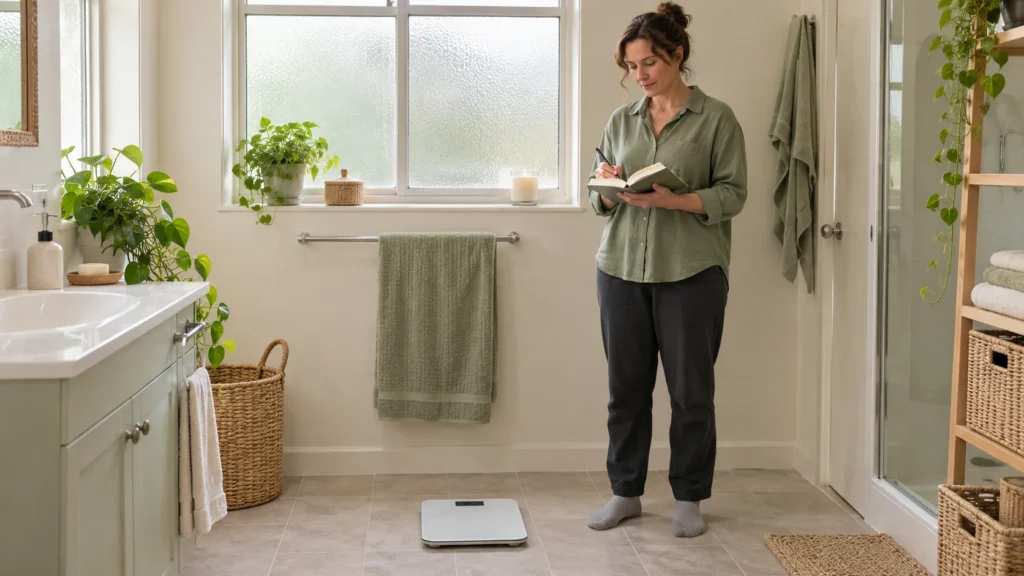
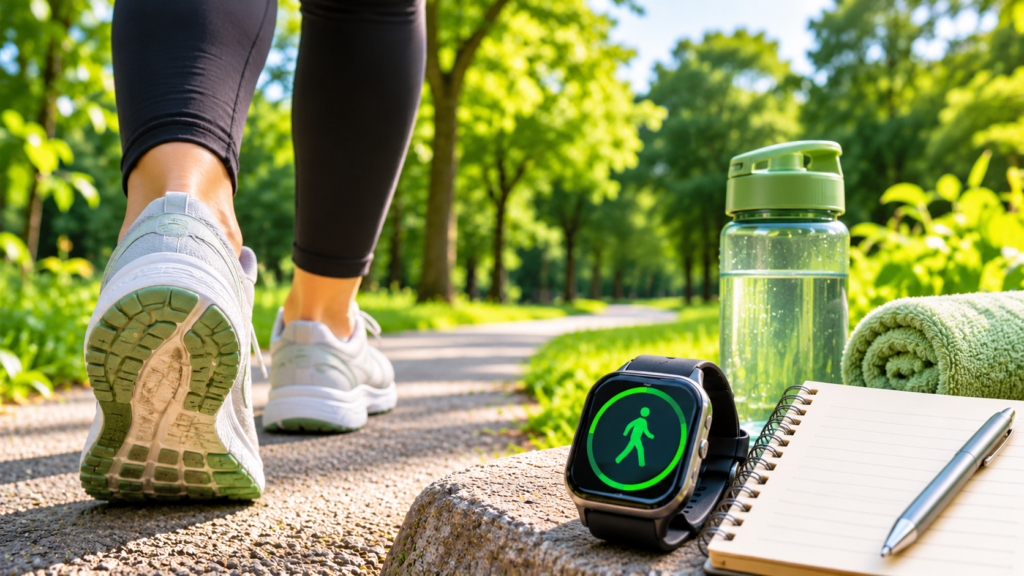
Record the day, activity, and minutes in a note on your phone. After a strength session, add one detail you can compare next time, such as how many chair stands felt steady or how far your feet were from the wall. Mark your walks as easy or brisk using the talk test. At the end of the week, see which sessions fit into your schedule.
If you choose to track your waist, measure under similar conditions and look at the trend across multiple weeks. A single reading can vary with how you position the tape and when you measure. If you missed several sessions, choose a shorter version or a different time of day for the coming week.
Key Takeaway
Start with one 10-minute low-impact workout and use the starter schedule to plan your next walks and strength sessions. Once the routine feels manageable, add a few minutes to one or two walks. In the first week, track the sessions you complete. Over time, regular aerobic exercise can help reduce waist circumference, while strength exercises help you build muscle strength.
Frequently Asked Questions
What exercises help reduce belly fat safely?
Brisk walking, indoor marching, and stationary cycling are low-impact aerobic options. Start with a pace you can repeat and increase the duration gradually. Add strength work on separate days or after a short walk, using a stable chair and wall for support.
What is the most effective at-home workout for reducing abdominal fat?
A practical starting plan combines regular aerobic exercise with full-body strength work. Use the ten-minute session to learn a few movements, then repeat them alongside short walks. Choose activities you can fit into most weeks and build the weekly duration as you get comfortable.
Which low-impact exercises can beginners do at home?
Walking is a practical starting option if it feels comfortable. Try a short walk on a familiar route or march indoors in a clear space. Begin at an easy pace and build up as you get used to the routine.
Can core workouts alone get rid of belly fat?
Planks and crunches strengthen the muscles you use. Fat loss around the waist can occur with regular activity over time, but working the abdominal muscles alone cannot reliably direct where fat comes off. British Heart Foundation guidance
How often should I exercise to help reduce belly fat?
Begin with the three short walks and two brief workout sessions in the starter schedule if that fits your current activity level. Over time, work toward the general adult activity guideline of 150 weekly minutes of moderate aerobic activity and two days of muscle strengthening.
What is the quickest exercise for belly fat, and can you see results in 7 or 10 days?
There is no single exercise that reliably produces the fastest belly fat loss. Research showing changes in waist circumference looked at programs lasting at least eight weeks. In your first week, track the walks and strength sessions you complete. Aerobic exercise review
Are there exercises that target stubborn lower belly fat?
Exercises such as leg raises and planks work the abdominal muscles. Changes in lower belly fat depend on overall changes in body fat. Build your home routine around walking or other aerobic movement and add strength exercises you can repeat comfortably.
Workout Resources
A fitness app can help with reminders, walking logs, and timers. Look for low-impact filters and sessions you can pause or adapt. If you prefer an online subscription, preview a beginner class and check whether the coach demonstrates easier versions of core exercises. A wall, a stable chair, and an optional light water bottle cover the basic movements. A resistance band can add pulling exercises later. An ab wheel adds a harder core exercise for readers who can already control a plank.
Optional Meal-Planning Resource
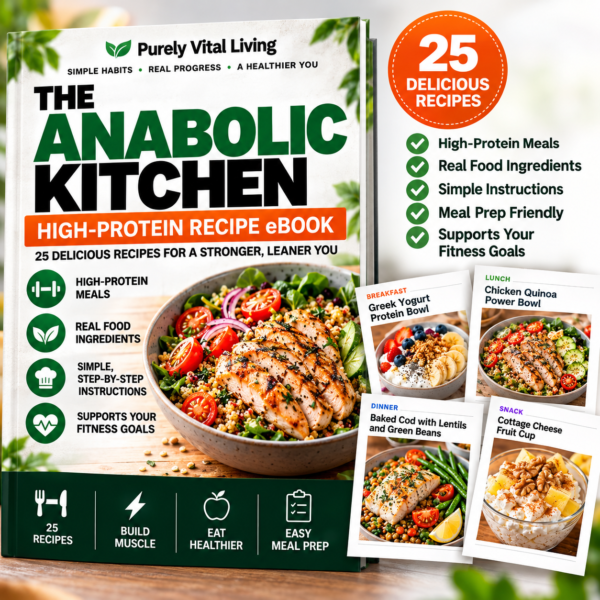
PVL pick — High-protein recipe ebook
The Anabolic Kitchen – High-Protein Recipe eBook
If you’re planning meals alongside your workout routine, this 31-page downloadable PDF gives you high-protein recipes to work into your week.
Get the Purely Vital Living Newsletter
Get practical guides for walking, home workouts, and healthy habits in your inbox.
Related Reads
- How Many Steps a Day to Lose Weight? — Set a walking goal based on your current activity.
- How to Lose Body Fat Naturally — See how activity, nutrition, and progress tracking fit together.
- Meal Prep for Weight Loss — Plan a week of meals with simple recipes.
References
- Aerobic Exercise and Weight Loss in Adults — Jayedi et al., JAMA Network Open (2024).
- High-intensity interval training for healthy but sedentary adults — Cochrane review.
- Measuring Physical Activity Intensity — Centers for Disease Control and Prevention.
- Adult Activity Guidelines — Centers for Disease Control and Prevention.
- What’s the best exercise to lose fat around your belly? — British Heart Foundation.