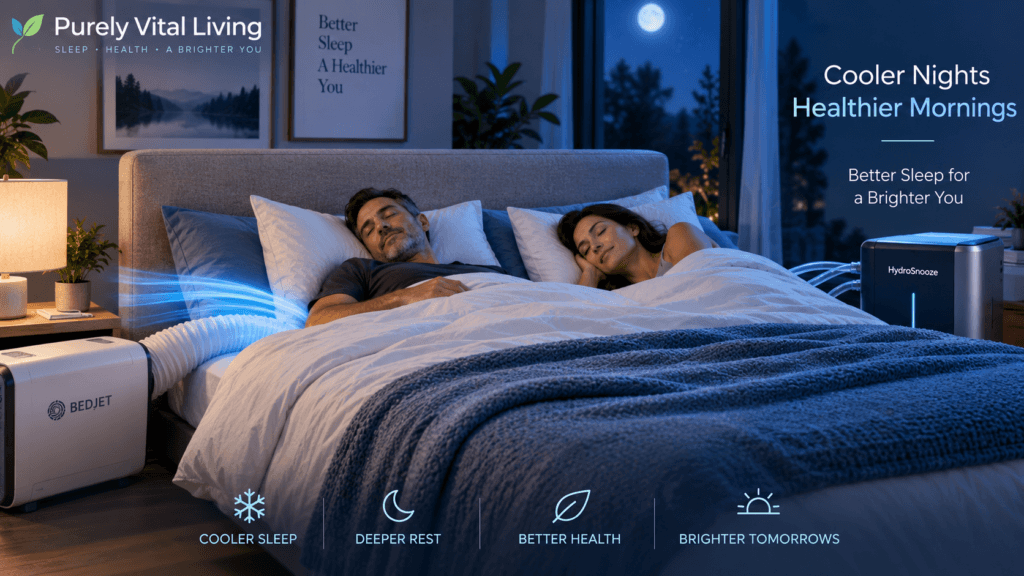
For most hot sleepers, BedJet 3 is our best overall bed cooling system because it combines active airflow, heating, overnight scheduling and lower maintenance than water-based systems. If you prefer direct water-based cooling, HydroSnooze is the stronger cooling-and-heating option, while Adamson B10 is the better budget active pick.
- BedJet 3 offers the best overall balance of cooling, heating, controls and easier maintenance.
- HydroSnooze is the best fit if you want direct water-based cooling plus heating.
- Adamson B10 is the strongest budget option for active bed cooling.
- Chilipad Cube CP500 suits sleepers who want simple half-bed water temperature control.
- SLEEP ZONE is a passive, lower-cost alternative for mild warmth or clamminess—not a true active cooling system.
- Choose between water, air or passive cooling based on cooling intensity, maintenance, noise, partner needs and total cost.
Waking up hot does not always mean the whole bedroom needs to be colder. Heat can build up inside the smaller microclimate created by your mattress, sheets, sleepwear and covers. A bed cooling system targets that space directly, using circulating air, temperature-controlled water, or passive moisture-management materials.
For this guide, we compared five options already evaluated by Purely Vital Living across cooling approach, comfort, ease of use, maintenance, features and value. Some are powered systems designed for substantial temperature control; one is a much simpler passive option for sleepers who mainly want a less clammy surface.
Editorial note: PVL does not claim hands-on testing where we have not personally tested a product. Our ratings are editorial assessments based on published specifications, manufacturer documentation, research, pricing, features, maintenance requirements and practical ownership factors.
- What Is the Best Bed Cooling System for Hot Sleepers?
- Best Bed Cooling Systems at a Glance
- How We Chose
- 1. BedJet 3 — Best Overall
- 2. HydroSnooze — Best Water Cooling + Heating
- 3. Adamson B10 — Best Budget Active Cooling
- 4. Chilipad Cube CP500 — Best for Half-Bed Control
- 5. SLEEP ZONE — Best Passive Budget Option
- Water vs. Air Bed Cooling Systems
- Which Bed Cooling System Should You Choose?
- Best Bed Cooling System for Couples
- Best for Memory Foam Mattresses
- What Is the Quietest Bed Cooling System?
- How Much Do Bed Cooling Systems Cost?
- Are Bed Cooling Systems Worth It?
- How to Choose a Bed Cooling System
- Frequently Asked Questions
- Final Verdict
- Related Reads
- References
What Is the Best Bed Cooling System for Hot Sleepers?
BedJet 3 is our best overall bed cooling system for most hot sleepers because it combines active airflow-based cooling and warming, fast temperature changes, overnight scheduling and lower maintenance than water-circulating systems. The important limitation is that BedJet moves ambient room air rather than refrigerating it, so its cooling performance depends partly on bedroom conditions.
If you prefer direct water-based temperature control, HydroSnooze is our pick for cooling plus heating. Adamson B10 offers a simpler budget route into active cooling, while the Chilipad Cube CP500 is useful for direct half-bed cooling and heating with uncomplicated controls. For mild warmth or clamminess, the SLEEP ZONE Cooling Mattress Topper is a lower-cost passive alternative rather than a true powered cooling system.
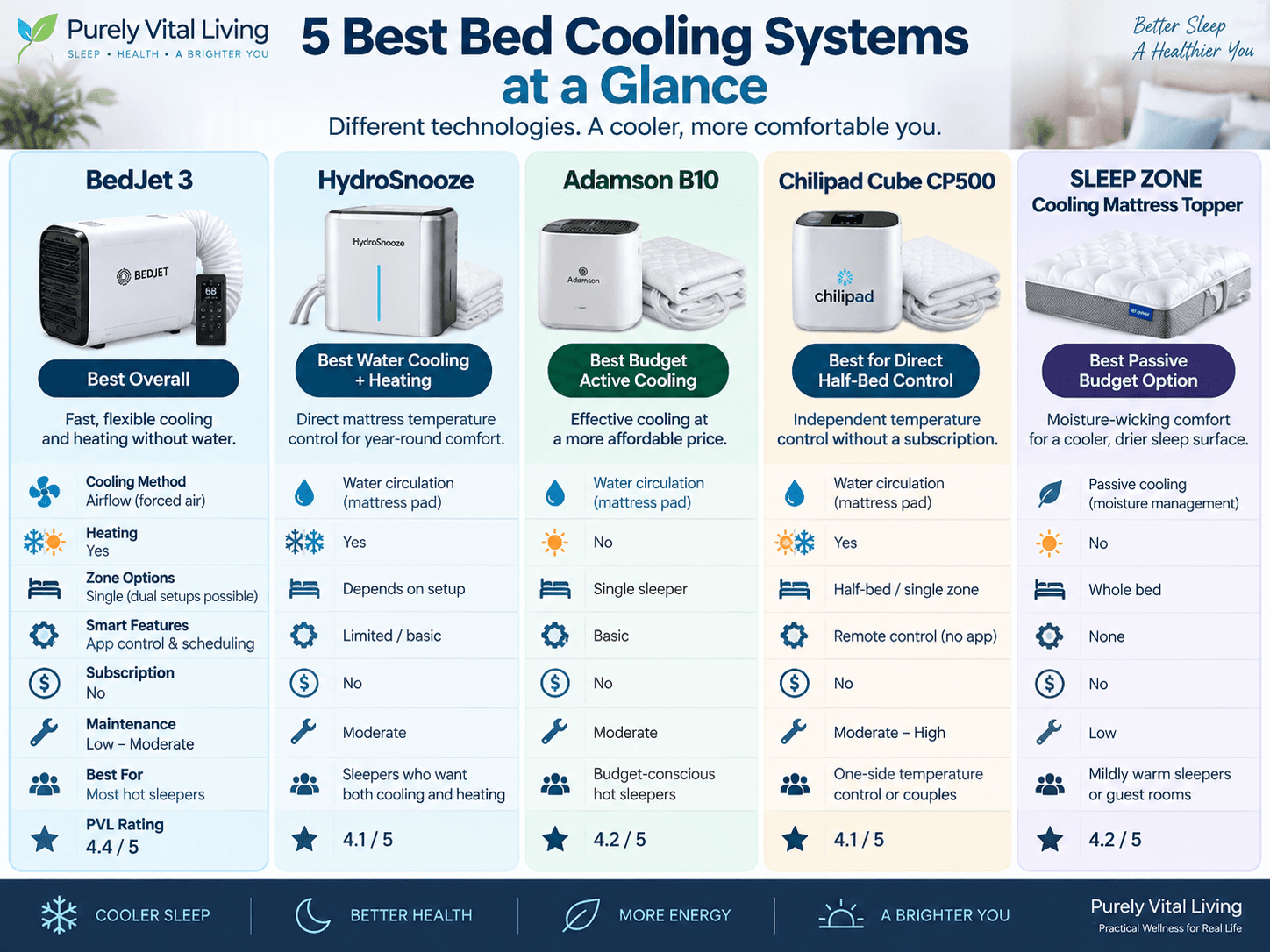
Best Bed Cooling Systems at a Glance
| System | Best for | Cooling method | Heating | Smart features | Subscription | Maintenance | PVL rating |
|---|---|---|---|---|---|---|---|
| BedJet 3 | Best overall | Airflow | Yes | App and scheduling | No required subscription | Low–moderate | 4.4/5 |
| HydroSnooze | Best water cooling + heating | Water circulation | Yes | Limited | No | Moderate | 4.1/5 |
| Adamson B10 | Best budget active cooling | Water circulation | No | Basic controls | No | Moderate | 4.2/5 |
| Chilipad Cube CP500 | Best for direct half-bed control | Water circulation | Yes | Remote control | No | Moderate–high | 4.1/5 |
| SLEEP ZONE | Best passive budget option | Moisture management | No | None | No | Low | 4.2/5 |
How We Chose the Best Bed Cooling Systems
We weighted cooling performance most heavily because that is the main reason to buy a mattress cooling system. We then considered how the system feels in everyday use and whether its benefits justify the setup, maintenance and cost.
| Evaluation factor | Weight |
|---|---|
| Cooling effectiveness | 30% |
| Comfort and sleep experience | 20% |
| Ease of use | 15% |
| Value for money | 15% |
| Maintenance | 10% |
| Features and versatility | 10% |
We also looked at whether a product heats as well as cools, how much equipment sits on or around the bed, whether it requires water-system care, how useful its controls are, and whether the design makes sense for couples. A high feature count does not automatically outrank better cooling or simpler ownership.
1. BedJet 3 — Best Overall
PVL Rating: 4.4/5
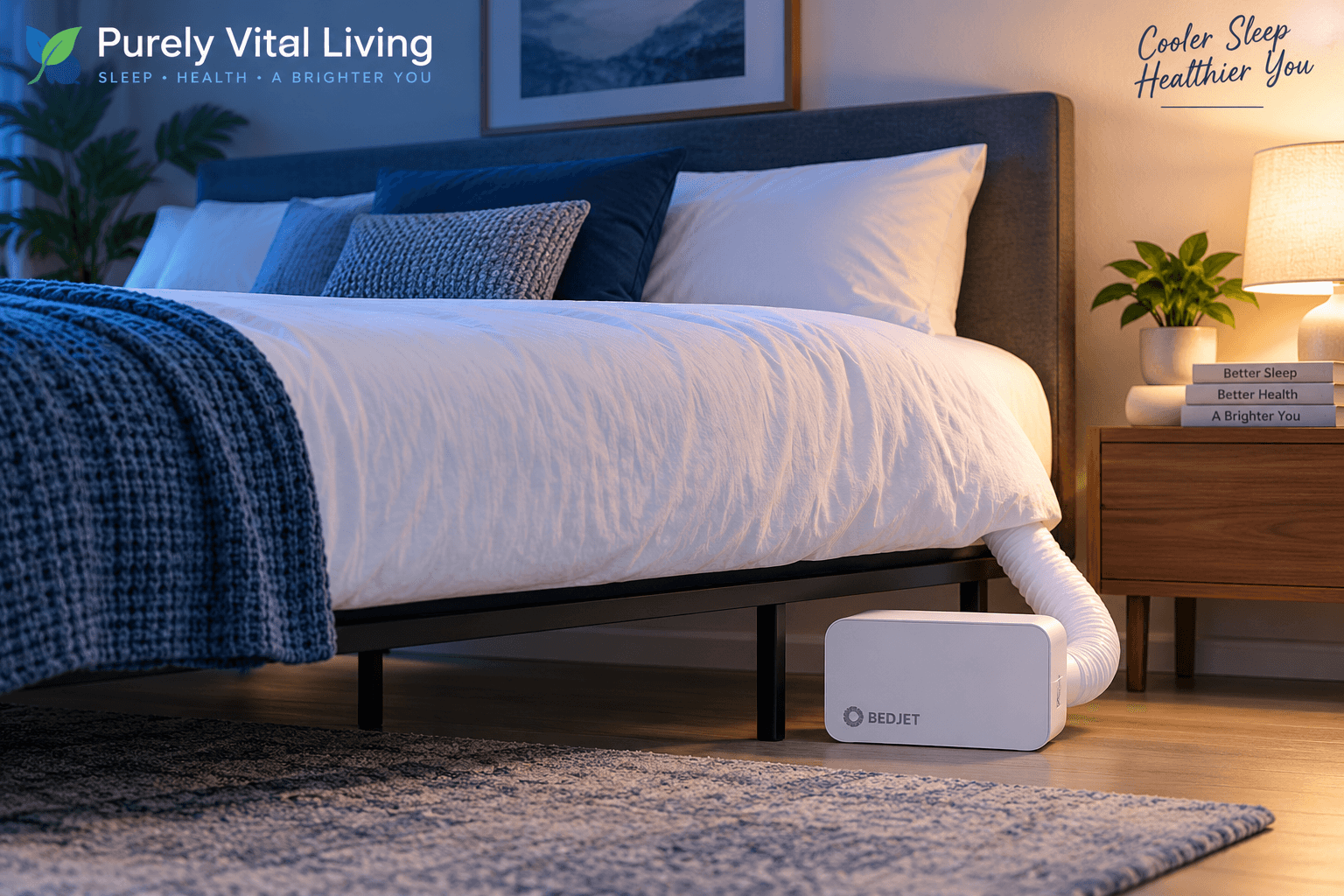
Why we picked it: BedJet 3 changes the microclimate under your covers with forced airflow rather than circulating water through a mattress pad. That makes it responsive, avoids water reservoirs and leaks, and reduces routine maintenance compared with water-based systems. It can also warm cold bedding and follow an overnight temperature schedule.
Best for: Hot sleepers who want fast temperature changes, people who dislike water pads beneath the body, and buyers who value scheduling without committing to a water-maintenance routine.
Skip it if: Your bedroom stays very hot and you expect the system to refrigerate air below ambient room temperature, or you strongly dislike airflow under the covers.
Cooling technology and temperature control
BedJet moves room air through the bed rather than cooling water. The airflow can move trapped heat and help sweat evaporate, which can make the bed feel much less stuffy. The trade-off is that it is not an air conditioner: the temperature of the room still matters.
Noise, features and maintenance
The fan is audible, particularly at higher output, and the hose and base unit are visible parts of the setup. In return, there is no reservoir to refill or water loop to clean. App-based controls and overnight scheduling give BedJet more flexibility than basic manual systems.
Pros and cons
Pros
- Fast airflow-based cooling and warming
- No water reservoir or water-loop maintenance
- Overnight scheduling
- Helps move trapped heat and moisture
- No pad with water channels beneath the sleeper
Cons
- Cooling depends on ambient room air
- Airflow sensation will not suit everyone
- Fan noise increases at higher settings
- Hose and base unit add visible hardware
- Independent dual-zone control can require additional equipment
PVL verdict: BedJet 3 offers the best overall balance in this group for sleepers who want meaningful active temperature management without maintaining a water system. Its limitation in very hot rooms should be understood before buying.
Read the full PVL BedJet 3 review →
2. HydroSnooze — Best Water Cooling + Heating
PVL Rating: 4.1/5
Why we picked it: HydroSnooze uses circulating water to influence temperature directly at the mattress surface. That conductive approach is attractive for sleepers who want active cooling without air blowing under the covers, while heating extends its usefulness into colder seasons.
Best for: Sleepers who specifically prefer water-based cooling and want both cooling and warming without a premium smart-bed ecosystem.
Skip it if: You want minimal maintenance, dislike hoses and reservoirs, or place a high priority on advanced automation.
Cooling technology and temperature control
Temperature-controlled water circulates through a pad beneath the sleeper, allowing heat exchange close to the body. This can feel more direct than passive cooling textiles and avoids the draft sensation of an air system.
Noise, features and maintenance
Like other water-based systems, HydroSnooze requires more ownership care than a passive topper or air-only setup. Reservoir condition, tubing, connections and cleaning become part of routine use. Buyers should weigh those requirements against the benefit of direct conductive cooling and heating.
Pros and cons
Pros
- Active water-based cooling
- Heating capability
- Direct sleep-surface temperature management
- No cooling draft across the body
- No mandatory subscription
Cons
- Requires water-system maintenance
- Hoses and control hardware add setup
- Less automated than premium smart systems
- Real-world performance depends on bedding and room conditions
PVL verdict: HydroSnooze is the strongest fit in this lineup for shoppers who specifically want a water-cooled and heated sleep surface but do not need a sophisticated connected ecosystem.
Read the full PVL HydroSnooze review →
3. Adamson B10 — Best Budget Active Cooling
PVL Rating: 4.2/5
Why we picked it: Adamson B10 gives budget-conscious sleepers a simpler route into active, targeted bed cooling. It avoids subscriptions and complex smart features, concentrating instead on the core problem of a sleep surface that feels too warm.
Best for: One hot sleeper who wants active cooling at a lower entry cost and is comfortable with a manual water-based setup.
Skip it if: You need heating, advanced scheduling, sophisticated automation or a premium dual-zone setup.
Cooling technology and everyday use
The B10 circulates water through a mattress pad to address heat close to the sleeper rather than cooling the entire room. This makes it fundamentally different from a passive cooling topper, but it also introduces the filling, tubing and inspection requirements common to water systems.
Value and maintenance
Value is Adamson’s clearest advantage in our existing evaluation. It is better viewed as a focused cooling tool than a smart sleep platform. That simplicity can be a strength if the main goal is to reduce bed heat without paying for features you do not need.
Pros and cons
Pros
- Budget-oriented active cooling
- Targeted water circulation
- No required subscription
- Simple controls
- Useful when one sleeper runs hotter
Cons
- Cooling only
- Manual setup and maintenance
- Limited automation
- Water tubing and connections require inspection
- Less versatile than heating-and-cooling systems
PVL verdict: Adamson B10 is our value-focused active pick. It makes the most sense when targeted cooling matters more than smart features, heating or a polished connected experience.
Read the full PVL Adamson B10 review →
4. Chilipad Cube CP500 — Best for Direct Half-Bed Temperature Control
PVL Rating: 4.1/5
Why we picked it: The Chilipad Cube CP500 combines active cooling and heating with a straightforward half-bed format. The ME configuration is particularly relevant when one partner wants direct temperature control while the other side of the mattress remains largely unchanged.
Best for: One partner who wants a dedicated temperature zone, sleepers who prefer water cooling to moving air, and buyers who prefer a physical remote over app dependence.
Skip it if: You want current-generation automation, sleep tracking, minimal maintenance or the strongest value at this price level.
Cooling technology and temperature control
The Cube circulates temperature-controlled water through channels beneath the sleeper. Its published system settings should not be confused with guaranteed skin or mattress temperature because room conditions, bedding, body heat and water flow all affect the result.
Noise, controls and maintenance
The Cube uses a pump and ventilation fan, so it is not silent. It also requires reservoir monitoring and circulation-system cleaning. Controls are intentionally simple: the unit and wireless remote provide direct adjustment without requiring Wi-Fi, an account or a subscription, but there are no modern automatic schedules or biometric adjustments on this legacy configuration.
Pros and cons
Pros
- Active cooling and heating
- Direct half-bed temperature zone
- No cooling draft
- Physical remote
- No app or subscription required
Cons
- Regular water maintenance
- Pump and fan are audible
- No app schedules or sleep tracking
- Older-generation hardware
- Pad channels or edges may be noticeable
PVL verdict: Chilipad Cube still offers capable direct water-based temperature control, but its older feature set and maintenance burden make it a more specialized recommendation than BedJet or a simpler budget system.
Read the full PVL Chilipad Cube review →
5. SLEEP ZONE Cooling Mattress Topper — Best Passive Budget Option
PVL Rating: 4.2/5
Important: SLEEP ZONE is not an active bed cooling system. It does not circulate chilled water or powered air and cannot lower the sleep surface in the same way as the four systems above. We include it because some sleepers need better moisture management and breathability rather than powered temperature control.
Why we picked it: It offers a low-cost, washable way to make a supportive mattress feel softer and potentially less clammy without adding pumps, hoses, electricity or a control unit.
Best for: Mild warmth, humid or clammy sleep surfaces, guest rooms, and buyers who want the simplest possible option.
Skip it if: You regularly overheat, need measurable active temperature control, or expect the topper to cool a hot bedroom or heat-retaining mattress.
Cooling approach and comfort
The pad relies on moisture-management fabric and a quilted construction rather than refrigeration. Its polyester fill adds softness but can also add insulation, so results depend heavily on sheets, mattress material, room temperature and humidity.
Pros and cons
Pros
- Much simpler than powered systems
- No electricity, pump or hoses
- Machine washable
- Adds light cushioning
- Budget-friendly entry point
Cons
- No active cooling
- Cannot remove heat like water or air systems
- Polyester fill may still feel warm in hot rooms
- Not a solution for severe overheating
- Limited pressure relief compared with thick toppers
PVL verdict: Choose SLEEP ZONE when the problem is modest surface warmth or moisture, not when you need true active cooling. Its low cost and simplicity are the point.
Read the full PVL SLEEP ZONE review →
Water vs. Air Bed Cooling Systems
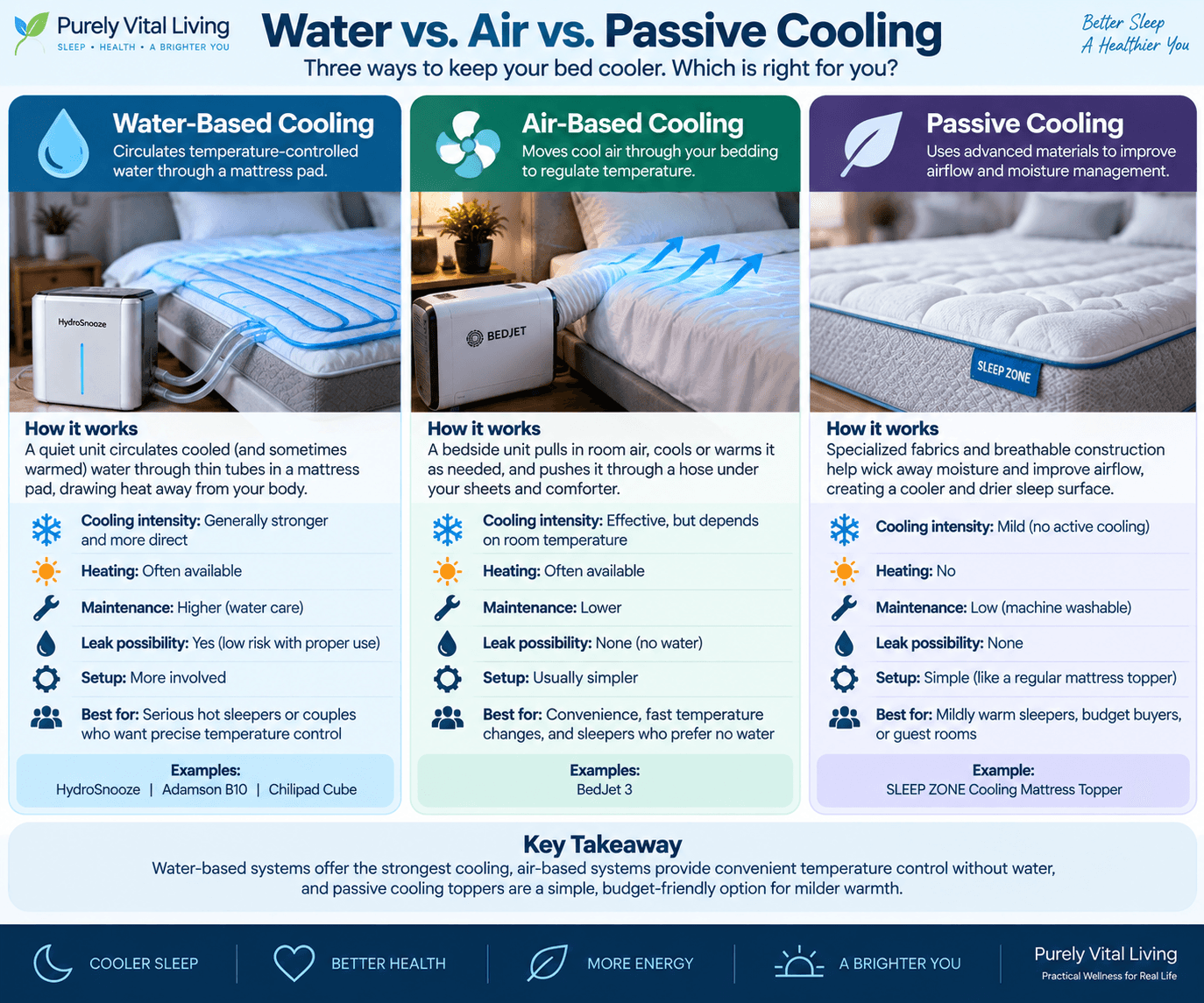
The most important technology decision is whether you want heat moved through circulating water or airflow. Neither approach is universally better; the right choice depends on how hot you sleep, whether you like moving air, how much maintenance you will tolerate and how warm the bedroom itself becomes.
| Feature | Water-based systems | Air-based systems |
|---|---|---|
| PVL examples | HydroSnooze, Adamson B10, Chilipad | BedJet 3 |
| Method | Circulates water through a mattress pad | Moves air through the bedding |
| Cooling sensation | Direct conductive contact | Airflow and evaporative cooling |
| Maintenance | Higher | Lower |
| Water leak possibility | Possible | None from the cooling system |
| Setup | Usually more involved | Usually simpler |
| Best for | People wanting direct sleep-surface control | Convenience and fast response |
| Main drawback | Water care and tubing | Cooling depends more directly on room air |
A passive pad such as SLEEP ZONE belongs in a third category. It can influence moisture and the immediate feel of the bed, but it does not actively transfer heat with a powered system.
Which Bed Cooling System Should You Choose?
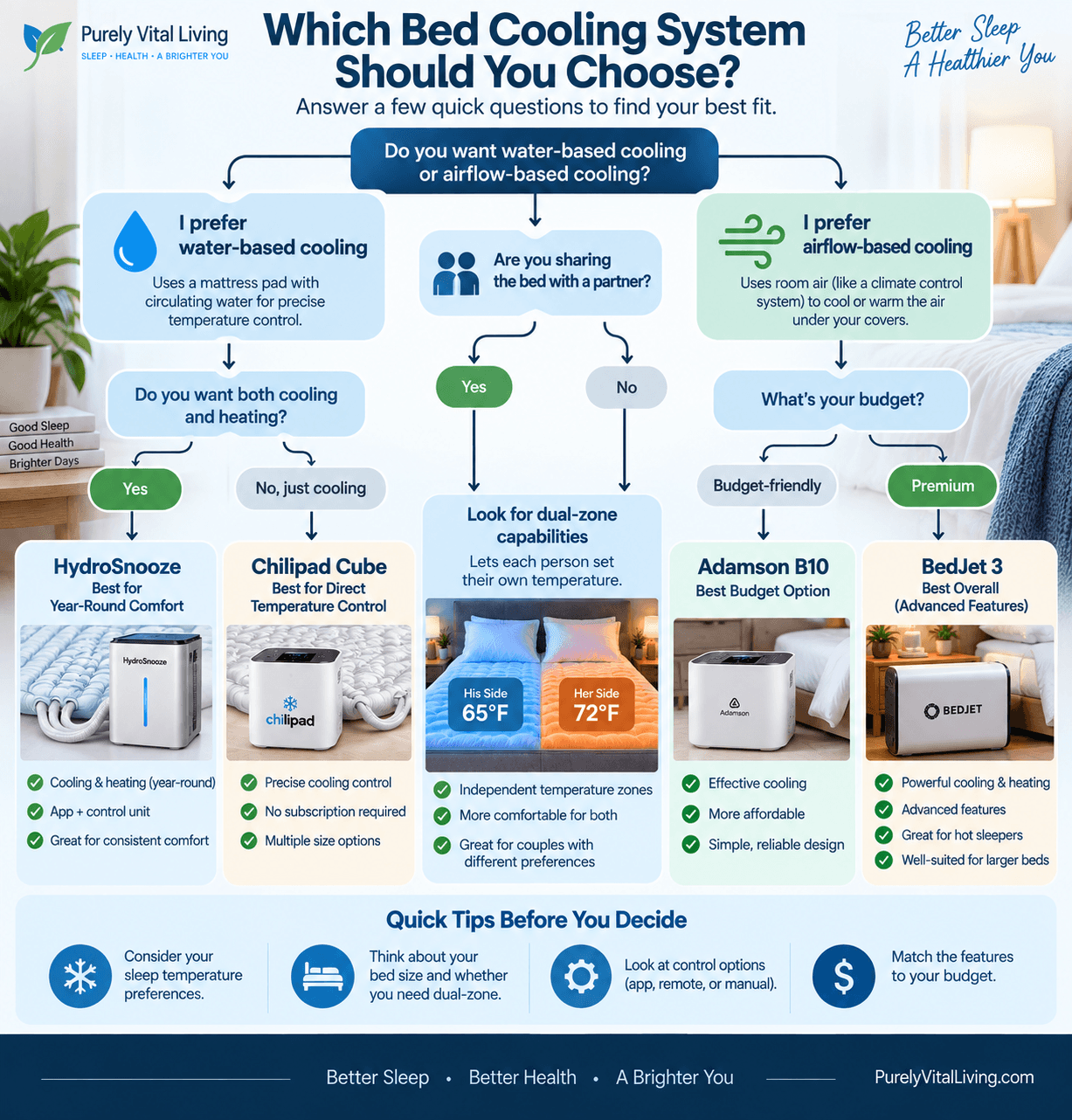
- Want the easiest all-around active option? Start with BedJet 3.
- Prefer direct water-based cooling and heating? Consider HydroSnooze.
- Want a lower-cost active cooling system? Adamson B10 is our budget pick.
- Want simple half-bed cooling and heating? Chilipad Cube CP500 is the most targeted fit here.
- Only mildly warm and do not want powered equipment? Try a passive option such as SLEEP ZONE first.
Best Bed Cooling System for Couples
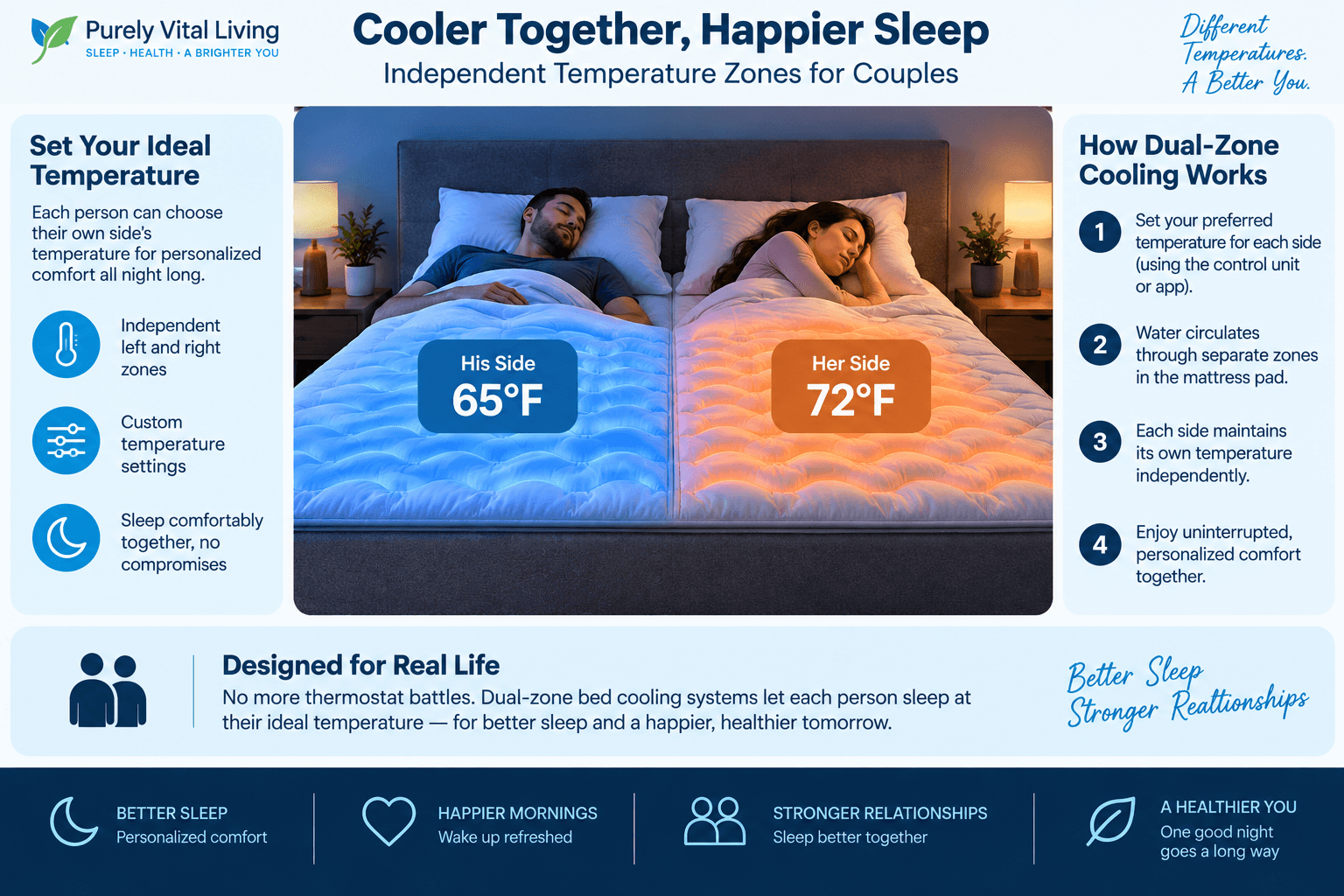
Couples should prioritize zone control rather than simply buying the most powerful system. If one person sleeps hot while the other sleeps cold, cooling the entire bed—or the entire room—can create a new comfort problem.
The Chilipad Cube ME configuration is designed around a half-bed zone, making it relevant when only one partner wants active water cooling or heating. BedJet can also accommodate couples through compatible dual-zone configurations, though independent control may require additional equipment. Check the exact size and configuration before ordering because single-zone and dual-zone packages are not interchangeable.
Best Bed Cooling System for Memory Foam Mattresses
Dense memory foam can feel warm because heat and moisture can accumulate around the sleeper, particularly under insulating bedding. A bed cooling system can change the microclimate above the mattress without requiring you to replace an otherwise comfortable bed.
Air systems such as BedJet work primarily through the space under the covers, while water pads sit closer to the body and influence the sleep surface directly. With either approach, thick protectors, toppers and heavy bedding can change how much cooling you actually feel. A passive topper may improve surface moisture but cannot remove stored heat as actively as a powered system.
What Is the Quietest Bed Cooling System?
There is no useful universal “quietest” winner unless systems are measured under comparable conditions. Air systems produce fan noise, while water systems may combine pump, fan and water-flow sounds. Output level, placement, flooring, room acoustics and distance from the pillow all affect perceived noise.
If you are highly noise-sensitive, look beyond a single decibel figure. Consider whether the sound is a steady fan, mechanical hum or intermittent water noise, and check return terms in case the sound character bothers you more than expected.
How Much Do Bed Cooling Systems Cost?
Prices vary widely because “bed cooling system” can describe everything from a passive mattress pad to a sophisticated powered temperature-control platform. Passive pads sit at the low end. Budget active systems typically cost several hundred dollars, while more advanced powered systems can approach or exceed $1,000 depending on size, zones and features. Premium smart systems can cost substantially more and may add subscription fees.
Compare total cost of ownership, not only the purchase price. Replacement pads, cleaning supplies, electricity, accessories, dual-zone hardware and subscriptions can materially change the long-term value.
Are Bed Cooling Systems Worth It?
A bed cooling system becomes more compelling when overheating repeatedly disrupts sleep despite reasonable changes to room temperature, bedding and airflow. Targeting the bed microclimate may also make sense for couples who have very different temperature preferences.
It is less compelling when lighter bedding, a fan, breathable sleepwear or a modest thermostat adjustment solves the problem. Before buying powered equipment, review our guide to the best sleeping temperature and identify whether the room itself or the heat trapped around your body is the bigger issue.
Persistent or unexplained night sweats can also have medical causes. A cooling system may improve comfort, but it is not a treatment for an underlying health condition.
How to Choose a Bed Cooling System
Cooling method
Choose water if you prefer direct conductive cooling and do not mind maintenance. Choose air if you want simpler ownership and tolerate airflow. Consider passive bedding first if your overheating is mild.
Temperature control
Do not assume a published water or device setting equals your skin temperature. Bedding, body heat and room conditions affect the temperature you actually experience.
Single vs. dual zone
Couples with different preferences should check whether each side can be controlled independently and whether dual-zone operation is included or requires additional hardware.
Noise
Pumps and fans are rarely silent. Consider where the control unit will sit and whether you are sensitive to airflow or mechanical hum.
Mattress compatibility
Check pad dimensions, mattress depth and manufacturer restrictions. Thick protectors or toppers between you and a cooling pad can also reduce the sensation of temperature change.
Maintenance
Water systems need reservoir and circulation-loop care. Air systems generally require less maintenance. Passive pads are usually simplest and may be machine washable.
Smart features and subscriptions
Scheduling can be genuinely useful because temperature preferences can change through the night. Sleep tracking and automation may be valuable to some buyers, but they should not distract from cooling performance, privacy considerations and recurring fees.
Trial, warranty and total cost
High-ticket sleep equipment is personal. Check the return window, warranty, replacement-part availability and any restocking or subscription conditions before buying.
Frequently Asked Questions
Do bed cooling systems really work?
Active bed cooling systems can change the thermal conditions immediately around the sleeper by circulating air or temperature-controlled water. How much cooler you feel depends on the technology, room temperature, bedding, mattress, body heat and system settings. Passive “cooling” textiles have a more limited role and generally focus on breathability or moisture management.
What is the best bed cooling system for hot sleepers?
For this PVL comparison, BedJet 3 is our best overall choice because it combines active airflow, heating, scheduling and relatively low maintenance. Sleepers who dislike airflow may prefer a water-based option such as HydroSnooze, while Adamson B10 offers a more budget-oriented route into active cooling.
Is a water- or air-based bed cooling system better?
Water systems provide direct conductive temperature control at the sleep surface but require more maintenance. Air systems are generally simpler and respond quickly, but cooling depends more on ambient room air and creates noticeable airflow. The better choice depends on your heat sensitivity, maintenance tolerance and preferred sensation.
What is the best bed cooling system for couples?
Look for independent zones rather than a single whole-bed setting. The Chilipad Cube half-bed configuration can serve one partner, while compatible BedJet configurations can provide separate sides. Always verify what is included in the exact package because dual-zone capability may require additional hardware.
Can you use a bed cooling system with memory foam?
Many bed cooling systems can be used with memory-foam mattresses because they target the area above the mattress rather than changing its core construction. Follow the cooling-system and mattress manufacturers’ compatibility guidance, and remember that thick protectors or toppers may reduce the temperature effect you feel.
Are bed cooling systems noisy?
Powered systems are usually audible. Air systems use fans, while water systems may use pumps, fans and circulating water. Noise varies with output, placement and room acoustics, so return policies can be important for light sleepers who are sensitive to mechanical sounds.
Are bed cooling systems worth the money?
They can be worth it for people whose sleep is regularly disrupted by overheating and who have already tried simpler changes such as lighter bedding, airflow and reasonable bedroom-temperature adjustments. For occasional warmth, a powered system may be unnecessary. Compare maintenance and total ownership cost as well as the initial price.
Final Verdict
BedJet 3 is our best overall pick in this five-product comparison because it balances active temperature management, useful controls and lower maintenance without circulating water beneath the sleeper. HydroSnooze is the stronger choice when water-based cooling plus heating is the priority, while Adamson B10 is our budget-focused active option.
Chilipad Cube CP500 remains useful for direct half-bed water cooling and heating with simple controls, though its older feature set and maintenance burden reduce its broader value. SLEEP ZONE is fundamentally different: choose it for modest moisture management and surface comfort, not as a substitute for powered temperature control.
The best system is ultimately the one that addresses your actual source of discomfort without adding more cost, noise or maintenance than you need. If you are unsure whether the problem starts with the room or the bed itself, begin with our best sleeping temperature guide.
Related Reads
- Best Sleeping Temperature: What’s the Ideal Room Temperature for Sleep?
- How to Improve Sleep Quality Naturally
- How to Improve Deep Sleep: 10 Science-Backed Strategies
- How to Fall Asleep Faster Naturally Tonight
- PVL Sleep Score Calculator