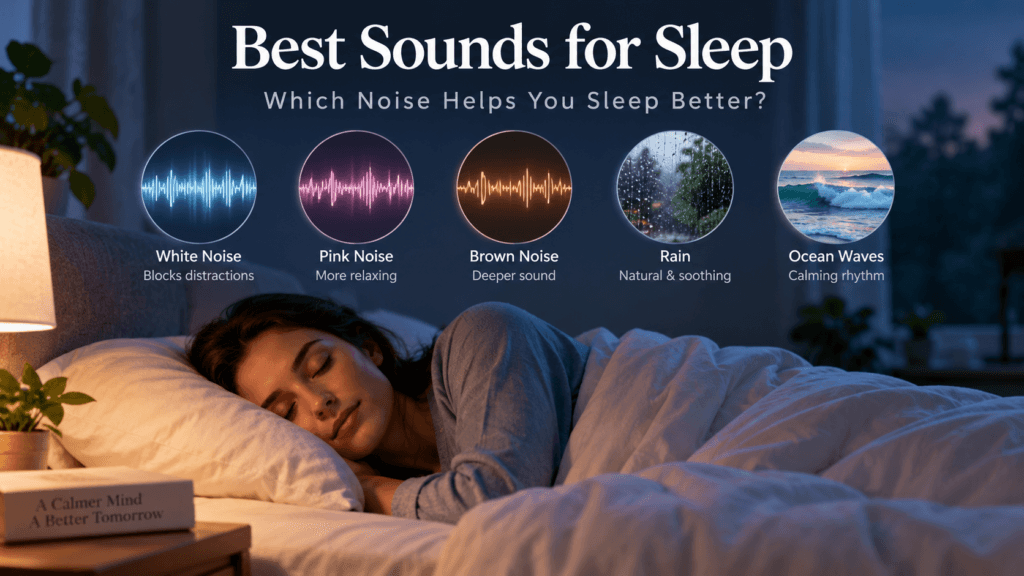
There is no universally best sound for sleep. White noise can help mask sudden environmental sounds, while pink and brown noise provide softer or deeper alternatives. Steady rain and other predictable nature sounds may feel more relaxing for some sleepers. If you already sleep well in silence, adding noise may offer no advantage.
Some people sleep best in complete silence. Others find that a steady background sound makes it easier to relax or masks traffic, voices, a humming air conditioner, or other nighttime disturbances. The challenge is that there is no single sound that works best for everyone.
White, pink, and brown noise differ in how their sound energy is distributed across frequencies, while rain, ocean waves, music, and guided audio offer different listening experiences. The best choice depends on what is disrupting your sleep, what you find comfortable, and whether adding sound actually helps you settle down.
Key Takeaways
- White noise is a practical first choice for masking unpredictable outside sounds.
- Pink noise has a softer profile, while brown noise sounds deeper and may suit low-frequency disturbances.
- Rain and nature sounds can be useful when relaxation is the goal rather than sound masking.
- No continuous sound has been proven to guarantee deep sleep.
- Use the lowest comfortable volume that serves the purpose, especially with earbuds or headphones.
- If silence already works well for you, there is no need to add background sound.
Table of Contents
- Best Sleep Sounds at a Glance
- What Are the Best Sounds for Sleep?
- White vs Pink vs Brown Noise
- Best Sounds for Different Sleep Problems
- Best Nature Sounds for Sleep
- Do Sleep Sounds Actually Improve Sleep?
- 432 Hz, Binaural Beats and Delta Waves
- Silence vs Noise
- How Loud Should Sleep Sounds Be?
- How to Choose the Right Sleep Sound
- How to Play Sleep Sounds
- Frequently Asked Questions
- The Bottom Line
Best Sleep Sounds at a Glance
| Sleep need | Sound to try | Why it may help |
|---|---|---|
| Sudden outside noises | White noise | Provides broad-spectrum sound masking |
| Traffic or low rumbling noise | Brown noise | Has a deeper, lower-frequency character |
| White noise feels too harsh | Pink noise | Has a softer high-frequency profile |
| Relaxation | Steady rain | Offers predictable natural ambience |
| Rhythmic natural sound | Ocean waves | Provides a repetitive natural pattern |
| Racing thoughts | Calm music or guided audio | May redirect attention away from bedtime thoughts |
| Sound itself bothers you | Silence | Added noise is not necessary for everyone |
What Are the Best Sounds for Sleep?
The most useful way to choose a sleep sound is not to ask which one is universally “best,” but what you want the sound to do. If the goal is masking unpredictable environmental noise, a continuous broadband sound may be useful. If the goal is relaxation, rain, ocean waves, quiet music, or another personally soothing sound may be more appealing.
Consistency also matters. A sound that seems relaxing while you are awake can become disruptive if it contains sudden changes, loud peaks, voices, animal calls, or an obvious loop.
White vs Pink vs Brown Noise: Which Is Best for Sleep?
White Noise
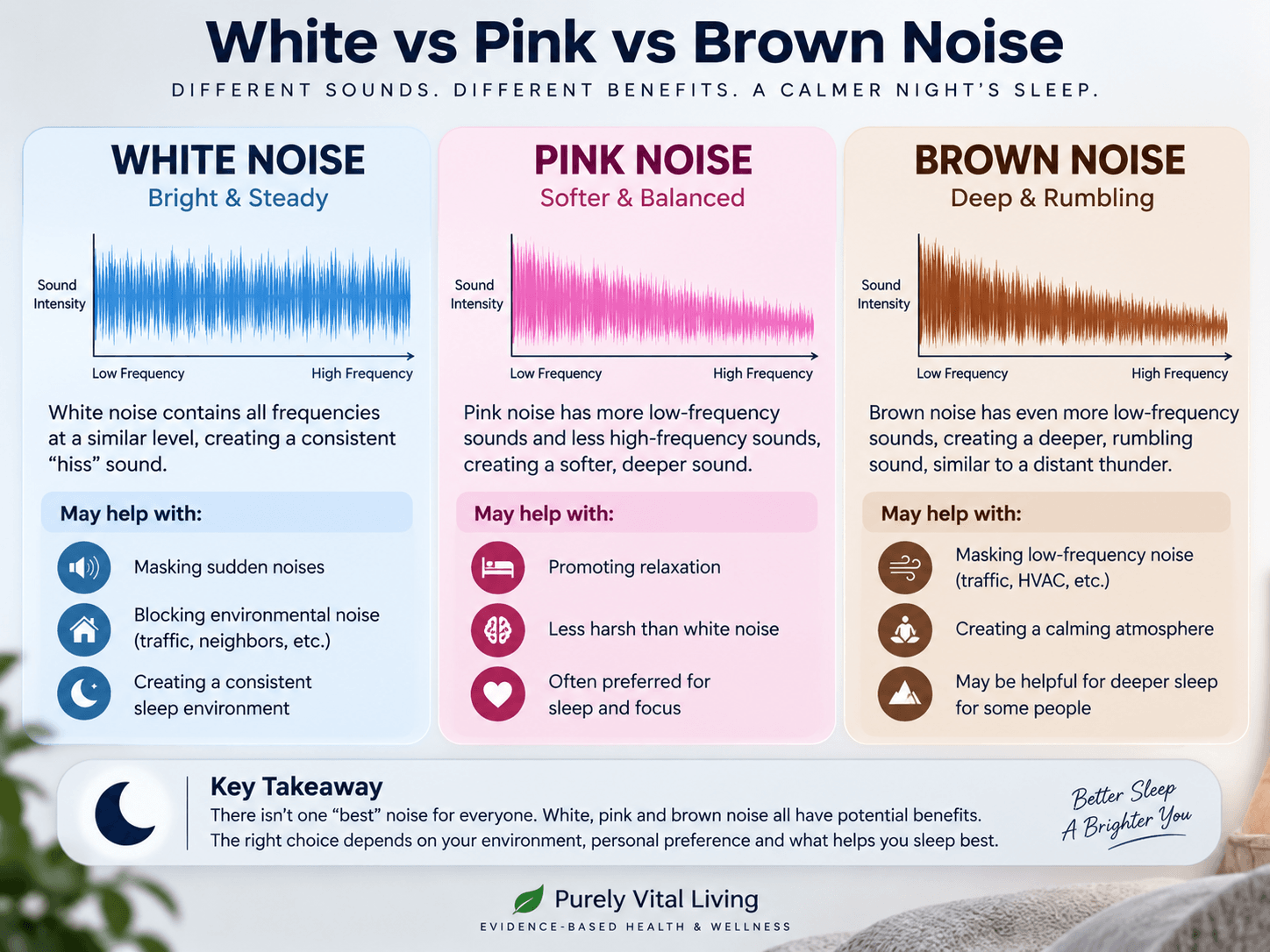
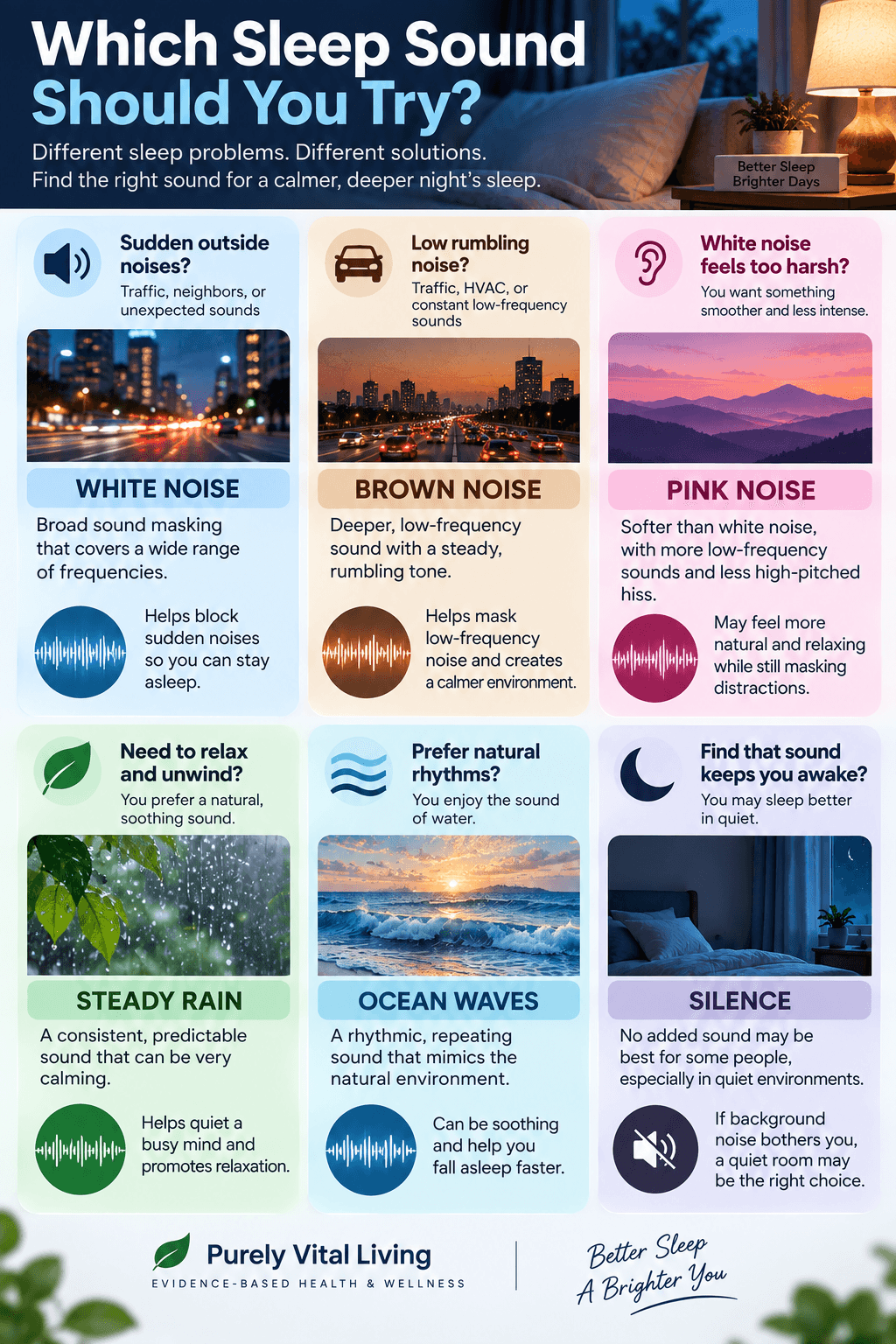
White noise contains energy across the audible frequency spectrum and typically sounds like a steady hiss or static. Its practical appeal at night is sound masking: a continuous background can make intermittent noises such as doors, voices, or traffic less noticeable.
Pink Noise
Pink noise places relatively less emphasis on higher frequencies than white noise, giving it a softer and deeper character. People who find white noise sharp or hissy may prefer pink noise. Research into pink-noise stimulation and sleep is interesting, but findings from specific experimental protocols should not be interpreted as proof that any ordinary pink-noise recording will improve everyone’s sleep.
Brown Noise
Brown noise emphasizes lower frequencies even more strongly and is often described as a deep rumble. Some sleepers prefer it for masking low-frequency environmental sounds such as traffic or mechanical hums. Brown noise is popular online, but popularity should not be confused with strong clinical evidence that it improves sleep itself.
Green Noise
“Green noise” is a less standardized term than white or pink noise and is commonly used online for sound profiles emphasizing midrange frequencies or resembling natural ambience. Treat it primarily as a listening preference rather than a distinct evidence-backed sleep treatment.
Best Sounds for Different Sleep Problems
Best Sound for Falling Asleep
If your bedroom is unpredictable or noisy, start with a steady sound that you find neutral rather than stimulating. White, pink, or brown noise can be tested at a comfortable low volume. If environmental noise is not the problem, quiet rain or gentle music may be more relaxing. If the main difficulty is sleep onset rather than noise itself, use our broader guide on how to fall asleep faster naturally.
Best Noise for Deep Sleep
No sound can guarantee deep sleep. Some laboratory research has investigated carefully timed auditory stimulation during slow-wave sleep, but that is different from simply playing a continuous noise track overnight. For everyday use, choose a steady sound that reduces disturbances without becoming a disturbance itself. For the wider lifestyle factors that support slow-wave sleep, see how to improve deep sleep.
Best Sound for Staying Asleep
If intermittent noises wake you, consistency is more important than novelty. Continuous white, pink, or brown noise may reduce the contrast between background sound and sudden environmental noises. Avoid recordings with abrupt changes or tracks that stop unexpectedly if those transitions wake you.
Best Sound for Traffic and Outside Noise
For variable street sounds, white noise is a practical first option because of its broad sound spectrum. If traffic produces more of a low rumble and you dislike white noise, try brown noise and compare which masks the disturbance more comfortably.
Best Sound for a Snoring Partner
A steady masking sound may make snoring less noticeable, although it does not address the cause of snoring. If snoring is loud, persistent, or accompanied by gasping or pauses in breathing, it deserves medical attention rather than simply being covered with louder audio.
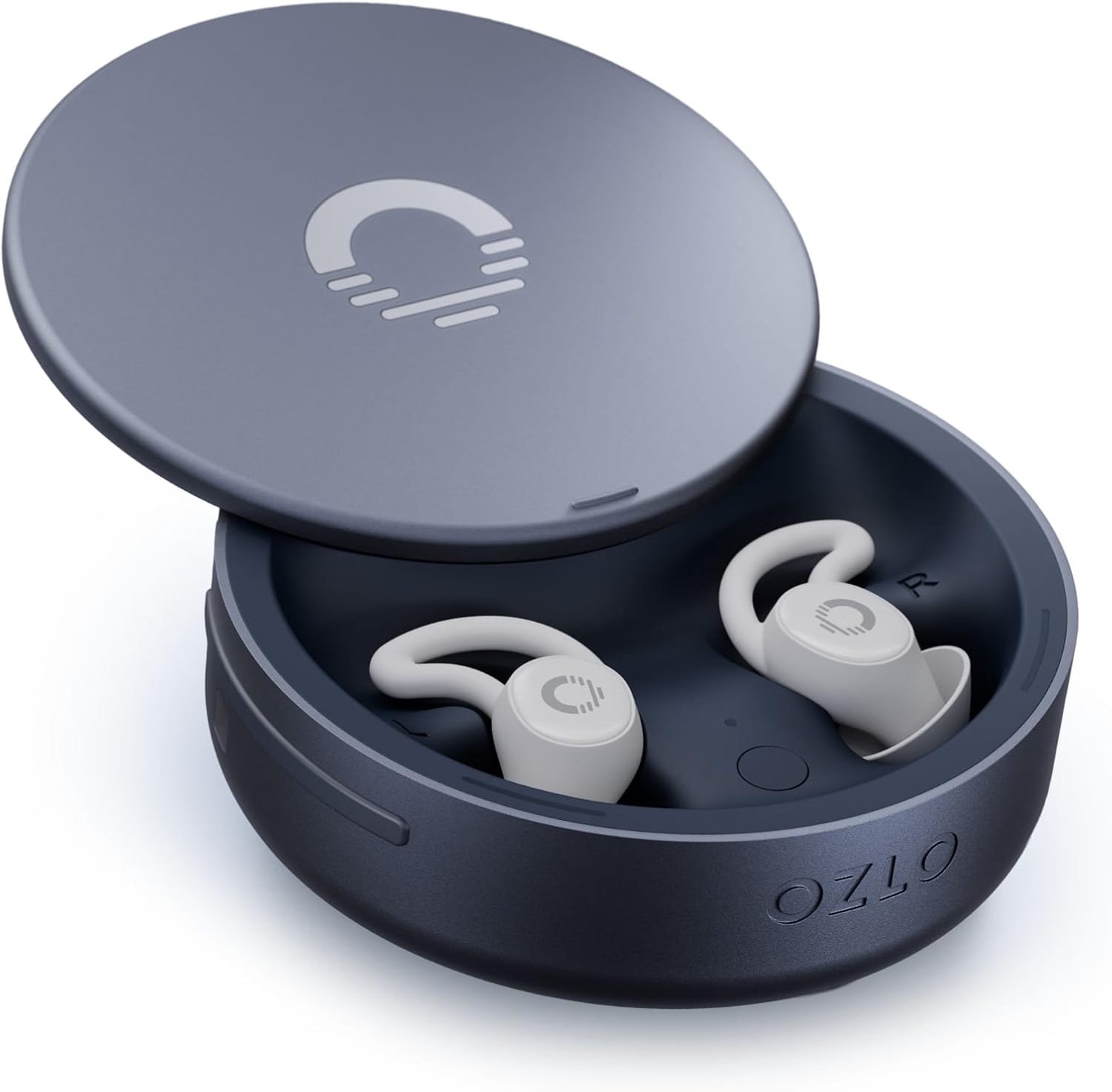
Ozlo Sleepbuds 2
PVL Rating: 4.1/5 · $279 reviewed price
Premium low-profile sleep earbuds designed for side sleepers who are regularly disturbed by snoring, traffic, neighbors, or travel noise. They combine passive sealing with selectable masking sounds, offer up to 14 hours of stated battery life, support Bluetooth streaming, and include a private in-ear alarm. The main trade-off is the premium price, and they use noise masking rather than active noise cancellation.
As an Amazon Associate, Purely Vital Living may earn from qualifying purchases. Price shown reflects the reviewed listing and may change.
Best Sleep Sounds for Racing Thoughts and Anxiety
When the main problem is mental stimulation rather than environmental noise, neutral noise may not be the best fit. Gentle instrumental music, guided relaxation, or a familiar low-key audio routine may help shift attention. Choose content that is calming rather than interesting enough to keep you listening.
Best Nature Sounds for Sleep
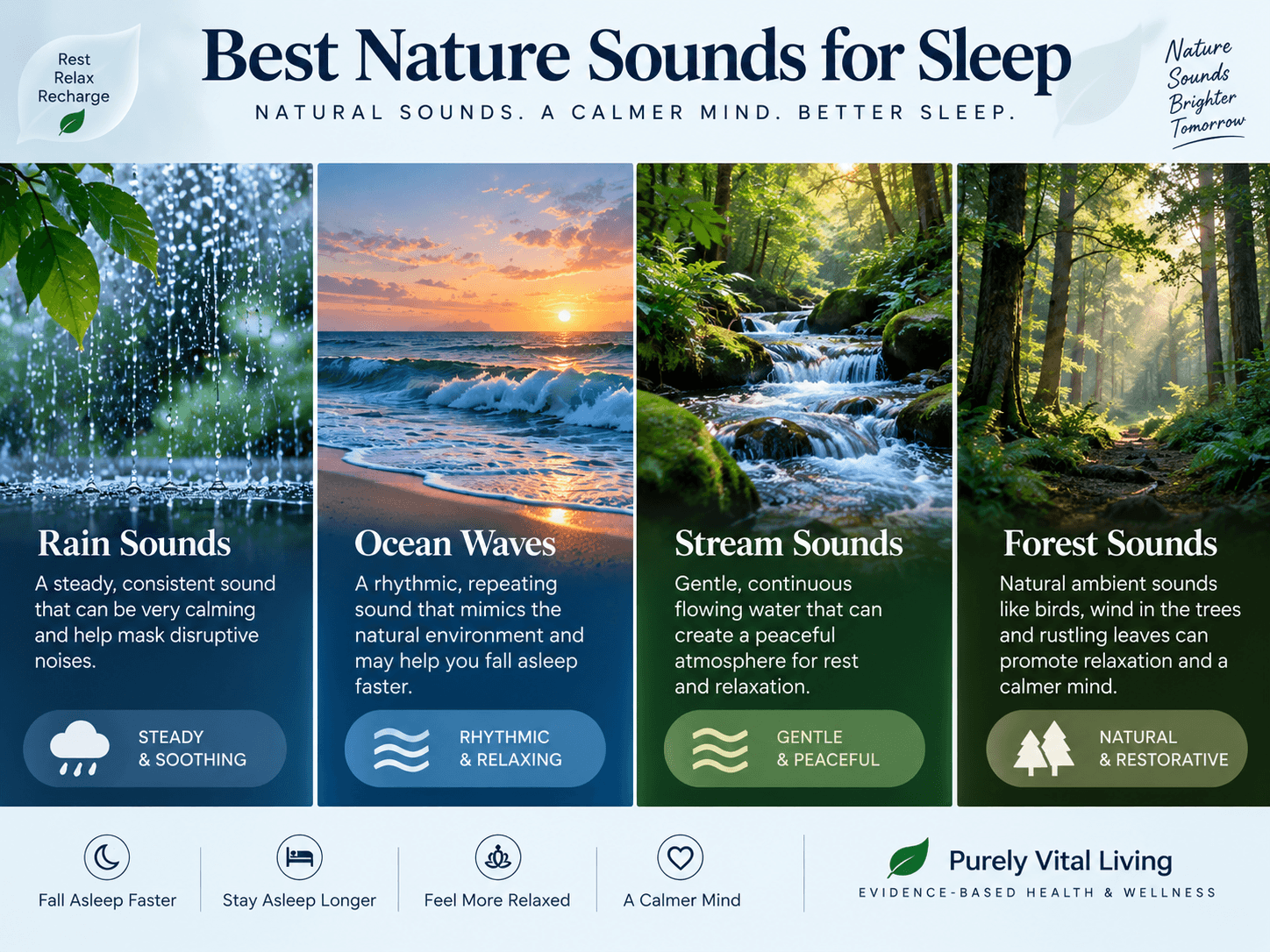
Nature sounds can provide a less artificial alternative to broadband noise, but the best recordings for sleep tend to be predictable and free of abrupt events.
Rain Sounds
Steady rainfall is a useful starting point because it can provide a relatively continuous sound bed. Choose recordings without sudden thunder, dramatic changes in intensity, or obvious looping.
Ocean Waves
Ocean waves have more rhythmic variation than steady rain. Some people find that rise-and-fall pattern soothing; others may notice each wave too much. Test it rather than assuming a natural sound will automatically be better.
Streams and Water Sounds
Streams and flowing water can create gentle continuous ambience. Look for recordings without sudden splashes or large shifts in volume.
Forest Sounds
Forest ambience can be relaxing, but birds, insects, frogs, and other distinct sounds may attract attention or startle light sleepers. A quiet, consistent forest recording is generally a better sleep experiment than a highly detailed wildlife soundscape.
Do Sleep Sounds Actually Improve Sleep?
The evidence depends on the type of sound, the listening method, the population being studied, and the outcome researchers measure. Sound masking may be useful when environmental noise is disrupting sleep, while studies of music, nature sounds, white noise, pink noise, and specialized auditory stimulation use different methods and should not be treated as interchangeable.
This distinction matters: reducing an unwanted noise, helping someone relax before bed, and directly changing sleep architecture are three different claims. Evidence for one does not automatically prove the others.
What About 432 Hz, Binaural Beats and Delta Waves?
Frequency-based sleep tracks are heavily promoted online, often with claims that a particular frequency can “induce” deep sleep. Those claims require more caution than their popularity suggests.
Does 432 Hz Actually Help Sleep?
There is not enough evidence to call 432 Hz the best frequency for sleep. A track tuned to 432 Hz may still feel relaxing, but that personal response is different from demonstrating that the tuning itself reliably improves sleep.
Do Binaural Beats Help You Sleep?
Binaural beats use slightly different tones presented to each ear, which means headphones are normally required to create the effect. Research has explored possible effects on relaxation and sleep, but results are not strong enough to treat binaural beats as a proven sleep therapy.
What Sound Frequency Is Best for Sleep?
There is no single frequency shown to be best for everyone. Be skeptical of precise frequency claims that promise deep sleep or a specific sleep stage without explaining the research behind them.
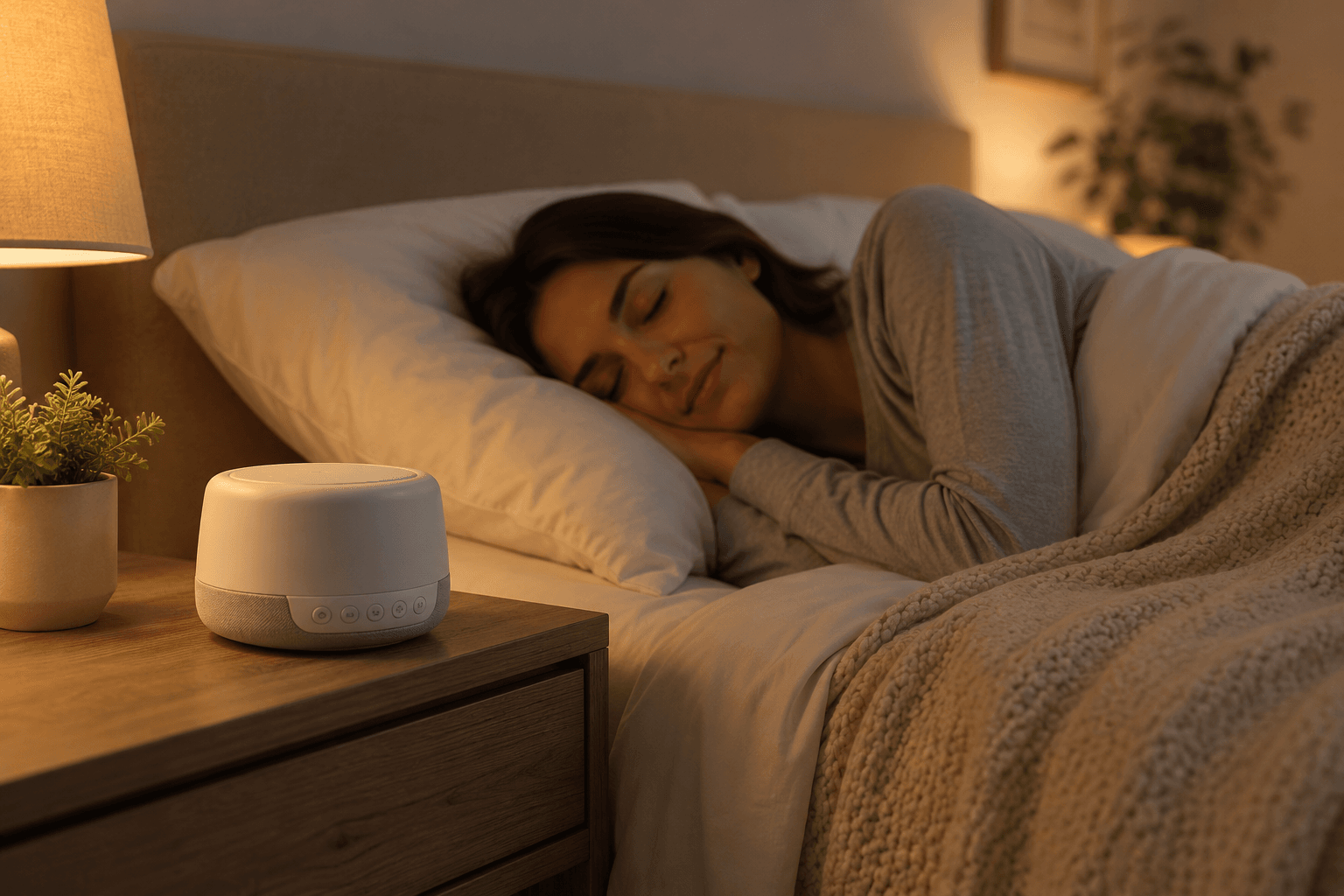
Best White Noise Machines of 2026
Top Pick: Yogasleep Dohm Classic
Want a dedicated bedside device instead of playing sleep sounds from your phone? Our white noise machine guide compares five options for different needs, including the Yogasleep Dohm Classic for natural fan-generated sound, LectroFan Evo for sound variety, Hatch Restore 3 for smart routines, and portable choices for travel.
Compare sound options, portability, power source, timers, smart features, and which type may fit your sleep environment.
Is It Better to Sleep in Silence or With Noise?
If your bedroom is already quiet and you sleep well, there is no need to add sound. Background audio is most useful when it solves a problem: masking disruptive noise, creating a predictable sound environment, or helping you relax as part of a bedtime routine.
Try both approaches. The goal is better sleep, not using a particular type of sound every night.
Sounds That May Be Less Helpful for Sleep
- Music with engaging lyrics: Words may keep your attention active.
- Highly variable nature recordings: Thunder, bird calls, or sudden animal sounds can interrupt an otherwise calm track.
- Interesting podcasts or stories: If you keep following the content, it may delay disengagement.
- Tracks with obvious loops: Repeated transitions can become noticeable.
- Loud audio: More volume is not necessarily more effective and can introduce unnecessary sound exposure.
How Loud Should Sleep Sounds Be?
Use the lowest comfortable volume that achieves the purpose. If you are masking outside noise, the goal is to reduce how noticeable that disturbance is—not to overpower it with very loud audio. Speaker placement, distance from the bed, and whether you use earbuds or headphones also affect your exposure.
Be especially cautious with audio played close to the ears for long periods. Sleep-audio guidance for infants and children requires separate safety considerations and should not simply be copied from adult recommendations.
How to Choose the Right Sleep Sound for You
Instead of switching sounds every few minutes, run a simple personal test. Pick one option based on your main problem and use it consistently for several nights at a comfortable volume. Note roughly how long it takes you to fall asleep, whether you remember waking during the night, and how rested you feel the next morning. Then test another option under similar conditions.
Keep the rest of your sleep environment reasonably consistent so you are comparing the sounds rather than simultaneously changing your room temperature, bedtime, caffeine intake, and other factors. If temperature is also disrupting your nights, use our best sleeping temperature guide to test that variable separately.
How to Play Sleep Sounds
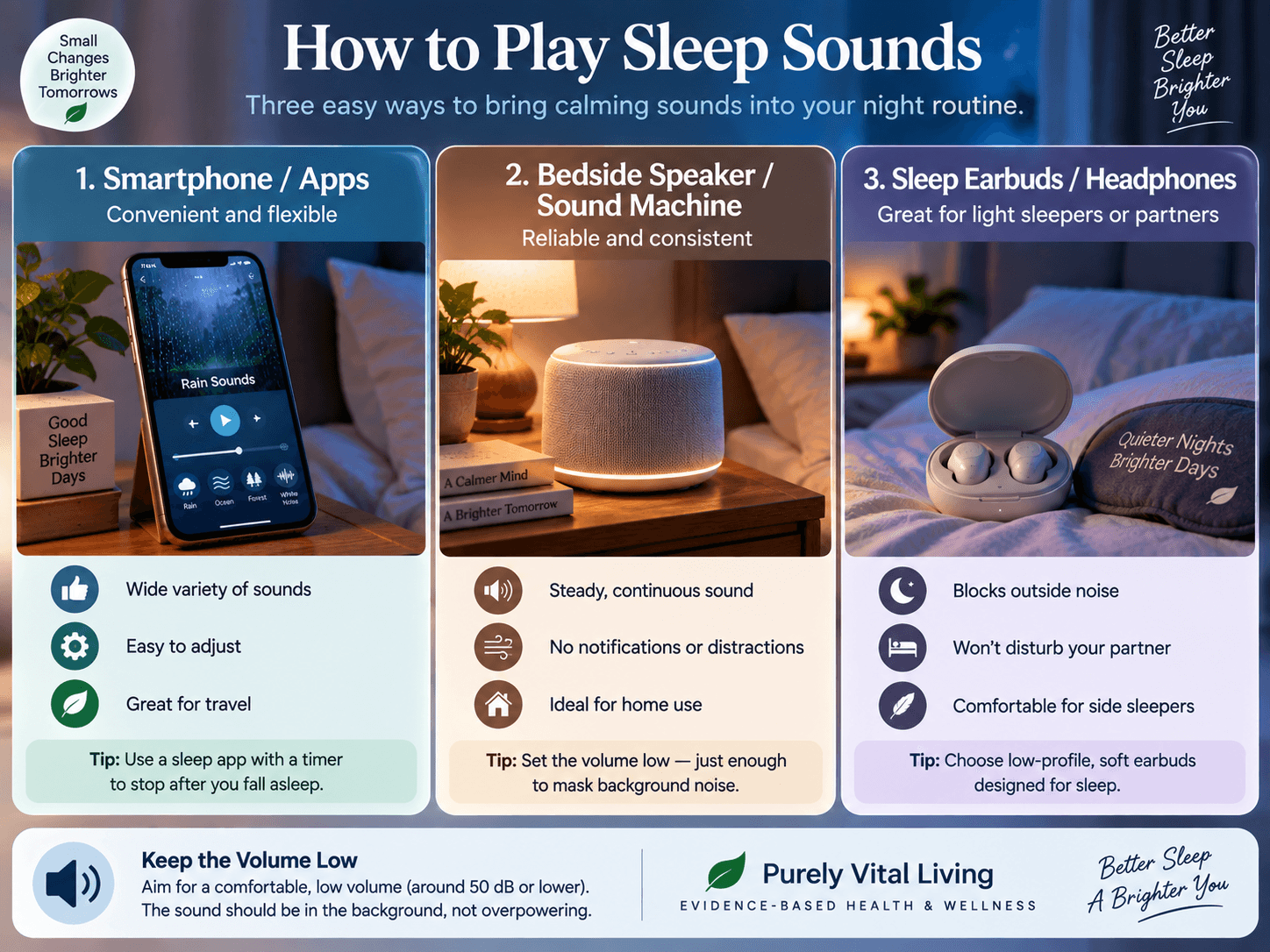
You do not need specialized equipment to test whether sleep sounds work for you. Start with a phone or speaker at a low volume. If you decide that continuous sound is useful, a dedicated sound machine can provide consistent playback without relying on your phone. Sleep earbuds or headphones can be useful when one partner wants audio and the other prefers quiet, provided they are comfortable and used at a sensible volume.
Want More Practical Sleep Strategies?
Sleep sounds are only one part of the sleep environment. Explore PVL’s evidence-based sleep guides for practical ways to improve sleep quality, fall asleep more comfortably, and build a bedroom routine that works for you.
Explore Sleep GuidesFrequently Asked Questions
Which is the best sound for sleeping?
There is no single best sleep sound for everyone. White noise is useful for masking variable environmental noise, while pink or brown noise may be more comfortable if you prefer a softer or deeper sound. Rain and other predictable nature sounds are alternatives for people who prefer natural ambience.
Which color noise is best for sleep?
No noise color has been established as universally best. White noise provides broad masking, pink noise sounds softer, and brown noise emphasizes lower frequencies. Choose according to the noise you want to mask and which profile you find least distracting.
Is white, pink or brown noise better for sleep?
They serve slightly different listening preferences. White noise has a brighter hiss, pink noise is softer, and brown noise sounds deeper. If your goal is sound masking, test which profile covers the disruptive noise without itself becoming annoying.
What is the best noise for deep sleep?
No continuous noise has been proven to guarantee deep sleep. Experimental auditory stimulation studied in sleep laboratories should not be confused with ordinary overnight noise tracks. A practical goal is to minimize disturbances and use a sound you find comfortable.
Does 432 Hz actually help sleep?
Evidence is not strong enough to establish 432 Hz as a uniquely effective sleep frequency. You may enjoy music or ambience tuned that way, but claims that the frequency itself reliably produces deeper sleep should be treated cautiously.
Is it better to sleep in silence or with noise?
Silence is best if you already sleep well in a quiet room, while steady background noise may be more useful when unpredictable sounds disturb your sleep. The better choice is the one that reduces nighttime disruption without becoming distracting itself.
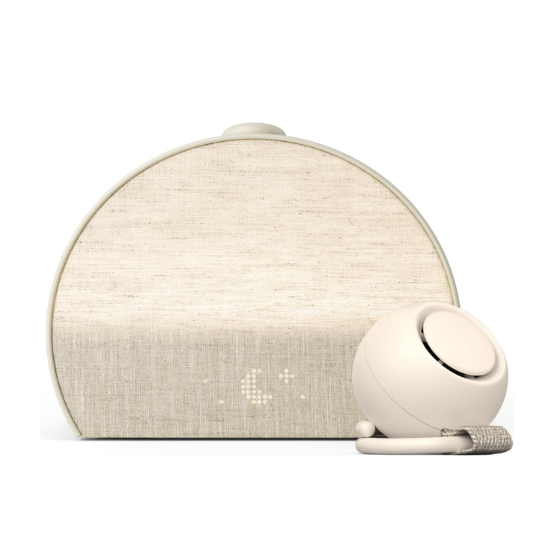
Hatch Restore 3
PVL Rating: 4.4/5 · $194.99 current PVL listing price
A premium bedside option for sleepers who want more than a basic sound machine. Hatch Restore 3 combines white noise and relaxing sleep sounds with customizable bedtime routines, a bedside light, and a sunrise-style alarm. It is best suited to people who want an all-in-one sleep routine device; the higher price, app dependence, and optional subscription content are the main trade-offs.
As an Amazon Associate, Purely Vital Living may earn from qualifying purchases. Price shown reflects the current PVL listing and may change.
Related Reads
- Best White Noise Machines of 2026: Top Picks for Better Sleep — Compare dedicated bedside sound machines, smart sleep devices, and portable options.
- How to Fall Asleep Faster Naturally Tonight — Practical strategies for reducing stimulation and settling down at bedtime.
- How to Improve Deep Sleep: 10 Science-Backed Strategies — Go beyond sound and address the habits and environment that support restorative sleep.
- How to Improve Sleep Quality Naturally: Complete Sleep Guide — A broader guide to sleep timing, light, environment, and daily habits.
The Bottom Line
The best sounds for sleep are the ones that solve a specific problem without becoming another source of stimulation. White noise is a sensible starting point for masking unpredictable sounds, pink noise offers a softer alternative, brown noise has a deeper character, and steady rain or other nature sounds may suit people who prefer natural ambience.
Do not assume that a popular sound, noise color, or precise frequency automatically improves sleep. Test one option at a comfortable volume for several nights, pay attention to how you actually sleep, and keep silence in the comparison. Better sleep—not a particular soundtrack—is the goal.
References
- Capezuti E, Pain K, Alamag E, et al. Systematic review: auditory stimulation and sleep. Journal of Clinical Sleep Medicine. 2022;18(6):1697–1709. doi:10.5664/jcsm.9860.
- Riedy SM, Smith MG, Rocha S, Basner M. Noise as a sleep aid: A systematic review. Sleep Medicine Reviews. 2021;55:101385. The review found very-low-quality and inconsistent evidence for continuous broadband noise as a general sleep aid.
- Smith MG, Cordoza M, Basner M. Environmental Noise and Effects on Sleep: An Update to the WHO Systematic Review and Meta-Analysis. Environmental Health Perspectives. 2022;130(7):076001. doi:10.1289/EHP10197.
- Jespersen KV, Pando-Naude V, Koenig J, Jennum P, Vuust P. Listening to music for insomnia in adults. Cochrane Database of Systematic Reviews. 2022;8:CD010459. doi:10.1002/14651858.CD010459.pub3.
- Ding Y, Sun X, Yin J, et al. Impact of white noise on sleep quality across age groups and in critically ill/non-critically ill patients: A systematic review and meta-analysis of randomized controlled trials. Sleep Medicine. 2025;136:106869. doi:10.1016/j.sleep.2025.106869.
- Li Z. Environmental Noise Exposure and the Risk of Sleep Disturbance: A Systematic Review and Meta-Analysis. Noise & Health. 2026;28(131):267–289. doi:10.4103/nah.nah_222_25.