Quick Answer: For most adults, finishing a substantial meal about 2–3 hours before bedtime is a reasonable starting point. However, there is no single scientifically established cutoff that works for everyone. Meal size, reflux, genuine hunger, evening exercise, and your usual sleep schedule can all affect how much time you need between eating and bed.
Key Takeaways
Table of Contents
- How long before bed should you stop eating?
- Why can eating too close to bed affect sleep?
- Is there a specific time to stop eating?
- What happens if you eat right before bed?
- What if you’re hungry before bed?
- What should you eat if you’re hungry?
- Foods to avoid close to bedtime
- Can you stop eating too early?
- Does stopping eating before bed help with weight loss?
- Special situations
- Find your best dinner-to-bed window
- What does the research say?
- Frequently asked questions
- Aim to finish a typical dinner about 2–3 hours before bed as a practical starting point.
- A large or heavy meal generally deserves more time before lying down than a small snack.
- Eating close to bedtime may be particularly uncomfortable for people prone to acid reflux or heartburn.
- You do not necessarily need to go to bed hungry simply because you have reached an arbitrary cutoff.
- There is no universal clock time—such as 7 PM or 8 PM—when everyone needs to stop eating.
How Long Before Bed Should You Stop Eating?
For most people, two to three hours between a substantial evening meal and bedtime is a useful place to start. This is not a hard biological deadline. Research on meal timing and sleep is mixed, and factors such as meal size, food composition, reflux symptoms, activity level, and individual sleep schedules can change what feels comfortable.
The important distinction is that eating a large dinner shortly before lying down is not the same as having a small snack because you are genuinely hungry.
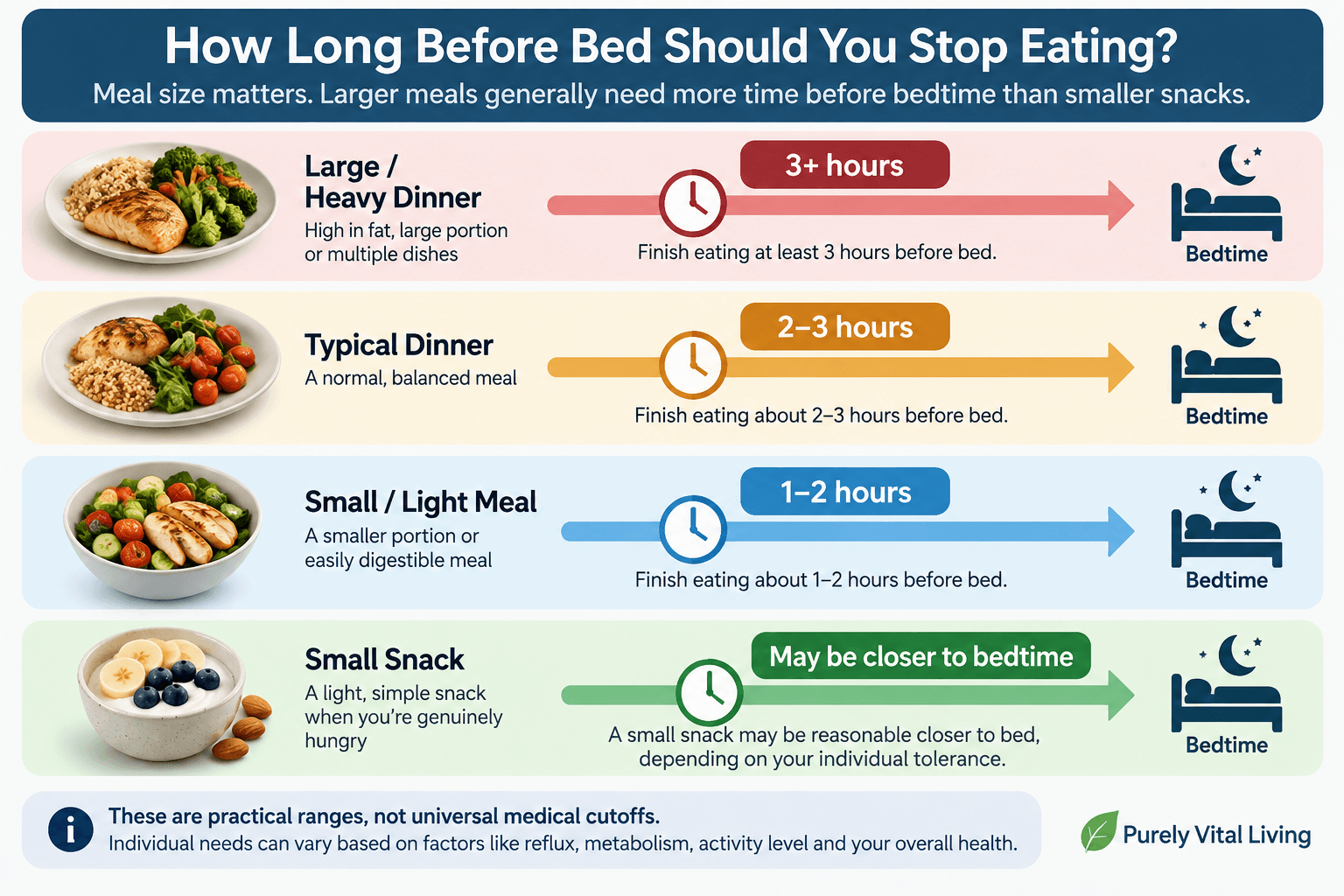
Does Meal Size Change How Long You Should Wait?
| What you eat | Practical starting point |
|---|---|
| Large or heavy dinner | About 3+ hours before bed |
| Typical dinner | About 2–3 hours before bed |
| Small, light meal | About 1–2 hours before bed |
| Small snack when genuinely hungry | May be reasonable closer to bedtime |
These are practical ranges, not medically established cutoffs for every person.
Why Can Eating Too Close to Bed Affect Sleep?
Late eating does not automatically mean poor sleep. The relationship is more complicated. Some observational research links eating close to bedtime with poorer sleep outcomes, while experimental findings are less consistent. Several mechanisms may help explain why certain people notice a difference.
Acid Reflux and Heartburn
Lying down soon after a meal can make reflux symptoms more troublesome for some people. If heartburn or regurgitation tends to appear at night, allowing more time between dinner and lying down may help reduce the opportunity for those symptoms to interfere with sleep.
Nighttime Reflux Product Review
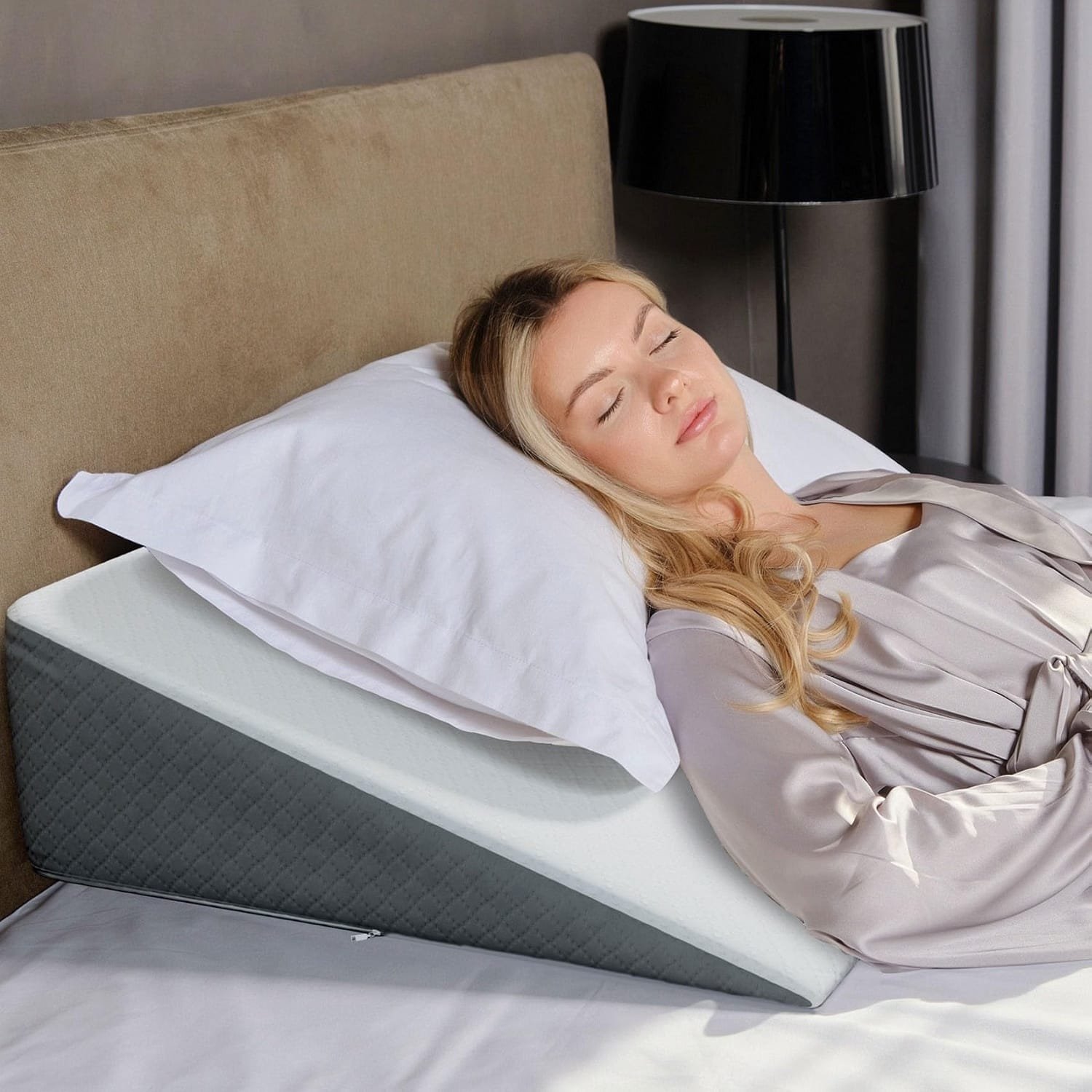 Kölbs Bed Wedge Pillow: gradual 7.5-inch upper-body incline.
Kölbs Bed Wedge Pillow
PVL Rating: 4.2/5 · $39.99 reviewed price
A 7.5-inch foam wedge designed to elevate the upper back and torso more gradually than stacked pillows. Upper-body elevation may help some adults with nighttime reflux symptoms, but this pillow should be viewed as positioning support—not a treatment for GERD, sleep apnea, or back pain.
Buy on AmazonRead the Full Review
As an Amazon Associate, Purely Vital Living may earn from qualifying purchases. Price shown reflects the reviewed listing and may change.
Digestion and Physical Discomfort
A large meal can leave you feeling overly full, bloated, or uncomfortable. Even if digestion itself does not prevent sleep, physical discomfort can make settling down more difficult or contribute to awakenings.
Circadian Rhythm and Metabolism
Meal timing interacts with the body’s daily rhythms, which is one reason researchers are increasingly studying chrononutrition—the relationship between when we eat and metabolic health. That does not mean there is one ideal dinner time for everyone, however, and the evidence is not strong enough to turn a general 2–3-hour guideline into a universal rule.
Does Late Eating Actually Reduce Sleep Quality?
The evidence is not completely consistent. Studies use different definitions of “late eating” and measure different outcomes, including sleep duration, sleep efficiency, time to fall asleep, and nighttime awakenings. This makes it important to distinguish an association between late eating and poorer sleep from proof that eating at a particular hour directly causes poor sleep.
Is There a Specific Time You Should Stop Eating at Night?
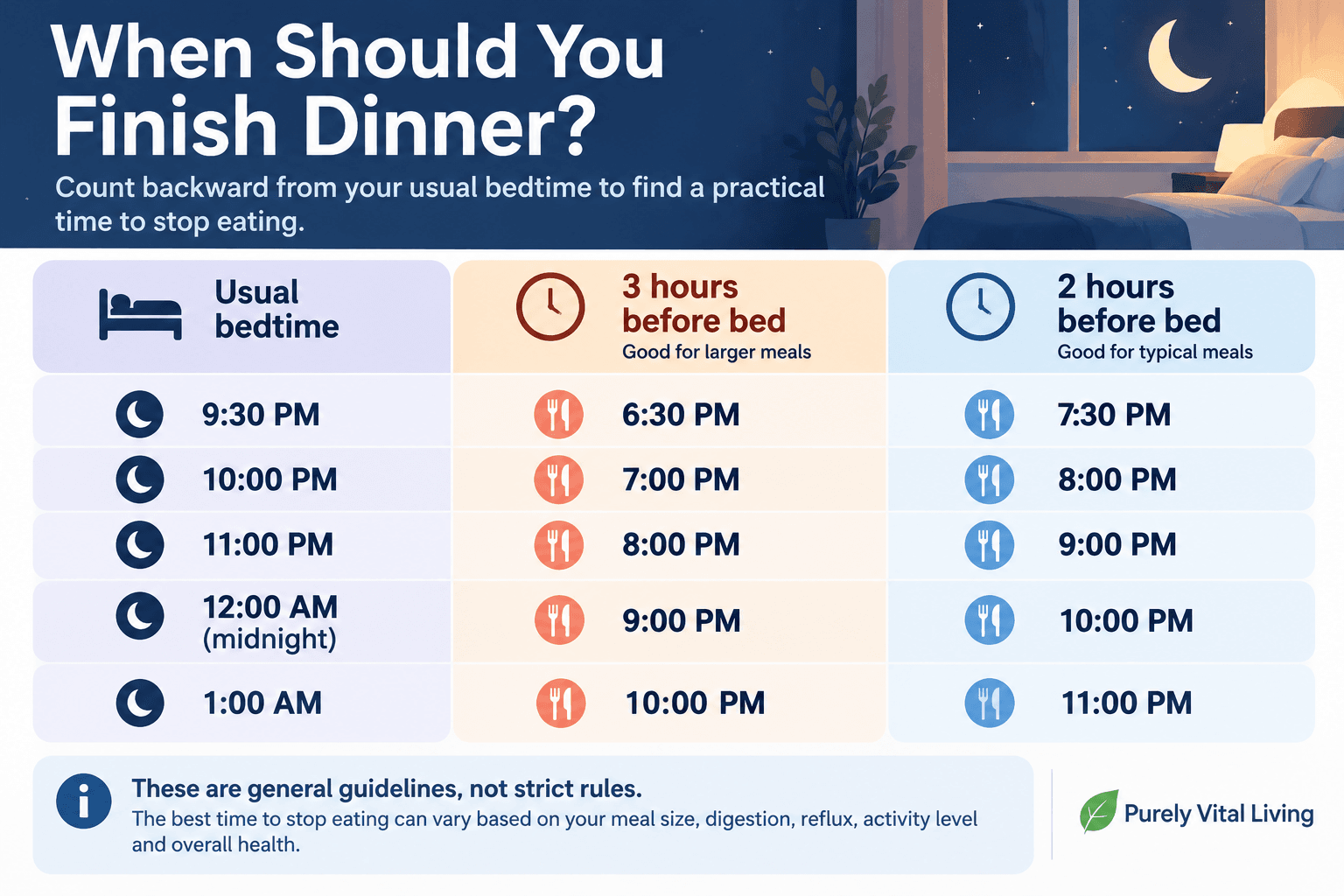
Your usual bedtime is more useful than an arbitrary clock time. A person who sleeps at 9:30 PM has a very different evening schedule from someone who sleeps at 1 AM.
| Usual bedtime | 3 hours before | 2 hours before |
|---|---|---|
| 9:30 PM | 6:30 PM | 7:30 PM |
| 10:00 PM | 7:00 PM | 8:00 PM |
| 11:00 PM | 8:00 PM | 9:00 PM |
| 12:00 AM | 9:00 PM | 10:00 PM |
| 1:00 AM | 10:00 PM | 11:00 PM |
Is Eating After 7 PM Bad?
Not necessarily. A fixed rule such as “never eat after 7 PM” ignores bedtime, total dietary pattern, activity, hunger, and individual circumstances. If you go to bed at midnight, for example, finishing dinner at 8 PM still leaves four hours before sleep.
What Happens If You Eat Right Before Bed?
Eating immediately before bed may cause no noticeable problem for some people. For others, particularly after a large meal, it may contribute to fullness, indigestion, reflux, or disrupted sleep. One late meal is not inherently harmful, and the effect of a small snack should not be assumed to be the same as the effect of a large dinner.
If you repeatedly notice that late meals coincide with heartburn, difficulty settling down, or more nighttime awakenings, moving your final substantial meal earlier is a simple variable worth testing.
What If You’re Hungry Before Bed?
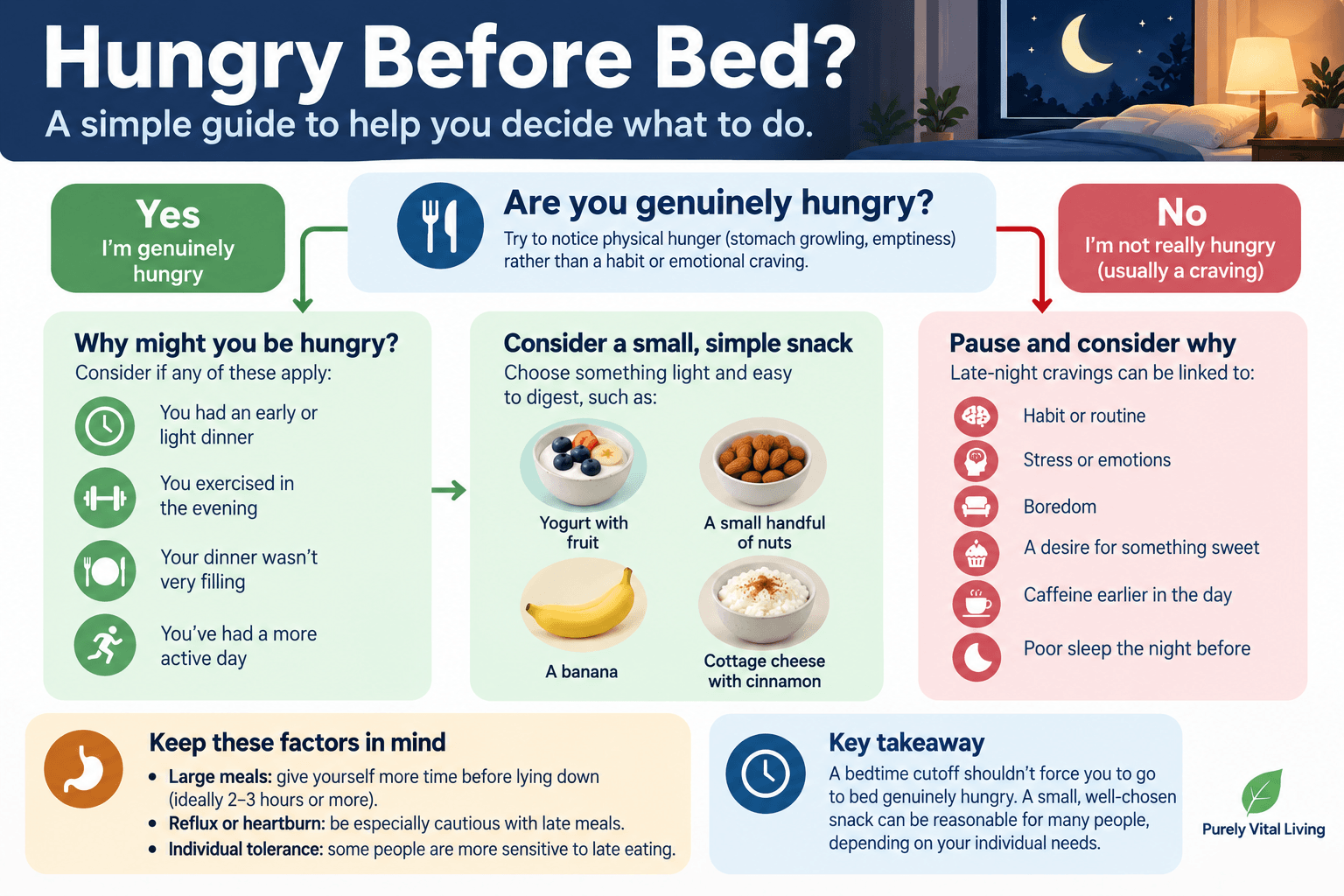
A bedtime cutoff should not become a rule that forces you to lie awake genuinely hungry. If dinner was early, you exercised in the evening, or you simply did not eat enough earlier in the day, a small snack may be more practical than rigidly avoiding food.
Is It Better to Eat a Small Snack or Go to Bed Hungry?
If hunger itself is making it difficult to relax or sleep, consider a small, simple snack that you tolerate well rather than another full meal. The goal is not to “beat” a three-hour timer; it is to find an evening eating pattern that supports both adequate nutrition and comfortable sleep.
Hunger or a Nighttime Craving?
It can help to ask whether you would eat a normal, simple food or whether you only want a specific sweet, salty, or highly palatable snack. The answer is not a perfect hunger test, but it can help you notice whether the urge is driven by physical hunger, routine, boredom, stress, or habit.
Why Do I Keep Getting Hungry Before Bed?
Regular bedtime hunger may be a sign that your evening meal is too early or not satisfying enough for your schedule. Evening exercise can also change hunger. Rather than repeatedly fighting hunger at bedtime, look at the overall timing and adequacy of your meals during the day.
What Should You Eat If You’re Hungry Before Bed?
If you need something before sleep, keep it modest and choose foods you already tolerate well. A small snack is generally a different proposition from a large, rich meal immediately before lying down. There is no need to rely on a particular “sleep food,” and no single snack has been shown to guarantee better sleep.
What Foods Should You Avoid Close to Bedtime?
There is no universal banned-food list, but several categories deserve attention if they repeatedly affect your sleep or digestion.
Large or High-Fat Meals
Large meals can increase fullness and digestive discomfort. If you know a heavy dinner leaves you uncomfortable, allow more time before bed.
Spicy Foods
If spicy foods trigger reflux or heartburn for you, eating them shortly before lying down may be especially uncomfortable. Individual tolerance matters.
Sugar Before Bed
You do not need a separate universal “sugar cutoff.” A better approach is to avoid making large sugary snacks a routine immediately before sleep and to consider the overall meal pattern rather than focusing on a single nutrient in isolation.
Caffeine
Caffeine deserves separate attention because it can directly interfere with sleep in susceptible people. Coffee and energy drinks are obvious sources, but tea, cola, chocolate, and some supplements or medications may also contain caffeine.
Alcohol
Alcohol can make some people feel sleepy initially, but sedation is not the same as healthy sleep. Alcohol later in the evening can alter sleep architecture and contribute to more fragmented sleep.
Can You Stop Eating Too Early Before Bed?
Yes, in practical terms. If you finish dinner at 5 PM but do not sleep until midnight, forcing yourself to avoid food for seven hours despite genuine hunger is not automatically better for sleep. Longer fasting is not synonymous with better sleep.
This matters particularly when dinner is unusually early, you have high activity levels, or you exercise in the evening. The objective is a sustainable eating schedule, not the longest possible fasting window.
Does Stopping Eating Before Bed Help With Weight Loss?
Stopping evening eating may reduce calorie intake for some people if it removes habitual late-night snacking, but meal timing should not be confused with the broader determinants of body weight. Overall energy intake, food quality, activity, sleep, and long-term dietary habits all matter.
In other words, avoiding food after a particular clock time does not create a special weight-loss effect independent of the rest of your diet.
Special Situations That May Change Your Eating Cutoff
If You Have Acid Reflux or GERD
Meal-to-bed timing can be particularly relevant if lying down after eating triggers reflux. Larger or higher-fat meals may also be more troublesome for some people. Persistent or severe reflux deserves individualized medical guidance rather than relying only on meal timing.
Under-Mattress Elevation Product Review
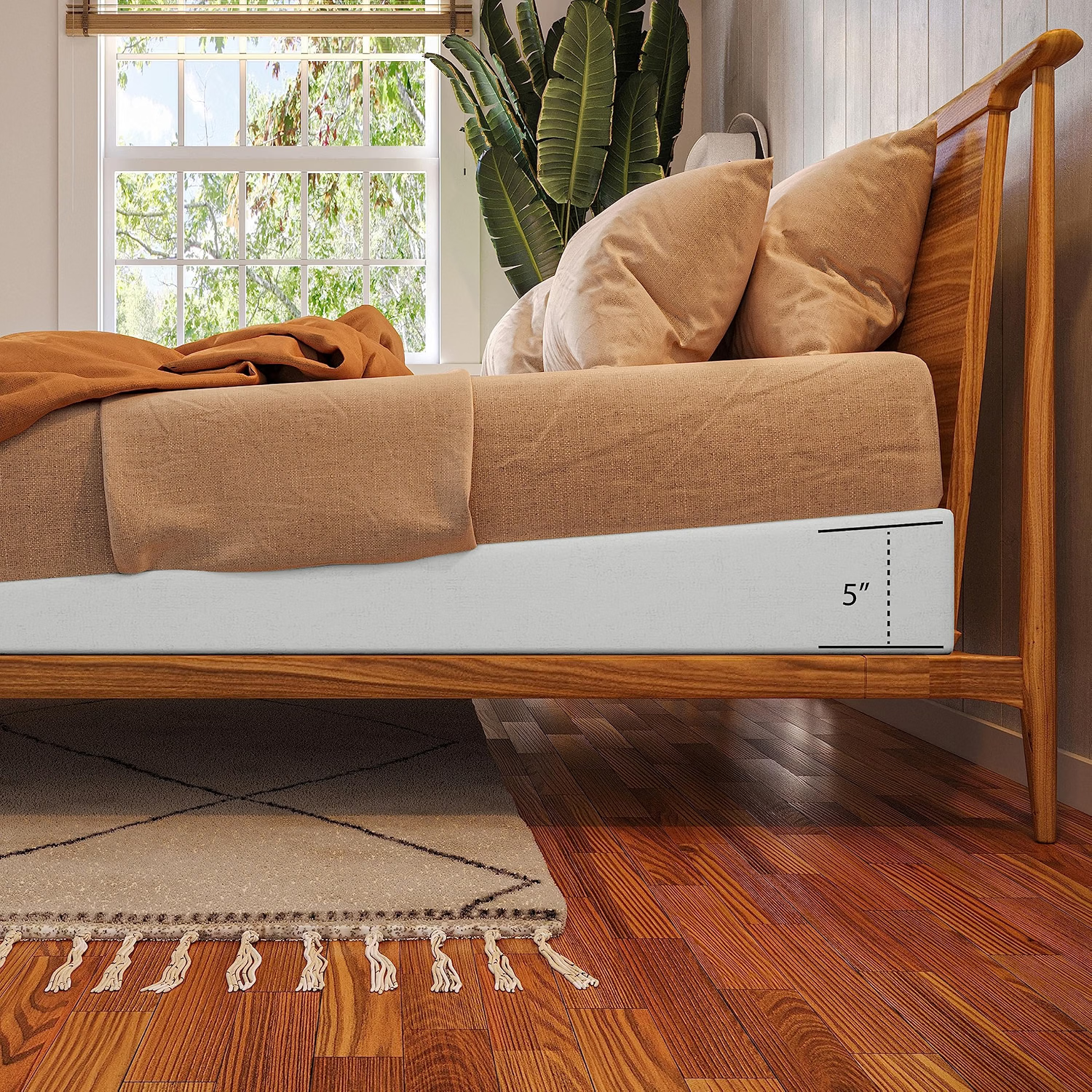 Avana Mattress Elevator: gradual 5-inch incline beneath the mattress.
Avana Mattress Elevator
PVL Rating: 4.2/5 · $79.21 reviewed price
A full-length foam incline that sits beneath the existing mattress instead of directly under the torso. Head-of-bed elevation may help some adults with nighttime reflux symptoms, but the Avana should be viewed as positioning support—not a treatment for GERD, sleep apnea, snoring, or sinus disease.
Buy on AmazonRead the Full Review
As an Amazon Associate, Purely Vital Living may earn from qualifying purchases. Price shown reflects the reviewed listing and may change.
If You Exercise in the Evening
Evening training can change both hunger and recovery needs. A rigid rule against eating near bedtime may therefore be impractical for some active people. Meal size, training intensity, total daily intake, and personal tolerance should all be considered.
If You Work Night Shifts
Clock-based rules such as “stop eating after 8 PM” make little sense for someone who sleeps during the day. Use your actual sleep period as the reference point and recognize that shift work creates additional circadian challenges beyond meal timing alone.
If a Medical Condition Affects Your Meal Timing
People managing diabetes, gastrointestinal conditions, pregnancy-related symptoms, medications that need to be taken with food, or other medical circumstances may need individualized advice. Do not change medically important meal timing solely to follow a general bedtime rule.
How to Find Your Best Dinner-to-Bed Window
Instead of assuming that three hours is automatically ideal, you can observe how your own sleep responds to meal timing.
Try a 7-Day Sleep-and-Meal Timing Check
For one week, record:
- When you finish dinner
- Whether the meal was light, normal, or heavy
- Any later snack and its timing
- Your bedtime
- Whether you felt hungry at bedtime
- Reflux, fullness, or digestive discomfort
- How long it seemed to take you to fall asleep
- Nighttime awakenings
- How rested you felt the next morning
If you want to test an earlier dinner, change the dinner-to-bed interval while keeping the rest of your evening routine reasonably consistent. Look for a repeatable pattern rather than judging the result from one night.
Sleep Tracker Product Review
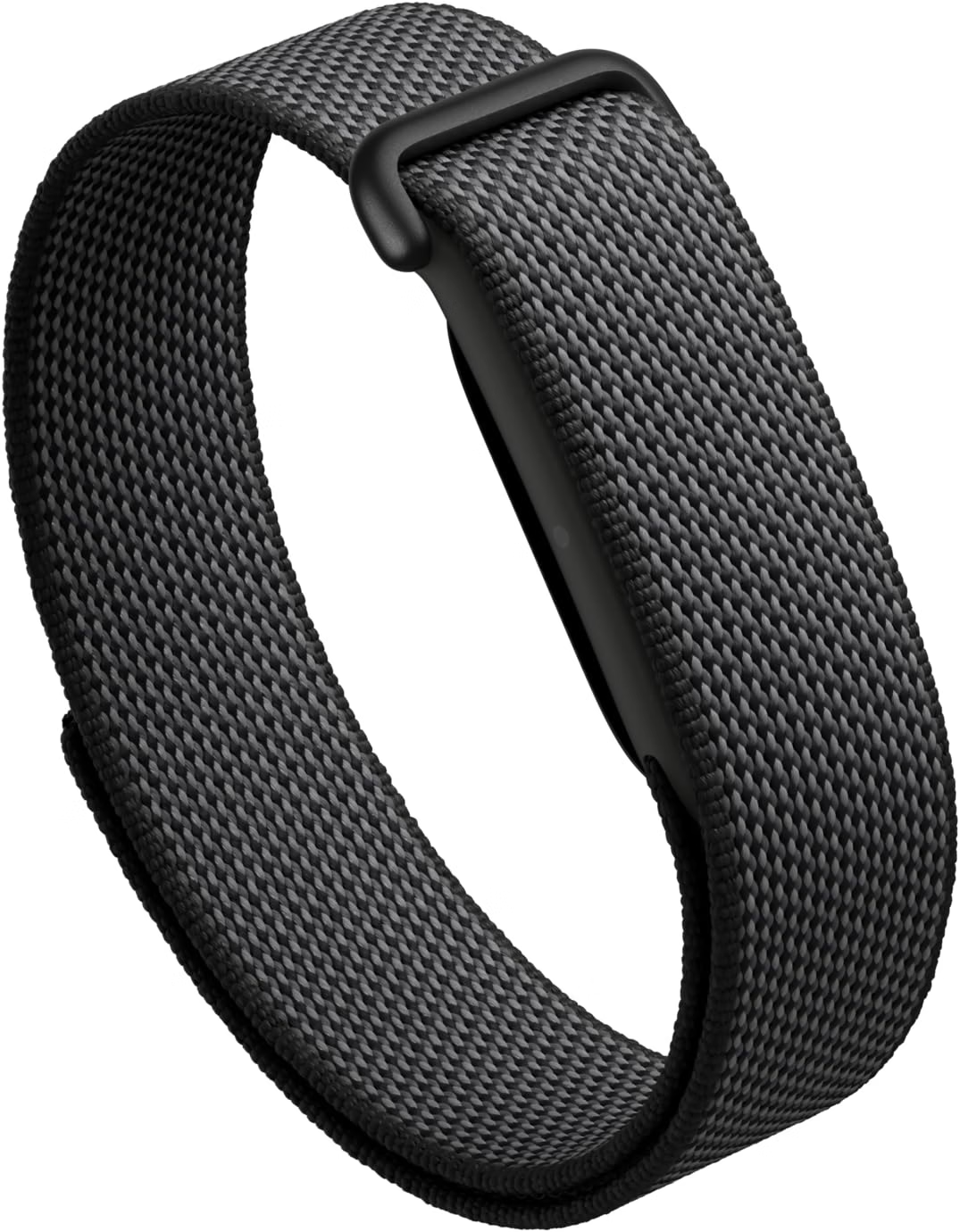 Fitbit Google Air: lightweight, screenless activity and sleep tracking.
Fitbit Google Air
PVL Rating: 4.3/5 · $99.00 reviewed price
A lightweight screenless tracker for activity, heart-rate and sleep trends. Its overnight data can add another layer to a short sleep-and-meal timing experiment, but consumer wearable sleep metrics are estimates and cannot show that meal timing caused a particular sleep result.
Buy on AmazonRead the Full Review
As an Amazon Associate, Purely Vital Living may earn from qualifying purchases. Price shown reflects the reviewed listing and may change.
For a broader look at your sleep habits, use the PVL Sleep Score Calculator.
Get Practical Wellness Guidance from PVL
Get evidence-informed sleep, energy, gut health, fitness, and low-tox living guidance from Purely Vital Living.
What Does the Research Say About Eating Before Bed?
The research does not support treating one exact cutoff as a universal law. Observational studies often find associations between eating close to bedtime and poorer sleep outcomes, while experimental studies have produced less consistent findings. Differences in meal size, meal composition, timing, participant characteristics, and the way sleep is measured all complicate the picture.
| Question | Evidence picture |
|---|---|
| Can lying down soon after eating worsen reflux? | Meal timing is particularly relevant for people prone to reflux. |
| Is late eating associated with poorer sleep? | Some observational evidence suggests an association. |
| Does everyone need exactly three hours? | No universal cutoff has been established. |
| Does meal composition matter? | It may, but findings vary. |
| Is a small snack equivalent to a full dinner? | No; meal size and composition matter. |
| Is a longer overnight fast always better for sleep? | Not established. |
The most useful takeaway is therefore not “never eat after a certain time.” It is to leave a reasonable gap after substantial meals, pay attention to symptoms such as reflux and fullness, and adjust the timing based on your sleep schedule and response.
Frequently Asked Questions
How many hours before bed should you stop eating?
About two to three hours before bedtime is a practical starting point for a typical meal. Larger meals may be more comfortable with additional time, while a small snack may be reasonable closer to bed if you are genuinely hungry.
Is it bad to eat 30 minutes before bed?
No, eating 30 minutes before bed is not automatically harmful, but meal size and symptoms matter. A large meal shortly before lying down may increase fullness or nighttime reflux in susceptible people, while a small snack is different. If late eating repeatedly causes discomfort or poorer sleep, try moving it earlier.
Is it OK to eat one hour before bed?
Yes, eating one hour before bed can be reasonable for some people, particularly if it is a small snack rather than a large meal. If eating within an hour of sleep repeatedly causes reflux, uncomfortable fullness, or poorer sleep, move the food earlier and compare how you feel over several nights.
Should I eat at 11 PM if I’m hungry?
The clock time alone does not determine whether you should eat. Consider your bedtime, when and what you last ate, whether the hunger is genuine, and whether late food tends to disturb your sleep. If needed, a small snack may be more practical than going to bed very hungry.
When should I stop eating sugar before bed?
There is no established universal cutoff specifically for sugar before bed. Instead of targeting an exact hour, avoid making large sugary snacks immediately before sleep a routine and consider your overall diet and energy intake. If a late sweet snack consistently leaves you uncomfortable or disrupts sleep, try having it earlier.
Should I stop eating and drinking at the same time before bed?
No, you do not need to stop eating and drinking at exactly the same time. Food timing is mainly about meal size, comfort, and symptoms such as reflux, while drinking a large volume close to bedtime may increase nighttime urination. Hydration needs vary, so adjust fluids to your own routine and medical needs.
Is fasting for three hours before bed beneficial?
A roughly three-hour dinner-to-bed gap can be a useful practical starting point, especially after a substantial meal, but it is not a required fasting rule. Research has not established that extending the overnight fast is automatically better for sleep. Meal size, hunger, reflux symptoms, activity, and your usual bedtime all matter.
Does eating before bed cause weight gain?
No, eating before bed does not automatically cause weight gain. Body weight is influenced by total energy intake and longer-term eating patterns, not simply the clock time of one meal or snack. Late-night eating may contribute indirectly if it regularly adds energy beyond your needs or becomes part of an overall higher-calorie pattern.
Bottom Line
For most adults, finishing a substantial meal around two to three hours before bedtime is a sensible starting point, not an inflexible rule. Give larger meals more time, pay attention to reflux and digestive comfort, and do not assume that going to bed hungry is inherently healthier.
The best cutoff is ultimately the one that fits your sleep schedule, nutritional needs, and individual response while supporting a consistent, comfortable bedtime routine.
Check Your Overall Sleep Habits
Meal timing is only one part of sleep quality. Use the free PVL Sleep Score Calculator to review your broader sleep routine and identify habits you may want to work on.
Bedtime Routine Product Review
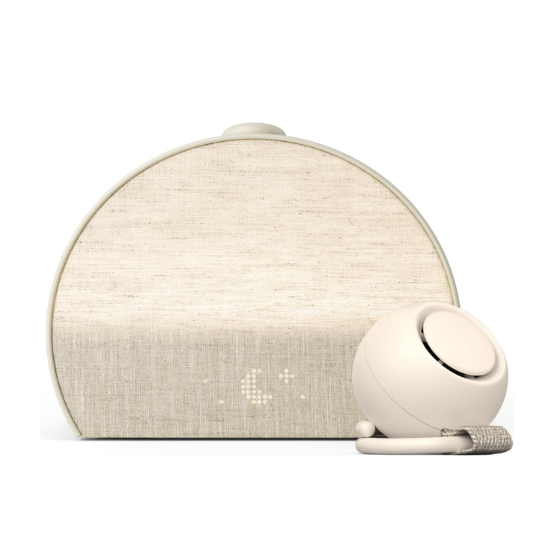 Hatch Restore 3: light, sound and customizable bedtime routines in one bedside device.
Hatch Restore 3
PVL Rating: 4.4/5 · $194.99 current reviewed price
A smart bedside device combining customizable wind-down routines, sleep sounds, soft lighting and a sunrise alarm. It can support a more consistent bedtime routine after your final meal, but it should be viewed as a routine tool rather than a treatment for insomnia or other sleep disorders.
Buy on AmazonRead the Full Review
As an Amazon Associate, Purely Vital Living may earn from qualifying purchases. Price shown reflects the current reviewed listing and may change.
Related Reads
- How to Fall Asleep Faster Naturally Tonight
- Cortisol and Sleep: How the Stress Hormone Affects Your Sleep
- Best Sounds for Sleep: Which Noise Helps You Sleep Better?
- PVL Sleep Score Calculator
- Sleep Debt Calculator — compare your recent sleep duration with your personal target over 7 or 14 nights.
References
- Systematic scoping review of meal timing, eating patterns, and sleep outcomes. PMC.
- Association between eating within three hours of bedtime and nocturnal awakening in young adults. PMC.
- Experimental study comparing dinner one hour versus five hours before bedtime in healthy young women. PMC.
- Review of lifestyle measures, including meal-to-bed timing, for gastroesophageal reflux disease. PubMed.
- Systematic review of time-restricted eating and sleep outcomes. PMC.
This article is for educational purposes and is not a substitute for individualized medical or nutrition advice. If nighttime eating, reflux, blood-sugar management, or persistent sleep problems are a concern, discuss them with an appropriate healthcare professional.