
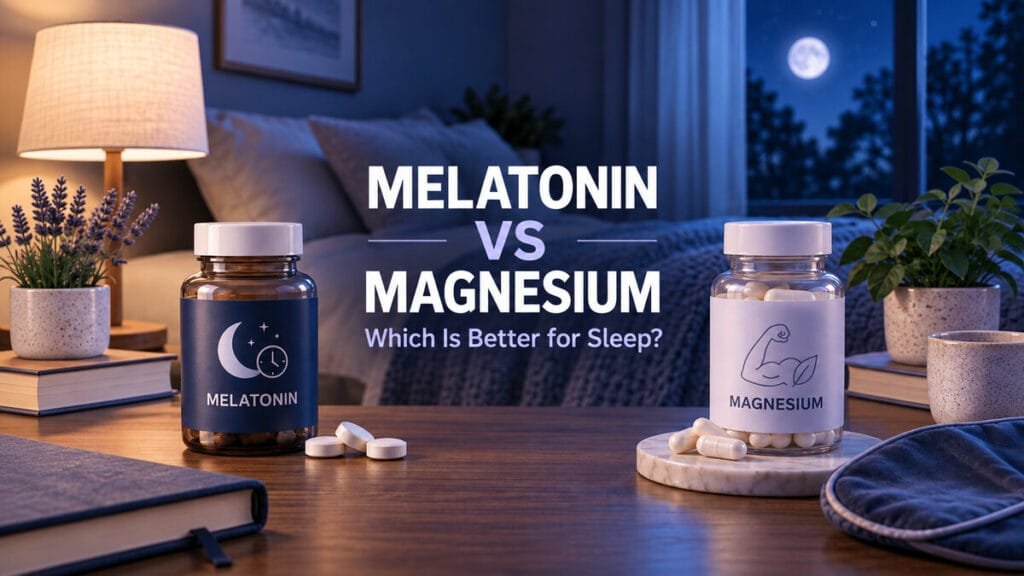
Neither melatonin nor magnesium is universally better for sleep. Melatonin is a hormone that signals biological night, so it is better suited to circadian-timing problems such as jet lag or a delayed sleep schedule. Magnesium is an essential mineral involved in nerve and muscle function, but evidence that supplements improve insomnia in people without a deficiency is limited and mixed.
- Melatonin mainly affects sleep timing; it is not simply a sedative.
- Magnesium supports normal nerve and muscle function, but it is not a proven cure for insomnia.
- Evidence for melatonin is stronger for jet lag and certain circadian-rhythm problems than evidence for magnesium as a general sleep aid.
- Neither supplement reliably fixes frequent awakenings, sleep apnea, restless legs, pain, reflux or chronic insomnia.
- Taking both together is not automatically more effective and can make side effects harder to trace.
- Check medications, health conditions and the actual amount on the label before using either supplement.
When you are tired of lying awake, choosing between melatonin and magnesium can feel like a simple shopping decision. The labels often promise relaxation, faster sleep or deeper rest—but the two supplements do very different jobs in the body, and neither is the right answer for every sleep problem.
The useful question is not “Which supplement wins?” It is “Why am I not sleeping?” A shifted body clock calls for a different approach than stress, muscle discomfort, repeated awakenings or a possible sleep disorder. This evidence-based comparison explains where each supplement may fit, where the research is weak and when neither is likely to solve the problem.
- Melatonin vs Magnesium at a Glance
- What Is the Difference?
- How Melatonin Affects Sleep
- How Magnesium May Affect Sleep
- What Does the Research Say?
- Which Is Better for Your Sleep Problem?
- Which Type of Magnesium Is Best for Sleep?
- What Are the Side Effects of Melatonin vs Magnesium?
- Can You Take Them Together?
- How to Choose
- When Neither Is the Answer
- Bottom Line
- Frequently Asked Questions
- Related Reads
- References
Melatonin vs Magnesium at a Glance
| Feature | Melatonin | Magnesium |
|---|---|---|
| What it is | A hormone the brain produces in response to darkness | An essential dietary mineral |
| Primary role related to sleep | Signals biological night and helps time the sleep-wake cycle | Supports normal nerve signaling and muscle function |
| Best-supported sleep use | Jet lag and selected circadian-timing problems | Correcting inadequate magnesium intake or deficiency; direct sleep benefits remain uncertain |
| Evidence for chronic insomnia | Limited and use-case dependent; not a universal first-line treatment | Limited and mixed |
| Common side effects | Headache, dizziness, nausea, sleepiness or next-day grogginess | Diarrhea, nausea and abdominal cramping, especially with some forms or larger supplemental amounts |
| Important caution | May interact with medicines and can impair alertness | Can interact with some antibiotics, bisphosphonates and other medicines; kidney disease raises risk |
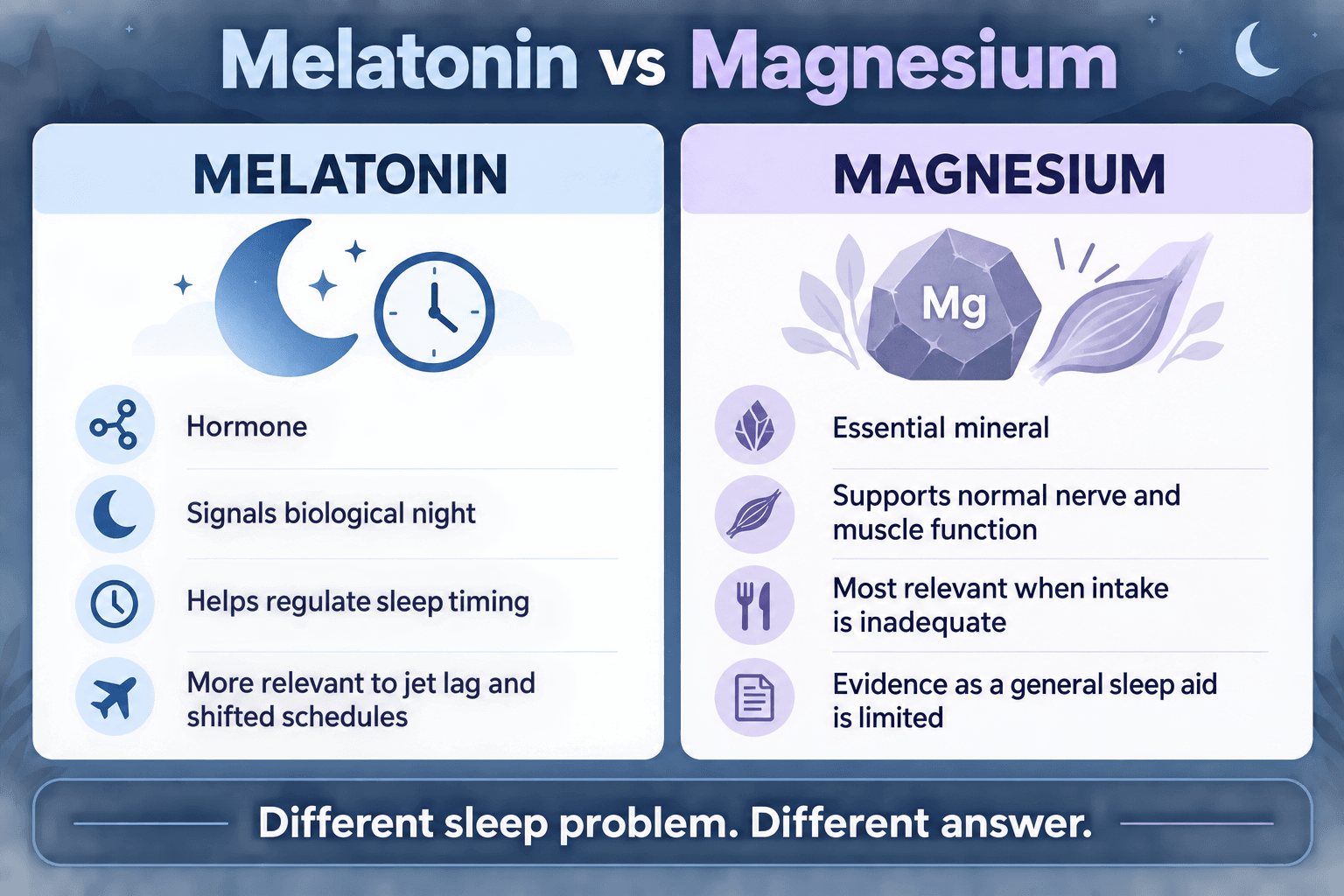
PVL verdict: melatonin is the more targeted option when sleep timing is the issue. Magnesium may be reasonable when intake is inadequate or a clinician identifies deficiency, but marketing often runs ahead of the sleep evidence.
Melatonin vs Magnesium: What Is the Difference?
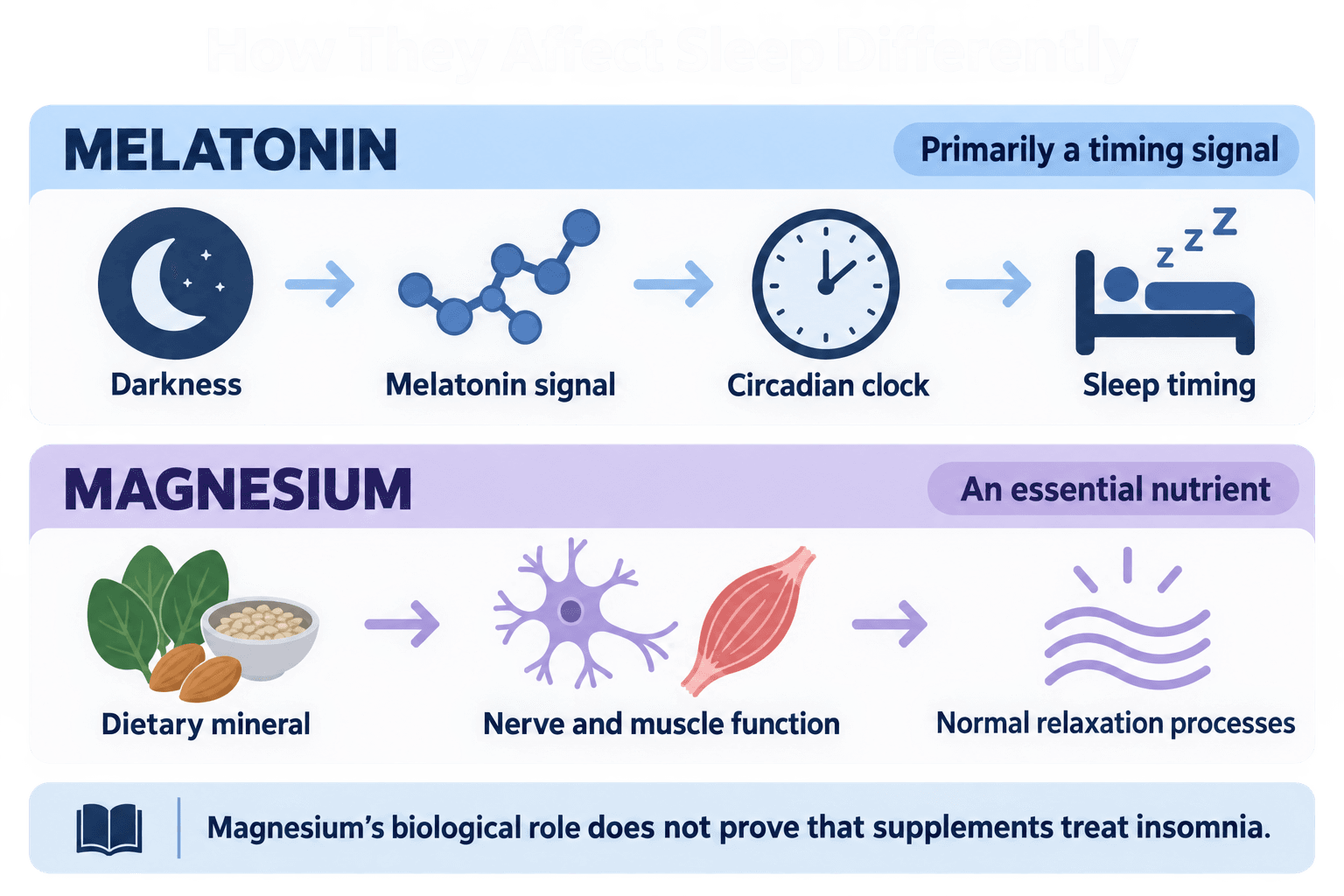
Melatonin and magnesium are not competing versions of the same sleep aid. Melatonin is a hormone and timing signal. The pineal gland releases more of it in dim-light conditions as the biological night begins. Supplemental melatonin can shift circadian timing, depending on when it is taken.
Magnesium is a mineral required for hundreds of biochemical reactions. It contributes to normal nerve transmission, muscle contraction, energy production, blood-glucose regulation and bone health. Because these systems influence relaxation and overall health, magnesium is often marketed for sleep. That plausible biological role, however, does not automatically prove that a magnesium supplement treats insomnia.
How Does Melatonin Affect Sleep?
Your internal clock helps coordinate when you feel alert and when your body prepares for sleep. Evening darkness normally encourages melatonin secretion; bright light at night can delay that signal. A supplement adds an external melatonin signal, which may help move sleep timing in the desired direction when used at an appropriate time.
This is why melatonin may make more sense for jet lag, delayed sleep timing or another circadian mismatch than for a person whose schedule is already aligned but whose sleep is interrupted by pain, snoring or anxiety. Timing can matter as much as dose, and taking it at the wrong time can shift the body clock in an unhelpful direction.
Melatonin is sometimes described as a natural sleeping pill, but that framing is misleading. It can cause sleepiness, yet its defining role is to tell the circadian system that biological night has arrived. For a practical look at light and melatonin timing, see our guide to blue-blocking glasses and melatonin production.
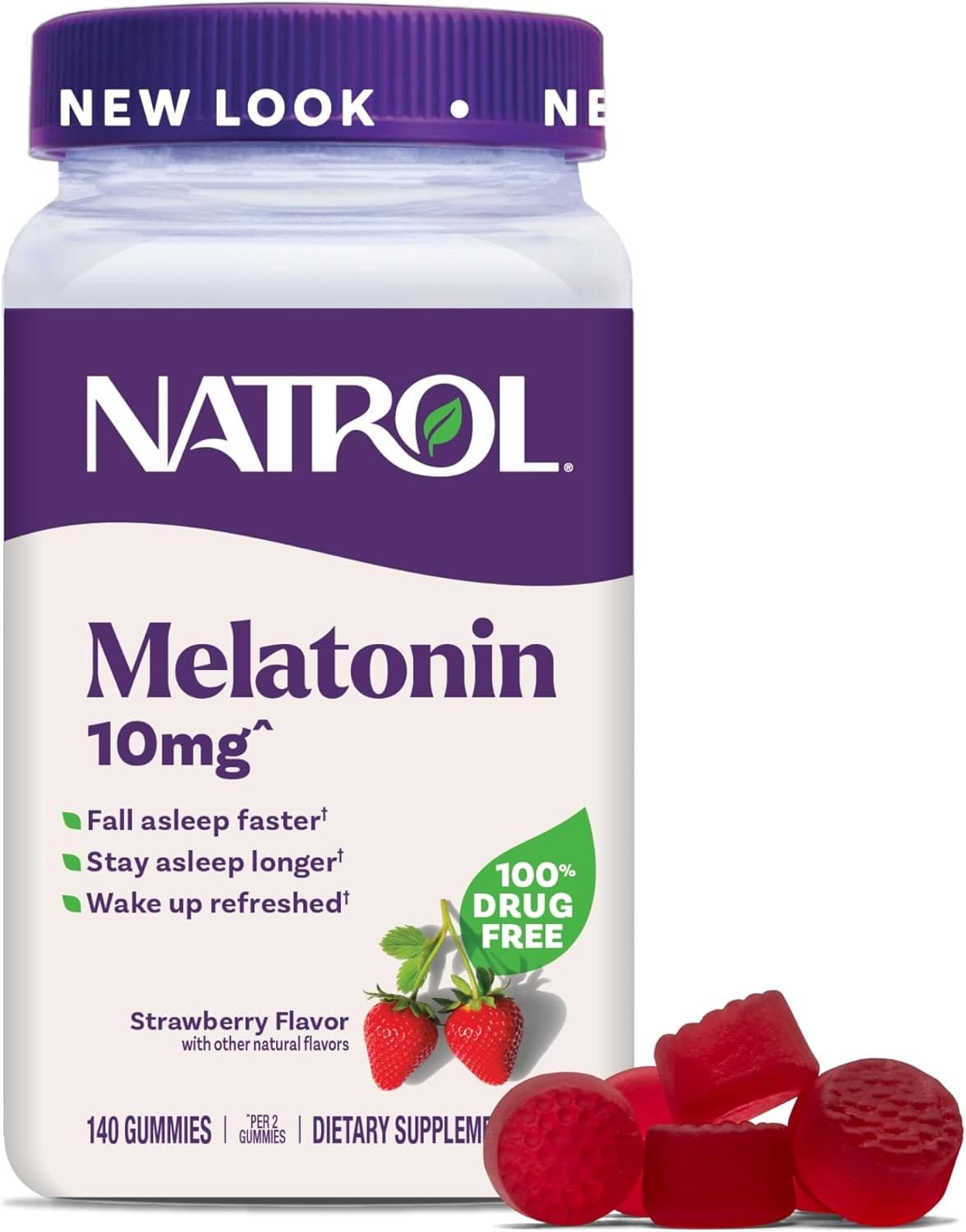
PVL Rating: 4.0/5 · $15.56 existing PVL price
Convenient vegetarian strawberry gummies for adults who already know they tolerate melatonin and want occasional sleep-timing support. The two-gummy serving provides 10 mg—more than many people need—and may increase next-day drowsiness or vivid dreams without improving results. It is not a universal treatment for insomnia or frequent nighttime waking.
As an Amazon Associate, Purely Vital Living may earn from qualifying purchases. Price shown reflects the existing PVL listing and may change.
How May Magnesium Affect Sleep?
Magnesium helps maintain normal nerve and muscle function, so adequate intake matters for health. Low magnesium status can occur with poor intake, gastrointestinal disease, long-term alcohol misuse, type 2 diabetes, older age or medicines that affect magnesium balance. Correcting a true deficiency is different from taking extra magnesium as a sleep treatment.
Some small trials have reported improvements in subjective sleep measures, particularly in older adults, while other results are less convincing. Reviews of the evidence generally conclude that observational links exist between magnesium status and sleep, but randomized trials are too limited or inconsistent to support broad claims that magnesium reliably treats insomnia.
If magnesium seems to help someone unwind, that does not establish a universal mechanism or guarantee the same response for everyone. It may also reflect correction of low intake, improved muscle comfort, expectation effects or changes elsewhere in the bedtime routine.
Melatonin vs Magnesium for Sleep: What Does the Research Say?
| Question | Evidence-based reading |
|---|---|
| Melatonin for jet lag | One of the better-supported short-term uses, although timing matters |
| Melatonin for delayed sleep timing | Can help shift circadian timing in selected people under appropriate guidance |
| Melatonin for falling asleep | May modestly help in some contexts; benefit varies by condition and person |
| Melatonin for chronic insomnia | Not a universal solution; behavioral treatment remains central |
| Magnesium when deficient | Correcting deficiency supports normal body function |
| Magnesium for insomnia without deficiency | Evidence is limited and mixed |
| Either supplement for “deep sleep” | Insufficient basis for a strong general claim |
Overall, melatonin has a clearer clinical role for specific circadian problems. Magnesium research is promising enough to study further but not strong enough to call it a dependable insomnia treatment. Neither supplement replaces finding the cause of persistent poor sleep.
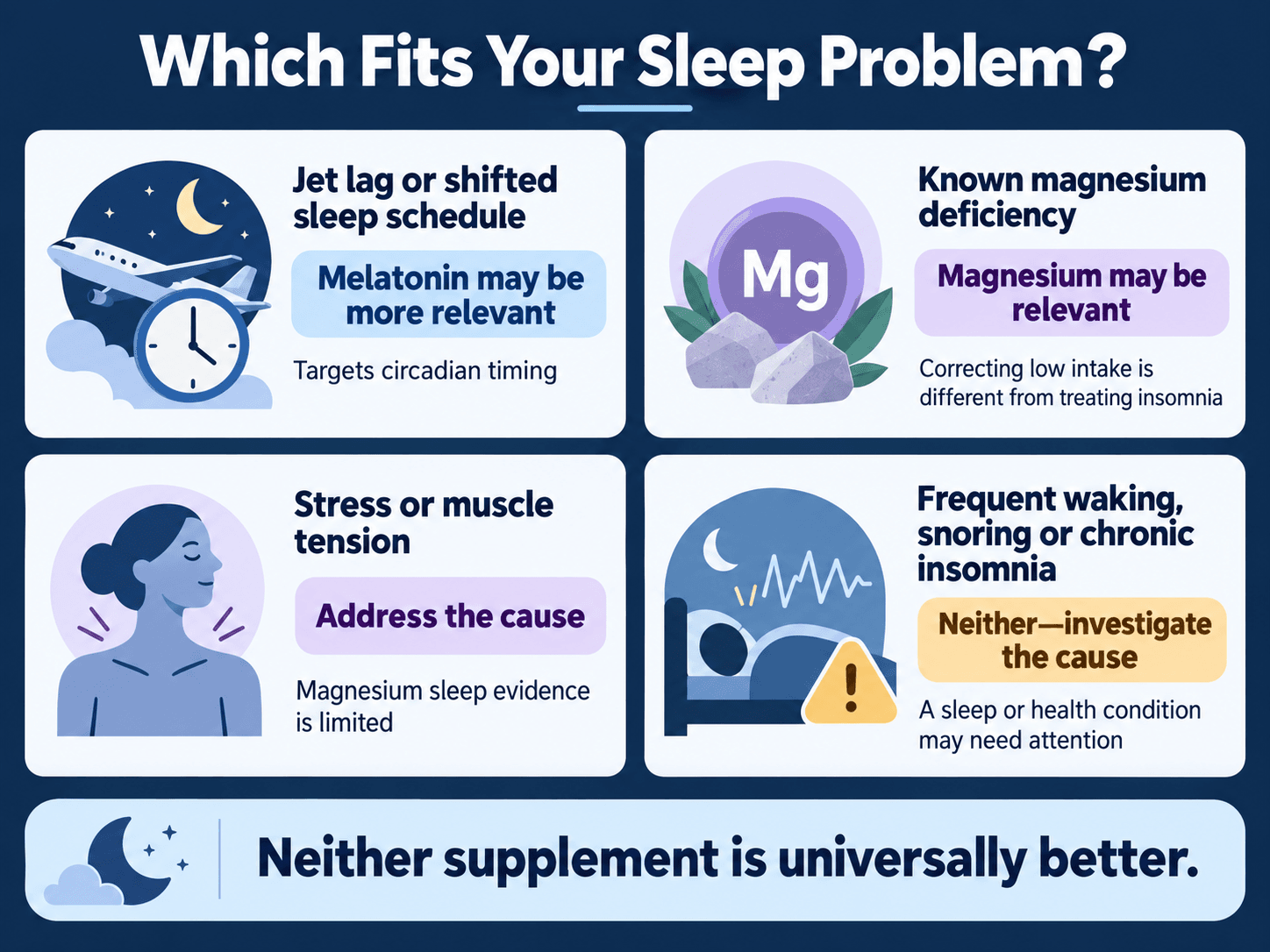
Melatonin or Magnesium: Which Is Better for Your Sleep Problem?
| Sleep situation | More relevant option | Why |
|---|---|---|
| Jet lag | Melatonin | The problem involves circadian timing; correct timing of use is important |
| A sleep schedule shifted later than desired | Melatonin may fit | It can shift the biological clock in selected cases |
| Stress or physical tension at bedtime | Neither is a guaranteed answer | Magnesium is often marketed here, but sleep evidence is limited; address the stress source and routine |
| Known low magnesium intake or deficiency | Magnesium | Correcting deficiency is nutritionally appropriate under guidance |
| Frequent nighttime waking | Investigate the cause | Alcohol, temperature, pain, reflux, urinary symptoms and sleep disorders may be involved |
| Loud snoring, gasping or breathing pauses | Neither | These can indicate sleep apnea and require evaluation |
| Chronic insomnia | Neither as a stand-alone fix | Cognitive behavioral therapy for insomnia is the standard first-line approach |
Which Is Better for Falling Asleep?
Melatonin has the stronger rationale when difficulty falling asleep is caused by delayed circadian timing, jet lag or another mismatch between the internal clock and desired bedtime. It may be less helpful when the problem comes from late caffeine, worry, an uncomfortable room, pain or inconsistent habits. Start with the cause and use our guide to fall asleep faster naturally for behavioral steps.
Which Is Better for Staying Asleep?
Neither is an automatic answer. Repeated awakenings may reflect insomnia, sleep apnea, alcohol, menopause symptoms, restless legs, reflux, pain, noise, temperature or a medication effect. Some prolonged-release melatonin products have been studied for particular groups, but choosing one without understanding the pattern can miss the real cause. If the pattern is specifically waking at roughly the same time overnight, see our guide to why you may wake up at 3 AM.
Which Is Better for Jet Lag or a Disrupted Schedule?
Melatonin is the better-targeted option because jet lag is a circadian problem. Light exposure, travel direction, destination time and supplement timing all affect the result. Magnesium does not directly reset the circadian clock. For a broader reset strategy, read how to fix your sleep cycle.
Which Is Better When Stress or Muscle Tension Keeps You Awake?
Magnesium is commonly promoted for relaxation, but the research does not justify promising that it will relieve anxiety or solve stress-related insomnia. If intake is low, improving dietary magnesium may be useful. If worry and hyperarousal are the main barriers, a consistent wind-down routine and evidence-based insomnia or anxiety care are more direct approaches. Our cortisol and sleep guide explains why feeling “wired” at night is not proof of a hormone problem.
Which Type of Magnesium Is Best for Sleep?
No magnesium form has high-quality evidence proving it is the best treatment for sleep. The practical differences are absorption, elemental-magnesium content, gastrointestinal effects, price and the reason it is being used.
| Form | Practical consideration |
|---|---|
| Magnesium glycinate | Often marketed for nighttime use and may be gentler on digestion for some people, but claims that it is uniquely superior for sleep are not established |
| Magnesium citrate | Generally well absorbed but can loosen stools; it is also used as a laxative |
| Magnesium oxide | Provides a high proportion of elemental magnesium by weight but is less readily absorbed and may cause gastrointestinal effects |
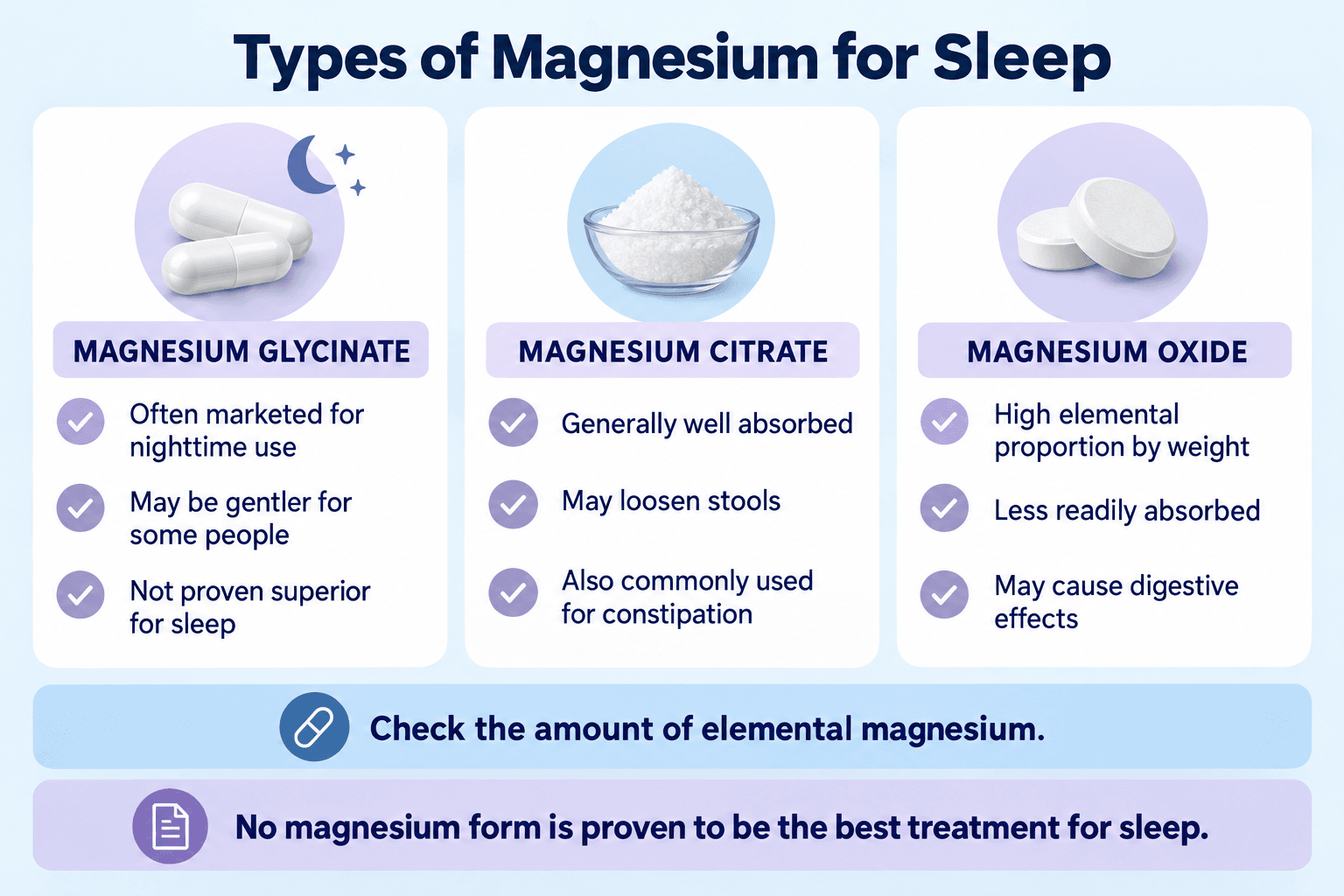
Read the Supplement Facts panel for the amount of elemental magnesium, not merely the compound name or total compound weight. Food sources—including nuts, seeds, legumes, whole grains and leafy green vegetables—can improve intake without turning sleep into a supplement-only problem.

PVL Rating: 4.0/5 · $23.99 existing PVL price
A good-value, fully chelated magnesium lysinate glycinate supplement providing 100 mg of elemental magnesium per tablet. The flexible dose and 240-tablet bottle are practical strengths, but it should support an identified magnesium need—not be treated as a proven insomnia solution. The full four-tablet label schedule provides 400 mg daily, above the NIH adult supplemental upper limit.
As an Amazon Associate, Purely Vital Living may earn from qualifying purchases. Price shown reflects the existing PVL listing and may change.
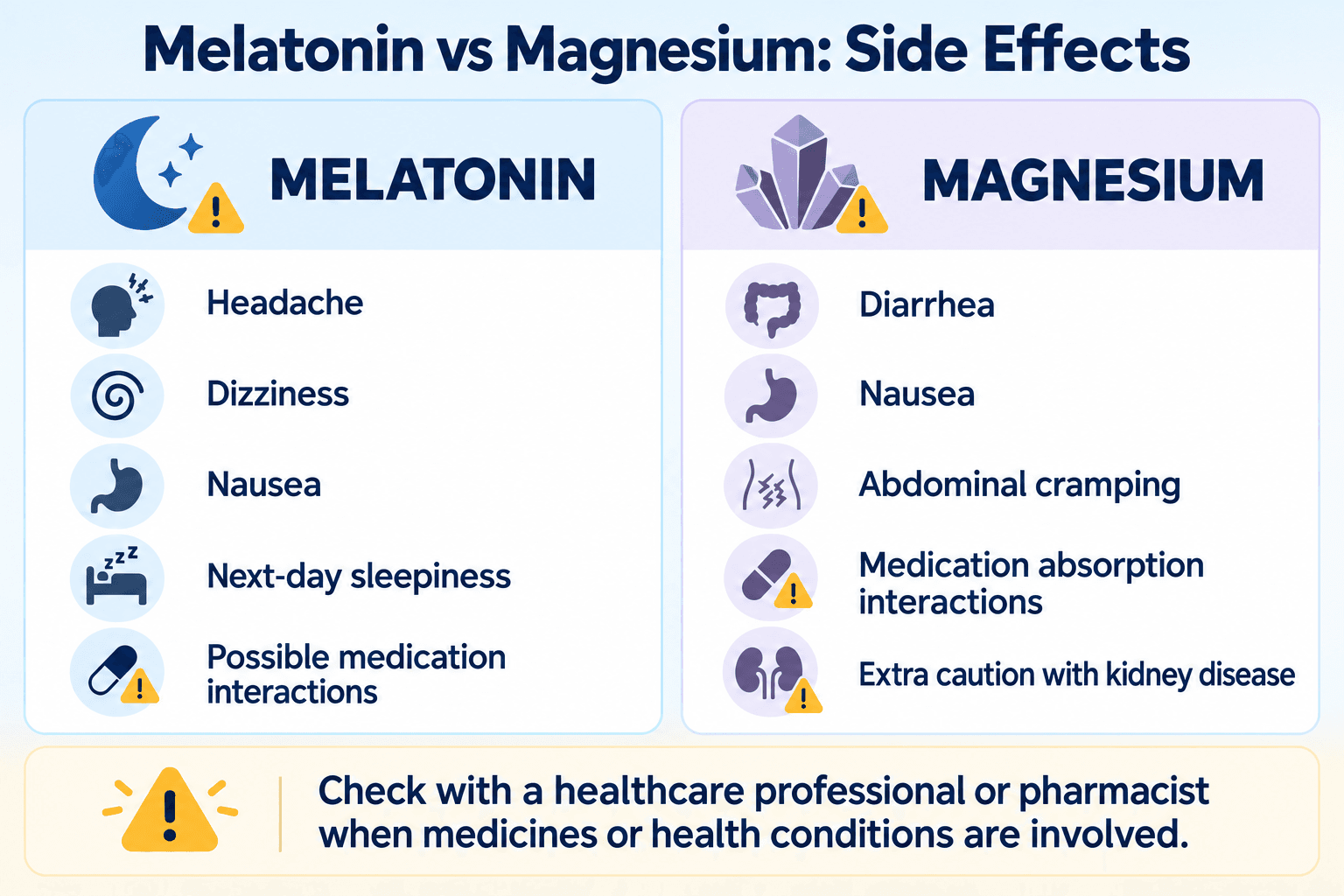
What Are the Side Effects of Melatonin vs Magnesium?
What Are the Side Effects and Cautions of Melatonin?
- Headache, dizziness, nausea or sleepiness may occur.
- Next-day grogginess can impair driving or other safety-sensitive tasks.
- Short-term use appears reasonably safe for many adults, but long-term safety is less certain.
- Possible medicine interactions include anticoagulants, seizure medicines, immune-suppressing drugs, diabetes medicines and others.
- Pregnant or breastfeeding people and those managing medical conditions should seek professional advice before use.
- Supplement contents may not always match the label, so independent quality testing matters.
What Are the Side Effects and Cautions of Magnesium?
- Supplemental magnesium can cause diarrhea, nausea and abdominal cramping.
- The NIH adult upper limit is 350 mg per day from supplements and medications—not magnesium naturally present in food—unless a healthcare professional recommends otherwise.
- Very high intake can be dangerous, particularly when kidney function is impaired.
- Magnesium can reduce absorption of certain antibiotics and osteoporosis medicines when taken too close together.
- Labels should be checked across antacids, laxatives and supplements to avoid unintentionally combining sources.
“Natural” does not mean interaction-free. A pharmacist can quickly check a supplement against your complete medication list, including over-the-counter products.
Can You Take Magnesium and Melatonin Together?
Some adults may be able to take magnesium and melatonin together, but combining them is not automatically safer or more effective. Research has not established that a combination works better for routine insomnia than selecting a targeted approach. Both may contribute to sleepiness or unwanted effects, and beginning two products at once makes it difficult to know which helped or caused a problem.
Ask a clinician or pharmacist before combining them if you take regular medicines, have kidney disease, are pregnant or breastfeeding, are preparing for surgery, or manage a seizure, bleeding, immune, blood-pressure or blood-sugar condition. Do not combine sleep supplements with alcohol, drive after taking a product that makes you drowsy or give melatonin to a child without pediatric guidance.
How to Choose Between Melatonin and Magnesium
- Define the problem. Is it falling asleep, a shifted schedule, jet lag, repeated waking, discomfort or unrefreshing sleep?
- Check the basics. Review wake time, morning light, caffeine, alcohol, screen exposure, exercise and bedroom conditions before adding a supplement.
- Consider the evidence. Melatonin fits circadian timing more directly; magnesium is most clearly appropriate when intake or status is inadequate.
- Review safety. Check medicines, health conditions, pregnancy or breastfeeding, driving requirements and possible interactions.
- Choose a quality product if needed. Look for clear ingredient amounts and credible independent testing rather than proprietary blends or dramatic sleep claims.
- Change one variable at a time. This makes benefits and side effects easier to identify.
- Set a review point. If the product is not helping, do not keep increasing the dose or stacking more sleep aids; reassess the cause.
The free PVL Sleep Score Calculator helps you review the everyday patterns that may be supporting—or interfering with—your sleep.
Check Your Sleep ScoreWhen Neither Melatonin Nor Magnesium Is the Answer
A supplement comparison should not distract from conditions that need a different solution. Speak with a healthcare professional when sleep difficulty is persistent, affects daytime function or safety, or occurs with loud snoring, gasping, breathing pauses, severe daytime sleepiness, uncomfortable urges to move the legs, significant mood symptoms, pain, reflux or medication changes.
For chronic insomnia, cognitive behavioral therapy for insomnia addresses the thoughts and behaviors that keep the problem going and is recommended as first-line care. Improving schedule consistency, light exposure, physical activity and bedroom conditions can also matter more than choosing a bottle. Our complete guide explains how to improve sleep quality naturally, while the PVL Sleep Resources hub brings together the wider sleep cluster, tools, and evidence-based resources.
Get practical, evidence-led sleep and wellness guidance from Purely Vital Living.
Join the PVL NewsletterBottom Line
Melatonin and magnesium are different tools. Melatonin is a circadian-timing signal with the clearest role in jet lag and selected sleep-timing problems. Magnesium is an essential nutrient, and correcting inadequate intake matters, but evidence for magnesium supplements as a general insomnia treatment remains limited.
Choose based on the cause of the sleep difficulty, not the loudest marketing promise. If you cannot identify the cause—or the problem keeps returning—an evaluation is more useful than increasing doses or combining supplements.
Frequently Asked Questions
Is magnesium better than melatonin for sleep?
No supplement is universally better. Melatonin is more directly relevant to jet lag and delayed circadian timing. Magnesium is appropriate when intake is inadequate or deficiency is present, but research supporting it as a general sleep aid is limited and mixed.
Can you take magnesium and melatonin together?
Some adults may be able to use both, but combining them has not been established as better for routine insomnia and can make side effects harder to identify. Check with a clinician or pharmacist if you take medicines, have kidney disease, manage a chronic condition, or are pregnant or breastfeeding.
Which is better for falling asleep, magnesium or melatonin?
Melatonin may be more relevant when falling asleep is difficult because the body clock is shifted later than the desired bedtime. It works mainly as a timing signal rather than a conventional sedative. If stress, caffeine, pain or inconsistent habits are responsible, neither supplement directly fixes the cause.
What type of magnesium is best for sleep?
No form is proven to be the best sleep treatment. Magnesium glycinate is often marketed for sleep and may be tolerated better by some people, while citrate and oxide are more likely to loosen stools. Consider elemental-magnesium content, tolerability and professional guidance.
Does magnesium help you stay asleep?
Current evidence does not show that magnesium reliably prevents nighttime awakenings in the general population. Repeated waking may come from insomnia, sleep apnea, alcohol, pain, reflux, temperature, menopause symptoms or medication effects. Identifying and addressing the underlying cause is more useful than automatically adding a supplement.
Is it safe to take melatonin every night?
Short-term melatonin use appears safe for many adults, but information about long-term safety is limited and individual risks vary. Nightly use should not replace evaluation of persistent insomnia. Review the dose, timing, medicines and health conditions with a qualified professional.
How long before bed should you take magnesium or melatonin?
There is no single timing rule for both. Melatonin timing depends on the goal and circadian pattern, so “30 minutes before bed” is not universally correct. Magnesium timing is less important than total intake, tolerability and the reason for use. Follow product and professional guidance rather than guessing.
Related Reads
- How to Improve Sleep Quality Naturally: Complete Sleep Guide
- How to Fall Asleep Faster Naturally Tonight
- How to Improve Deep Sleep: 10 Science-Backed Strategies
- Best Sleeping Temperature: Ideal Room Temperature for Sleep
- Cortisol and Sleep: How the Stress Hormone Affects Your Sleep
- PVL Sleep Score Calculator
References
- National Center for Complementary and Integrative Health. Melatonin: What You Need to Know.
- National Institutes of Health Office of Dietary Supplements. Magnesium: Fact Sheet for Health Professionals. Updated January 6, 2026.
- Arab A, Rafie N, Amani R, Shirani F. The Role of Magnesium in Sleep Health: a Systematic Review of Available Literature. Biological Trace Element Research. 2023.
- Abbasi B, et al. The effect of magnesium supplementation on primary insomnia in elderly: A double-blind placebo-controlled clinical trial. Journal of Research in Medical Sciences. 2012.
- American Academy of Sleep Medicine. Clinical Practice Guideline for the Pharmacologic Treatment of Chronic Insomnia in Adults. Journal of Clinical Sleep Medicine. 2017.
- American College of Physicians. Management of Chronic Insomnia Disorder in Adults: A Clinical Practice Guideline. Annals of Internal Medicine. 2016.
This article is for educational purposes and is not a substitute for diagnosis or individualized medical advice.